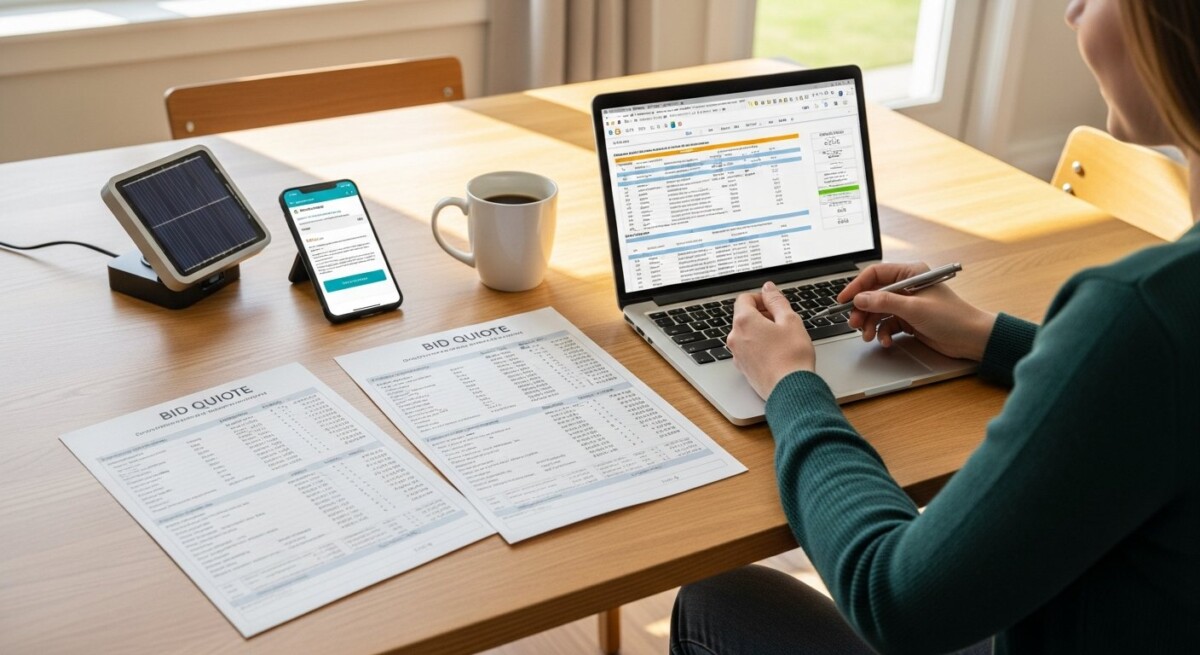
Every month, you pay an electric bill that seems to creep higher. You wonder if there is a way to take control of that cost. Solar energy offers that control, but the upfront numbers can feel intimidating. A thorough solar system investment analysis cuts through the confusion and shows you exactly what your money buys, how quickly it comes back, and what your home is worth with panels on the roof. This article walks you through the financial framework you need to make a confident decision.
Why a Simple Payback Calculation Is Not Enough
Many homeowners look at a single number: the payback period. If the system costs $20,000 and saves $1,500 per year, they divide and get 13.3 years. That is a start, but it ignores the most important factors. Solar panels last 25 to 30 years. The value of the energy they produce grows as utility rates rise. Federal and state incentives change the net cost dramatically. A deeper solar system investment analysis accounts for all of these variables.
Consider a homeowner in Arizona who pays $0.13 per kWh today. Over 25 years, utility rates have historically increased by an average of 2.5 to 3 percent annually. That same kWh will cost $0.27 in year 25. Your solar panels produce the same amount of energy each year, but the savings increase every time the utility raises its rate. A static payback calculation misses this compounding benefit entirely.
The Core Components of Your Return on Investment
To perform a reliable solar system investment analysis, you need to gather a few key data points. These inputs determine whether a system makes financial sense for your specific situation.
- Annual electricity consumption: Your utility bill shows your yearly kWh usage. This is the baseline for sizing the system.
- Local utility rate and escalation: Your current rate per kWh and the historical rate of increase in your area.
- System cost after incentives: The gross installed price minus the federal Investment Tax Credit (ITC) and any state or local rebates.
- Net metering policy: How your utility credits excess energy you send to the grid. Full retail credit is best. Avoid policies that pay wholesale rates.
- Production estimate: The number of kWh your roof will produce annually based on sun hours, panel efficiency, and shading.
Once you have these numbers, you can calculate the net present value (NPV) and internal rate of return (IRR) of the investment. These metrics account for the time value of money. A dollar saved in year 20 is worth less than a dollar saved today. NPV tells you the total value of the investment in today’s dollars. A positive NPV means the system pays for itself and generates profit over its lifetime.
How Federal and State Incentives Change the Math
The federal Investment Tax Credit currently allows you to deduct 30 percent of the total system cost from your federal taxes. If your system costs $25,000, you save $7,500 on your tax bill. That reduces your net investment to $17,500 immediately. Many states add their own incentives. In New York, for example, you can combine the federal credit with a state tax credit of up to $5,000. Some utilities offer performance-based incentives that pay you per kWh your system produces for the first five years.
Your solar system investment analysis must include every incentive available in your zip code. Missing one could understate your return by thousands of dollars. The Solar Energy Industries Association (SEIA) maintains a database of state-level incentives, and our solar system pricing calculator can help you estimate your savings based on your specific location and energy usage.
Financing Options and Their Impact on Returns
How you pay for the system changes the investment profile significantly. The three main paths are cash purchase, solar loan, and solar lease or power purchase agreement (PPA).
Cash Purchase
Paying cash delivers the highest long-term return. You own the system outright. You capture 100 percent of the tax credits and incentives. Your monthly savings go directly to your pocket. The IRR on a cash purchase often ranges from 10 to 20 percent over the life of the system. That is competitive with stock market returns but with lower volatility and zero correlation to the economy.
Solar Loan
Most homeowners do not have $20,000 to $30,000 in cash set aside for solar. A solar loan lets you finance the system with monthly payments that are typically lower than your current electric bill. You still own the system and qualify for the tax credit. The interest rate and loan term affect your net savings. A 10-year loan at 5 percent interest will reduce your first-year savings but still produce a solid return over the full life of the system.
Lease or PPA
A lease or PPA requires no upfront payment. A third party owns the panels on your roof. You pay a fixed rate for the energy they produce, usually lower than the utility rate. The advantage is zero maintenance risk and immediate savings. The downside is that you do not capture the tax credits or the long-term appreciation of the asset. Your savings are capped at the difference between the PPA rate and the utility rate. This option works best for homeowners who do not have the tax liability to use the ITC or who plan to move within five years.
A complete solar system investment analysis compares all three options side by side. The best choice depends on your cash flow, tax situation, and how long you plan to stay in the home.
Property Value and Resale Considerations
A solar system increases your home’s resale value. Studies from Zillow and the Lawrence Berkeley National Laboratory consistently show that homes with owned solar panels sell for a premium. The average premium in the United States is about 4 percent of the home’s value. For a $400,000 home, that is an extra $16,000 at closing. This value is realized only when you own the system. Leased systems can complicate a sale because the buyer must qualify to take over the lease.
When you perform your solar system investment analysis, include the expected property value increase as a conservative estimate. Even if you do not plan to sell, the equity is there as a financial buffer. If you do sell, the premium effectively shortens your payback period to the number of years you lived in the home before the sale.
Net Metering and Time-of-Use Rates
Net metering is the policy that allows you to send excess solar energy to the grid and receive credits on your bill. Under full retail net metering, each kWh you send to the grid offsets a kWh you pull from the grid at the same retail rate. This makes your electric meter spin backwards, literally saving you money at the same rate you would have paid.
Some utilities have moved to net billing or reduced credit rates. In California, the NEM 3.0 policy credits exported energy at a rate much lower than the retail rate. This change makes battery storage much more important for maximizing savings. In a solar system investment analysis for a home under NEM 3.0, you must model the system with a battery to capture excess solar energy and use it during peak evening hours. Without a battery, the payback period can double.
Time-of-use (TOU) rates charge more for electricity during peak demand hours, typically late afternoon and evening. Solar panels produce the most energy in the middle of the day when rates are low. A battery lets you store that cheap solar energy and discharge it during peak hours, effectively arbitraging the rate difference. This strategy can increase your savings by 20 to 30 percent compared to a system without storage.
Common Mistakes That Undermine Returns
Even a well-intentioned solar system investment analysis can go wrong if you overlook certain pitfalls. Here are the most common errors homeowners make.
- Ignoring future utility rate increases: If you assume rates stay flat, you understate savings by thousands of dollars. Use a conservative 2 percent annual escalation.
- Overestimating production: A south-facing roof in full sun is ideal. If your roof faces east or west, or has partial shading, production drops. Use a tool like Project Sunroof or get a site audit.
- Forgetting maintenance costs: Solar panels are low maintenance but not zero maintenance. Inverter replacement around year 12 costs $1,000 to $2,000. Include this in your NPV calculation.
- Choosing the wrong installer: A cheap installation with poor workmanship can cause roof leaks, electrical issues, and lower production. Vet your installer thoroughly. Use our platform to compare quotes from pre-screened providers.
Each of these mistakes can reduce your actual return by 20 to 40 percent. A careful analysis catches them before you sign a contract.
How to Run Your Own Analysis
You do not need a finance degree to perform a solar system investment analysis. Follow these steps to get a reliable answer for your home.
- Gather your utility bills: Collect 12 months of bills to find your total kWh usage and average monthly cost.
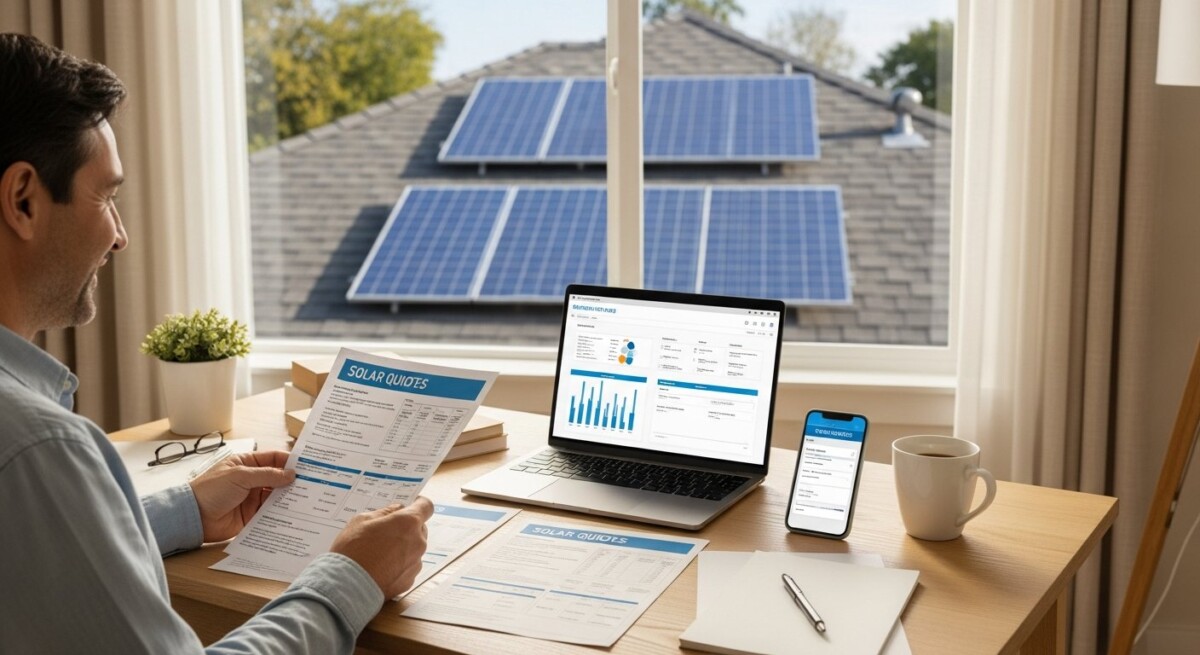
- Get multiple quotes: Use a service like FreeSolarPowerQuotes to receive free, no-obligation quotes from three to five local installers. Compare the equipment, warranty, and total price.
- Calculate the net cost: Subtract the federal ITC (30 percent) and any state incentives from the gross price.
- Estimate annual production: Ask each installer for a production estimate in kWh. Cross-check with a tool like PVWatts from NREL.
- Model your savings: Multiply the annual production by your current utility rate. Apply a 2 percent annual escalation. Subtract any loan payments if financing.
- Calculate NPV and payback: Use a simple spreadsheet or an online solar calculator. Enter the net cost, annual savings, system lifespan (25 years), and your discount rate (typically 4 to 6 percent).
If the NPV is positive and the payback period is under 12 years, the investment is likely sound. For most U.S. homeowners, the numbers work well, especially in states with high electricity rates and strong net metering policies.
When Solar Does Not Make Financial Sense
Not every home is a good candidate for solar. If your roof is heavily shaded by trees or taller buildings, production will be too low to justify the investment. If your roof needs replacement within five years, you should replace the roof first and then install solar. If your electric bill is very low (under $60 per month), the savings will not cover the fixed costs of the system.
In these cases, a solar system investment analysis will show a negative NPV or a payback period longer than 20 years. That is okay. You can still support renewable energy through community solar subscriptions or by purchasing renewable energy credits from your utility. These options require no roof work and deliver modest savings.
For the majority of homeowners with good sun exposure and moderate to high electric bills, solar remains one of the best home improvement investments available. The returns are predictable, the maintenance is minimal, and the environmental benefit is real. A thorough analysis gives you the confidence to move forward or the clarity to wait.
Start your analysis today by gathering your utility bills and requesting quotes. The information is free. The peace of mind that comes from knowing the numbers is invaluable. As you compare your options, refer to our guide on solar system investment analysis to maximize your energy savings for a deeper dive into the financial modeling that drives the best decisions.