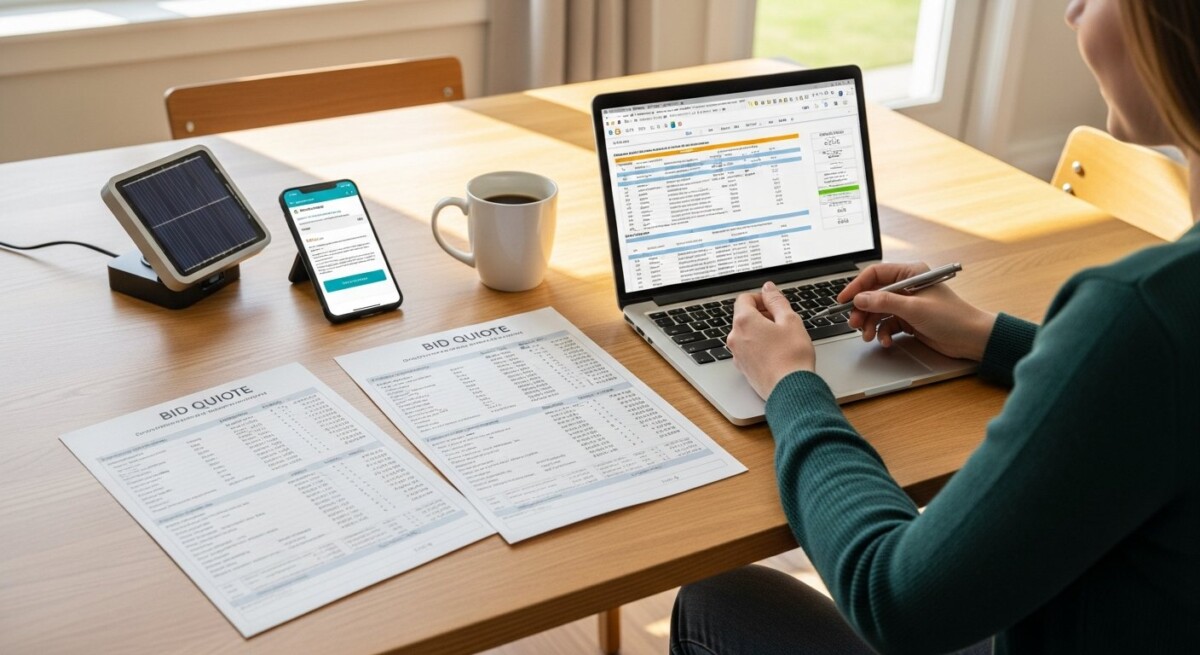
The decision to switch to solar energy is one of the most impactful financial and environmental choices a homeowner can make. Yet, the path from curiosity to installation often feels cluttered with technical jargon, confusing financing options, and conflicting advice from different companies. Many homeowners waste weeks talking to individual sales representatives, only to realize they have no clear way to compare offers side by side. This is where a structured solar installer quote request changes everything. Instead of chasing down contractors one by one, you can centralize the process, receive multiple competitive bids, and make an informed decision based on real numbers rather than sales pressure.
Submitting a single, well-prepared request shifts the dynamic from you being the hunter to you being the evaluator. When solar companies know they are competing for your business, they tend to present their best pricing and most efficient system designs upfront. This approach not only saves time but also ensures that you are not overpaying for equipment or installation labor. The key is knowing how to prepare for that request and what to look for in the responses you receive. In this guide, we will walk through the entire process so you can secure the best possible deal on your solar installation.
Why Submitting a Single Quote Request Beats Calling Installers Individually
When you call a solar installer directly, you are engaging with that company’s sales process on their terms. They control the information flow, the timeline, and often the pricing structure. Without a competing offer in hand, you have no leverage and no benchmark for what a fair price looks like. By submitting a centralized solar installer quote request through a platform like Free Solar Power Quotes, you flip the script entirely. Multiple vetted providers receive your home’s energy data simultaneously, and they each submit a proposal designed to win your business.
This competitive tension drives down costs and improves quality. Installers know that if their price is too high or their equipment is subpar, you will simply choose another bid from the stack. Furthermore, you gain access to a wider range of financing solutions. One installer might specialize in cash purchases with a steep discount, while another offers a zero-down loan with a lower interest rate. Seeing these options side by side allows you to choose the financial path that aligns with your monthly budget and long-term savings goals. For a deeper look at how this comparison process works in practice, check out our guide on how to compare solar installer quotes near me to cut energy bills.
The time savings alone are substantial. Instead of scheduling three or four separate in-home consultations, each lasting two hours, you can review proposals on your own schedule. You can ask clarifying questions via email or phone, and you can take your time comparing line items like panel wattage, inverter type, warranty terms, and estimated annual production. This methodical approach reduces the risk of buyer’s remorse and increases the likelihood that your solar system will perform as promised for decades.
What Information You Need Before You Submit a Request
A successful quote request begins with accurate data about your home and your energy consumption. The more precise the information you provide, the more accurate and comparable the quotes will be. Start by gathering your last twelve months of electricity bills. Installers need to see your kilowatt-hour (kWh) usage patterns across all four seasons. A home that uses 800 kWh in the winter but 1,400 kWh in the summer due to air conditioning requires a different system size than a home with flat consumption.
You will also need details about your roof. The age of your roofing material is critical because installing solar panels on a roof that needs replacement in five years creates an expensive removal and reinstallation problem later. You should know the orientation of your roof planes (south-facing is ideal in the northern hemisphere), the pitch or slope, and any obstructions like chimneys, skylights, or vents that could limit panel placement. If you have shading from nearby trees or buildings, make a note of that as well. Finally, have your property address and a rough idea of your credit score range ready, as many financing options depend on creditworthiness.
When you submit your information through a platform like Free Solar Power Quotes, that data is standardized and sent to multiple installers. This ensures that each installer is bidding on the same job with the same assumptions. Without this standardization, one installer might quote you for premium panels while another quotes for budget panels, making a direct comparison impossible. A centralized request eliminates that confusion and gives you an apples-to-apples comparison from the start.
How to Evaluate the Quotes You Receive
Once the quotes start arriving, the real work begins. Do not simply look at the lowest monthly payment or the smallest total cost. Solar is a long-term investment, and the cheapest option upfront can sometimes be the most expensive over the system’s 25- to 30-year lifespan. Focus on four key metrics: cost per watt, equipment quality, warranty coverage, and estimated annual energy production.
Cost per watt is the most straightforward benchmark for comparing hardware pricing. Divide the total system cost (before incentives) by the system size in watts. A typical residential system might range from $2.50 to $3.50 per watt depending on your location and the complexity of the installation. If one quote is significantly higher or lower than the others, ask why. A lower price might indicate lower-quality panels or a smaller inverter that could limit future expansion.
Equipment quality matters just as much as price. Reliable manufacturers like REC, Q Cells, and Panasonic offer panels with strong degradation warranties (often 92% or higher output after 25 years). Inverters from Enphase or SolarEdge are industry standards. Beware of quotes that use obscure brands without a strong U.S. service network. Warranty coverage should include at least three components:
- Product warranty: Covers manufacturing defects in the panels and inverters, typically 25 years for panels and 12 to 25 years for microinverters.
- Performance warranty: Guarantees that the panels will produce a certain percentage of their rated output over time, usually 80% to 92% after 25 years.
- Workmanship warranty: Covers the installation labor and roof penetrations, often 10 to 25 years depending on the installer.
After reviewing these factors, look at the estimated annual production in kilowatt-hours. This number is calculated using software that models your roof’s solar exposure, local weather patterns, and system efficiency. If one installer’s production estimate is dramatically higher than another’s for the same system size, ask for an explanation. They may be using overly optimistic assumptions about sun hours or ignoring shading losses. Trust the installer who provides conservative, realistic numbers because that is the performance you will actually experience.
Financing Options and the Role of Incentives
Solar financing has evolved far beyond the simple cash-or-loan choice of a decade ago. Today, homeowners can choose from cash purchases, solar loans, solar leases, and power purchase agreements (PPAs). Each option has different implications for your long-term savings, tax liability, and home resale value. When you review your quotes, pay close attention to the financing terms attached to each proposal.
A cash purchase offers the highest long-term return because you avoid interest payments and you own the system outright. You also qualify for the full 30% federal Investment Tax Credit (ITC), which reduces your tax bill dollar-for-dollar. Many states and utilities also offer additional rebates or performance-based incentives that can lower your net cost further. A solar loan allows you to finance the system with little to no money down, but the interest rate and loan term will affect your monthly savings. Some lenders offer low rates by buying down the points, which increases the overall system price. Always ask for the dealer fee or origination fee associated with a low-rate loan.
Leases and PPAs require no upfront payment and offer immediate bill savings, but you do not own the system or the electricity it produces. The installer or a third-party company retains ownership, and you pay a fixed rate per kWh that is typically lower than your utility’s rate. The trade-off is that you cannot claim the ITC, and selling a home with a leased solar system can be more complicated. A centralized quote request lets you see all four financing types from different providers, giving you the full picture before you commit.
Understanding the interplay between federal incentives and state-specific programs is also crucial. The federal ITC remains at 30% through 2032, but some states offer additional incentives like net metering credits, property tax exemptions for solar additions, and sales tax exemptions on equipment. Your installer should itemize these savings in the quote so you can see your true net cost after all incentives are applied. If a quote seems vague about incentives, that is a red flag. Reputable installers will show you exactly how they arrived at the final number.
Common Mistakes to Avoid When Requesting Quotes
Even with a streamlined process, homeowners can make errors that undermine the value of their quote requests. The most common mistake is failing to verify the installer’s licensing, insurance, and reputation. Just because a company submits a competitive bid does not mean they will deliver quality work. Before signing any contract, check that the installer holds a valid state contractor’s license, carries general liability insurance and workers’ compensation, and has positive reviews on platforms like the Better Business Bureau, Google, and Solar Reviews.
Another frequent error is focusing exclusively on the monthly payment without understanding the total cost. A solar loan with a 25-year term might have a low monthly payment, but the total interest paid over the life of the loan could be substantial. Always calculate the total cost of the system including interest, fees, and escalator clauses (for leases and PPAs). If the monthly payment seems too good to be true, ask for the full amortization schedule or contract terms.
Homeowners also sometimes forget to ask about the monitoring system. A good solar installation includes a monitoring platform that shows real-time energy production and consumption. This data helps you verify that the system is performing as expected and alerts you to issues like a panel failure or inverter malfunction. Without monitoring, you might not notice a drop in performance for months or years. Make sure monitoring is included in the quote, and ask whether it comes with a monthly fee or is free for the life of the system.
Making Your Final Decision and Scheduling Installation
After you have compared all the quotes side by side, checked the installer credentials, and confirmed the financing terms, it is time to make a decision. Choose the installer that offers the best combination of price, equipment quality, warranty coverage, and customer service. The lowest price is rarely the best choice if the installer has poor reviews or a weak warranty. Similarly, the highest-priced quote is not automatically the best if it includes premium equipment you do not need.
Once you select a provider, they will conduct a detailed site visit to finalize the system design and take precise measurements. This is the point where any assumptions from the initial quote are confirmed or adjusted. After the site visit, the installer will handle the permitting process with your local building department and utility company. This step can take anywhere from a few weeks to a few months depending on your location and the complexity of the interconnection agreement. During this time, stay in communication with the installer and ask for regular updates.
The installation itself typically takes one to three days for a standard residential system. After the panels are mounted and the wiring is connected, the utility company will inspect the system and install a net meter if required. Once the system is turned on, you can start generating your own electricity and watching your meter spin backward (or your bill shrink). The entire process from quote request to power-on usually takes two to four months, but the savings last for decades.
Submitting a solar installer quote request is the single most effective step you can take to ensure you get a fair price, quality equipment, and a reliable installer. By preparing your data, evaluating proposals carefully, and understanding your financing options, you transform a potentially stressful purchase into a confident investment. If you are ready to see what solar could save you, start by submitting your information through a trusted platform that connects you with multiple pre-screened installers. For homeowners in Illinois, our specific resource on Chicago solar installers to save on electricity bills provides localized guidance on incentives and installer options in that market.
The sun provides free energy every day. All you need is the right partner to capture it. A well-executed quote request is the bridge between wanting solar and actually owning it. Take the time to do it right, and you will enjoy clean, affordable electricity for a generation or more.