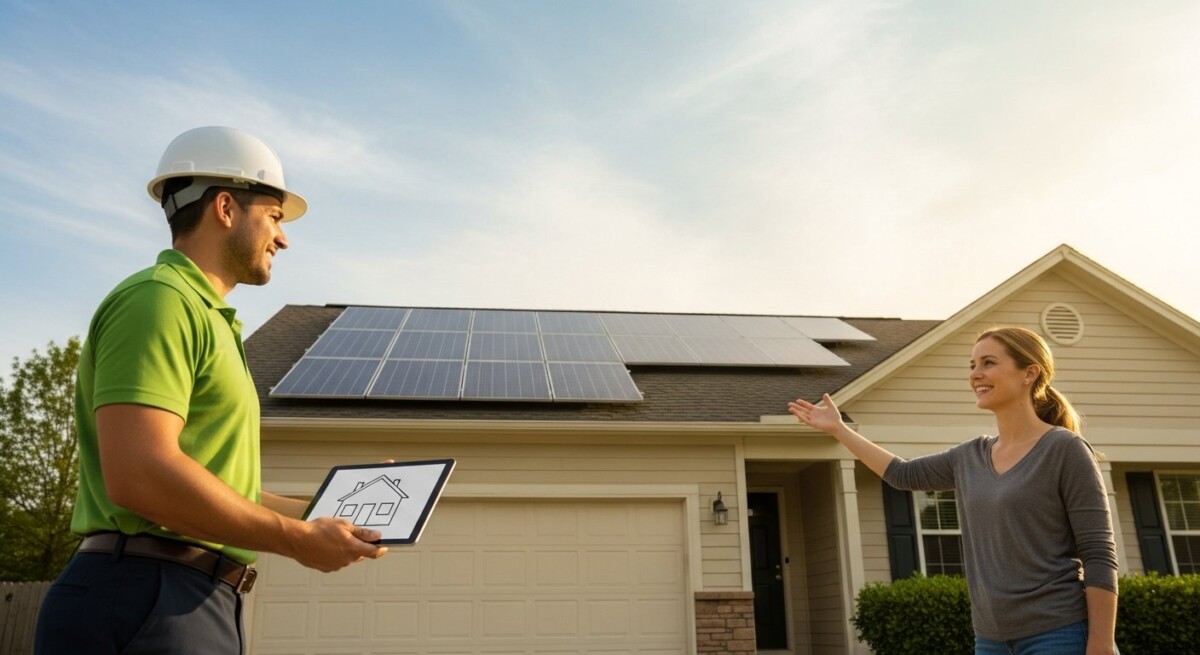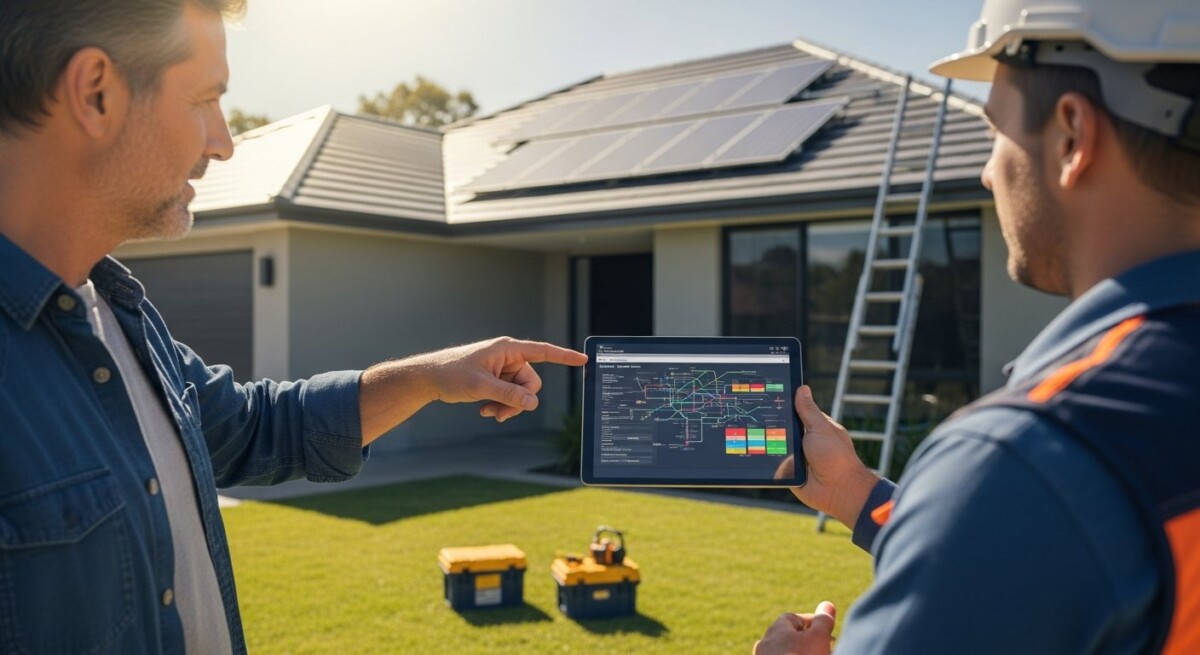
If you are considering solar panels for your home, the first question is usually about price. A complete solar cost breakdown for homeowners reveals that the total figure depends on equipment, labor, permits, and incentives. Understanding each component helps you compare quotes with confidence and avoid surprise expenses. This guide walks through every layer of the cost structure so you can make an informed decision.
The upfront price of a residential solar system has dropped significantly over the past decade, but it still represents a major investment. A typical 6-kilowatt system in the United States ranges from $15,000 to $25,000 before incentives. After the federal solar tax credit, that number falls to roughly $10,500 to $17,500. However, the final amount you pay depends on where you live, your roof type, and the financing option you choose. Breaking the price into categories reveals where your money goes and where you can save.
Hardware Costs: Panels, Inverters, and Racking
The largest portion of any solar installation budget goes to hardware. Solar panels themselves account for about 25 to 30 percent of the total cost. Monocrystalline panels are the most efficient and popular choice for homes, while polycrystalline panels offer a lower upfront price with slightly less efficiency. Thin-film panels are rarely used in residential settings due to lower efficiency and shorter warranties.
Inverters represent another 10 to 15 percent of the system cost. A string inverter is the most common and affordable option, but microinverters and power optimizers cost more while improving performance on shaded roofs. Your installer will recommend the best inverter type based on your roof layout and sun exposure. Racking and mounting hardware, which secure the panels to your roof, account for roughly 5 to 10 percent of the total. Flush mounts are standard for asphalt shingles, while tile and metal roofs may require specialized adapters that add to the labor and material costs.
Battery storage is an optional but increasingly popular addition. Adding a lithium-ion battery like the Tesla Powerwall or LG Chem RESU can increase the total system cost by $8,000 to $15,000. Batteries provide backup power during outages and allow you to store excess energy for evening use, but they are not necessary for all homeowners. If your utility offers net metering, you may not need a battery to achieve financial savings.
Soft Costs: Labor, Permits, and Overhead
Soft costs make up a surprisingly large share of the total price. In the United States, soft costs account for roughly 40 to 50 percent of a solar installation. This category includes labor, design, permitting, inspection, interconnection fees, sales commissions, and installer overhead. While hardware prices have fallen steadily, soft costs have remained stubbornly high, particularly in states with complex permitting requirements.
Labor typically represents 15 to 20 percent of the total cost. A professional installation team spends one to three days on your roof, running conduit, mounting panels, and connecting the system to your electrical panel. The complexity of your roof affects labor time. A simple south-facing roof with no obstructions takes less time than a multi-plane roof with skylights or vents. Permitting and inspection fees vary widely by municipality. Some cities charge a flat fee of a few hundred dollars, while others require engineering stamps and structural reviews that can add $1,000 or more.
Sales and marketing costs are built into the price you pay. Solar companies spend heavily on advertising, lead generation, and sales commissions. These costs are embedded in the quote you receive. Working with a company that has a lean sales model or using a quote comparison service can help reduce the impact of these overheads. FreeSolarPowerQuotes connects you with multiple vetted providers so you can compare bids and choose the best value without paying inflated sales margins.
Financing Options and Their Impact on Cost
How you pay for solar dramatically affects the total cost over time. Cash purchases are the simplest and cheapest option because you avoid interest and fees. If you have the funds available, paying cash gives you the fastest payback period and the highest long-term savings. However, most homeowners finance their systems through loans, leases, or power purchase agreements (PPAs).
Solar loans are the most popular financing method. A typical solar loan has an interest rate between 3 and 8 percent, depending on your credit score and the lender. Loan terms range from 10 to 25 years. Some lenders offer zero-down loans, which make solar accessible without upfront cash. However, the interest payments reduce your net savings. A $20,000 system financed over 20 years at 5 percent interest will cost roughly $31,600 in total payments, including interest. Compare that to a cash purchase of $20,000, and the difference is significant.
Leases and PPAs allow you to go solar with zero upfront cost, but you do not own the system. Instead, you pay a monthly fee to the solar provider for the electricity the panels generate. The provider owns and maintains the equipment. While this option eliminates upfront expense, it also eliminates the federal tax credit and most state incentives, which go to the provider. Over 20 years, a lease or PPA typically costs more than a financed purchase. If you plan to stay in your home long-term, buying the system with a loan or cash is usually the better financial decision.
For a deeper look at how different financing scenarios affect your bottom line, review our guide on how to calculate savings from solar quotes. That resource walks through the math behind loan payments, payback periods, and net present value so you can compare offers side by side.
Incentives and Tax Credits That Reduce Net Cost
The federal solar Investment Tax Credit (ITC) is the single most valuable incentive for homeowners. As of 2026, the credit allows you to deduct 30 percent of your total system cost from your federal income taxes. There is no cap on the credit amount. If your system costs $20,000, you receive a $6,000 credit. You do not need to owe that much in taxes to claim it, and the credit can be carried forward to future tax years if your liability is lower than the credit amount.
State and local incentives vary widely. Some states offer additional tax credits, property tax exemptions, sales tax exemptions, or performance-based incentives. For example, New York offers a state tax credit of up to $5,000, while California has property tax exclusions for solar additions. Other states like Florida and Texas have no state income tax, so they offer sales tax exemptions instead. Check the Database of State Incentives for Renewables and Efficiency (DSIRE) for your specific location.
Net metering is not a direct rebate, but it dramatically affects the financial return of your solar system. Under net metering, your utility credits you for excess electricity your panels send to the grid. These credits offset the power you consume at night or on cloudy days. Net metering policies differ by state and utility. Some utilities offer full retail rate credits, while others offer reduced rates or time-of-use structures. Understanding your utility’s net metering policy is essential for calculating realistic savings.
Regional Variations in Installation Pricing
Solar prices differ significantly across the United States due to labor rates, permitting complexity, and local market competition. Homeowners in California and the Northeast typically pay higher prices because of stricter building codes, higher labor costs, and more complex permitting. In contrast, states like Texas, Arizona, and Florida often have lower installation costs due to competitive markets and streamlined permitting processes.
For example, a 6-kilowatt system in Los Angeles might cost $3.00 to $3.50 per watt, while the same system in Phoenix could cost $2.50 to $3.00 per watt. The difference of $0.50 per watt adds up to $3,000 on a 6-kilowatt system. Rural areas may also see higher prices due to limited installer competition and travel fees. Getting multiple quotes from local installers is the best way to find competitive pricing in your area. FreeSolarPowerQuotes simplifies this process by aggregating offers from pre-screened providers in your region.
Roof type and condition also affect pricing. Asphalt shingle roofs are the easiest and cheapest to install on, while tile, slate, and metal roofs require specialized mounting systems that add $500 to $2,000 to the total cost. If your roof is older than 15 years, you may need to replace it before installing solar, which adds thousands of dollars to the project. Many homeowners combine roof replacement with solar installation to avoid paying for separate labor and permits later.
How to Compare Quotes and Avoid Hidden Fees
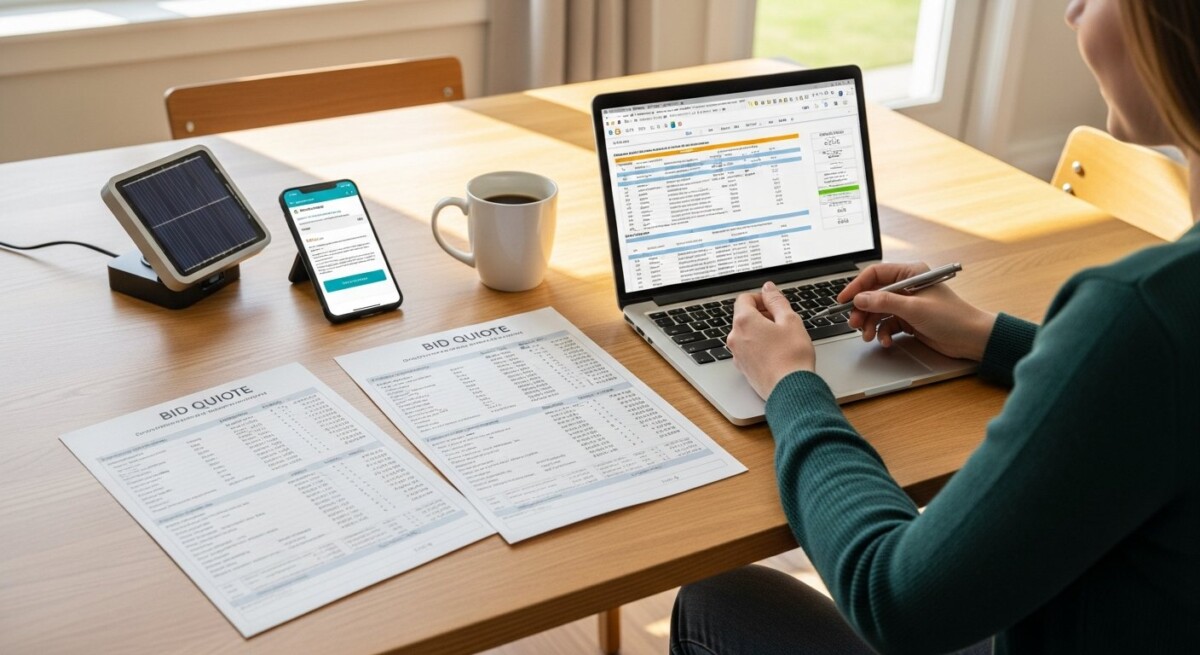
When you receive multiple solar quotes, focus on the cost per watt rather than the monthly payment or total system price. Cost per watt standardizes the comparison by dividing the total system price by the system size in watts. A typical price range is $2.50 to $3.50 per watt before incentives. If a quote exceeds $4.00 per watt, ask the installer to explain the higher cost. Common reasons include premium equipment, complex roof conditions, or high sales commissions.
Ask each installer for a detailed line-item breakdown of the quote. The breakdown should include panel model, inverter type, racking system, labor, permits, and warranty terms. Be wary of quotes that lump everything into a single number without explanation. Hidden fees can include permit escalation charges, electrical panel upgrades, tree trimming, or structural reinforcements. Electrical panel upgrades alone can cost $1,000 to $3,000 if your current panel cannot handle the additional solar input.
Warranty terms are another critical factor. Most panels come with a 25-year performance warranty, while inverters typically have a 10- to 12-year warranty. Labor warranties from the installer usually cover workmanship for 5 to 10 years. A longer warranty often justifies a slightly higher price because it protects your investment over the system’s lifespan. Compare not just the price but the total value, including warranty coverage, equipment quality, and installer reputation.
Business owners considering solar will find a parallel cost structure, though commercial projects involve different financing and incentive options. Read our article on commercial solar panels and how they power business operations for a detailed breakdown of commercial pricing, depreciation benefits, and ROI timelines.
Long-Term Value and Payback Period
The payback period for a residential solar system typically ranges from 6 to 12 years depending on your electricity rates, system cost, and available incentives. After the payback period, the electricity your panels generate is essentially free, aside from minimal maintenance costs. Over the 25-year lifespan of the panels, a typical homeowner saves $20,000 to $40,000 on electricity bills, depending on local utility rates and system size.
Solar panels also increase home value. Studies from the National Renewable Energy Laboratory and Zillow show that homes with solar panels sell for 4 to 6 percent more than comparable homes without solar. Buyers recognize the value of lower utility bills and energy independence. If you sell your home before the payback period ends, the increased resale value often recovers the remaining investment.
Maintenance costs are low. Solar panels have no moving parts and require only occasional cleaning to remove dust, leaves, and bird droppings. Most installers include monitoring software that alerts you to performance issues. Inverter replacement is the most common maintenance expense, typically occurring once during the system’s 25-year life at a cost of $1,000 to $2,000. Factoring this into your long-term budget ensures you have a realistic picture of total ownership cost.
Understanding the full solar cost breakdown for homeowners empowers you to negotiate effectively and choose the right financing path. Every component from panel efficiency to installer markup affects your bottom line. By comparing quotes, maximizing incentives, and selecting the right financing method, you can make solar a financially sound investment for your home.