Your roof is one of the biggest investments you will ever make. Adding solar panels to it should feel exciting, not terrifying. Yet every week, homeowners across the United States sign contracts with solar installers who later vanish, leave systems unfinished, or install equipment that fails within two years. The solar industry has grown fast, and where fast money flows, bad actors follow. Learning how to verify solar installer legitimacy before you commit can save you tens of thousands of dollars and years of headaches. This guide walks you through the exact steps to separate trustworthy professionals from fly-by-night operators.
The stakes are high. A legitimate solar installation adds value to your home, lowers your electric bill, and qualifies for federal tax credits. A fraudulent one can damage your roof, void your homeowner’s insurance, and leave you with a loan for a system that does not work. The good news is that legitimate installers leave a clear trail of credentials, customer satisfaction, and financial stability. You just need to know where to look and what questions to ask. Below, we break down the verification process into actionable steps.
Check Licensing and Certification Requirements by State
Every state has different rules for solar contractors. Some require a general contractor license. Others mandate a specific solar or electrical license. A legitimate installer will have the correct license for your state and be happy to show you proof. Start by visiting your state’s contractor licensing board website. Search for the company name and verify that their license is active and in good standing. If the license has expired or shows complaints that were not resolved, that is a major red flag.
Beyond state licensing, look for industry certifications. The North American Board of Certified Energy Practitioners (NABCEP) certification is the gold standard in the solar industry. Installers with NABCEP-certified professionals on staff have passed rigorous exams and adhere to a code of ethics. While not every legitimate installer has NABCEP certification, it is a strong indicator of professionalism. Ask the company directly if they employ NABCEP-certified installers and request the certificate numbers so you can verify them on the NABCEP website.
Electrical licensing is another critical layer. Solar installations involve high-voltage electrical work. In most states, a licensed electrician must perform or supervise this work. Verify that the installer’s electricians hold active licenses in your state. You can usually check this through your state’s electrical licensing board. A company that hesitates to provide license numbers or tries to explain why they do not need one should be avoided.
Investigate Business History and Financial Stability
A solar installation is a long-term commitment. Your panels should last 25 to 30 years. The company that installs them needs to be around for at least the warranty period. Start by checking how long the company has been in business. A company with five or more years of operating history in your area is generally more reliable than a startup that appeared six months ago. Use the Better Business Bureau (BBB) website to check the company’s rating and read customer complaints. Look for patterns of unresolved issues, such as poor communication, missed deadlines, or failure to honor warranties.
Financial stability matters more than you might think. Many solar companies lease equipment or use complex financing structures. If the installer goes bankrupt, your warranty could become worthless. You can check a company’s financial health through services like Dun & Bradstreet or simply by asking for references from suppliers. Equipment manufacturers like SunPower, LG, or Enphase often have lists of certified installers. If a company is on a manufacturer’s preferred installer list, that manufacturer has vetted them to some degree. Additionally, ask for proof of general liability insurance and workers’ compensation coverage. Request a certificate of insurance directly from their insurance provider, not just a photocopy from the salesperson.
Another smart step is to check for any pending lawsuits or liens. You can search your county’s civil court records online. A lawsuit or mechanic’s lien from a previous customer or supplier is a serious warning sign. If the company has a history of not paying its subcontractors or suppliers, they may cut corners on your installation as well. For a more detailed comparison of what different installers offer, see our guide on how to compare solar installer quotes near me.
Read Real Customer Reviews and Request References
Online reviews are a useful starting point, but you need to dig deeper than the star rating. Look for reviews on multiple platforms: Google, Yelp, the BBB, and SolarReviews.com. Pay attention to reviews that mention specific details about the installation process, communication, and post-installation support. A pattern of complaints about leaky roofs, slow repairs, or unresponsive customer service is a clear red flag. Be wary of companies with dozens of five-star reviews that all sound similar or are posted in a short time frame. These may be fake reviews.
Beyond online reviews, ask the installer for at least three references from installations completed in the last six months. Contact those homeowners directly. Ask specific questions: Did the installation finish on time? Were there any unexpected costs? How was the communication throughout the process? Has the system performed as promised? Would you hire them again? A legitimate company will have happy customers who are willing to talk. A company that hesitates to provide references or gives you only one name is hiding something.
You can also check if the company has any unresolved complaints with your state’s Attorney General’s office or consumer protection agency. These records are often public. A complaint or two is not necessarily disqualifying, but a pattern of unresolved complaints is. Also, look for online forums or neighborhood social media groups where homeowners discuss local solar installers. Real-world experiences from people in your area are invaluable.
Scrutinize the Contract and Warranty Terms
The contract is where legitimate installers separate themselves from frauds. A trustworthy installer will provide a clear, detailed contract that spells out every cost, timeline, and warranty term. You should never sign a contract that uses vague language like “system will be installed in a timely manner” or “estimated cost may vary.” The contract should include the exact make and model of every piece of equipment: panels, inverters, racking, and monitoring hardware. It should also state the total price, payment schedule, and any financing terms in plain language.
Warranties are another critical area. There are three main warranties to examine: the equipment warranty, the workmanship warranty, and the production guarantee. The equipment warranty covers defects in the panels and inverters and typically lasts 25 years for panels and 12 to 25 years for inverters. The workmanship warranty covers the installation labor and should last at least 10 years, though 25 years is becoming more common. The production guarantee promises that your system will produce a certain amount of energy each year. If it falls short, the installer compensates you. Read the fine print on all warranties. Some warranties are prorated, meaning the coverage decreases over time. Others have exclusions for certain types of damage.
Pay close attention to what happens if the company goes out of business. Some manufacturers offer “comprehensive” warranties that cover both equipment and labor if the installer ceases operations. This is a valuable protection. If the warranty is only through the installer, your coverage ends if they close. Also, check if there is an arbitration clause. Many contracts require you to resolve disputes through arbitration instead of going to court. While not necessarily a dealbreaker, understand that arbitration can limit your legal options if something goes wrong.
Verify Permits and Inspection Processes
Legitimate solar installations require building permits and electrical permits from your local government. A reputable installer will handle the permitting process as part of their service. They will pull the necessary permits before work begins and schedule the required inspections after the installation is complete. If an installer tells you that permits are not needed or suggests skipping the inspection to save money, walk away immediately. Unpermitted work can cause major problems when you sell your home or file an insurance claim.
Ask the installer about their typical permitting timeline and inspection process. A professional company will have a dedicated permitting specialist or team. They should be able to walk you through the steps: submitting plans to the city, scheduling inspections, and obtaining final approval. After the installation, your local building inspector will check the electrical work, the roof attachments, and the overall safety of the system. The installer should be present for this inspection and address any issues the inspector finds. Never make the final payment until the system has passed all required inspections and is operating correctly.
Your utility company also needs to approve the interconnection. This is the process of connecting your solar system to the grid. Your installer should handle the interconnection application and paperwork. The utility will inspect the system and install a new meter if needed. Until the utility gives permission to operate (PTO), you should not turn the system on. A legitimate installer will guide you through this entire process and keep you informed of the status.
Evaluate Financing Offers and Payment Terms
Solar financing can be confusing, and some less reputable companies use complex loan structures to hide high fees and interest rates. Be very careful with offers that seem too good to be true, such as “$0 down” or “free solar panels.” These are often leases or power purchase agreements (PPAs) where you do not own the system. While leases and PPAs can be legitimate, they come with long-term contracts and escalator clauses that increase your payment each year. Read the financing agreement as carefully as the installation contract.
If you are taking out a solar loan, check the annual percentage rate (APR) and the total cost of the loan, including fees. Some solar loans have dealer fees that are hidden in the upfront cost. These fees can add thousands of dollars to the price. Compare the APR from the installer’s financing partner with rates from local banks and credit unions. You can often get a better deal by financing separately. Never sign a loan document that includes a “prepayment penalty” unless you are certain you will not pay off the loan early.
Payment terms should be clearly outlined in the contract. A standard payment schedule might include a small deposit (10% or less) to secure the permit and materials, progress payments as work is completed, and the final payment after the system passes inspection and the utility has given PTO. Avoid companies that demand a large upfront payment before any work begins. Also, be cautious of companies that pressure you to sign the same day or offer a “limited-time discount” that expires in 24 hours. Legitimate solar professionals give you time to review the contract and do your research.
Use a Quote Service to Vet Multiple Installers at Once
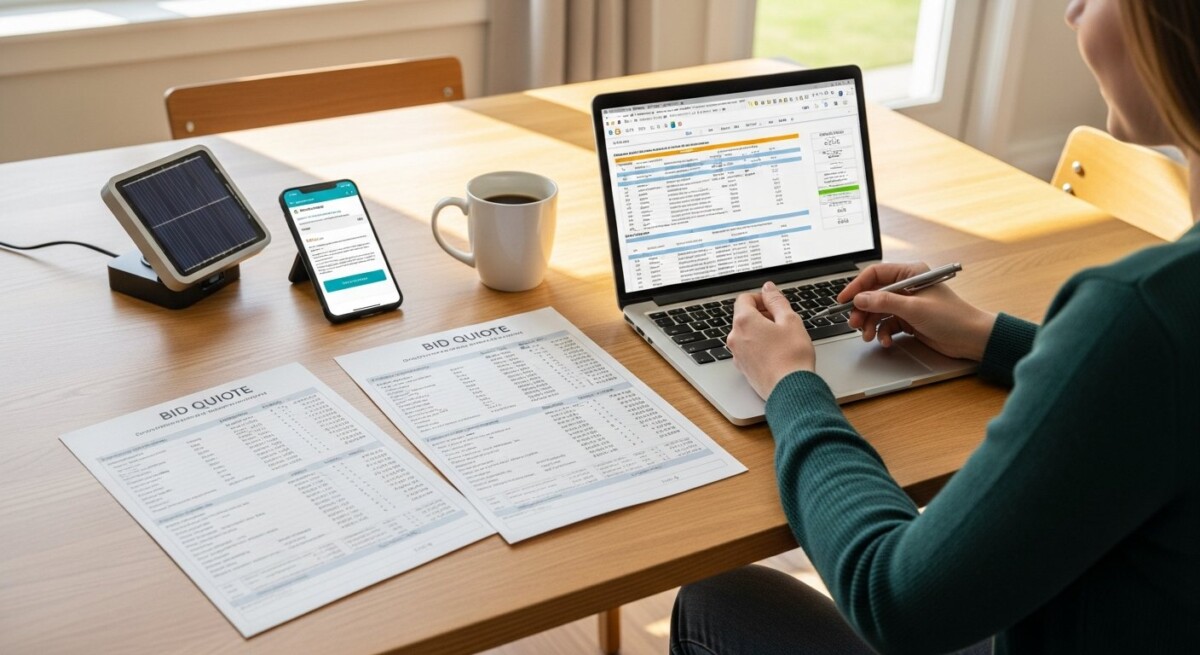
One of the fastest ways to identify legitimate installers is to compare multiple quotes side by side. When you receive quotes from several companies, you can easily spot outliers. If one quote is dramatically lower than the others, there is likely a reason. The company may be using substandard equipment, skipping permits, or planning to cut corners on labor. Conversely, a quote that is much higher is not necessarily better. Comparing quotes helps you benchmark pricing and see which companies are transparent about their costs.
Using a trusted platform like FreeSolarPowerQuotes simplifies this process. You submit your information once, and we connect you with pre-screened, reputable solar providers in your area. These providers have been vetted for licensing, insurance, and customer satisfaction. This saves you the time and risk of finding installers on your own. You receive multiple quotes that you can compare on equipment, pricing, warranty terms, and financing options. This approach not only helps you find a legitimate installer but also ensures you get a fair price. For more on how this process works and the financial benefits, read our article on how a solar installer quote request saves you money.
Legitimate installers welcome competition because they know their pricing and service quality are competitive. If a company tries to discourage you from getting other quotes or pressures you to sign an exclusive agreement, consider that a red flag. A transparent installer will encourage you to shop around and will stand by their quote when compared to others.
Trust Your Instincts and Verify Everything
After you have checked licenses, read reviews, reviewed contracts, and compared quotes, take a step back. Trust your gut. If something feels off about the salesperson’s approach, the contract terms, or the company’s transparency, listen to that feeling. Legitimate solar installers operate with professionalism and clarity. They do not use high-pressure tactics, obscure fees, or vague promises. They answer your questions directly and provide documentation for every claim they make.
Remember that solar energy is a long-term investment. Taking an extra week to verify an installer’s legitimacy is far better than being stuck with a bad system for 25 years. The steps outlined in this guide are your protection. Use them every time you evaluate a solar company. By thoroughly vetting your installer, you ensure that your transition to solar energy is smooth, financially sound, and genuinely beneficial for your home and the environment.