When a homeowner first considers installing solar panels, the biggest question is almost always about money. How much will it cost upfront? How long before the system pays for itself? These questions lead directly to a concept called solar payback calculation. This calculation answers a simple yet powerful question: how many years will it take for your cumulative energy savings to equal the total cost of your solar installation. Once you understand this number, you can make an informed decision about whether solar is a smart investment for your home. It is the financial compass that guides every smart solar purchase.
What Is Solar Payback Calculation?
Solar payback calculation is the process of determining the payback period for a solar energy system. The payback period is the time it takes for the money you save on electricity bills to cover the full cost of installing the system. After that point, the electricity your panels generate is essentially free, aside from minimal maintenance costs. This metric is crucial because it translates a large upfront investment into a timeline that homeowners can understand and compare against other investments or home improvements.
The calculation itself is not complicated. You take the net cost of your solar system (after tax credits, rebates, and other incentives) and divide it by your annual electricity savings. For example, if your net system cost is $15,000 and you save $1,500 per year on electricity, your payback period is 10 years. However, the real world is messier than this simple formula. Factors like changing utility rates, panel degradation, your home’s energy consumption patterns, and local net metering policies all affect the actual outcome. A thorough calculation accounts for these variables to give you a realistic estimate.
Why the Solar Payback Period Matters for Homeowners
Understanding your solar payback period is critical for several reasons. First, it helps you evaluate solar as a financial investment. If your payback period is 8 years and your solar panels are warrantied for 25 years, you will enjoy 17 years of essentially free electricity. That is a strong return on investment. Second, the payback period affects your decision about financing. If you take out a solar loan, you want the monthly loan payment to be lower than your average monthly electricity bill savings. Otherwise, you would be losing money each month until the loan is paid off.
Third, the payback period influences your home’s resale value. Studies show that homes with solar panels sell for a premium, and a shorter remaining payback period makes the system more attractive to buyers. Finally, knowing your payback period helps you compare different solar quotes. A system that costs more upfront but has a shorter payback period due to higher efficiency or better placement may be the better long-term choice. For a deeper look at how savings accumulate over time, explore our guide on Solar Payback Calculation: How to Know When You’ll Start Saving.
Key Components That Affect Your Solar Payback Calculation
Several variables feed into an accurate solar payback calculation. Understanding each one helps you see why two identical homes can have very different payback periods.
Total System Cost After Incentives
The gross cost of a solar system includes panels, inverters, racking, wiring, labor, permits, and sometimes a battery. However, the net cost is what matters for your payback calculation. The federal solar Investment Tax Credit (ITC) currently allows you to deduct 30 percent of the system cost from your federal taxes. Many states, cities, and utilities offer additional rebates or performance-based incentives. For example, some states have Solar Renewable Energy Credits (SRECs) that pay you for the electricity your system produces. These incentives can reduce your net cost by thousands of dollars, dramatically shortening your payback period.
Annual Electricity Savings
Your annual savings depend on how much electricity your system produces and the rate you pay for grid electricity. A larger system facing south with no shading will produce more power and save you more money. Your local electricity rate is equally important. If you pay $0.12 per kilowatt-hour, your savings will be lower than someone paying $0.30 per kilowatt-hour in a high-cost area. Utility rate inflation also matters. Electricity prices have historically risen 2 to 4 percent per year. Factoring in this escalation makes your savings grow faster over time and shortens your payback period.
Net Metering Policies
Net metering is the billing arrangement where your utility credits you for excess solar power you send to the grid. Full retail net metering (1:1 credit) gives you the best return. Some utilities offer reduced credit rates or time-of-use net metering, which complicates the calculation. In areas with weak net metering, you may need battery storage to maximize self-consumption, which adds cost but can improve your payback if time-of-use rates are high. Always check your utility’s net metering policy before calculating your payback.
How to Calculate Your Solar Payback Period: A Step-by-Step Approach
You can calculate your payback period using a straightforward process. While online calculators are helpful, understanding the steps gives you confidence in the result.
First, determine the gross cost of the system from your solar quote. Second, subtract all federal, state, and local incentives you qualify for to get the net cost. Third, estimate your annual electricity production in kilowatt-hours based on your system size, roof orientation, and local sunlight hours. Fourth, multiply that production by your blended electricity rate (including delivery charges and taxes) to get your first-year savings. Fifth, divide the net cost by the annual savings. The result is your simple payback period in years.
For a more accurate picture, you should adjust for annual panel degradation (typically 0.5 percent per year) and utility rate escalation (2 to 4 percent per year). Here are the key variables you need to gather before starting:
- Total system cost from your installer (before incentives)
- Federal tax credit amount (30 percent of gross cost)
- State and local rebates or SREC income estimates
- Your home’s average monthly electricity usage in kilowatt-hours
- Your current electricity rate per kilowatt-hour (including all fees)
- Your roof’s solar production estimate (from a site survey or solar calculator)
Once you have these numbers, you can run the calculation yourself or use a trusted online tool. Many solar installers provide a payback analysis as part of their quote. However, it is wise to verify their assumptions, especially the rate escalation they use. Some installers use aggressive escalation numbers to make the payback look shorter. If the payback period seems too good to be true, ask for the underlying data.
Simple Payback vs. True Payback: Understanding the Difference
Many solar quotes show a simple payback period, but there is a more accurate method called true payback. Simple payback ignores the time value of money. It treats a dollar saved in year 10 the same as a dollar saved today. True payback uses a discounted cash flow analysis that accounts for the fact that money today is worth more than money in the future. It also factors in the opportunity cost of investing your money elsewhere.
For most homeowners, simple payback is sufficient for a quick comparison. But if you are a financially savvy homeowner, true payback gives you a more precise view. It tells you how many years until the net present value of your savings becomes positive. This number is usually a year or two longer than the simple payback. Understanding both numbers helps you make a more informed decision, especially if you plan to sell your home before the payback period ends.
Real-World Examples of Solar Payback Periods
Solar payback periods vary widely across the United States. In a state like California with high electricity rates and good net metering, a typical payback period might be 5 to 8 years. In a state like Texas with lower rates but good sun exposure, the payback period might be 8 to 12 years. In states with low electricity rates and weak incentives, the payback could stretch to 15 years or more.
Consider a concrete example. A homeowner in Arizona installs an 8 kW system that costs $24,000 before incentives. After the 30 percent federal tax credit, the net cost is $16,800. The system produces 12,000 kWh per year, and the local electricity rate is $0.14 per kWh. First-year savings are $1,680. Simple payback is 10 years. However, if electricity rates rise 3 percent per year, the payback drops to about 8.5 years. After 25 years, the homeowner saves over $50,000 in cumulative electricity costs. That is a powerful return on a $16,800 investment.
Common Mistakes in Solar Payback Calculation
Even well-intentioned homeowners make errors when calculating their payback period. One common mistake is using the gross system cost instead of the net cost after incentives. This overstates the payback period and can make solar look less attractive than it really is. Another mistake is ignoring future rate increases. If you assume your electricity rate stays flat, your payback period will be longer than reality.
A third mistake is overestimating system production. Shading, roof orientation, and inverter efficiency all reduce actual output from the theoretical maximum. Always use a production estimate from a site-specific solar assessment, not a generic online calculator. Finally, some homeowners forget to include ongoing costs like inverter replacement (typically needed after 10 to 15 years) or panel cleaning. These costs are small but should be included for accuracy. Avoiding these pitfalls ensures your payback calculation reflects reality.
How to Use Your Payback Period to Choose a Solar Installer
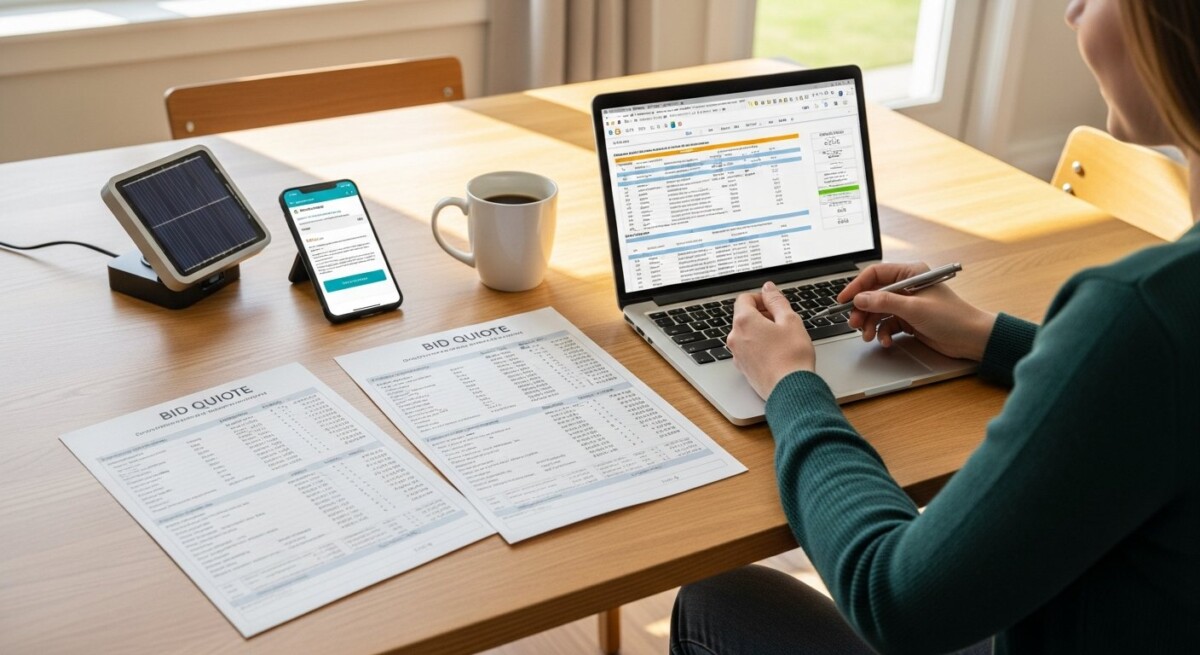
Your payback calculation is a powerful tool for comparing solar quotes. When you receive quotes from multiple installers, ask each one to provide their payback analysis with all assumptions clearly stated. Compare the assumptions side by side. If one installer assumes a 4 percent annual rate escalation and another uses 2 percent, the first will show a shorter payback. You need to standardize the assumptions to make a fair comparison.
Look for an installer that offers transparent pricing and a realistic payback estimate. Be cautious of companies that promise extremely short payback periods without supporting data. A payback period of 4 years sounds great, but it may rely on unrealistic rate escalation or production numbers. A reputable installer will walk you through their calculation and explain each variable. Use the payback period as one of several factors in your decision, alongside warranty, equipment quality, and customer reviews.
Improving Your Solar Payback Period
If your initial payback calculation shows a period longer than you would like, there are ways to improve it. Increasing your system’s self-consumption is one of the most effective strategies. If you can shift your electricity usage to daytime hours when your panels are producing, you buy less power from the grid and save more money. Running your pool pump, dishwasher, and laundry during the day can make a noticeable difference.
Adding battery storage can also improve your payback in areas with time-of-use rates. A battery allows you to store cheap solar power and use it during expensive peak hours, avoiding high utility rates. However, batteries add cost, so the net effect on payback depends on your rate structure. Finally, improving your home’s energy efficiency before going solar reduces the size of the system you need. Better insulation, efficient appliances, and LED lighting lower your overall electricity use, meaning a smaller solar system can cover your needs. This reduces upfront cost and shortens your payback period.
Beyond the Payback Period: Total Lifetime Value
While the payback period is important, it is not the only metric to consider. The total lifetime value of your solar system matters even more. After your system pays for itself, you still have 15 to 20 years of free electricity. Over 25 years, a well-designed system can save you $30,000 to $80,000 depending on your location and electricity rates. This long-term savings is the real financial benefit of solar.
Additionally, solar panels increase your home’s property value. Studies from Zillow and Lawrence Berkeley National Laboratory show that homes with solar sell for 4 to 6 percent more than comparable homes without solar. This premium can offset a significant portion of your initial investment if you sell before the payback period ends. When you combine energy savings, tax incentives, and increased home value, the total financial picture is often much better than the payback period alone suggests.
Understanding what is solar payback calculation gives you the confidence to evaluate solar quotes, choose the right financing, and make a smart investment. The payback period is not just a number. It is a roadmap that shows you when your investment starts delivering pure profit. For personalized quotes and a detailed payback analysis tailored to your home, visit FreeSolarPowerQuotes.com to connect with trusted local installers.