
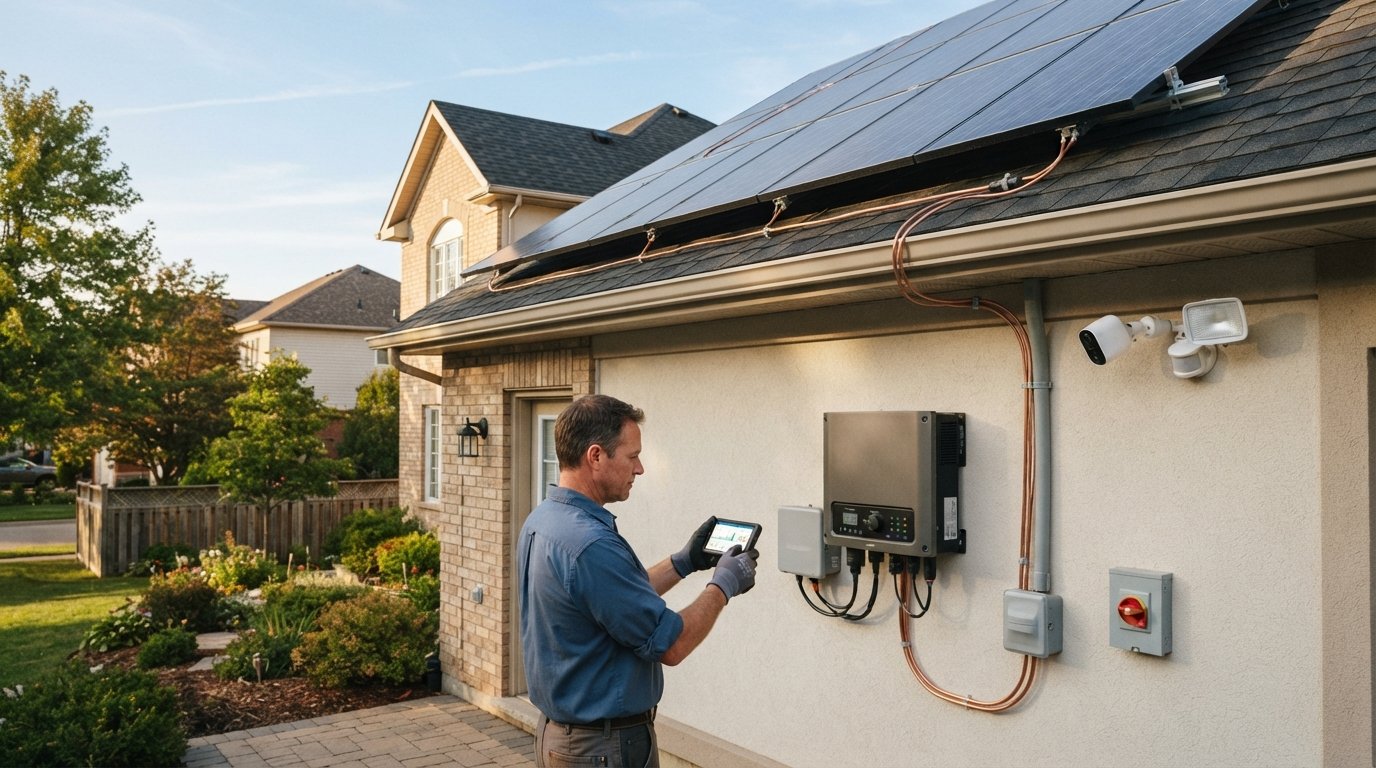
Solar Panel Theft and Vandalism Prevention for Homeowners
Protect your solar investment from theft and vandalism with practical hardware, monitoring, and insurance tips. Call (833)-793-7166 for expert guidance.

Learn more about Solar Panel Installation and Repair for guides, costs, and what to expect.
Compare Solar Panel Installation and Repair Pros Near You

Enter your ZIP code to compare top-rated local professionals and request free quotes.
Your solar array represents a significant investment, often tens of thousands of dollars, and it sits exposed on your roof or in your yard day and night. While solar panels have no resale value to a typical thief, the components around them do. Copper wiring, inverters, and even the aluminum framing can be tempting targets for scrap metal thieves, and vandalism remains a real concern in certain neighborhoods. The good news is that a combination of smart hardware choices, monitoring technology, and basic property management can dramatically reduce your risk. This guide walks you through exactly what criminals target, where your system is most vulnerable, and the practical steps you can take to protect your solar investment without breaking the bank.
What Thieves Actually Target on a Solar System
Understanding the criminal mindset is the first step toward prevention. Most solar theft is not about the panels themselves. Modern photovoltaic modules are difficult to remove without specialized tools, and they carry serial numbers that make resale traceable. Instead, thieves focus on the components that are easy to detach and quick to convert into cash at a scrap yard or on the secondary market. The most commonly stolen items are copper grounding wires, bare copper conductors, and the interconnect cables that run between panels. Inverters, especially string inverters mounted on exterior walls, are also prime targets because they contain copper windings and valuable electronic components. In some cases, thieves have even stripped aluminum mounting rails and framing.
Knowing what is at risk helps you prioritize your security spending. For example, if your inverter is mounted on the side of your house near a fence line, that is a far more attractive target than panels on a steep roof. Similarly, ground-mounted systems with exposed wiring are inherently more vulnerable than roof-mounted arrays with concealed conduit. The following list summarizes the most targeted components and why they attract thieves:
- Copper wiring and grounding conductors: High scrap value, easy to cut and remove quickly.
- Inverters: Contain copper and electronics, often mounted at ground level for easy access.
- Aluminum mounting rails and framing: Scrap metal value, though removal is more labor-intensive.
- Solar panels themselves: Rarely stolen due to size and traceability, but occasionally taken for off-grid use or resale in unregulated markets.
Once you understand that copper is the primary motivator, you can design your security strategy around protecting wiring and inverter access points. This is especially important for ground-mount systems, which we will examine next.
Ground-Mount vs. Roof-Mount: Where Your System Is Most Vulnerable
Roof-mounted solar arrays benefit from natural elevation and limited access. A thief would need a ladder, time, and a certain level of brazenness to climb onto a roof and start cutting wires. That does not make roof mounts immune, but the risk is generally lower than for ground-mounted systems. Ground mounts, by contrast, sit at eye level and often have exposed conduit, junction boxes, and inverters that can be tampered with in seconds. If your ground mount is located far from the house or behind a shed, it becomes an even easier target because neighbors and passersby are less likely to notice suspicious activity.
The physical weaknesses of each configuration dictate different prevention strategies. For roof mounts, the main concerns are ladder access and gutter proximity. A thief can lean a ladder against the gutter and reach the array in minutes. For ground mounts, the entire system is accessible from the yard, and wiring often runs along the ground or through shallow trenches that can be dug up. The table below summarizes the relative risk and the most effective countermeasures for each type.
- Roof-mount weaknesses: Ladder access, visible wiring on the roof plane, inverters mounted on exterior walls near the ground.
- Ground-mount weaknesses: Exposed conduit, easy access to inverters and wiring, remote locations with poor visibility.
- Shared weaknesses: Lack of lighting, no alarm system, unsecured fencing, and no monitoring alerts.
Regardless of your mounting type, the goal is to make your system harder to access and easier to monitor. That leads us to the hardware and technology solutions that form the backbone of any solid prevention plan.
Anti-Theft Hardware, Fasteners, and Monitoring Alerts
Physical deterrents are your first line of defense. Specialized anti-theft fasteners, such as tamper-resistant screws and bolt locks, replace standard hardware and require unique tools to remove. These are inexpensive and can be installed on mounting rails, junction boxes, and inverter enclosures. For ground mounts, consider installing a locking metal enclosure around the inverter and wiring, or running conduit through rigid metal rather than PVC. Cable locks and wire mesh can also secure exposed conductors. The key is to increase the time and effort required for a thief to succeed, because most criminals will abandon a target if the job takes too long or makes too much noise.
Monitoring technology is equally important. Many modern solar systems come with monitoring apps that alert you to sudden drops in production, which could indicate stolen panels or cut wiring. However, production monitoring alone may not catch a theft in progress. Add a dedicated security camera with motion alerts pointed at your array, or a simple driveway alarm that triggers when someone approaches the equipment. For ground mounts, a battery-powered motion sensor light is a cheap and effective deterrent. If you have a home security system, ask your provider about adding a zone for the solar equipment area. The following numbered list outlines a step-by-step approach to hardening your system:
- Replace standard mounting bolts with tamper-resistant fasteners on all accessible components.
- Enclose inverters and wiring in locked metal cabinets or rigid conduit.
- Install motion-activated lighting and a camera covering the array and inverter location.
- Enable production monitoring alerts on your solar app and check them regularly.
- Add a loud alarm or siren to your security system that triggers on unauthorized access to the equipment area.
These measures work best when combined with a broader neighborhood strategy, which we will cover later. But first, it is important to understand how your insurance policy responds to theft and vandalism, because even the best prevention cannot guarantee zero risk.
Insurance Coverage for Solar Theft and Vandalism
Most homeowners insurance policies cover solar panels and related equipment as part of the dwelling structure, but the details matter. Standard HO-3 policies typically include theft and vandalism coverage for attached structures and personal property, but there may be limits or exclusions for equipment mounted on the ground or used for business purposes. If your solar system is leased or financed through a power purchase agreement (PPA), the equipment may be insured by the leasing company, but you should verify who is responsible for filing claims and paying deductibles. For owned systems, review your policy declarations page to confirm that the solar array is included in your dwelling coverage limit. Some insurers require a separate rider or endorsement for ground-mounted systems or for systems that exceed a certain value.
When filing a claim, documentation is critical. Keep copies of your purchase receipts, installation contracts, and serial numbers for all major components. Take clear photographs of the system from multiple angles, including close-ups of inverters and wiring, and store them in the cloud. If a theft occurs, file a police report immediately and notify your insurer. Be prepared to provide proof of ownership and value. Also ask your agent whether your policy covers the cost of temporary repairs, such as securing exposed wiring after a theft, and whether there is a separate deductible for theft claims. Understanding these details before an incident occurs can save you time and frustration. For a deeper look at how to evaluate the overall financial performance of your system, including payback and return on investment, see our guide on solar system investment analysis for homeowners.
Finally, consider whether your insurance company offers discounts for security measures such as alarms or cameras. Some do, and those discounts can offset the cost of the equipment. If you are shopping for a new policy, ask specifically about solar coverage and compare quotes from multiple carriers. The goal is to have a clear understanding of what is covered, what is excluded, and what steps you need to take to file a successful claim.
Neighborhood and Lighting Strategies That Reduce Risk
Security is not just about your own property. Thieves often avoid well-lit, visible areas with active neighbors. Simple environmental design principles can make a big difference. Start with lighting: install motion-activated floodlights or smart bulbs that can be scheduled to turn on at dusk and off at dawn. Keep shrubs and trees trimmed back so that your solar array and inverter are visible from the street or from a neighbor's window. A clear line of sight is a powerful deterrent. If you have a ground mount, consider planting low, thorny bushes around the perimeter (but keep them away from the panels to avoid shading). A fence with a locked gate adds another layer of physical security, especially if it is tall enough to prevent easy climbing.
Neighborhood cooperation is another underrated tool. Join or start a neighborhood watch program and share information about suspicious activity. Something as simple as a shared group chat can alert everyone when a strange vehicle is circling the block. If you are friendly with your neighbors, ask them to keep an eye on your property when you are away, and offer to do the same for them. For homeowners in higher-risk areas, a visible security camera sign or a sticker from a monitored alarm company can be enough to make a thief move on to an easier target. Remember that most solar theft is opportunistic, so anything that makes your system look like a hassle is valuable.
You can also work with your solar installer to design security into the system from the start. Ask about conduit routing that keeps wiring inside walls or attic spaces rather than exposed on exterior surfaces. Request inverters mounted in a locked garage or utility room when possible. And ask for recommendations on local monitoring services or alarm companies that integrate with solar systems. For general information on solar technology and industry best practices, you can visit SolarEnergy.ai, a comprehensive platform with guides and tools for homeowners. By combining physical hardening, smart monitoring, insurance awareness, and community vigilance, you can significantly reduce the chances that your solar investment becomes a target. The effort is modest compared to the cost of replacing stolen equipment or repairing vandalized wiring, and the peace of mind is well worth it.