
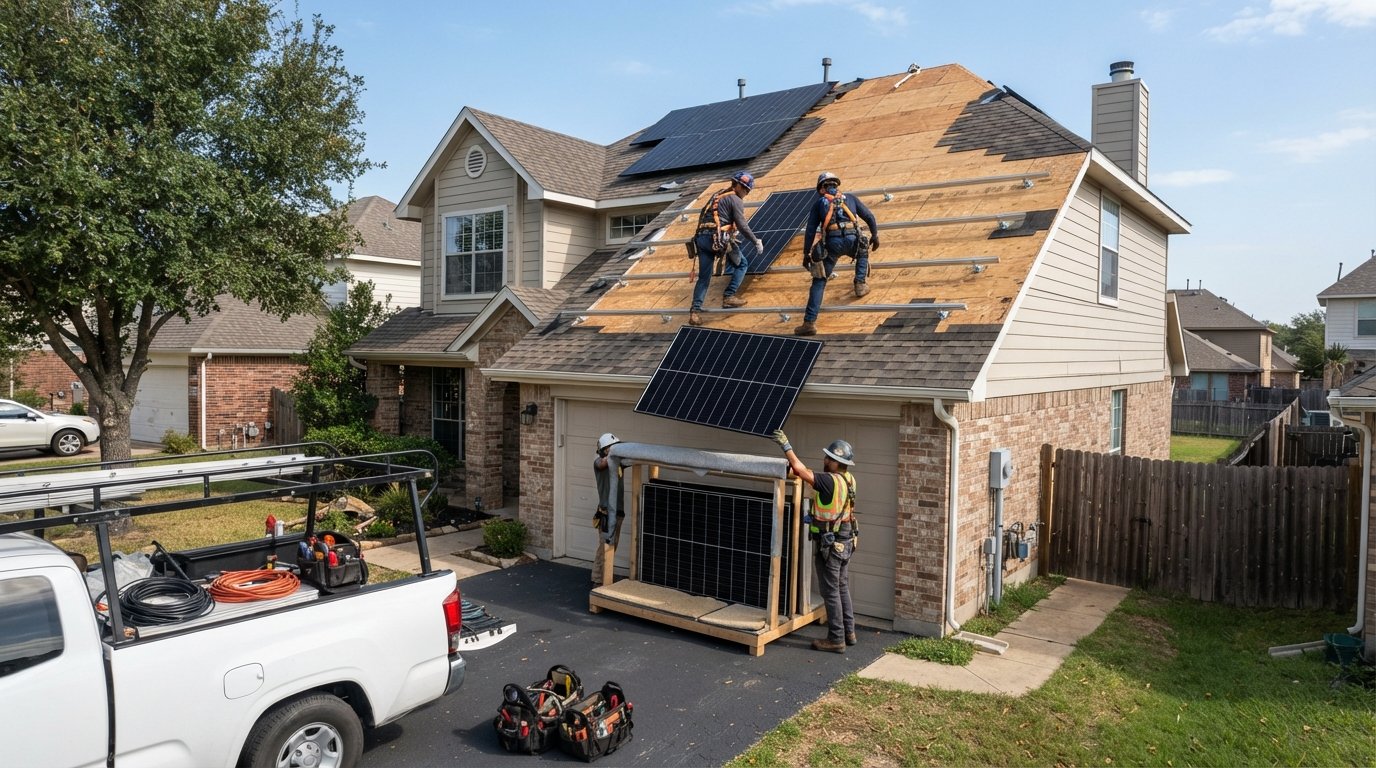
Solar Panel Removal and Reinstall Cost for Roof Replacement
Solar panel removal and reinstall for a roof replacement typically costs $1,500 to $6,000. For expert guidance, call (833)-793-7166 today.

Learn more about Solar Panel Installation and Repair for guides, costs, and what to expect.
Compare Solar Panel Installation and Repair Pros Near You

Enter your ZIP code to compare top-rated local professionals and request free quotes.
Your roof needs replacing, but your solar array is sitting right on top of it. Now you are facing a question most solar shoppers never think about: how much does it cost to remove and reinstall solar panels for roof replacement? The answer typically lands between $1,500 and $6,000, depending on system size, roof type, and who does the work. That range can feel frustratingly wide, so this guide breaks down the real numbers, the warranty traps, and the sequencing decisions that protect your investment. Whether you are planning ahead or already staring at a leaking ceiling, understanding these costs now helps you avoid surprise bills and costly mistakes later.
Typical Disconnect and Reset Costs by System Size and Roof Type
Solar panel removal and reinstallation is not a single line item. It is a bundle of labor, permits, and sometimes structural work. Most homeowners pay a base fee for disconnecting the system, a per-panel fee for removal and storage, and another per-panel fee for reinstallation and recommissioning. Add permit fees, inspection costs, and possible electrical upgrades, and the total climbs quickly. The table below shows realistic ranges for common residential system sizes, assuming a standard asphalt shingle roof and a single-story home.
- Small system (10 to 15 panels, roughly 4 kW): $1,500 to $2,500 total.
- Mid-size system (16 to 25 panels, roughly 6 to 8 kW): $2,500 to $4,000 total.
- Large system (26 to 40 panels, roughly 10 to 12 kW): $4,000 to $6,000 total.
- Complex roofs (tile, slate, metal standing seam): add 20 to 50 percent to the figures above.
Roof type matters as much as system size. Asphalt shingles are forgiving and fast to work with. Clay tile and slate crack easily, so crews budget extra time and replacement tile. Standing seam metal roofs often require specialized clamps, and some installers will not touch them without a manufacturer-certified crew. Flat roofs with ballasted arrays are usually cheaper to clear because there are fewer penetrations, but they may need a membrane inspection afterward. If your home has multiple roof planes, a steep pitch, or limited ladder access, expect the higher end of every range.
Geography plays a role too. Labor rates in dense metro areas run higher than in rural markets, and some states require a new electrical permit and inspection even when the system is simply being reset. Always ask for a line-item quote that separates removal, storage, reinstallation, permit fees, and any roof repair work. A single lump sum makes it impossible to compare bids or spot padded charges.
Why Removing Panels May Affect Roof and Workmanship Warranties
This is the part most homeowners discover too late. Your roof warranty and your solar warranty are separate contracts, and moving panels can void or complicate both. Most asphalt shingle manufacturers void or prorate coverage when a third party penetrates the roof outside the original installation. If your solar installer created the penetrations, the roofer may argue the roof warranty does not cover leaks around those mounts. Meanwhile, the solar installer may argue that the roofer's work disturbed the flashing and caused the problem. You can end up in a finger-pointing loop with no one accepting responsibility.
Workmanship warranties are even more fragile. Many solar contracts include a 10 to 25 year workmanship warranty that covers the mounting and flashing. That warranty often becomes void if anyone other than the original installer removes and resets the array. The same logic applies to the roof: if a solar crew touches the shingles, the roofer's workmanship warranty may not apply to that section. Before anyone picks up a wrench, get written confirmation from both the roofer and the solar company about what remains covered after the work.
There is also the equipment warranty angle. Panels themselves rarely care about being removed, but inverters, optimizers, and racking components can be damaged during handling. If a microinverter is dropped or a rail is bent, the manufacturer may deny a claim because the damage was caused by improper handling rather than a defect. Document the condition of every component before removal with photos and serial numbers. That paper trail protects you if a warranty claim arises months later.
Sequencing Questions: Roof First, Solar First, or Coordinated Install
Timing is where homeowners lose the most money. The general rule is simple: if the roof is near the end of its life, replace it before installing solar, or replace it now if solar is already up. Installing panels on a roof that has five years left means paying for removal and reinstallation sooner than necessary. But once solar is already installed, the sequencing question becomes more nuanced. You have three basic options, and each has tradeoffs.
- Roof first, solar second (remove and reset): The solar crew removes the array, the roofer replaces the roof, and the solar crew reinstalls. This is the cleanest approach for roof quality but requires two mobilizations and careful coordination.
- Solar first, roof second (roof under and around panels): The roofer works around the array, replacing shingles up to the mounting points. This is cheaper but often leaves old shingles under the panels and can compromise the new roof's integrity.
- Coordinated single mobilization: The roofer and solar crew work on the same days, with solar removed in the morning and reset after the roof is finished. This minimizes downtime but requires both companies to agree on scheduling and liability.
Coordinated mobilization is usually the best value when both companies are willing. It reduces storage time, limits the window when your system is offline, and keeps liability clear because each crew documents its own work. However, it only works if the roofer and solar installer have worked together before or are willing to sign a shared scope of work. If they will not coordinate, choose roof first and solar second. Never let a roofer shingle around an active array unless the panels are being replaced anyway, because the resulting roof is difficult to inspect and repair.
One more sequencing note: if you are also adding battery storage or upgrading your electrical panel, do that work during the same window. Having the solar crew on site twice is expensive, so bundle electrical upgrades with the reinstall to save on mobilization costs.
Whether the Original Installer or a Roofer Should Do the Work
Homeowners often assume the original solar installer is the obvious choice. Sometimes that is true, but not always. The original installer already knows your system layout, has the monitoring login, and may honor the workmanship warranty if they do the removal and reset. That continuity is valuable. But many solar companies have gone out of business or no longer service residential systems, and some charge premium rates for removal work because it is not their core business. Get a quote from them first, but do not assume it will be the cheapest or the best.
A roofing company can handle removal and reinstallation only if they have solar experience and proper licensing. In many states, disconnecting and reconnecting a solar array requires an electrical license, and some roofers subcontract that portion. Ask directly who will perform the electrical work and whether they carry liability insurance that covers solar equipment. A roofer who has never worked with solar may damage mounting hardware or void the panel warranty. On the other hand, a roofer who specializes in solar roofs can sometimes offer a bundled price that is lower than hiring two separate companies.
The best approach is to get three quotes: one from the original installer, one from a solar-savvy roofing company, and one from an independent solar service provider. Compare not just price but also what each quote includes: permits, inspections, storage, monitoring reconnection, and warranty language. If you are still in the shopping phase and wondering whether you could handle parts of the work yourself, our guide on installing solar panels yourself explains where DIY ends and licensed work begins. For most roof replacement projects, the electrical disconnect and reconnect should stay with a licensed professional.
Contract Clauses to Confirm Responsibility Before Any Removal
Before a single panel comes off, your contract should answer every responsibility question in writing. Verbal assurances disappear when a leak appears or a microinverter fails. The clauses below are the ones that matter most, and you should insist on seeing them in the final agreement rather than a proposal email.
- Scope of work: Exactly which components are removed (panels, racking, flashing, wiring) and which stay in place.
- Warranty preservation: Written confirmation that the roof warranty and solar workmanship warranty remain valid after the work, or a clear statement of what is excluded.
- Damage liability: Who pays for broken panels, cracked tile, or damaged inverters, and how disputes are resolved.
- Permits and inspections: Who pulls the electrical and building permits, who pays the fees, and who schedules the final inspection.
- Storage and security: Where panels are stored during the roof work and who insures them while they are off the roof.
- Timeline and reconnection: A defined window for reinstallation and a penalty or remedy if the system stays offline longer than agreed.
Pay special attention to the warranty preservation clause. If the solar company will not put it in writing, treat that as a red flag. The same goes for damage liability: a contract that is silent on who pays for broken equipment is a contract that will cost you money. Finally, confirm that the reinstall includes monitoring setup and a performance test. A system that is physically back on the roof but not producing is not finished.
If you want independent help comparing installer quotes and understanding the full financial picture, resources like NewSolarQuotes offer educational guides and cost calculators that can make the bidding process more transparent. FreeSolarPowerQuotes also connects homeowners with vetted local providers for no-obligation quotes, which is useful when you want multiple removal and reinstall bids without cold-calling every company in town.
Factors That Push the Price Higher or Lower
Two homeowners with identical system sizes can pay very different prices. The variables below explain most of the gap, and knowing them helps you predict your own number before the quotes arrive.
Roof accessibility and height. A single-story ranch with a gentle pitch is fast work. A three-story colonial with a steep roof, dormers, and landscaping obstacles requires more labor hours, more safety equipment, and sometimes a crane or lift. Each of those adds cost. Panel count and age. More panels mean more per-panel fees, and older systems sometimes have seized mounting hardware that takes extra time to free. Electrical complexity. Systems with multiple inverters, rapid shutdown devices, or battery backup take longer to disconnect and recommission. Permit jurisdiction. Some cities require a new electrical permit and inspection for any disconnect, while others treat it as minor maintenance. Season and scheduling. Roofing season is busy, and crews charge more when demand is high. Booking in the shoulder months can sometimes save 10 to 15 percent.
On the lower side, a small array on a simple roof with an original installer who still has your records is the best-case scenario. On the higher side, a large array on a tile roof with a defunct installer and a strict permitting department is the worst case. Most homeowners land somewhere in the middle, which is why the $1,500 to $6,000 range holds up across the country.
How to Plan and Budget for the Project
Start by getting a roof inspection and a solar system audit before you commit to anything. The roofer tells you how much life the roof has left and where the problem areas are. The solar technician confirms the system is functioning and documents its condition. With both reports in hand, you can decide whether to remove and reset now or wait. If the roof has more than five years of life left, waiting may be financially smarter, provided the leak risk is low.
Next, build a budget that includes a contingency of 10 to 20 percent. Hidden costs appear often: a rotted deck board under a mount, a failed flashing, a permit fee you did not expect, or a monitoring gateway that needs replacing after reconnection. A contingency fund turns a stressful surprise into a minor annoyance. Also confirm your homeowner's insurance position. Some policies cover roof damage that requires solar removal, but many do not cover the removal itself. A quick call to your agent clarifies what is covered before you file a claim.
Finally, schedule the work in the right order and get everything in writing. Confirm the removal date, the roof installation window, and the reinstall date in a single calendar shared by both companies. Keep photos of every stage, save all receipts, and store the warranty documents together. When the project is done, verify the system's production against its pre-removal baseline. If output has dropped, you have documentation to support a service call. Handling these steps carefully is what separates a smooth roof replacement from a months-long dispute over who broke what.
The cost to remove and reinstall solar panels for roof replacement is real, but it is manageable when you plan ahead. Get multiple quotes, protect your warranties in writing, and coordinate the roof and solar crews rather than leaving the sequence to chance. A few hours of preparation now can save thousands of dollars and a great deal of frustration later.