
Solar Panel Soiling Loss and Cleaning ROI in Dusty Climates
Solar panel soiling loss and cleaning ROI in dusty climates explained. Call (833)-793-7166 to find local solar pros and protect your savings.

By Liam Parker
Learn more about Solar Panel Cleaning for guides, costs, and what to expect.
Compare Solar Panel Cleaning Pros Near You

Enter your ZIP code to compare top-rated local professionals and request free quotes.
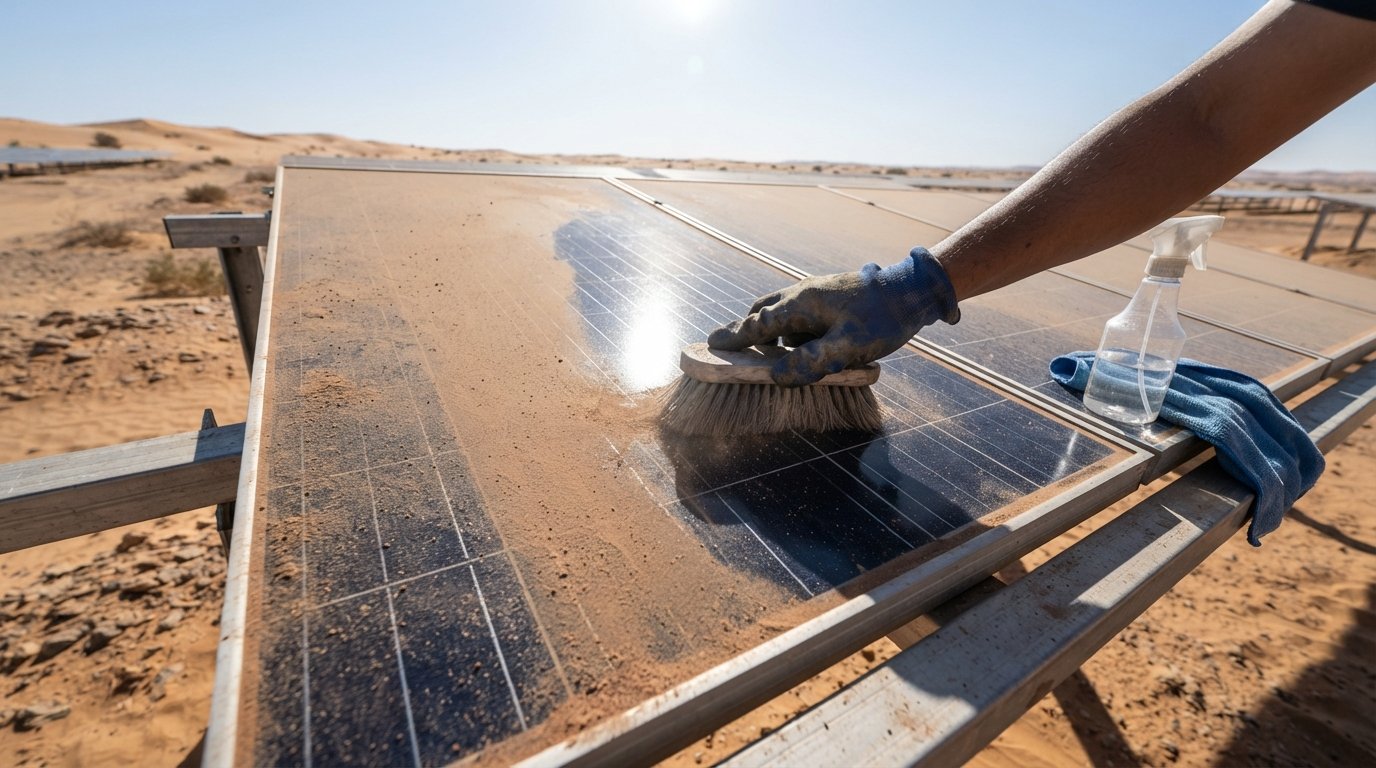
Dust, pollen, and agricultural debris can silently erode your solar investment. In dusty climates, soiling loss can slash production by 15% to 30% or more between cleanings, turning a high-performing array into a underperformer. But does paying for cleaning actually pay you back? The answer depends on your local soiling rate, electricity prices, and cleaning costs. This guide breaks down the real numbers behind solar panel soiling loss and cleaning ROI in dusty climates, so you can decide when to clean, when to wait, and how to protect your returns.
How Much Production Does Soiling Really Steal?
Soiling loss varies widely by location, season, and weather patterns. In dry, dusty regions like the Southwest, panels can lose 0.5% to 1% of output per day without rain, accumulating to 20% or more over a month. Agricultural areas face additional challenges from pollen, dust from tilling, and bird droppings. Coastal areas may see salt film, while urban environments contend with soot and exhaust residue.
Seasonal factors matter too. Spring pollen bursts can cause rapid soiling, while summer dust storms deposit thick layers in hours. Winter often brings less dust but more bird activity and occasional snow. Understanding your local pattern is the first step toward calculating cleaning ROI. The table below shows typical soiling loss ranges by climate type, based on industry studies and field data.
- Arid desert: 1% to 2% loss per week without rain; up to 30% monthly in extreme dust.
- Agricultural: 0.5% to 1.5% per week during tilling and harvest; pollen adds seasonal spikes.
- Urban/industrial: 0.3% to 0.8% per week from soot and exhaust; rain provides partial cleaning.
- Coastal: 0.2% to 0.5% per week from salt and moisture; corrosion risk if not rinsed.
These percentages translate directly to lost kilowatt-hours and lost savings. For a 10 kW system in a desert climate producing 1,600 kWh per month, a 20% soiling loss means 320 kWh lost, worth $40 to $60 depending on local rates. Over a year, that adds up to hundreds of dollars, making the cleaning decision financially significant.
When Cleaning Costs More Than the Energy Recovered
Cleaning is not free, and not every cleaning pays for itself. Professional cleaning costs typically range from $150 to $400 for a residential array, depending on size, access, and location. DIY cleaning costs less in cash but requires time, water, and safety precautions. To determine ROI, compare the cost of cleaning to the value of energy recovered.
Suppose your system loses 15% of production due to soiling, and you generate 1,200 kWh monthly at $0.15 per kWh. That is 180 kWh lost, worth $27 per month. If cleaning costs $200, it takes over seven months to break even, not counting the fact that soiling would continue accumulating. In this scenario, cleaning only makes sense if the soiling rate is higher or electricity prices are steeper.
Conversely, in a dusty desert with 25% loss and $0.25 per kWh, lost production could be worth $75 per month. A $200 cleaning pays back in under three months, delivering strong ROI. The key is to calculate your own numbers using a simple framework:
- Estimate your daily soiling rate (start with 0.5% per day for dusty areas, adjust based on observations).
- Multiply by days since last cleaning or rain to get current loss percentage.
- Calculate lost kWh by multiplying system monthly output by loss percentage.
- Multiply lost kWh by your electricity rate to get lost revenue.
- Compare lost revenue to cleaning cost; if payback is under three to four months, cleaning is likely worthwhile.
Keep in mind that cleaning too frequently wastes money, while cleaning too rarely sacrifices production. Monitoring is the key to finding the sweet spot.
Monitoring Production to Detect Soiling Versus Equipment Issues
Not all production drops are caused by dirt. Inverter faults, shading, and wiring problems can mimic soiling loss. To avoid unnecessary cleaning or missed repairs, monitor your system's performance regularly. Most modern inverters and monitoring platforms provide daily or hourly production data, allowing you to spot trends.
Look for gradual declines that correlate with dry spells, or sudden drops after dust storms. If production falls sharply and does not recover after rain, soiling may not be the culprit. In our guide on solar panel failure and protection, we explain how to distinguish equipment faults from environmental factors. Comparing your system's output to a nearby reference system or to historical weather data can also help isolate soiling.
Some monitoring systems offer soiling alerts or performance ratios that adjust for weather. If yours does not, a simple manual log of production and cleaning dates can reveal patterns. After a few months, you will know how quickly your panels soil and how much production you recover after cleaning, giving you a data-driven basis for scheduling.
DIY Cleaning Risks and Professional Service Pricing
Cleaning solar panels seems straightforward, but doing it wrong can void warranties or damage panels. Hard water spots, abrasive brushes, and high-pressure washers can scratch glass or degrade anti-reflective coatings. Climbing on roofs poses safety risks, especially for steep or fragile roofs. Moreover, using excessive water can waste a precious resource in arid climates.
Professional cleaning services mitigate these risks with proper equipment, deionized water, and safety protocols. They also know local soiling patterns and can recommend optimal cleaning frequency. Pricing varies by region and system size, but expect $150 to $400 for a typical residential system. Some companies offer subscription plans with discounts for regular service. Before hiring, verify insurance and ask about their process for avoiding scratches and water waste.
For those who prefer DIY, use a soft brush or squeegee with a mild detergent, rinse with deionized water if possible, and work early morning or late afternoon to avoid rapid evaporation. Never use abrasive sponges or high-pressure nozzles. And always prioritize safety: if your roof is steep or high, hire a pro. The savings from DIY are not worth a fall.
Rain, Tilt Angle, and Pollen: Factors That Change Cleaning Frequency
Rain is nature's cleaner, but its effectiveness depends on intensity and frequency. Light drizzle can actually make soiling worse by creating muddy streaks, while heavy rain washes away accumulated dust. In regions with regular heavy rainfall, cleaning may be needed only once or twice a year. In arid climates with infrequent rain, manual cleaning becomes essential.
Tilt angle also plays a role. Steeper panels (30 degrees or more) shed dust and pollen more effectively than flat-mounted arrays. If your panels are at a low tilt, expect faster soiling and more frequent cleaning. Pollen season adds another layer: sticky pollen binds to glass and requires more than rain to remove. During peak pollen, consider increasing cleaning frequency or installing a protective coating.
Bird droppings are a special case: they can create hot spots and permanent damage if left too long. Inspect panels regularly and spot-clean droppings promptly, even if overall soiling is low. A proactive approach to these factors helps you avoid over-cleaning while protecting your investment.
Balancing Cleaning Costs and Solar ROI
Ultimately, the decision to clean is a financial one. Solar panel soiling loss and cleaning ROI in dusty climates hinge on your specific conditions: soiling rate, electricity price, cleaning cost, and system size. Use monitoring data to track performance, calculate lost revenue, and compare it to cleaning quotes. In many dusty areas, cleaning once or twice a year delivers a solid return, while in extreme dust, quarterly cleaning may be justified.
Remember that soiling also affects panel longevity and warranty compliance. Some manufacturers require periodic cleaning to maintain warranty coverage, so check your documentation. And if you are planning a move, consider how solar panel condition affects home value: resources like Moving.Homes offer practical guidance for homeowners navigating relocation, including tips for transferring solar agreements and maintaining system performance.
By combining production monitoring, cost analysis, and a bit of local knowledge, you can maximize your solar savings without wasting money on unnecessary cleaning. For personalized advice and free quotes from local solar professionals, reach out to FreeSolarPowerQuotes. Our network of vetted installers can help you assess soiling loss and design a cleaning schedule that protects your ROI.