
Solar Panel Roof Warranty and Penetration Leak Coverage Explained
Understand solar roof warranties and leak coverage to avoid surprise bills. Call (833)-793-7166 for expert guidance on protecting your home.

By Leo Owens
Learn more about Solar Panel Installation and Repair for guides, costs, and what to expect.
Compare Solar Panel Installation and Repair Pros Near You

Enter your ZIP code to compare top-rated local professionals and request free quotes.
When you install solar panels on your roof, you are adding a complex, long-term energy system to one of the most critical and expensive components of your home. While the benefits of clean energy and lower bills are clear, many homeowners pause at a nagging question: will putting holes in my roof for solar mounting void my roofing warranty? The short answer is that it depends on the age of your roof, the terms of your warranty, and, most importantly, how the installation is performed. Understanding the intersection of solar panel roof warranty and penetration leak coverage explained in plain terms is essential before you sign any contract. This guide will walk you through what typical roof warranties say about penetrations, how installer workmanship warranties differ from manufacturer coverage, the flashing methods that protect your home, and the exact steps to take if a leak appears after your solar panels are installed. By the end, you will know how to protect your investment and your peace of mind.
What Typical Roof Warranties Say About Penetrations and Modifications
Most asphalt shingle roof warranties, which are the most common type in the United States, contain clauses that address alterations and penetrations. Manufacturers know that homeowners add vents, skylights, and now solar arrays, so they have developed language to limit their liability when someone else creates a hole in their product. Typically, a manufacturer's warranty covers defects in materials, such as premature cracking, curling, or granule loss. It does not cover damage caused by improper installation of other components, including solar mounting hardware. Many warranties explicitly state that any penetration not performed by a certified contractor using approved flashing methods may void the warranty for the affected area, or in some cases, the entire roof.
However, the situation is not as dire as it might first appear. Most major roofing manufacturers, including GAF, CertainTeed, and Owens Corning, have specific provisions for solar installations. Some offer enhanced warranties if the solar installer is also a certified roofing contractor. Others require that the solar mounting system use flashing that integrates with the roofing material according to the manufacturer's specifications. The key takeaway is that a blanket statement like "solar voids your roof warranty" is an oversimplification. The real answer depends on the fine print of your specific warranty and the quality of the solar installation. Before any work begins, you should obtain a copy of your roof warranty and review the sections on alterations, penetrations, and exclusions.
If your roof is older or already near the end of its warranty period, many experts recommend replacing it before installing solar panels. This avoids the scenario where a future roof replacement requires temporarily removing and reinstalling the solar array, which adds significant cost. A new roof also gives you a clean slate for warranty coverage. When you are ready to compare solar quotes, look for installers who are knowledgeable about roofing warranties and who can provide documentation of their flashing methods. For those exploring community solar as an alternative to rooftop panels, our guide on community solar programs explained without rooftop panels offers a way to participate in solar without any roof penetrations at all. But if rooftop solar is your path, understanding the warranty landscape is your first line of defense.
Installer Workmanship Warranties Versus Manufacturer Roof Warranties
It is crucial to distinguish between two very different types of warranties: the manufacturer's roof warranty and the solar installer's workmanship warranty. The manufacturer's warranty covers the roofing materials themselves. The installer's workmanship warranty covers the quality of the installation labor, including how well the solar mounting and flashing are integrated with your roof. A typical solar installer offers a workmanship warranty that ranges from 5 to 25 years, with 10 years being common. This warranty should explicitly cover any leaks or damage caused by the installation process. Without a strong workmanship warranty, you could be left paying for repairs if a penetration leaks.
Manufacturer roof warranties, on the other hand, are provided by the roofing material company. They often have exclusions for damage caused by third-party modifications. This is why the solar installer's warranty is so important: it fills the gap. When you review a solar contract, look for a clear workmanship warranty that covers roof penetrations. The best installers will also provide a penetration warranty that specifically guarantees the flashing and seals for the life of the solar system, or at least 20 years. Some roofing manufacturers offer extended warranties if the solar installer is certified by them. For example, certain shingle brands offer a 50-year warranty on the shingles and a 25-year warranty on the solar mounting system if installed by a certified professional.
To protect yourself, ask for the following in writing before signing a solar contract: the length and terms of the workmanship warranty, whether it covers roof penetrations and leaks, and whether the installer will coordinate with your roofing manufacturer to maintain warranty validity. A reputable solar company will be transparent about these details and may even offer a "roof warranty saver" program. Remember that the manufacturer's roof warranty is unlikely to cover any leak related to solar penetrations, so the installer's warranty is your primary safety net. Always verify that the installer is licensed and insured, and check reviews for how they handle warranty claims. For homeowners seeking qualified contractors for roof repairs or solar installations, resources like Homes.Contractors provide a directory of pre-vetted professionals, which can be a helpful starting point when comparing local options.
Flashing Methods That Protect Roof Warranty Coverage
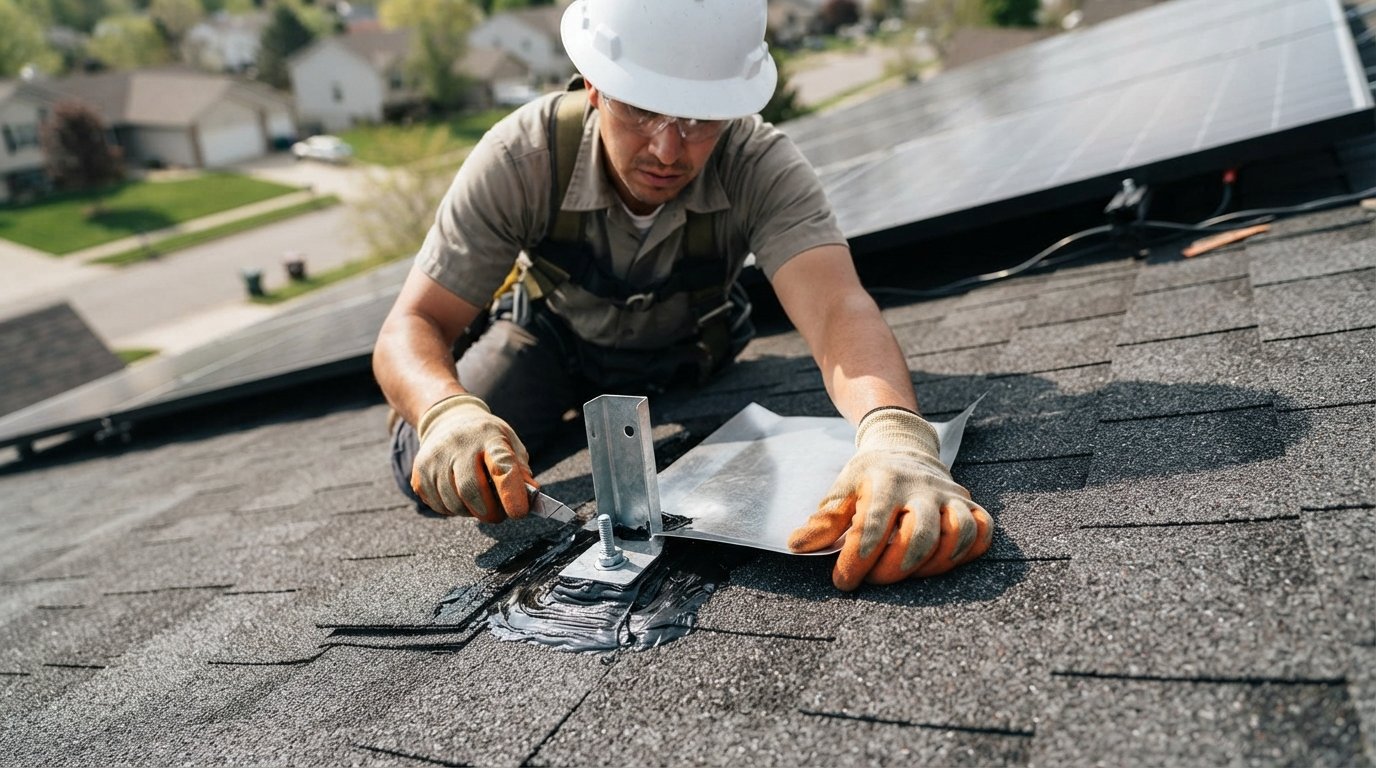
The single most important factor in preventing leaks and preserving your roof warranty is the flashing method used for the solar mounting brackets. Flashing is the metal or plastic component that seals the penetration where the mounting foot attaches to the roof. Poor flashing is the leading cause of solar-related roof leaks. There are several methods, but not all are created equal. The gold standard is a flashed mount that slides under the shingles and integrates with the roofing material, often called a "flashed L-foot" or a "double-flashed" mount. This method creates a shingle-over-flashing detail that sheds water exactly like the rest of the roof. In contrast, methods that rely solely on sealant (like lag bolts covered in caulk) are prone to failure over time as the sealant degrades from UV exposure and thermal cycling.
Here are the key flashing methods and their warranty implications:
- Flashed mounts with shingle integration: These are the preferred method by most roofing manufacturers. The flashing is woven into the shingle courses, and the mounting bracket sits on top. This method is often required to maintain the roof warranty and is the most leak-resistant.
- Chemical sealants only: Some installers simply drill a hole, insert a lag bolt, and cover it with sealant. This is a red flag for warranty coverage and long-term leak risk. Most roof manufacturers will not honor a warranty claim if the penetration was not flashed properly.
- Raised mounting systems (e.g., ballasted): These are common on flat commercial roofs but less so on residential pitched roofs. They avoid penetrations entirely but may not be suitable for all residential applications and can still affect warranty terms.
When evaluating a solar proposal, ask the installer to specify the flashing method they will use and whether it is approved by your roofing manufacturer. A professional installer will use flashing that is compatible with your roof type (asphalt shingle, tile, metal, or flat membrane) and will follow the manufacturer's installation instructions. They should also be able to show you examples of their work or provide references. Proper flashing not only protects your home from leaks but also helps ensure that your roof warranty remains intact for the areas not directly affected by the solar installation. If a leak does occur, the flashing is the first place to inspect.
What to Do If a Leak Appears After Installation
Discovering a leak after your solar panels are installed can be stressful, but a calm, systematic approach will help you resolve the issue and protect your warranty. The first step is to document everything. Take photos and videos of the leak, including the ceiling stain, the roof area near the solar array, and any visible damage. Note the date and time you first noticed the leak, and keep a record of any communication with the solar installer. Then, contact your solar installer immediately. Most workmanship warranties require you to notify them within a certain timeframe, and they will send a technician to inspect the array and flashing. Do not attempt to fix the leak yourself, as this could void the warranty.
If the installer is unresponsive or has gone out of business, you may need to contact the roofing manufacturer or a separate roofing contractor. Your homeowner's insurance may also cover the damage, but it is important to understand that insurance typically covers sudden damage, not long-term seepage. If the leak is clearly caused by the solar installation, the installer's workmanship warranty should cover the repair. In some cases, the manufacturer's roof warranty may also apply if the leak is due to a defect in the roofing material itself, but this is less common. Keep in mind that many solar contracts include an arbitration clause, so review your contract for dispute resolution procedures.
To strengthen your position, gather all project documentation: the signed contract, the workmanship warranty, the flashing specifications, and any inspection reports. If the installer is a member of a professional organization or has a certification from the roofing manufacturer, mention that in your communication. In extreme cases, you may need to file a complaint with your state's contractor licensing board or seek legal advice. The best defense against a prolonged leak battle is prevention: choose an installer with a strong workmanship warranty and a proven track record, and insist on proper flashing from the start. For homeowners who want to compare solar quotes from vetted installers, FreeSolarPowerQuotes offers a free service to connect you with local professionals who understand warranty requirements.
Documentation to Collect at Project Closeout
The project closeout is your last chance to ensure that your roof warranty and leak coverage are solid. Before the final payment, collect a complete documentation package from your solar installer. This package should include the following items:
- Signed contract and workmanship warranty: Make sure the warranty explicitly covers roof penetrations and leaks for a specified number of years.
- Flashing specifications and photos: Ask for detailed photos of the flashing installation before the panels were mounted. These photos are invaluable if a leak occurs later.
- Roof warranty documents: Obtain a copy of your original roof warranty and any endorsements from the manufacturer related to the solar installation.
- Permit and inspection records: Keep copies of the building permit and final inspection sign-off, which prove the work was done to code.
- Installer contact information: Ensure you have current phone numbers and email addresses for warranty claims.
In addition to the above, ask the installer to provide a written statement that the installation was performed in accordance with the roofing manufacturer's specifications. This can be a powerful tool if you need to file a warranty claim with the roof manufacturer. Some installers will also register the solar system with the manufacturer on your behalf, which may activate extended warranty coverage. Store all documents in a safe place, preferably both physically and digitally. If you sell your home, this documentation will be valuable to the buyer and can help maintain the value of your solar investment.
Finally, consider scheduling a professional roof inspection after the solar installation is complete. An independent roofer can verify that the flashing is correct and that no shingles were damaged during the install. This small investment can catch potential issues early and give you peace of mind. Remember that your roof is a long-term asset, and the solar array should enhance, not jeopardize, its integrity. By being proactive and informed, you can enjoy the benefits of solar energy without worrying about leaks or warranty surprises.
In summary, solar panel roof warranty and penetration leak coverage explained comes down to three pillars: understanding your existing roof warranty, choosing an installer with a strong workmanship warranty and proven flashing methods, and documenting everything. With the right preparation, you can protect both your roof and your renewable energy investment for decades to come.