
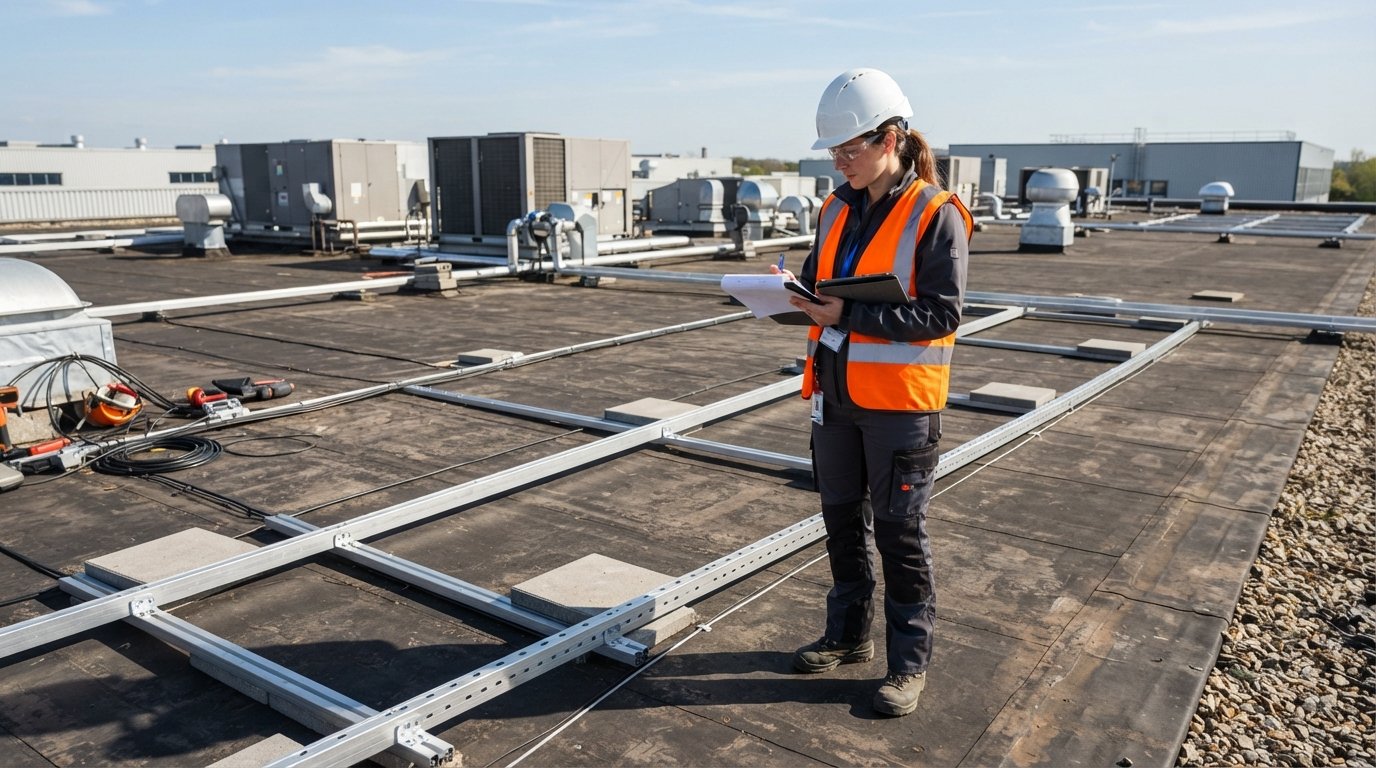
Commercial Solar Roof Structural Load Limits Assessment Guide
A commercial solar roof structural load limits assessment protects your building and budget. Call (833)-793-7166 to connect with trusted solar pros.

Learn more about Solar Panel Installation and Repair for guides, costs, and what to expect.
Compare Solar Panel Installation and Repair Pros Near You

Enter your ZIP code to compare top-rated local professionals and request free quotes.
Before you sign a commercial solar contract, the most important question is not about panel efficiency or inverter brand. It is whether your roof can safely carry the additional weight and withstand the wind forces that a photovoltaic array introduces. A commercial solar roof structural load limits assessment answers that question with engineering data, not guesswork. Skipping this step can lead to membrane failures, voided warranties, or far worse: a roof collapse that endangers occupants and stalls your operations for months. This guide walks you through the technical, financial, and practical dimensions of load limits so you can move forward with confidence.
Why Structural Load Limits Matter for Commercial Solar
Every roof is designed for a specific set of loads: dead loads from roofing materials and equipment, live loads from maintenance traffic and snow, and environmental loads from wind and seismic activity. A solar array adds a new, permanent dead load and changes how wind interacts with the roof surface. On a large commercial building, an array can add tens of thousands of pounds across the roof deck. That additional weight is usually manageable, but only if the structural system has reserve capacity. Older buildings, lightweight steel decks, and roofs already carrying HVAC equipment or previous solar installations may have little margin left.
Wind uplift is often the more misunderstood force. Solar panels act like sails, creating uplift pressures that can pull mounting hardware out of the roof or peel back membrane. Building codes require engineers to calculate these forces based on local wind speed maps, building height, roof slope, and exposure category. A commercial solar roof structural load limits assessment combines dead load and wind uplift calculations to confirm that the existing structure can handle the array under both normal and extreme conditions. Without this analysis, you are essentially guessing, and guessing with a commercial asset is expensive.
Dead Load and Wind Uplift Calculations: What Engineers Evaluate
Dead load is the static weight of the solar system itself: panels, racking, ballast blocks, wiring, and inverters. Structural engineers calculate the total weight per square foot and compare it to the roof's design capacity. For ballasted systems, the ballast weight can be substantial, often 3 to 7 pounds per square foot or more depending on wind requirements. Penetrated systems are lighter but introduce concentrated point loads at each attachment. The assessment must account for both the distributed load and any point loads that could stress purlins or joists.
Wind uplift calculations follow procedures outlined in ASCE 7, the standard referenced by most building codes. Engineers determine the design wind pressure for the specific site, then apply pressure coefficients that vary by roof zone. Corners and edges experience much higher uplift than the interior of the roof, so array layout matters. A commercial solar roof structural load limits assessment will typically produce a report showing demand-to-capacity ratios for each structural member. If any ratio exceeds 1.0, reinforcement or a different mounting strategy is required.
Here is a simplified framework of what a structural engineer reviews during the assessment:
- Roof framing drawings and as-built conditions: Confirming joist size, spacing, and material grade.
- Existing load inventory: Accounting for HVAC units, ductwork, snow guards, and prior penetrations.
- Proposed solar dead load: Calculating weight per square foot for the selected racking and panel layout.
- Wind uplift demand: Applying ASCE 7 pressures to roof zones and mounting configurations.
- Deflection and ponding checks: Ensuring the roof does not sag excessively or collect water under added weight.
These calculations are not academic. They determine whether you need additional purlin bracing, a fully ballasted versus hybrid system, or a structural retrofit before solar can proceed. A credible solar installer will insist on this assessment before finalizing a proposal, and you should insist on seeing the stamped report.
Signs You Need a Structural Engineer Assessment Before Signing
Not every commercial building requires a full structural study, but many do, and the signs are usually visible to an experienced contractor. If your building is more than 25 years old, if the roof has been recovered multiple times, or if you have no original structural drawings, an assessment is prudent. Similarly, any roof that already carries heavy equipment or has a history of leaks or ponding should be evaluated before adding solar. The cost of an engineering assessment is minor compared to the risk of discovering a structural deficiency after the array is installed.
Certain red flags should trigger an immediate engineering review. These include a lightweight steel deck with wide joist spacing, a roof slope below 1/4 inch per foot, or a building located in a high-wind region. If your property is in a hurricane zone or has experienced severe weather events, wind uplift calculations become even more critical. Finally, if your roof membrane warranty is still active, adding solar may affect coverage, and the manufacturer may require engineering documentation. A commercial solar roof structural load limits assessment protects both your building and your warranty.
Ballasted Versus Penetrated Mounting: Effects on Load and Membrane Warranty
The mounting method you choose has a direct impact on structural loads and roof membrane integrity. Ballasted systems use heavy blocks or trays to hold panels in place without penetrating the membrane. They are popular on flat commercial roofs because they avoid leaks, but they add significant dead load. On a roof with limited reserve capacity, ballast may be impractical. Penetrated systems use brackets and fasteners anchored into the structure. They are lighter but create hundreds of small holes that must be properly sealed. Each penetration is a potential leak point if not flashed correctly.
Membrane warranties are another factor. Most commercial roofing manufacturers require that any penetrations be performed by their certified contractors and that the flashing details meet specific standards. Ballasted systems generally have a friendlier warranty profile because the membrane is not punctured, but the ballast can abrade the membrane over time if a protective pad is not used. Some warranties exclude damage from solar installations altogether, so you must read the fine print. A thorough assessment will recommend a mounting approach that balances structural capacity, wind uplift resistance, and warranty compliance.
For business owners comparing installation costs, it helps to understand how structural requirements affect the overall budget. Our guide on commercial solar panel installation costs for small business breaks down line items like engineering fees and racking upgrades so you can plan accordingly.
Upgrading Older Roofs Versus Scheduling Solar After Replacement
One of the most consequential decisions is whether to install solar on an aging roof or replace the roof first. If your roof is nearing the end of its service life, adding solar now means you will pay to remove and reinstall the array when the roof is replaced. That double cost can erase years of energy savings. A structural assessment can help you quantify the remaining life of the roof and determine whether a retrofit is economically sensible. In many cases, the smart sequence is roof replacement first, then solar, so the array sits on a new membrane with a fresh warranty.
However, replacing a roof solely for solar is not always necessary. If the roof has 10 or more years of life remaining and passes the structural load limits assessment, proceeding with solar is reasonable. The key is to document the roof condition and get a professional opinion on remaining service life. Some solar contracts include a roof replacement clause or a provision for future removal and reinstallation. Review these terms carefully. If you need help evaluating roofing contractors or scheduling maintenance, platforms like Repairmen connect you with vetted local professionals for roofing and general repairs, which can be useful when coordinating a roof replacement before solar.
What a Complete Assessment Report Should Include
When you commission a commercial solar roof structural load limits assessment, you should receive a stamped report from a licensed structural engineer. The report should identify the building, describe the existing structural system, and list all assumptions about materials and conditions. It should show the calculated dead load and wind uplift demand for the proposed array, along with demand-to-capacity ratios for each member. If any member is overstressed, the report must recommend specific reinforcements or layout changes. Finally, the report should include a clear conclusion stating whether the roof can support the array as designed.
Do not accept a one-page letter that simply says the roof is fine. A proper assessment includes calculations, diagrams of roof zones, and a statement of professional responsibility. This document protects you in permitting, insurance, and future real estate transactions. It also gives your installer a clear basis for the final design. If your installer cannot produce this report or refuses to share it, consider that a warning sign.
Frequently Asked Questions
How much does a structural assessment cost?
Costs vary by building size and complexity, but most commercial assessments fall in the range of $1,500 to $5,000. This is a small fraction of the total project cost and can prevent catastrophic mistakes. Some installers include the assessment in their proposal, while others bill it separately.
Can my existing roof handle solar without reinforcement?
Many commercial roofs can, especially if they were designed with reserve capacity. However, lightweight steel decks and older buildings often require bracing or a different mounting strategy. Only a stamped engineering report can confirm capacity with certainty.
Does ballast always require more structural capacity?
Ballast adds significant dead load, so it typically requires more vertical load capacity than penetrated systems. However, ballasted systems may be preferable where membrane warranties prohibit penetrations. The assessment will weigh both factors.
What if my roof fails the assessment?
You have options: reinforce specific members, reduce array size, switch to a lighter mounting system, or replace the roof before installing solar. An experienced engineer will outline the most cost-effective path.
Ultimately, a commercial solar roof structural load limits assessment is not a bureaucratic hurdle; it is the foundation of a safe, durable, and financially sound investment. By understanding dead loads, wind uplift, mounting methods, and roof condition, you can avoid costly surprises and maximize the long-term return on your solar project. Start with a professional evaluation, insist on a stamped report, and choose an installer who treats structural integrity as seriously as energy production.