
Solar Panel Balcony and Small Space Installs for Apartments
Explore solar panel balcony and small space installations for apartments, from plug-in kits to community solar. Call (833)-793-7166 for expert guidance.

By Leo Owens
Learn more about Solar Panel Installation and Repair for guides, costs, and what to expect.
Compare Solar Panel Installation and Repair Pros Near You

Enter your ZIP code to compare top-rated local professionals and request free quotes.
Apartment living often feels like a dead end for renewable energy. You cannot drill into the roof, the building owner controls the exterior, and a full rooftop array is out of the question. Yet the desire to cut electricity bills and use clean power does not disappear just because you rent. The good news is that the market has caught up with this exact problem. Small scale solar, from plug in balcony kits to community solar subscriptions, now gives renters and condo owners real options that did not exist a decade ago.
This guide walks through the practical side of solar panel balcony and small space installations in an apartment setting. You will learn what you can install without permission, what requires a landlord sign off, how local rules shape what is allowed, and when a mini system is the wrong tool for the job. The goal is not to sell you on a specific product but to help you understand the trade offs so you can make a decision that fits your lease, your budget, and your long term plans.
Plug In Balcony Solar Kits vs Full Permitted Systems
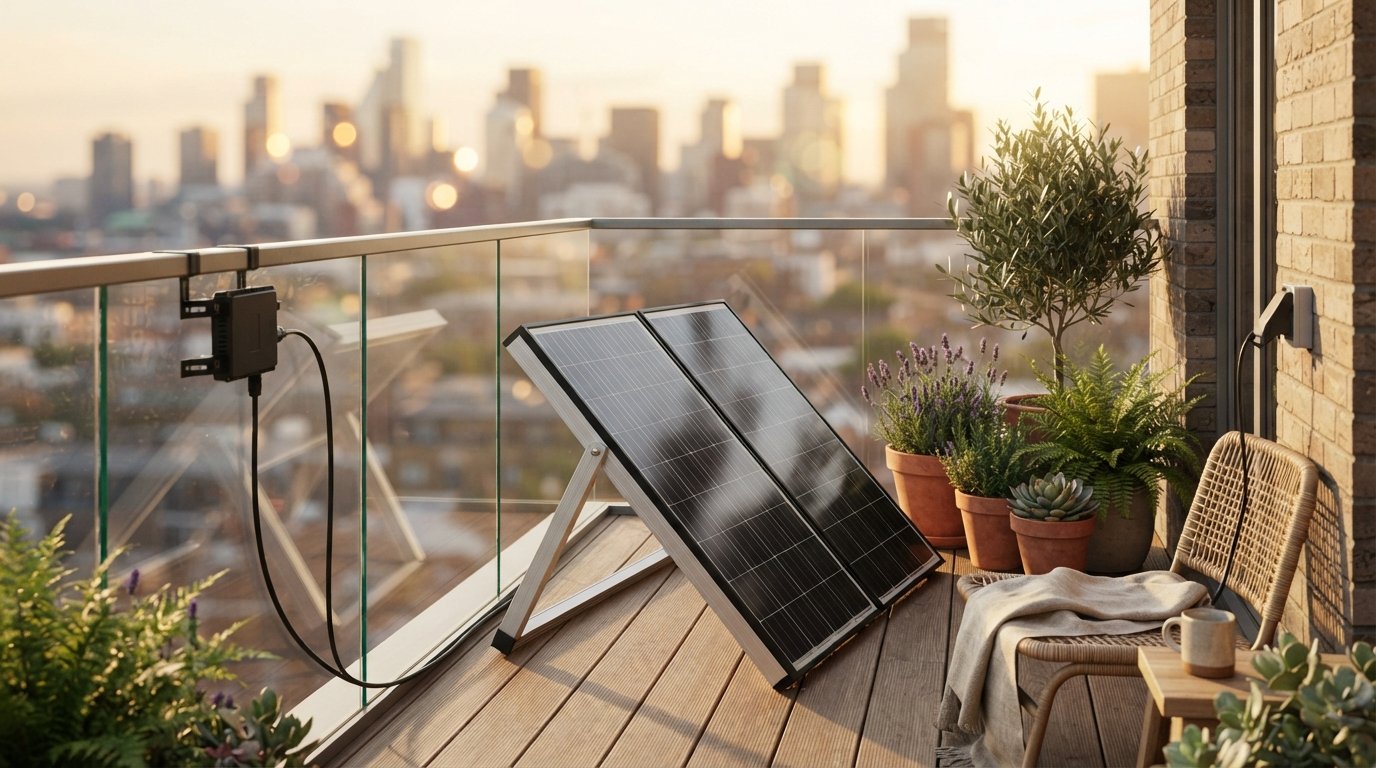
The first fork in the road is between a plug in kit and a fully permitted system. A plug in balcony solar kit typically consists of one or two panels, a microinverter, and a cable that connects to a standard wall outlet. These kits are designed for do it yourself assembly and usually require no roof penetration. A full permitted system, by contrast, involves mounting hardware, electrical permits, inspection, and usually a net metering agreement with the utility. For apartment dwellers, the permitted route is rarely feasible unless the building owner is involved and the array is installed on a common roof or dedicated structure.
Plug in kits have gained traction in Europe and are beginning to appear in U.S. markets, though regulations vary widely. The appeal is obvious: lower cost, simple installation, and portability. A typical single panel kit might produce between 300 and 400 watts under ideal conditions, which is enough to offset a small portion of a refrigerator or home office load. It will not power an entire apartment, but it can shave a few dollars off the monthly bill and provide backup during an outage if paired with a small battery. For a deeper look at how these smaller setups compare to traditional patio arrays, see our guide on solar panels patio installations, which covers mounting and performance basics that apply to balcony systems as well.
Full permitted systems, on the other hand, offer higher output and eligibility for incentives like the federal Investment Tax Credit. However, they require a permanent structure, utility interconnection, and often a cooperative landlord. If you own a condo and the building has a shared roof, a permitted system might be possible through a special assessment or HOA agreement. For most renters, the plug in kit is the only realistic entry point, but it comes with its own set of limitations that we will cover next.
What Renters Can Install vs What Needs Landlord Approval
The line between what you can do on your own and what requires permission depends on your lease, local tenant laws, and building rules. Generally speaking, anything that modifies the structure or affects the building's electrical system requires landlord approval. That includes drilling into the facade, running cables through walls, or installing a permanent mounting bracket. Freestanding or clamp based systems that rest on a balcony railing and plug into an existing outdoor outlet are more likely to be allowed, but even those can be restricted by lease terms or building codes.
Before you buy anything, review your lease for clauses about alterations, electrical work, and exterior modifications. Many leases prohibit attaching items to the railing or exterior walls, and some explicitly ban solar panels. If the lease is silent, ask your landlord in writing. A short email describing the system, its weight, its connection method, and any safety certifications will often get a faster response than a vague request. Landlords are more receptive when they understand that the system is temporary, reversible, and does not alter the building's wiring.
Here is a practical breakdown of common renter scenarios:
- Plug in balcony kit with railing clamp: Usually requires landlord approval, but often granted if the system is removable and does not penetrate the facade.
- Freestanding panel on a patio or balcony floor: Often allowed with written permission, especially if it does not block egress or violate fire codes.
- Roof mounted array: Almost always requires landlord and possibly HOA approval, plus permits and utility interconnection.
- Community solar subscription: No installation and no landlord approval needed, because the panels are located off site.
Keep in mind that even if your landlord approves, your building may have additional rules through an HOA or property management company. In some states, solar access laws protect homeowners but not renters, so do not assume you have a legal right to install. The safest path is to get written approval before spending money, and to choose a system that can be removed without leaving a trace when you move out.
Local Utility and Building Code Limits on Small Plug In Arrays
Plug in solar is not automatically legal everywhere. Utilities and local building departments are still catching up with the technology, and rules vary from state to state and even from one utility to the next. Some jurisdictions require any grid tied solar system, no matter how small, to go through an interconnection application and inspection. Others have created simplified pathways for systems under a certain wattage, often around 600 to 1,200 watts. A few have no specific rules at all, which can put the burden on the homeowner or renter to prove compliance.
The key technical concern is backfeeding. When a plug in solar system sends power into a standard outlet, it can potentially energize wiring that a utility worker assumes is dead during an outage. To address this, most plug in kits use microinverters that automatically shut off when the grid goes down, a feature known as anti islanding. Even with that safety feature, utilities may still require notification or a formal application. Building codes may also impose limits on cable routing, outdoor outlet types, and mounting methods to ensure the system does not create a fire or shock hazard.
Before you install, contact your utility and local building department. Ask three specific questions: Is a plug in system under a certain wattage exempt from interconnection rules? Does the installation require a permit or inspection? Are there restrictions on where the panel can be mounted or how the cable can be routed? Document the answers in writing if possible. If the utility requires an application, the process is usually simpler than a full rooftop system, but it still takes time. Skipping this step can lead to fines, forced removal, or liability issues if something goes wrong.
When Community Solar Is a Better Fit Than a Mini System
For many renters, community solar is the smarter choice. Instead of installing panels on your balcony, you subscribe to a share of a larger solar farm located elsewhere in your utility territory. The power generated by your share is credited to your electricity bill, often at a discount to the standard rate. There is no installation, no landlord approval, and no equipment to move when you relocate within the same utility area. The trade off is that you do not get the same hands on satisfaction of producing your own power, and the savings are typically modest, often in the range of 5 to 15 percent off the supply portion of your bill.
Community solar is particularly attractive if your balcony is shaded, faces the wrong direction, or is too small for a meaningful array. It also makes sense if your lease is short term or if you expect to move soon, since you can often cancel or transfer your subscription. The main requirement is that a community solar project must be available in your utility territory. Not every state has them, and even within a state, availability varies by utility. You can check your utility's website or ask your landlord if the building already participates in a community solar program.
A mini system and a community solar subscription are not mutually exclusive. Some renters use a small balcony kit to cover a specific load, like a home office or a window air conditioner, while subscribing to community solar for the rest of their usage. This hybrid approach can maximize savings and resilience, but it adds complexity. If you are new to solar, starting with community solar is often the lowest friction path. You can always add a balcony kit later once you understand your usage patterns and your building's rules.
Planning for Future Portability if the Renter Moves
Renters move, and any solar solution should be designed with that in mind. A plug in balcony kit is inherently portable, but only if you keep the original packaging, mounting hardware, and instructions. Before you install, take photos of the setup and label the cables. When it is time to move, you can disassemble the system and take it with you, provided your new balcony has a suitable outlet and the local rules allow it. Some kits are heavier and bulkier than they look, so consider storage space and whether you can transport the panels safely.
Community solar subscriptions are also portable within limits. Most programs allow you to transfer your subscription to a new address if you stay within the same utility territory. If you move out of the area, you can usually cancel with notice, though there may be a fee or a minimum term. Read the subscriber agreement carefully before signing. Look for terms about cancellation, transfer, and what happens if the project underperforms. A reputable provider will disclose these details upfront, and you should not feel pressured to sign on the spot.
For those who want a more permanent solution, a portable power station paired with a folding solar panel can be a good middle ground. These systems are not grid tied, so they do not interact with your apartment's wiring. You can use them to charge devices, run a fan, or power a laptop during an outage, and they move with you easily. The trade off is higher cost per watt and limited capacity, but for renters who prioritize resilience and simplicity, they can be a practical choice. As you plan, think about how long you expect to stay in your apartment and whether your next place will have the same constraints. A solution that fits your current lease may not fit the next one, so flexibility is valuable.
Finally, keep an eye on policy changes. States and utilities are gradually updating rules for small scale solar, and programs that are unavailable today may open up in the future. If you are serious about solar, check back periodically or sign up for updates from your utility. The landscape is shifting, and renters are increasingly part of the conversation. For a broader view of how solar fits into the overall energy market and what tools can help you estimate savings, resources like SolarEnergy.ai offer calculators and guides that can inform your decision without pushing a specific product.
Small space solar is no longer an impossible dream for apartment dwellers. Whether you choose a plug in balcony kit, a community solar subscription, or a portable power station, the key is to match the solution to your lease, your local rules, and your long term plans. Start with a clear understanding of what you can install, get permission where needed, and verify the rules with your utility before you buy. With a little planning, you can bring renewable energy into your apartment and keep it with you when you move.