
Solar Electricity: How It Powers Your Home
Solar electricity cuts your power bills and raises home value. Compare free quotes from trusted installers to find the best deal.

By Ethan Whitaker
Learn more about Solar Panel Installation and Repair for guides, costs, and what to expect.
Compare Solar Panel Installation and Repair Pros Near You

Enter your ZIP code to compare top-rated local professionals and request free quotes.
When you pay a monthly electricity bill, you are buying power that often comes from burning coal or natural gas. That power travels hundreds of miles through aging wires, and its price keeps climbing. Solar electricity changes that story. Instead of renting power from a distant utility, you generate your own clean energy on your rooftop. For many U.S. homeowners, the switch is not just an environmental statement; it is a financial strategy that pays off for decades.
This article walks through what solar electricity is, how it works, what it costs, and how to get the best deal. By the end, you will know exactly how to evaluate solar for your home and why getting multiple quotes is the smartest first step.
What Is Solar Electricity and How Does It Work?
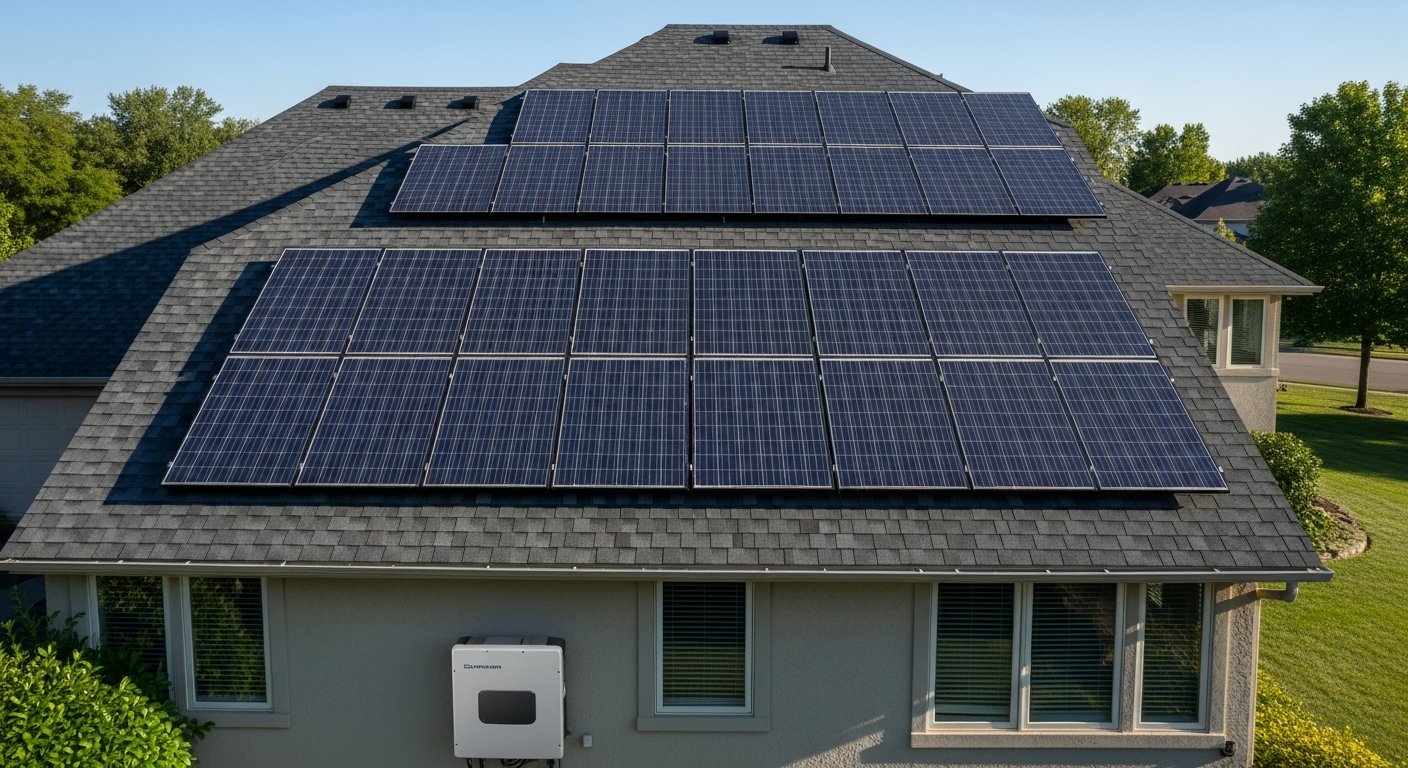
Solar electricity is the conversion of sunlight into usable power for your home. The technology relies on photovoltaic (PV) cells, usually made of silicon, that absorb photons from sunlight and release electrons. Those moving electrons create direct current (DC) electricity. Because your home runs on alternating current (AC), the system needs an inverter to convert DC to AC before it powers your lights, appliances, and electronics.
A complete home solar system includes three main components:
- Solar panels: Mounted on your roof or ground, they capture sunlight and produce DC electricity.
- Inverter: Converts DC into AC electricity that your home can use.
- Net meter or battery: A net meter tracks how much power you send back to the grid; a battery stores excess power for nighttime or outages.
During the day, your panels often generate more power than you need. That surplus goes to the grid, and your utility gives you a credit through a policy called net metering. At night, you draw power from the grid, using those credits. This arrangement means your solar panels directly reduce the amount of electricity you buy from the utility, and in many cases, you can nearly eliminate your monthly bill.
The technology is proven, with systems lasting 25 to 30 years or more. Manufacturers back their panels with warranties that guarantee at least 80 percent performance after 25 years. That long lifespan is why solar is best understood as a long-term investment, not a quick fix.
The Biggest Benefit: Predictable, Lower Electricity Costs
The most immediate reason homeowners go solar is the savings. The average U.S. household spends more than $1,500 per year on electricity, and that number has risen steeply over the past decade. Solar electricity lets you lock in a predictable rate for your power generation, shielding you from utility rate hikes.
Here is how the savings add up:
- You offset your usage: A properly sized system covers 70 to 100 percent of your annual electricity needs.
- You earn credits for surplus: Net metering pays you retail or near-retail rates for excess generation.
- You benefit from tax credits: The federal solar Investment Tax Credit (ITC) still offers a 30 percent deduction on system cost for systems installed through 2032.
- You raise your home's value: Studies show homes with solar sell for 4 to 6 percent more than comparable homes without it.
These savings are not theoretical. A family in Texas with a $200 monthly electric bill might install a 10 kW system that costs $25,000 before incentives. After the 30 percent federal tax credit, their net cost is $17,500. If their monthly savings average $150, the payback period is about 10 years. Since the system lasts 25 to 30 years, they enjoy 15 to 20 years of nearly free electricity.
Savings vary by location, utility rates, and sun exposure, but the pattern is consistent. The more you pay for electricity, the faster solar pays for itself.
How Much Does Solar Electricity Cost in 2026?
Prices have dropped dramatically over the past decade. The average cost of a residential solar system in the United States is now between $2.50 and $3.50 per watt before incentives. That means a typical 8 kW system costs $20,000 to $28,000. After the 30 percent federal tax credit, the net cost drops to $14,000 to $19,600.
But the actual price you pay depends on several factors:
- System size: Larger systems cost more upfront but produce more power and often have a lower cost per watt.
- Equipment quality: Premium panels and microinverters cost more but offer better performance and longer warranties.
- Installation complexity: Roof pitch, material, and shading affect labor costs.
- Your utility's rate structure: Higher electricity rates mean a bigger system is worth more.
Financing also changes the math. Many homeowners choose a solar loan with $0 down, paying a monthly amount that is often less than their previous electric bill. That means you start saving from day one. Others prefer a lease or power purchase agreement (PPA), where you pay a fixed rate for the power the system produces, with no upfront cost. Each option has pros and cons, so it pays to compare offers.
One key point: the federal tax credit is a dollar-for-dollar reduction of your tax liability, not a rebate. You need enough tax owed to claim it. If you do not have that liability, you can still benefit from loans or leases where the installer claims the credit and passes the savings to you.
Grid-Tied vs. Battery Backup: Which Is Right for You?
Most solar homes stay connected to the grid. This is called a grid-tied system, and it is the simplest and cheapest option. You use the grid as your battery: pull power at night, push excess during the day. No batteries are required, and the cost is lower because battery storage adds $10,000 to $20,000 to a project.
But batteries are gaining popularity. A solar battery lets you store surplus power for evening use, cutting your grid reliance even further. It also provides backup power during outages, which is critical in areas prone to storms or rolling blackouts. If your utility uses time-of-use rates, where power is more expensive in the evening, a battery lets you shift your usage to avoid peak prices.
When deciding between grid-tied and battery, consider your goals:
- Maximum savings: A grid-tied system with net metering is the cheapest path to lower bills.
- Energy independence: A battery gives you resilience and reduces reliance on the grid.
- Outage protection: If blackouts are common, a battery is worth the extra cost.
Many homeowners start with a grid-tied system and add a battery later. That flexibility is one of the reasons solar is such a solid investment.
State Incentives and Net Metering: What to Know
Beyond the federal tax credit, many states and utilities offer additional incentives. These can include cash rebates, performance payments, or tax exemptions. For example, New York offers a state tax credit of up to $5,000, while Florida exempts solar systems from property taxes. Net metering policies also vary: some states guarantee retail-rate credits, while others pay wholesale or market rates.
Because incentives change frequently, you should always verify current programs with official sources. A reliable solar installer or an independent resource like the Database of State Incentives for Renewables and Efficiency (DSIRE) can help you see what applies to your area.
The combination of federal and state incentives is what makes solar affordable in many states. In states with high electricity rates like California, Massachusetts, or Hawaii, the payback period can be as short as 5 to 7 years. In states with lower rates, it might stretch to 12 years, but the long-term savings remain significant.
How to Get Solar Electricity Without Getting Burned
The solar industry is competitive, and that is good for you. Prices have fallen, and installers are eager for business. But not every company offers the same quality or price. The best way to protect yourself is to compare multiple quotes before signing anything.
Here is a step-by-step process:
- Research installers: Look for companies with good reviews, proper licensing, and experience in your state.
- Get at least three quotes: Ask for a detailed breakdown of equipment, warranty, and total cost.
- Compare apples to apples: Ensure each quote uses similar panel brands, inverter types, and system sizes.
- Check financing terms: Understand the interest rate, monthly payment, and total cost over the loan term.
- Read the fine print: Look for escalation clauses in leases or PPAs that raise your rate over time.
These steps are exactly what FreeSolarPowerQuotes simplifies. Instead of contacting multiple companies yourself, you submit one request on the site and receive quotes from pre-vetted, reputable providers in your area. This lets you compare offers side by side without pressure or spam.
Also, be wary of door-to-door salespeople who pressure you into signing that day. A legitimate installer will give you time to review the proposal. If a deal seems too good to be true, it probably is. Always verify the company's credentials and check with your state's consumer protection agency if something feels off.
Solar Maintenance and Long-Term Performance
Once your system is installed, it requires very little upkeep. Solar panels have no moving parts, and most are designed to withstand hail, wind, and heavy snow. Rain naturally washes away most dust and pollen. A quick annual inspection by a professional is usually enough to keep the system running at peak efficiency.
Inverters, however, may need replacement after 10 to 15 years. This is a known cost, typically $1,000 to $2,500, and many installers include a 10-year workmanship warranty. After that, you might pay out of pocket, but the long-term savings far outweigh this occasional expense.
Monitoring your system's performance is simple. Most modern systems come with an app that shows real-time production. If you notice a sudden drop, you can call your installer for service. Because solar systems are so reliable, most homeowners spend more time thinking about their savings than their panels.
In summary, solar electricity is a proven, affordable way to cut your energy bills, increase your home's value, and reduce your carbon footprint. The key is to do your homework, compare quotes, and choose a system that fits your budget and goals. With the right setup, you can stop worrying about rising electric rates and start enjoying the benefits of clean, renewable power.
Ready to see what solar can do for you? Get free, no-obligation quotes from trusted installers in your area and compare your options today.