
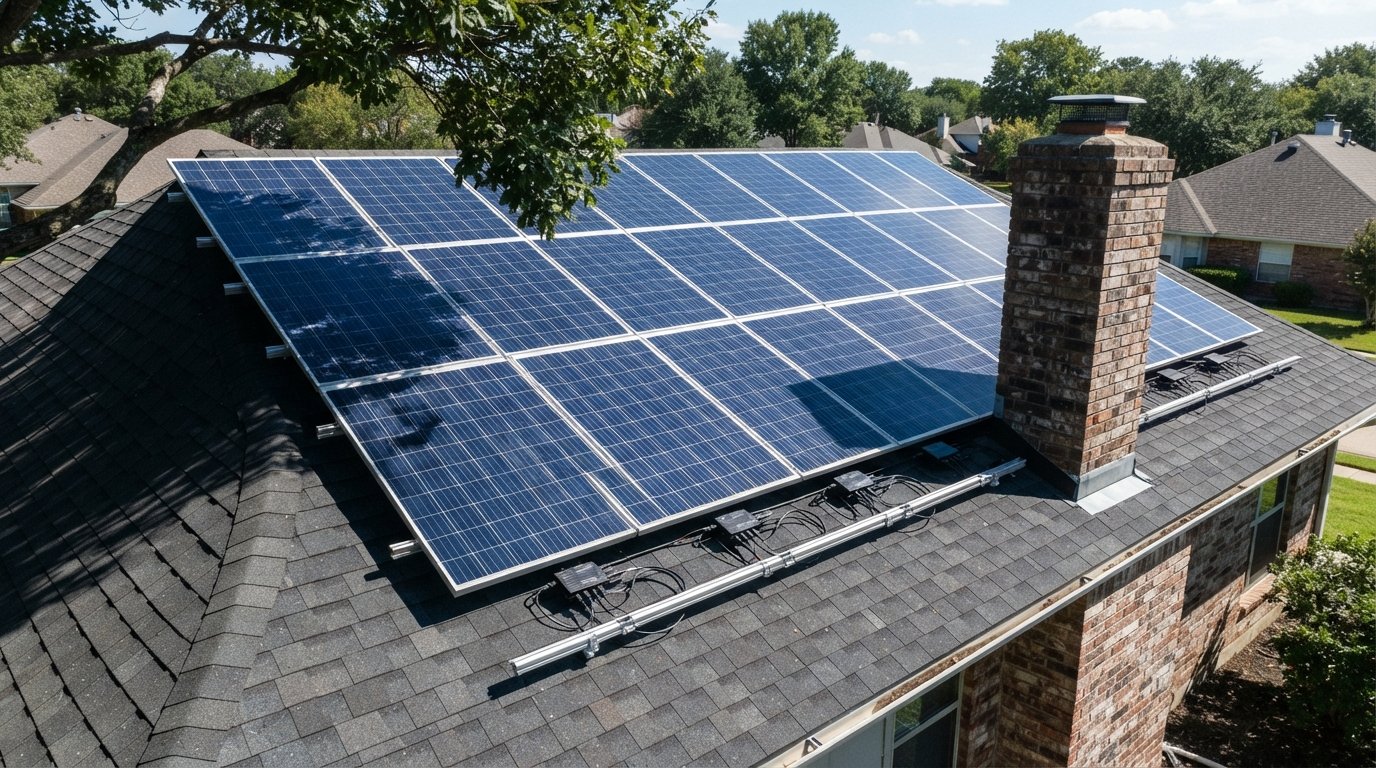
Solar Panel Shading Solutions: Power Optimizers Explained
Power optimizers let each solar panel work independently, recovering up to 30% of production lost to shade and boosting long-term savings.

By Benjamin Taylor
Learn more about Solar Panel Installation and Repair for guides, costs, and what to expect.
Compare Solar Panel Installation and Repair Pros Near You

Enter your ZIP code to compare top-rated local professionals and request free quotes.
Shade is the quiet thief of solar savings. A single tree branch, a chimney, or a neighboring roofline can drag down an entire string of panels, turning a high-performing array into a disappointment. For homeowners across the United States, this is one of the most common and frustrating realities of going solar. The good news: modern power optimizers have changed the game. These compact devices, mounted behind each panel, allow every module to operate independently, so shade on one panel no longer cripples the rest. Understanding how solar panel shading solutions power optimizers work is essential before you sign a contract, because the right technology can mean the difference between a system that meets its projections and one that falls short for decades.
Why Shading Hurts Solar Production More Than You Think
Solar panels are wired together in series, like old-fashioned holiday lights. In a traditional string inverter setup, the weakest panel dictates the performance of the entire string. If one panel is shaded and its output drops by 50 percent, the other panels in that string can lose a similar proportion of their production. This is not a minor inconvenience. Depending on the layout and the time of day, a single shaded module can reduce total system output by 20 to 40 percent or more.
Partial shading is especially insidious because it changes throughout the day and across seasons. A tree that casts a shadow in the morning may leave the array alone by noon. A chimney might only interfere in winter when the sun sits lower in the sky. Many homeowners do not realize how much shade they have until they see their first months of production data. That is why a professional shade analysis is a critical step in any solar evaluation.
Even small shadows, such as those from a vent pipe or a power line, can trigger disproportionate losses in a string system. The reason is electrical: when one cell is shaded, it resists current flow, heating up and reducing the output of every panel in the series. Bypass diodes help somewhat, but they are a crude tool. Power optimizers solve the problem at its source by giving each panel its own maximum power point tracking (MPPT).
What Power Optimizers Do and How They Work
A power optimizer is a DC-to-DC converter installed at the back of each solar panel. It constantly adjusts the voltage and current of that individual panel to extract the maximum possible power, regardless of what is happening to its neighbors. Instead of forcing all panels to match the weakest link, the optimizer conditions each panel's output and sends it along to a central inverter (or a specially designed inverter) for final conversion to AC power.
The key benefit is module-level optimization. If one panel is shaded, only that panel's optimizer reduces its output. The other panels continue at full capacity. This architecture also enables module-level monitoring, so you can see the performance of every single panel through a smartphone app or web portal. If a panel underperforms, you know exactly which one and can investigate whether the cause is shade, dirt, or a fault.
Power optimizers are often confused with microinverters. Both are module-level electronics, but they work differently. Microinverters convert DC to AC at each panel, while optimizers condition DC power and rely on a central inverter for the final conversion. Optimizers are typically paired with a string inverter, and they are a popular choice for roofs with partial shade, multiple orientations, or space constraints. They also allow for longer strings and greater design flexibility.
- Module-level MPPT: Each panel operates at its own maximum power point, so shade on one does not drag down others.
- Monitoring: Panel-level data helps you spot underperformance quickly and verify installer claims.
- Design flexibility: Panels can face different directions or be installed on complex roofs without severe mismatch losses.
- Safety: Many optimizers reduce voltage to safe levels when the inverter is shut down, protecting firefighters and technicians.
These features make optimizers an excellent solar panel shading solution, but they are not the only option. String inverters with advanced MPPT can handle some shade, and microinverters offer similar benefits. The right choice depends on your specific shade patterns, roof layout, budget, and long-term goals. In our guide on understanding commercial solar power quotes, we explain how to compare system designs and see whether optimizers are included, which is a key differentiator among proposals.
Power Optimizers vs. Other Shading Solutions
When homeowners ask about solar panel shading solutions power optimizers are often the first recommendation, but it helps to understand the alternatives. A traditional string inverter with bypass diodes is the baseline. It is the least expensive option, but it performs poorly under shade. If your roof is completely unshaded and all panels face the same direction, a string inverter may be perfectly adequate.
Microinverters are another module-level solution. Like optimizers, they isolate each panel, but they convert DC to AC at the panel. They tend to cost more upfront, but they can be simpler to install in some cases and offer similar monitoring. Some homeowners prefer microinverters because there is no central inverter to replace later. However, optimizers paired with a string inverter often provide the same shade benefits at a lower total cost, especially as system size grows.
There are also non-electronic solutions, such as strategic panel placement, trimming trees, or using solar panel cleaning services to reduce soiling. While these can help, they do not solve hard shade from chimneys or adjacent buildings. For those cases, module-level power electronics are the only real fix. It is also worth noting that some utilities and incentive programs may have specific requirements, so always verify with your installer and current official sources.
To choose the best solution, consider these factors:
- Shade severity and timing: How many panels are affected, and when? A shade study will quantify this.
- Roof complexity: Multiple orientations, pitches, or obstructions favor module-level electronics.
- Budget and payback: Optimizers add cost, but they can increase production enough to improve ROI.
- Monitoring needs: If you want panel-level data, optimizers or microinverters are required.
- Future expansion: Optimizers make it easier to add panels later without reconfiguring strings.
For most homeowners with partial shade, power optimizers strike a strong balance between cost and performance. They are widely available from major manufacturers and are compatible with many string inverters. As you gather quotes, ask installers to model your system with and without optimizers so you can see the projected difference in kilowatt-hour production and savings.
How to Evaluate Optimizer Options and Installers
Not all power optimizers are created equal. Leading brands like SolarEdge, Tigo, and others offer different features, warranties, and compatibility. Some optimizers are designed to work exclusively with a specific inverter, while others are more universal. Your installer should explain the trade-offs clearly and provide a design that maximizes your roof's potential.
When reviewing proposals, look for a detailed shade analysis and production estimate. A reputable installer will use tools like Aurora or Helioscope to simulate shading and show you the expected impact. If an installer dismisses your shade concerns or promises unrealistic production, that is a red flag. You can also ask for references from customers with similar shade conditions.
Financing and incentives can offset the added cost of optimizers. The 30 percent federal Investment Tax Credit (ITC) applies to the entire system cost, including optimizers, as long as you own the system. State and local incentives may also help. Because incentive programs can change, always confirm details with a tax professional or the relevant government agency. For a broader look at solar information and tools, you can visit SolarEnergy.ai, which offers calculators and industry insights that complement your installer's proposal.
It is also wise to understand the warranty and service landscape. Optimizers typically come with 25-year warranties, matching panel warranties. Inverters may have shorter terms, so factor in potential replacement costs. A good installer will walk you through the full lifecycle economics, not just the upfront price.
Real-World Benefits: Savings, Reliability, and Peace of Mind
The financial case for optimizers is straightforward: more production means more savings. If shade would otherwise reduce your system's output by 15 percent, optimizers can recover most of that loss. Over 25 years, that difference can amount to thousands of dollars. For homeowners in states with high electricity rates, the payback period on optimizers can be just a few years.
Beyond raw numbers, optimizers deliver peace of mind. You will not have to worry about a new tree growing on your neighbor's property or a future construction project casting shadows. The system will adapt automatically. Panel-level monitoring also means you can catch issues early, potentially avoiding costly downtime and ensuring your system keeps performing at its best.
For businesses, the stakes are even higher. Commercial solar systems often have complex roofs, multiple buildings, and strict ROI targets. Power optimizers help maximize production per square foot and provide the data needed to verify performance. They can also be a smart choice for ground-mounted arrays with intermittent shade from poles or vegetation.
Ultimately, solar panel shading solutions power optimizers are an investment in system resilience. They turn a potential weakness into a manageable, monitored asset. As you compare quotes, prioritize installers who take shade seriously and recommend the right technology for your site. Your future self, and your energy bill, will thank you.
Ready to see how much you could save with a shade-optimized solar system? Request free, no-obligation quotes from reputable local installers and get a custom design that accounts for your unique roof and shading conditions.