
Solar Panel End of Life Disposal Cost for Homeowners
Solar panel end of life disposal cost for homeowners runs $20 to $50 per panel plus hauling. Call (833)-793-7166 to compare local removal and recycling options.

By Leo Owens
Learn more about Solar Panel Installation and Repair for guides, costs, and what to expect.
Compare Solar Panel Installation and Repair Pros Near You

Enter your ZIP code to compare top-rated local professionals and request free quotes.
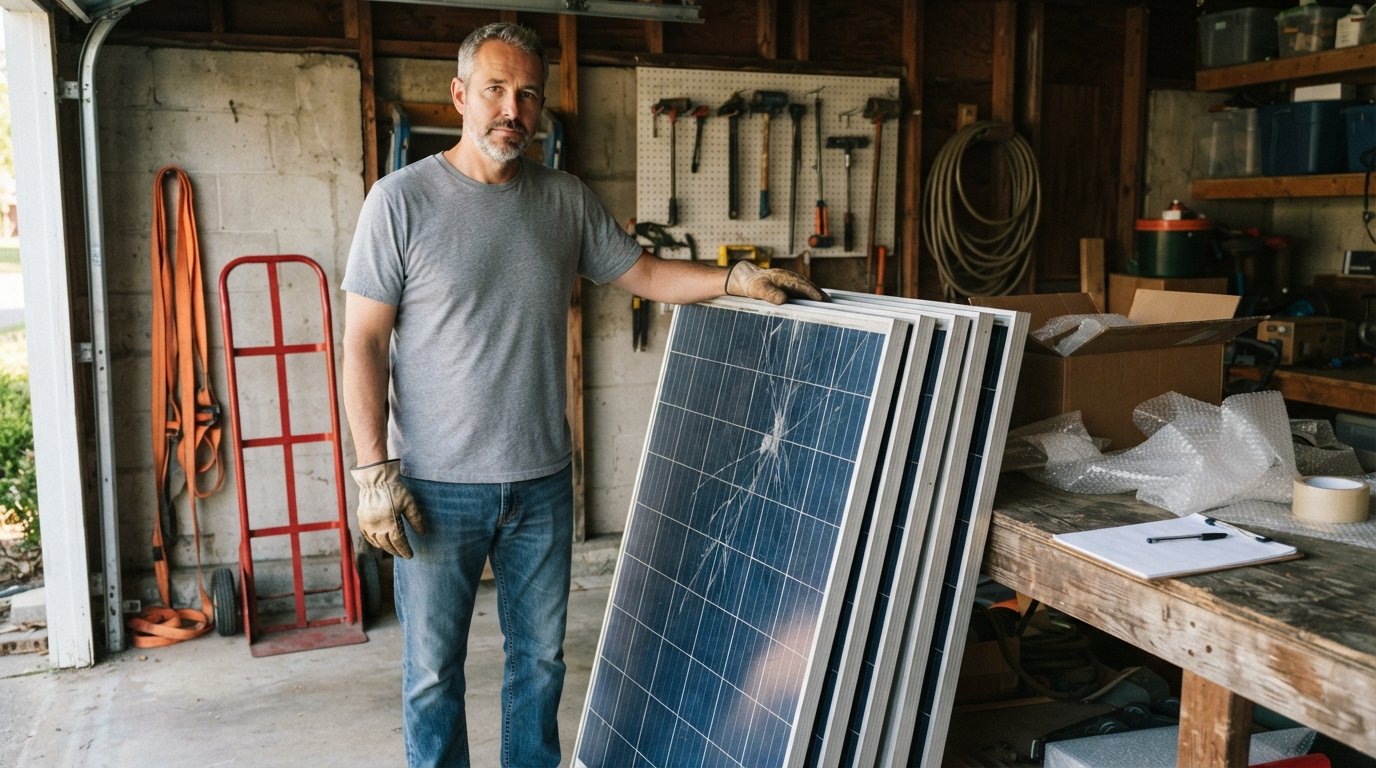
Your solar panels were supposed to last 25 to 30 years, and for most of that time they quietly turned sunlight into savings. Then one day a hailstorm cracks a few modules, or your inverter fails and the replacement quote comes in higher than expected. Suddenly you are not thinking about payback periods anymore. You are staring at a stack of glass and silicon in your garage and wondering what it costs to make it disappear legally. The answer is more nuanced than a single number, but it is absolutely something you can plan for. Homeowners typically pay between $20 and $50 per panel for recycling or disposal, with full system removal and hauling adding another $500 to $1,500 depending on your location and the condition of the equipment. Batteries follow a completely different and often more expensive path. This guide walks through the real numbers, the programs that accept old equipment, and the questions that will save you money before you sign anything.
What Drives Solar Panel Disposal Costs for Homeowners
Disposal pricing is not random. It reflects the physical reality of moving heavy, fragile, electronically active equipment through a regulated waste stream. A standard residential panel weighs roughly 40 to 50 pounds and contains glass, aluminum, copper, silicon, and small amounts of silver and other metals. Because panels are classified as universal or electronic waste in many states, they cannot simply go in your curbside bin. That classification is the first cost driver. The second is logistics: panels are awkward, break easily during transport, and require either a specialty hauler or a recycling facility equipped to handle them. The third is your local market. A homeowner in Phoenix or Houston with three nearby recyclers will pay far less than someone in a rural county where the nearest facility is 200 miles away.
Most homeowners encounter costs in three separate buckets. First is removal labor, which is often bundled into a replacement installation but becomes a standalone charge if you are decommissioning a system entirely. Second is transportation, which covers loading, hauling, and any tipping fees at the destination. Third is the processing fee itself, which recyclers charge to cover manual disassembly and material recovery. Understanding which bucket each quote covers prevents the unpleasant surprise of a low removal bid that quietly excludes the recycling fee.
Here is the realistic range you should budget for, based on typical 2026 market conditions:
- Per-panel recycling fee: $20 to $50 per panel at a dedicated facility, sometimes waived or reduced by state-funded programs.
- Full-system removal labor: $500 to $1,500 for a typical 6 kW to 10 kW residential array, including disconnection and roof patching.
- Hauling and transportation: $150 to $600 depending on distance and whether the hauler charges by weight or by trip.
- Municipal or county drop-off: $0 to $15 per panel where household hazardous waste events accept solar equipment.
- Battery disposal or recycling: $100 to $400 per unit for lithium-based home batteries, higher for damaged units requiring special handling.
Those figures assume a straightforward single-family installation. Costs climb quickly when panels are difficult to access, when the roof needs repair after removal, or when the equipment is damaged and therefore harder to transport safely. A cracked panel is not just a handling inconvenience; many haulers charge a premium for broken glass because it requires specialized containment. If you are simultaneously planning a replacement system, bundling removal with a new installation is almost always the cheapest path, and it is worth reviewing understanding solar panel system quotes for your home so you can compare removal line items across bids rather than accepting the first number you see.
Who Actually Accepts Old Solar Equipment
The single biggest mistake homeowners make is assuming their original installer will handle disposal for free. Some will, particularly if they are selling you a replacement system, but take-back programs are voluntary and vary wildly by company. Before you call a random junk hauler, work through the legitimate channels in order of cost-effectiveness.
Dedicated PV recyclers are your best option for intact or repairable panels. Companies in this space specialize in separating glass, aluminum frames, junction boxes, and silicon wafers, and many will quote a per-panel fee that includes pickup if you have a full system's worth of material. Municipal household hazardous waste programs are the cheapest option when they exist, but coverage is patchy and events often run only a few times per year, so you may need to store panels for months. General hauling companies will take panels but usually charge by weight or volume and may not guarantee responsible recycling, which matters if you care about the environmental case for solar in the first place. Retailers and manufacturers occasionally run take-back promotions, especially in states with extended producer responsibility laws, so it is worth a phone call to the original manufacturer before you assume the worst.
Geography matters enormously here. States with active solar markets and strong recycling infrastructure, including California, Texas, and Florida, have more competitive pricing and more drop-off options. Homeowners in those regions can often find a recycler within a reasonable drive and pay closer to the $20 per panel end of the range. In states without dedicated facilities, your panels may travel across state lines, and the transportation surcharge can double your total cost. If you are also planning a household move and need to coordinate timing around a relocation, resources like Moving.Homes relocation guides and checklists can help you sequence the sale of a home, the removal of equipment, and the paperwork that goes with both.
Batteries Are a Separate and More Expensive Problem
Home batteries deserve their own budget line because they cannot be handled like panels. Lithium-ion battery systems, whether from a residential storage unit or an older lead-acid backup bank, are regulated as hazardous materials in most jurisdictions. That means standard haulers often refuse them, municipal drop-offs frequently exclude them, and the facilities that do accept them charge accordingly. Expect $100 to $400 per unit for recycling, with damaged or swollen batteries costing more because they require fire-safe packaging and specialized transport.
The good news is that battery recycling has become a genuine industry, and some manufacturers now offer take-back credits or buyback programs when you upgrade. If your battery is still functional but simply old, a second-life market exists for refurbished units, though you should be transparent about age and capacity if you sell privately. Never place a lithium battery in curbside recycling or a standard dumpster; beyond the legal risk, it is a real fire hazard for waste workers. Ask your installer or the manufacturer for the approved recycling pathway before you remove the unit from the wall.
Questions That Protect Your Wallet
Before you accept any disposal quote, ask a short set of questions that separate legitimate providers from expensive middlemen. The answers will tell you whether the price you were given is complete or whether hidden fees are waiting at the back end.
- Does this quote include removal, transportation, and the recycling fee, or are those billed separately?
- Where exactly will the panels and batteries end up, and can you provide the name of the receiving facility?
- Are you insured for roof work and for hazardous materials transport?
- Do you offer a take-back credit if I am purchasing a replacement system from you?
- How do you handle damaged or broken panels, and is there a surcharge for glass containment?
A reputable provider will answer all five without hesitation and put the answers in writing. If a quote seems dramatically lower than everything else you have received, ask what it excludes. The most common trap is a low removal price that omits the recycling fee, which then appears as a separate charge once the panels are already off your roof and you have no leverage. Getting two or three quotes for disposal alone, even on a small system, is worth the hour of phone calls.
Planning Ahead Saves the Most Money
The homeowners who pay the least for end-of-life disposal are the ones who thought about it at the beginning. When you request installation quotes, ask each installer directly whether they offer a documented take-back program at end of life and what it will cost. Installers competing for your business are increasingly willing to put that commitment in the contract, and a written clause is worth far more than a verbal promise. If you are still in the shopping phase and comparing bids, the same due diligence that helps you avoid overpaying upfront also protects you decades later.
It also helps to keep your paperwork. Panel model numbers, serial numbers, battery chemistry, and installation dates all make recycling easier and cheaper because facilities can plan their handling in advance. Store those documents with your home records, and if you sell the house, pass them to the buyer. A future owner inheriting a system with clear documentation is far more likely to dispose of it responsibly than one who finds a mystery array with no records.
Finally, treat disposal as a line item in your long-term solar budget from day one. Setting aside a small amount each year, or simply knowing that a full-system decommissioning will run somewhere between $1,000 and $3,000 in today's dollars, turns a future shock into a manageable plan. Solar remains one of the best investments a homeowner can make, and the end of the story does not have to be the expensive part. With a few phone calls, written quotes, and the right questions, you can close out your system's life cleanly, legally, and for far less than a panicked same-week haul would cost.