
Solar Energy Systems: Cut Bills and Boost Home Value
Discover how solar energy systems can eliminate your electric bill, increase home value, and cut carbon emissions. Learn the smart way to go solar.

By Liam Parker
Learn more about Solar Panel Installation and Repair for guides, costs, and what to expect.
Compare Solar Panel Installation and Repair Pros Near You

Enter your ZIP code to compare top-rated local professionals and request free quotes.
Imagine opening your monthly electricity bill to find a balance of zero, or even a credit from your utility company. For many homeowners, this is no longer a distant dream but a practical reality achieved through solar energy systems. Beyond the clear environmental benefits, going solar has become a strategic financial move. It offers protection against rising utility rates and increases the resale value of your property. This guide walks you through everything you need to know about modern solar energy systems, from how they work to the financial incentives that can make your switch to clean energy surprisingly affordable.
How Solar Energy Systems Transform Sunlight into Savings
At the heart of every solar energy system is a straightforward yet sophisticated process known as the photovoltaic effect. Solar panels, typically mounted on your roof, are made up of silicon cells that capture sunlight and convert it into direct current (DC) electricity. Since your home and appliances operate on alternating current (AC), an inverter is used to convert the DC power into usable AC electricity. This seamless conversion allows you to power everything from your refrigerator to your air conditioning with energy generated right on your property.
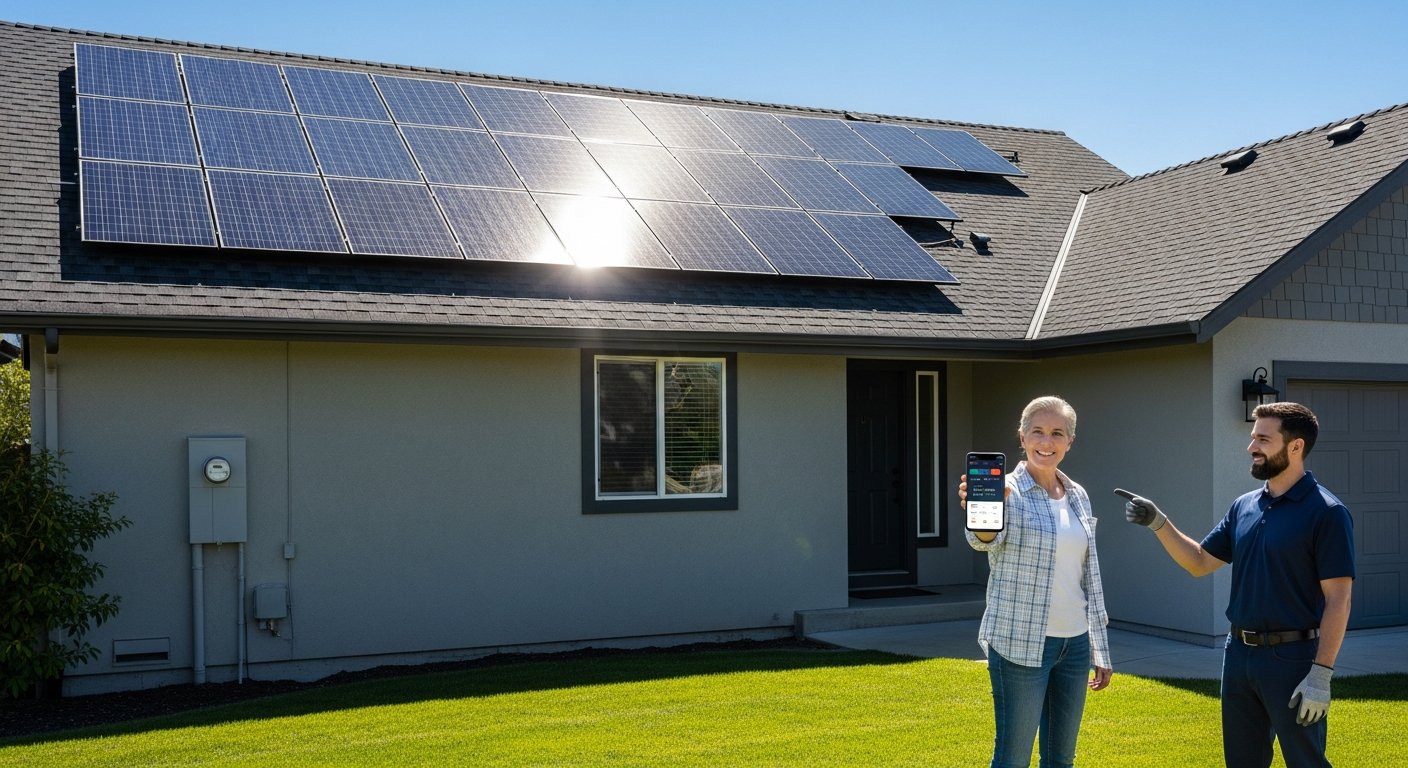
Modern systems have evolved significantly, offering smart monitoring that lets you track your energy production in real time through a smartphone app. This transparency helps you understand your usage patterns and maximize your system's output. Additionally, battery storage options, such as the Tesla Powerwall or LG Chem RESU, have become increasingly popular. These batteries store excess energy produced during the day for use at night or during a power outage, further increasing your energy independence and resilience.
The efficiency of solar panels has also improved dramatically, with most modern panels converting 20% to 23% of sunlight into electricity. This means you need fewer panels to generate the same amount of power, which is especially beneficial for homes with limited roof space. Advances in panel design, such as half-cut cells and shingled technology, also enhance performance in low-light conditions, ensuring you get the most out of your investment even on cloudy days.
The Financial Case for Going Solar
The most compelling reason for most homeowners to invest in solar energy systems is the long-term financial return. Your system pays for itself over time through the savings on your utility bills. The exact payback period depends on several factors, including your local electricity rates, the size of your system, and the amount of sunlight your location receives. In many sun-rich states like California, Texas, and Arizona, the payback period can be as short as five to seven years, after which your electricity is essentially free for the remaining 20-25 year lifespan of the system.
Beyond the monthly savings, solar panels can significantly increase the value of your home. According to recent studies by Zillow, homes with solar energy systems sell for approximately 4.1% more on average than comparable homes without them. This premium is particularly pronounced in markets where energy costs are high and buyers are eager for sustainable features. Moreover, solar-equipped homes often sell faster, as the promise of lower utility bills is a strong draw for prospective buyers.
To make the financial picture even more attractive, there are numerous incentives available at the federal, state, and local levels. The most significant is the federal Investment Tax Credit (ITC), which allows you to deduct 30% of the cost of your solar installation from your federal taxes. This credit has been extended and stabilized, making 2026 an excellent time to invest. Additionally, many states offer rebates, performance-based incentives, and property tax exemptions for solar installations, further reducing your upfront costs and accelerating your return on investment.
Understanding Net Metering and Its Impact on Your Savings
Net metering is a crucial policy that can dramatically affect the economics of your solar energy system. Under net metering, your utility company credits you for the excess electricity your panels produce and send back to the grid. This means your meter spins backwards when you are generating more power than you are using, effectively giving you retail-rate credit for the surplus. Over the course of a year, you can offset your entire electricity consumption, only paying for the net amount you draw from the grid.
However, net metering policies vary widely by state and utility company. Some utilities have moved to net billing, where the credit for exported electricity is lower than the retail rate. Understanding your local policy is essential before installing a solar system, as it directly impacts your payback period and overall savings. For example, in California, the transition to Net Billing Tariff (NBT) has changed the calculus for new solar customers, making battery storage more attractive to maximize self-consumption. To navigate these complexities, it is wise to consult with a reputable solar installer who can model your potential savings based on your specific utility rates and net metering rules.
Solar Energy in Daily Life: Everyday Uses
Solar energy systems are not just for powering your entire home; they can be integrated into your daily life in countless ways. From solar-powered garden lights and pool heaters to solar water heaters and attic fans, these smaller applications provide a low-cost entry point into renewable energy. They can also complement a full-scale solar system by further reducing your energy consumption and your carbon footprint.
For example, a solar water heater can supply 70% to 80% of your household's hot water needs, significantly reducing the load on your main solar system or your conventional water heater. Solar attic fans help regulate your home's temperature by expelling hot air, thereby reducing your air conditioning costs during the summer. By adopting these smaller solar applications, you can create a more sustainable lifestyle while easing the transition to a more comprehensive solar energy system. In our guide on solar energy in daily life, we explore these and other practical uses in more detail.
Choosing the Right Solar Energy System for Your Home
Selecting the ideal solar energy system involves several critical decisions, starting with the type of panel and inverter technology. The two most common panel types are monocrystalline and polycrystalline. Monocrystalline panels are more efficient and sleek, but they come at a higher price point. Polycrystalline panels are more affordable but slightly less efficient. Recent innovations like TOPCon and HJT cells are pushing efficiency boundaries even further, though they may come with a premium cost.
Inverters also come in different configurations. String inverters are the most cost-effective and are ideal for roofs with consistent sun exposure. However, if your roof has shading issues or panels are placed on different orientations, a string inverter with power optimizers or a microinverter system may be a better choice. Microinverters are installed on each panel, allowing for independent optimization and monitoring, which maximizes energy production even if one panel is partially shaded.
When choosing a system, you should also consider the quality and warranty of the components. High-quality panels typically come with a 25-year performance warranty, while inverters may have a lower lifespan and require replacement during the system's life. A reputable installer will guide you through these options and help you balance upfront cost with long-term performance and durability. To ensure you get the best value, it is advisable to compare quotes from multiple providers. Our resource on does solar energy save money can help you evaluate the financial benefits of different system configurations.
What Does a Solar Installation Involve?
The installation process for a residential solar energy system is surprisingly smooth and typically takes one to three days. It begins with a site assessment where a technician evaluates your roof's condition, orientation, and shading. They will also review your electricity bills to determine the appropriate system size. Following the assessment, the design team creates a custom layout for your panels and obtains any necessary permits from your local jurisdiction.
On the installation day, the crew will safely mount the racking system to your roof, secure the panels, and connect the wiring to your inverter and electrical panel. They will also install a new meter, if required by your utility, and ensure everything is properly grounded and meets all local codes. After the physical installation, a final inspection is conducted by your local building department and utility company. Once your system passes inspection and receives permission to operate (PTO), you can flip the switch and start generating your own clean energy.
To ensure a hassle-free experience, it is crucial to work with a licensed and insured installer with a proven track record. They should handle all permitting, inspections, and utility coordination on your behalf. A quality installer will also provide a clear explanation of your system's monitoring and maintenance requirements. While solar panels require minimal upkeep, keeping them clean and free of debris is essential for optimal performance. Most manufacturers recommend a periodic cleaning, especially in dry or dusty climates.
Financing Options for Your Solar System
Understanding the financing landscape is key to making your solar investment work financially. There are four primary ways to finance a solar energy system:
- Cash Purchase: You pay the full cost upfront, giving you the highest long-term savings and immediate ownership of the system.
- Solar Loan: You borrow money to pay for the system and repay the loan over time, typically 5 to 20 years. You own the system and can take advantage of the federal tax credit, though you will pay interest.
- Solar Lease: You lease the system from a third-party owner, paying a fixed monthly fee for the use of the system. There is little to no upfront cost, but you do not own the system and may not benefit from the tax credit.
- Power Purchase Agreement (PPA): You agree to buy the electricity generated by the system at a set per-kilowatt-hour rate, which is typically lower than your utility's rate. Again, you do not own the system.
Each financing option has its pros and cons. A cash purchase or loan maximizes your return on investment and increases your home's value. Leases and PPAs offer low upfront costs and immediate savings, but they can complicate a future home sale and do not provide the same long-term financial benefits. When comparing offers, be sure to consider the total cost, interest rates, and any escalator clauses in the payment schedule. For a deeper dive into the economics, our article on does solar energy save money provides a thorough analysis.
Government Support and Incentives for Solar Adoption
The role of government incentives cannot be overstated when it comes to the affordability of solar energy systems. The federal solar Investment Tax Credit (ITC) is the most generous federal policy, offering a dollar-for-dollar reduction in your federal income taxes. As of 2026, the ITC is set at 30% of the system cost, with no maximum limit. This means a $20,000 solar installation could yield a $6,000 tax credit, effectively reducing your net cost to $14,000.
Beyond the federal ITC, many states offer additional incentives. These can include state tax credits, rebates, and performance-based incentives (PBIs) that pay you for the electricity your system generates. Some states also have solar carve-outs in their renewable portfolio standards, which help fund local incentive programs. It is essential to research the specific incentives available in your state and municipality, as they can significantly shorten your payback period. For example, New York offers a state tax credit of 25% of the system cost, up to $5,000, in addition to the federal ITC. Similarly, Massachusetts offers the SMART program, which provides a per-kilowatt-hour payment for solar generation over 10 years.
To keep up with the ever-changing landscape of solar policies, it is wise to consult a trusted resource. Our article on the future outlook on solar energy support provides a comprehensive analysis of current and upcoming incentives. This can help you maximize your savings and ensure you are taking full advantage of all available programs.
Environmental Benefits and Sustainability
While the financial savings are compelling, the environmental benefits of solar energy systems are equally significant. By generating your own clean electricity, you are directly reducing your reliance on fossil fuels. A typical residential solar system offsets about 3 to 4 tons of carbon dioxide emissions per year, equivalent to planting more than 100 trees annually. Over the 25-year life of your system, you could prevent over 75 tons of CO2 from entering the atmosphere.
Furthermore, solar energy helps reduce the strain on the electrical grid, especially during peak demand periods. By generating power locally, you reduce the need for utility companies to operate peaker plants, which are often the most polluting and expensive energy sources. This localized generation also enhances grid resilience, making it less susceptible to widespread outages. As more homes and businesses adopt solar, the collective impact on air quality and public health is substantial, leading to fewer respiratory illnesses and lower healthcare costs.
Choosing solar is a tangible action you can take to combat climate change and create a cleaner, more sustainable future for generations to come. It is a statement that you value both your financial well-being and the health of the planet. With the combination of financial incentives and environmental stewardship, there has never been a better time to consider making the switch.
Maintenance and Long-Term Care
One of the most appealing aspects of solar energy systems is their low maintenance requirements. With no moving parts, solar panels are extremely durable and can withstand harsh weather conditions, including hail, snow, and high winds. The primary maintenance task is keeping the panels clean and free of debris. In most regions, rain is sufficient to wash away dirt and pollen, but in dry, dusty climates or areas with heavy bird activity, occasional cleaning may be necessary. You can either use a hose and a soft brush or hire a professional cleaning service.
It is also important to monitor your system's performance regularly. Most modern systems come with monitoring software that alerts you to any drops in production. If you notice a significant decrease, it could indicate a faulty panel or inverter, or an issue with shading from nearby trees. Regular inspections by a qualified technician, ideally every few years, can help identify and resolve any potential issues before they become major problems. Your inverter, which is the most likely component to fail, typically has a 10 to 15-year warranty and may need to be replaced once during your system's lifetime.
Proper maintenance not only ensures that your system operates at peak efficiency but also protects your warranty. Most manufacturers require that panels be serviced by certified professionals to maintain coverage. By following these simple steps, you can enjoy the benefits of your solar energy system for decades to come, with minimal hassle and maximum return on your investment.
Take the Next Step Toward Energy Independence
Investing in solar energy systems is a decision that pays dividends both financially and environmentally. With the significant federal tax credit, state-level incentives, and the potential for net metering, the economics have never been more favorable. The long-term savings on your electricity bills, the increase in your home's value, and the satisfaction of reducing your carbon footprint make solar an exceptionally smart choice for homeowners across the United States.
The journey to going solar begins with obtaining accurate, personalized information. The best way to do this is to get quotes from multiple reputable installers who can assess your property and provide a detailed proposal. By comparing offers, you can ensure you are getting the best system at the most competitive price. Many homeowners find that the process is simpler than they anticipated, and the financial rewards are realized month after month. Take the first step today by requesting free, no-obligation quotes from trusted providers. Your wallet and the planet will thank you.