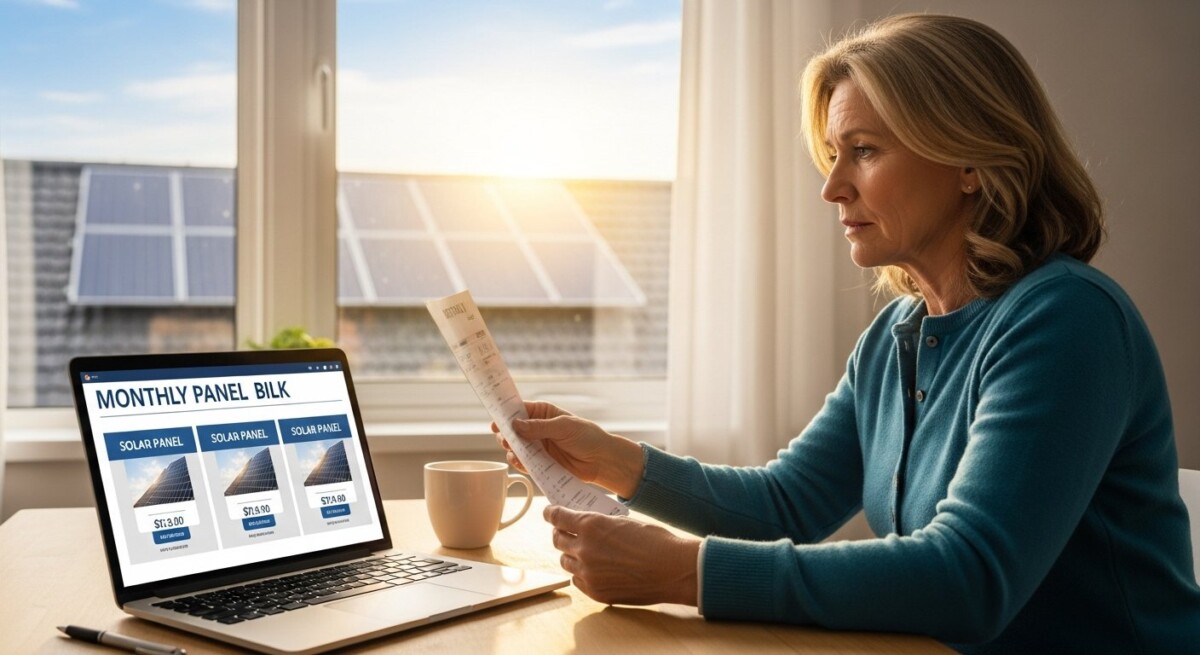
Every month, you open your electricity bill and wonder why the number keeps climbing. You are not alone. Rising energy costs have pushed many homeowners to search for a better way to power their homes. That search often leads to solar energy and the idea of reducing monthly bills while gaining more control over your energy use.
But figuring out where to start can feel overwhelming. You might wonder which panels are best, how much they cost, or whether your roof even works for solar. That is where trusted solar quote services come in. These services help you compare solar installation quotes from multiple providers so you can make an informed decision without spending hours on research.
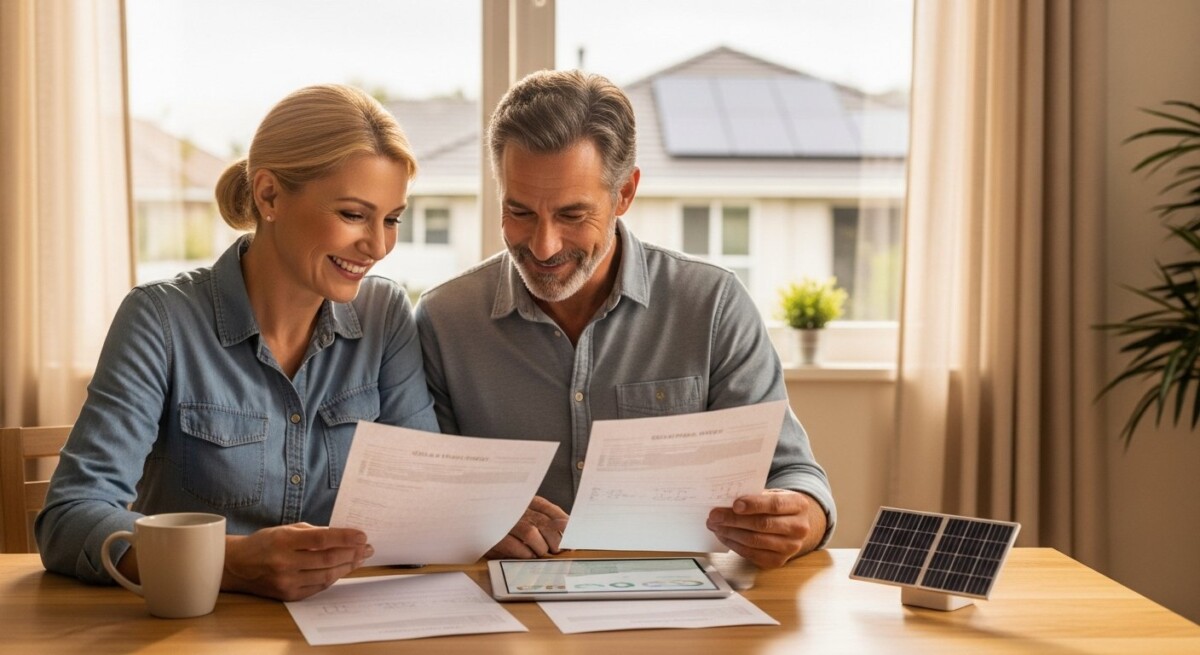
By using a free quote service, you can see what different installers offer, how much you might save, and which system fits your home. It takes the guesswork out of going solar and puts you in control of your investment.
Understanding Trusted Solar Quote Services
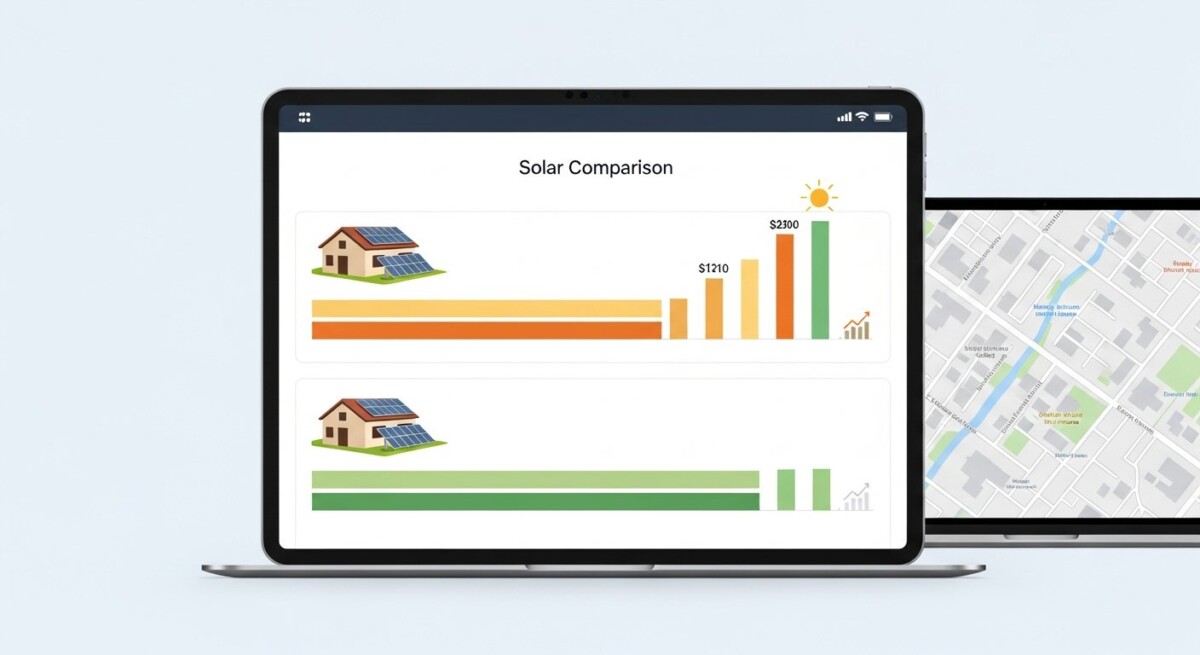
A trusted solar quote service is an online platform that connects you with pre-screened solar installation companies. Instead of calling five different contractors yourself, you fill out one simple form about your home and energy usage. The service then sends your information to multiple installers who compete for your business.
These platforms are not solar companies themselves. They act as matchmakers between homeowners and reputable installers. Most services are free for homeowners because the installers pay a fee when they receive your quote request. This means you get several custom quotes without any obligation or upfront cost.
More homeowners are turning to these services because they save time, reduce pressure from pushy salespeople, and give you side-by-side comparisons. You can evaluate equipment options, warranties, and pricing all in one place. It makes the process transparent and helps you avoid costly mistakes.
How Quote Services Protect You
Reputable quote services vet the installers on their network. They check licensing, insurance, and customer reviews before adding a company. When you use a trusted platform, you know every installer has met basic standards. This adds a layer of protection that you do not get by simply googling local solar companies.
Why Solar Energy Is Becoming More Popular
Electricity rates have risen faster than inflation for years, and the trend shows no signs of stopping. Homeowners feel the pinch and look for ways to lock in lower, predictable energy costs. Solar panels offer that stability by generating your own power from the sun.
Beyond saving money, many people choose solar because it reduces their carbon footprint. Solar energy is clean, renewable, and produces no greenhouse gases once installed. For environmentally conscious homeowners, switching to solar is one of the most impactful changes they can make.
The long-term financial picture also looks attractive. Federal tax credits, state rebates, and net metering programs can lower the upfront cost significantly. Over 25 to 30 years, a typical solar system can save tens of thousands of dollars, all while increasing your home’s resale value.
If you are considering solar power for your home, comparing installation quotes can help you understand your options. Request a free solar quote or call (888) 555-0199 to learn more.
Common Questions Homeowners Have About Solar
It is normal to have questions before making a big decision. Solar panels are a long-term investment, and you want to feel confident about your choice. The good news is that most concerns have clear answers.
Cost is usually the first question. A typical residential system costs between $15,000 and $25,000 before incentives, but federal and state programs can cut that by 30 percent or more. Financing options like solar loans also make it affordable with little or no money down.
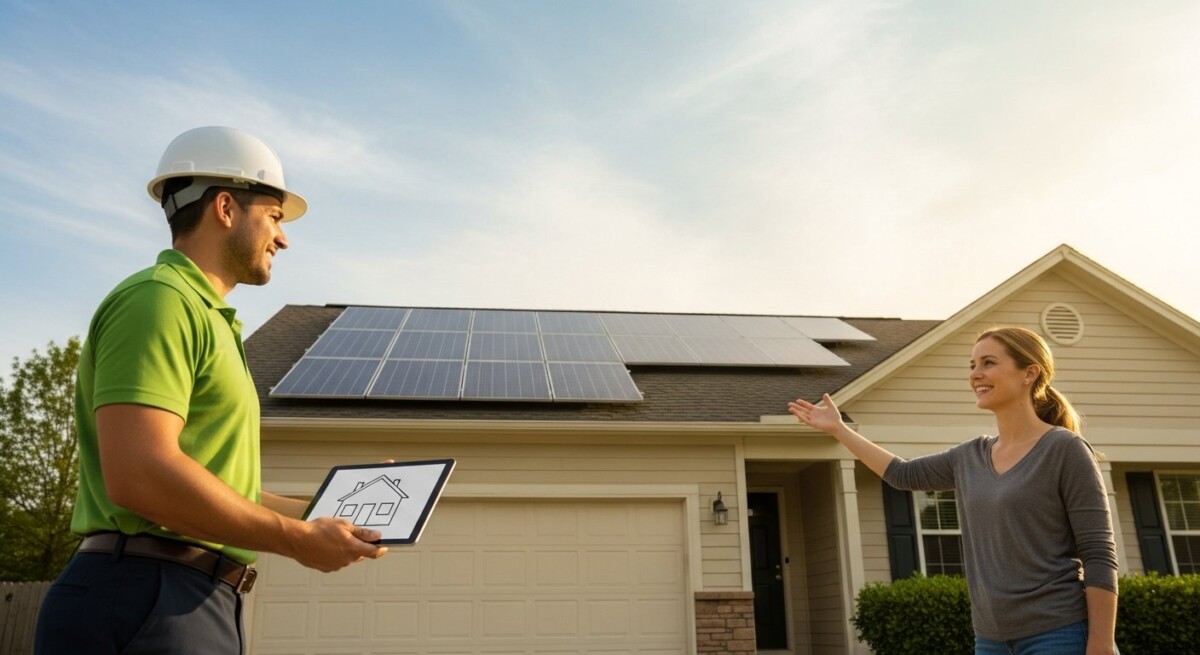
Another common worry is roof suitability. Not every roof is ideal, but most can accommodate panels. Factors like age, material, shading, and orientation all matter. A professional installer will assess your roof during the free site visit and let you know if any repairs or upgrades are needed.
- How much does a solar system cost after tax credits and rebates?
- Will solar panels work on my roof if it faces east or west?
- How long does it take for solar panels to pay for themselves?
- What happens if my panels produce more electricity than I use?
- Do solar panels require a lot of maintenance?
- Will I still have power if the grid goes down?
How Solar Panel Installation Works
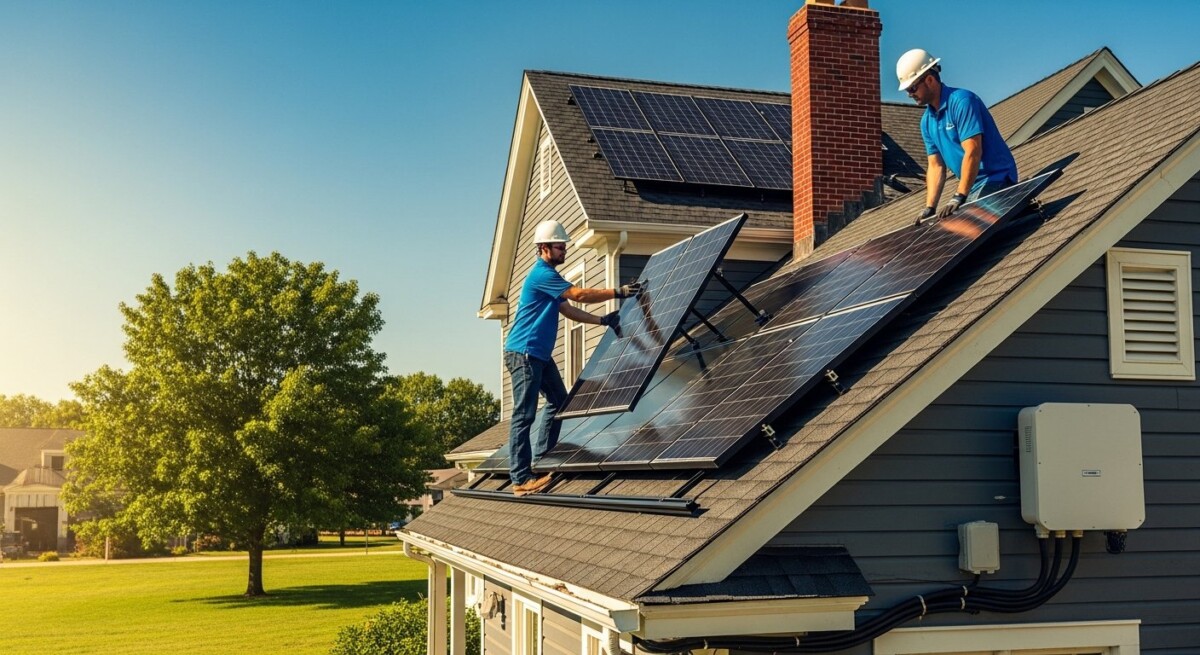
The installation process is simpler than most people expect. Once you choose an installer, they handle almost everything from permits to final connection. You do not need to become a solar expert yourself.
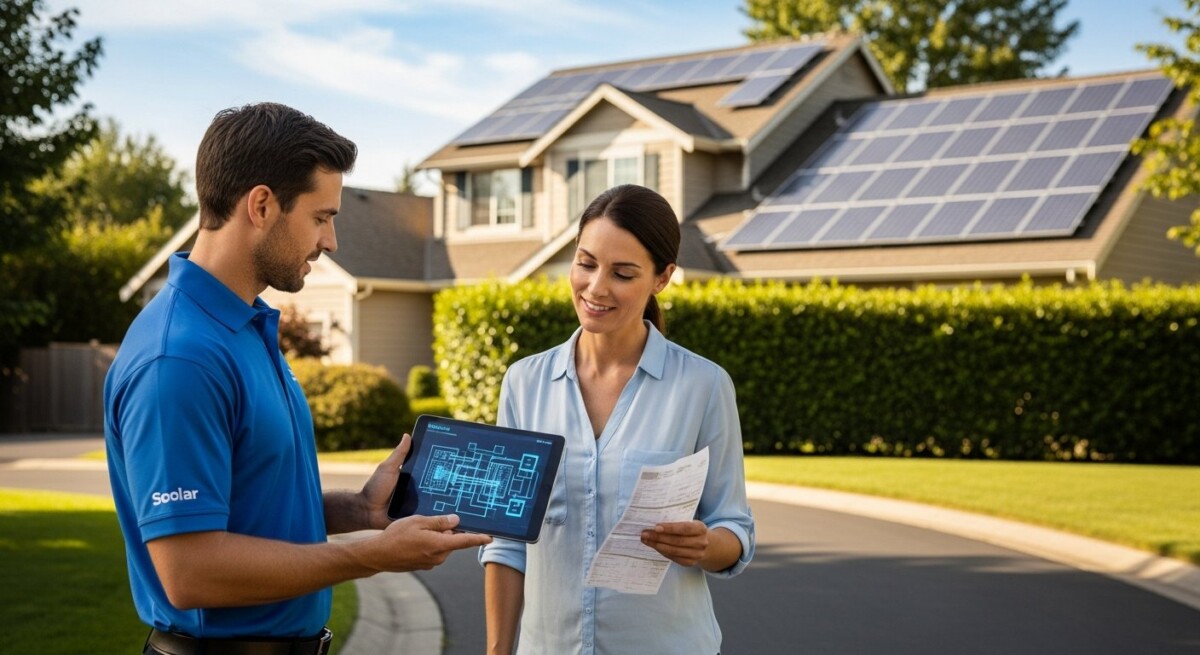
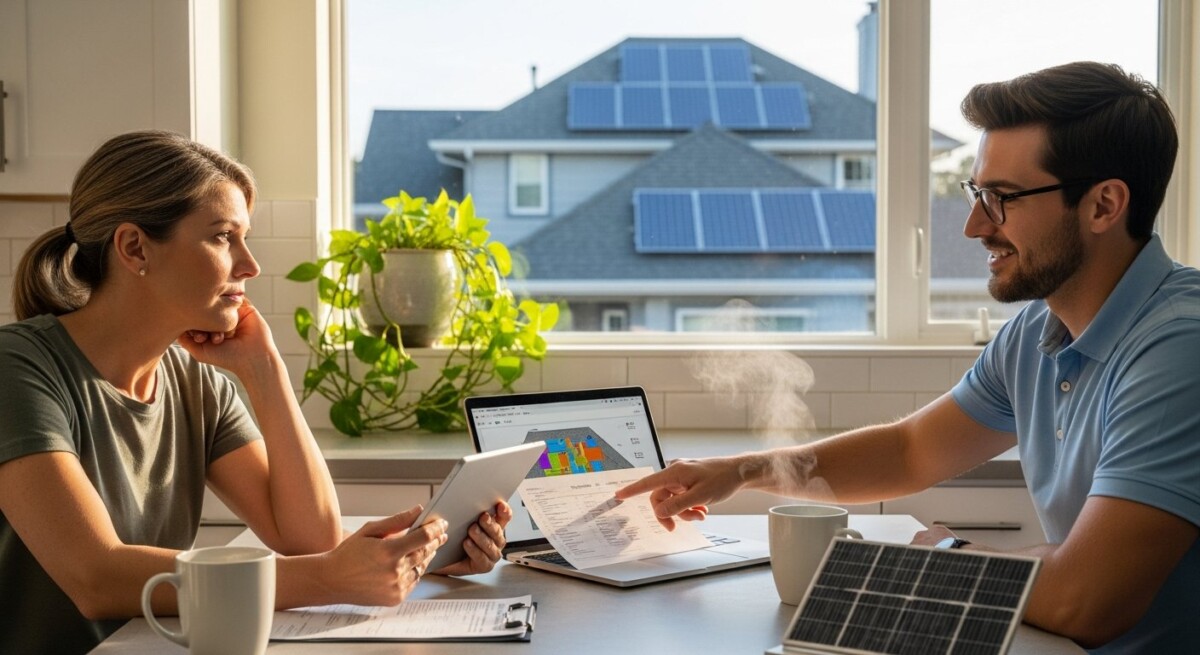
First, the installer performs a home energy assessment. They look at your past electricity bills, measure your roof, and check for shading. Then they design a system that matches your energy needs and roof space. After you approve the design, the company pulls the necessary permits from your local government.
- Home energy assessment , Review your usage and roof condition.
- System design , Create a custom layout and equipment list.
- Permits and approvals , File paperwork with your city or county.
- Panel installation , Mount the panels, inverter, and wiring.
- System activation , Connect to the grid and start generating power.
Speaking with experienced installers can help you determine the best solar solution for your home. Compare solar quotes here or call (888) 555-0199 to explore available options.
Signs Your Home May Be Ideal for Solar
While solar can work on many homes, some properties are better candidates than others. The best way to know for sure is to get a professional evaluation. But there are a few signs that suggest your home is a strong fit.
If your roof gets plenty of direct sunlight during the day, especially on south- or west-facing sections, you have good solar potential. Trees or nearby buildings that cast shade can reduce production, but partial shade is not always a dealbreaker with modern panel technology.
High electricity bills are another clear sign. If you pay more than $100 per month, solar will likely save you money. And if you plan to stay in your home for five years or more, you will have enough time to recoup your investment and start enjoying free electricity.
- Your roof receives at least four to five hours of direct sunlight daily.
- Your monthly electricity bill is consistently above $100.
- You have ample roof space without too many vents or chimneys.
- Your roof is less than ten years old or in good condition.
- You plan to stay in your home for at least five more years.
- Your state or utility offers net metering or solar incentives.
What Affects Solar Installation Costs
Solar pricing varies from home to home, but the main factors are consistent. Understanding them helps you evaluate quotes and avoid overpaying. The size of the system, measured in kilowatts (kW), is the biggest cost driver. A larger system that covers all your electricity needs costs more upfront but saves more over time.
Equipment quality also matters. Premium panels from brands like SunPower or LG are more efficient and often come with better warranties, but they cost more. Mid-range panels from manufacturers like Canadian Solar or Trina provide excellent value for most homeowners. Your installer can explain the trade-offs.
Installation complexity adds to the cost. A simple roof with easy access and standard shingles is cheaper to work on than a steep tile roof or a two-story home. Local incentives and the federal Investment Tax Credit (ITC) can reduce your net cost by thousands, so always ask about current programs.
The cost of solar installation varies depending on your home and energy needs. Request personalized solar quotes or call (888) 555-0199 to see what options are available.
Tips for Choosing a Reliable Solar Installer
Not all solar companies are created equal. Some have years of experience and strong reputations, while others are newer or have mixed reviews. Taking a few extra steps during your search can save you headaches later.
Start by checking how long the company has been in business and whether they hold relevant certifications, such as from the North American Board of Certified Energy Practitioners (NABCEP). Read online reviews on sites like Google, Yelp, and the Better Business Bureau. Pay attention to how the company handles complaints and service issues.
Always compare at least three quotes before deciding. Look beyond the bottom line price. Compare the equipment being offered, the warranty terms, and the estimated energy production. A slightly higher quote might include better panels, a longer labor warranty, or superior customer support.
- Review installer experience and NABCEP certification.
- Check warranties on panels, inverters, and workmanship.
- Read recent customer reviews on multiple platforms.
- Compare at least three quotes with similar equipment.
- Ask about financing options and lease versus purchase.
- Verify that the installer handles permits and inspections.
Long-Term Benefits of Installing Solar Panels
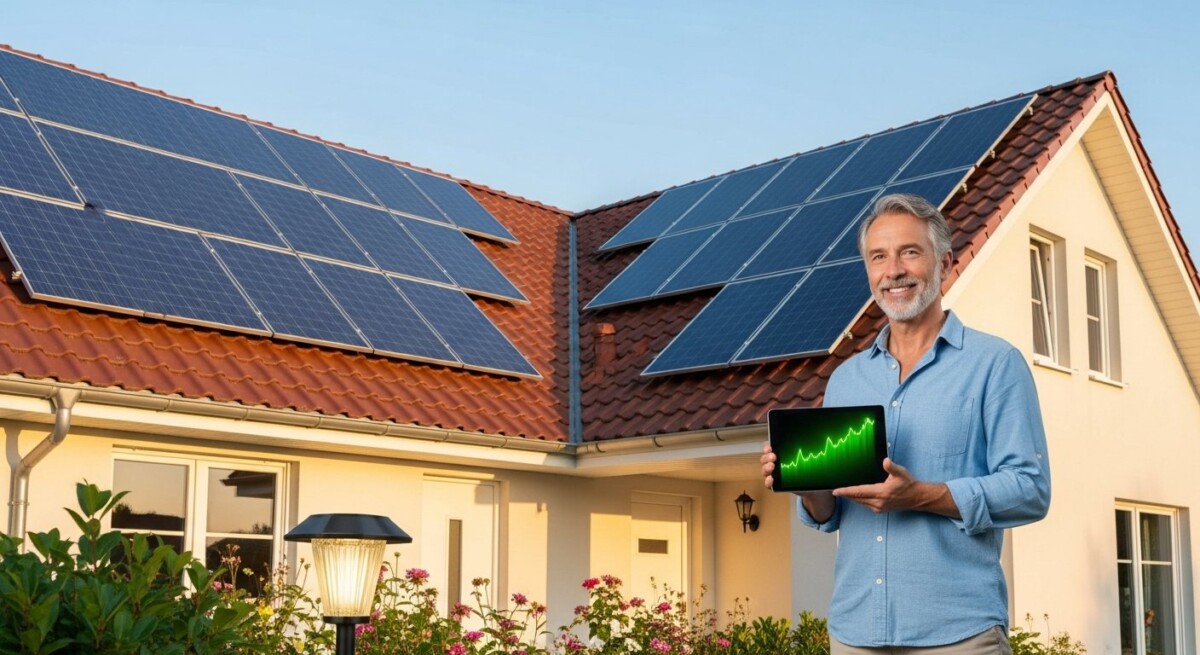
The most obvious benefit is lower electricity bills. Once your system is paid off, the power it produces is essentially free. Over 25 years, that adds up to significant savings,often $20,000 to $50,000 depending on your local utility rates and sun exposure.
Solar panels also increase your home’s value. Studies show that homes with solar sell for a premium compared to similar homes without it. Buyers see the lower utility bills as a valuable feature, and in many markets, solar homes sell faster.
Energy independence is another major advantage. When you generate your own electricity, you are less affected by utility rate hikes and grid outages (especially if you add battery storage). And every kilowatt-hour of solar power you use means less fossil fuel burned, which helps reduce air pollution and combat climate change.
How much can I save by switching to solar?
Savings depend on your location, system size, and electricity rates. Most homeowners save between $10,000 and $30,000 over the 25-year lifespan of their system. Using a trusted solar quote service helps you see personalized savings estimates from multiple installers before you commit.
Do solar panels work on cloudy days or in winter?
Yes, solar panels still generate electricity on cloudy days, though at reduced output. Modern panels capture diffuse light and can produce about 10 to 25 percent of their rated capacity under heavy clouds. Snow can actually help by reflecting light onto panels, and they are designed to shed snow easily.
What is net metering and how does it benefit me?
Net metering is a billing arrangement where your utility credits you for excess electricity your panels send back to the grid. When your system produces more than you use, the meter runs backward. You can use those credits later when your panels generate less, such as at night or in winter. Not all states offer full retail net metering, so check local policies.
How long does a solar panel system last?
Most solar panels come with a 25-year performance warranty, and they often continue producing power well beyond that,sometimes 30 to 40 years. Inverters typically need replacement after 10 to 15 years. With minimal maintenance like occasional cleaning, your system can generate clean energy for decades.
Is it better to buy or lease solar panels?
Buying your system outright or with a solar loan gives you the full financial benefits, including tax credits and long-term savings. Leasing or signing a power purchase agreement (PPA) requires no upfront cost but you do not own the system. The lease payments eat into your savings, and the tax credits go to the leasing company. Buying is usually better if you can afford it.
Will solar panels damage my roof?
When installed correctly by a professional, solar panels do not damage your roof. Installers use flashing and sealants to prevent leaks. In fact, panels can protect the roof area underneath from sun and rain. If your roof is old or damaged, the installer may recommend repairs before installation.
How do I know if an installer is trustworthy?
Look for a proven track record, valid licenses and insurance, positive customer reviews, and transparent pricing. Avoid companies that pressure you to sign immediately or demand large deposits before work begins. Using a trusted solar quote service helps because they pre-screen installers on your behalf.
Switching to solar is one of the smartest financial and environmental decisions a homeowner can make. The key to getting the best deal is comparing multiple solar installation quotes from qualified professionals. A trusted solar quote service makes that comparison easy, transparent, and free. Start exploring your options today and take the first step toward lower bills, energy independence, and a cleaner future.