
How to Add a Solar Battery to Your Home Generator
Pairing a solar battery with your generator cuts fuel use, reduces noise, and keeps your home powered for days.

By Liam Parker
Learn more about Solar Panel Installation and Repair for guides, costs, and what to expect.
Compare Solar Panel Installation and Repair Pros Near You

Enter your ZIP code to compare top-rated local professionals and request free quotes.
Power outages are a fact of life in many parts of the United States. Whether caused by severe storms, grid failures, or planned rolling blackouts, losing electricity can disrupt your daily routine and threaten your comfort and safety. Many homeowners have already invested in a backup generator, often a natural gas or propane model, to keep the lights on. But as solar and battery technology has improved and prices have dropped, a common question emerges: can you integrate a solar battery with your existing home generator? The short answer is yes, and doing so can transform your home's backup power strategy, cutting fuel costs and extending your outage endurance.
In this guide, we will walk through the practical steps, benefits, and important design considerations of pairing a solar battery with your current generator setup. By the end, you will understand how these two systems can work together to provide cleaner, quieter, and more resilient backup power for your home. We will also explore the financial implications and how to plan the integration with the help of a qualified solar installer.
Why Pair a Solar Battery with a Generator?
Generators are reliable workhorses, but they have clear drawbacks. They consume fuel, require regular maintenance, produce noise, and emit exhaust that limits where you can place them. A solar battery, on the other hand, stores energy silently and can be charged by your solar panels during the day. When you combine the two, you get the best of both worlds: the immediate, high-power output of a generator for extreme needs, and the quiet, low-cost, emissions-free power of a battery for everyday backup.
The primary advantage is fuel savings. Instead of running your generator continuously for days on end, you can run it only when the battery is low or during peak load times. For example, a typical home might need about 30 kWh per day for essential circuits. A fully charged 13.5 kWh Tesla Powerwall can cover a significant portion of that, and your generator can recharge the battery or power the home directly when the battery is depleted. This approach cuts fuel consumption by 50% to 70% in many cases, depending on your usage patterns.
Another benefit is noise reduction. Generators are loud, and running them at night can disturb your family and neighbors. With a battery, you can run quiet, essential loads like refrigerators, lights, and internet routers for several hours without starting the generator. This is especially valuable in neighborhoods with strict noise ordinances or during long, weather-related outages.
How the Systems Work Together
To integrate a solar battery with your existing generator, you need a system that can manage both power sources intelligently. This is typically done with a hybrid inverter and an automatic transfer switch that connects your generator, battery, solar panels, and utility grid. The system's energy management controller decides in real time which source to use based on load, battery state of charge, and generator availability.
Here is a typical sequence during an outage:
- Battery first: When the grid fails, the battery immediately powers your critical loads. This happens seamlessly, usually within milliseconds, keeping your lights on and appliances running.
- Generator as backup: If the battery runs low and the sun is not producing enough solar power, the system automatically starts the generator. It can either power the home directly or recharge the battery, whichever is more efficient.
- Generator off, solar recharges: Once the generator has brought the battery to a minimum level (for example, 50%), it shuts off, and solar panels can top off the battery during the day. This cycle repeats as needed, minimizing generator runtime.
This smart interaction is possible because modern inverters, such as those from Enphase, SolarEdge, or Tesla, are designed to work with generators. They can sense generator output, control charging rates, and prevent overloading. The key is to choose a battery system that explicitly supports generator integration, as not all batteries are designed for this.
Key Design Considerations Before You Start
Before integrating solar battery with existing home generator, you need to evaluate several technical factors. A professional solar installer can help, but you should have a basic understanding of what is involved.
Generator Size and Compatibility
Your generator's power output must be compatible with the battery's charging requirements. Most home generators range from 5 kW to 20 kW. A battery system typically needs a generator that can provide enough wattage to charge the battery at a reasonable rate. For example, a 7 kW generator can easily charge a 10 kWh battery in about two hours, but it might not be enough if you are simultaneously powering a large AC unit. The system must be designed to prioritize either charging the battery or powering loads, or you need a generator large enough to do both.
Also, consider the generator's fuel type. Natural gas generators can run indefinitely as long as the gas supply is intact, but they are less efficient for short charge cycles. Propane and diesel generators are more portable but require refueling. Your battery integration should account for the generator's fuel autonomy to avoid running out during a long outage.
Electrical Panel Setup
You will need to decide which circuits are critical and will be backed up by the battery and generator. A sub-panel is often installed to isolate these circuits. The sub-panel connects to the hybrid inverter, which manages power from solar, battery, and generator. This setup allows you to power essentials like refrigeration, heating systems, and medical equipment without needing to back up your entire home, which would require a much larger and more expensive system.
In some cases, you can use a transfer switch that allows the generator to power the entire load panel, but the battery would need to be sized accordingly. A professional electrician must perform this work to ensure safety and code compliance. The National Electrical Code (NEC) has specific requirements for integrating multiple power sources, including rules for disconnects and grounding.
Battery Capacity and Sizing
Choosing the right battery capacity is crucial. Too small, and you will still rely heavily on the generator. Too large, and you may be wasting money on storage you rarely use. A good starting point is to calculate your daily essential usage. For a typical home, that might be 20 to 30 kWh per day. A battery like the Tesla Powerwall (13.5 kWh) or the LG Chem RESU (9.8 kWh) can cover a portion of that. To reduce generator runtime significantly, you may need two or more batteries, giving you 20 to 27 kWh of usable capacity.
Remember that batteries are not 100% efficient, and you should not discharge them to zero. Most batteries have a recommended depth of discharge (DoD) of 80% to 90%, meaning you can use up to 80% to 90% of the rated capacity. Also, consider the continuous power output of the battery. A single battery might provide 5 kW of continuous power, which is enough for most essential loads but not for a central AC unit. If you want to power large appliances, you will need a battery with a higher output or a larger generator to supplement.
Financial and Practical Benefits
Integrating a solar battery with your existing home generator is not just about convenience; it is also a smart financial move. By reducing generator fuel consumption, you save money on gasoline, propane, or natural gas. Over a multi-day outage, these savings can be substantial. For example, a 7 kW generator running at 50% load consumes about 0.75 gallons of propane per hour. At $3.50 per gallon, that is $2.63 per hour. Running the generator 12 hours a day for a week costs about $221. With a battery, you might only run the generator 4 hours a day, cutting that cost to about $74 per week.
Additionally, a solar battery can provide benefits even when the grid is up. Many utilities offer time-of-use (TOU) rates, where electricity costs more during peak hours. You can charge the battery with solar during the day and discharge it during peak hours, avoiding high utility rates. This is called load shifting and can reduce your monthly electric bill by 10% to 20% in many areas. Over time, the battery can pay for itself, especially when combined with federal and state incentives like the 30% investment tax credit (ITC).
There is also the intangible benefit of peace of mind. You know that your home will remain powered for days, even if the outage lasts longer than expected, because you have multiple layers of backup. You can maintain comfortable temperatures, keep food fresh, and stay connected, all while minimizing your environmental footprint.
Steps to Integrate Your Battery and Generator
If you are ready to move forward, here is a step-by-step process to guide you:
- Assess your needs: List the circuits you want to back up and estimate your daily energy consumption. This will determine the battery size and generator compatibility.
- Consult with a solar installer: Reach out to a reputable solar company that specializes in battery plus generator systems. They can perform a site assessment and design a system that meets your specific requirements. Many installers offer free, no-obligation quotes, and using a service like solar for existing homes upgrades can help you find vetted professionals in your area.
- Choose the right equipment: Your installer will recommend a hybrid inverter and battery that are compatible with your generator. Ensure that the system has a generator input port and supports the communication protocols needed for automatic start/stop.
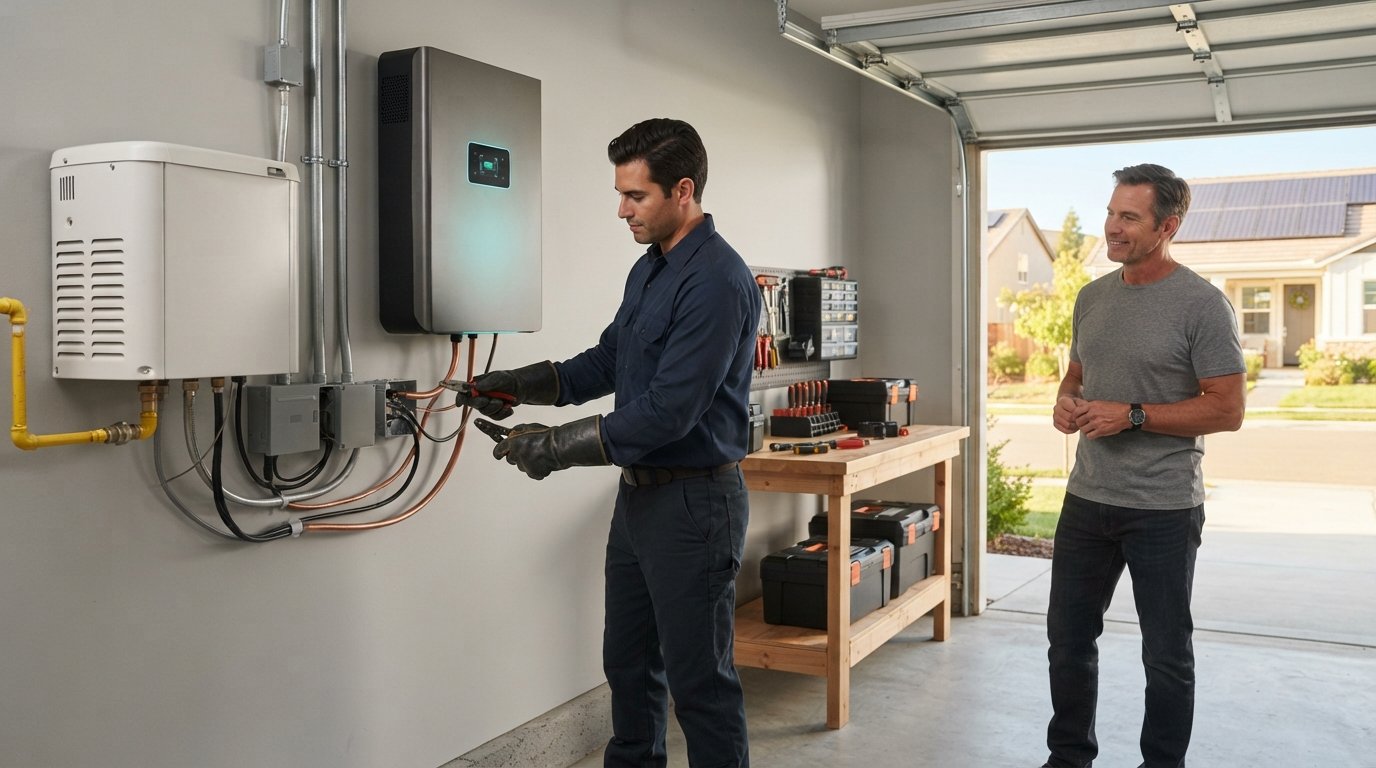
- Install the sub-panel and wiring: An electrician will install a sub-panel for critical loads, connect it to the hybrid inverter, and wire the generator to the inverter's generator input. This must be done according to local codes and with proper permits.
- Configure the system: The installer will set up the energy management software to prioritize battery use, set generator charge thresholds, and define the behavior during outages and TOU periods.
- Test and integrate: Finally, the system will be tested to ensure all components communicate correctly. You will be shown how to manually start the generator if needed and how to monitor the system from your phone.
This process typically takes one to three days, depending on the complexity of your electrical panel and the number of batteries being installed. The total cost varies widely, but a typical home battery system ranges from $10,000 to $20,000 before incentives. While that is a significant investment, the combination of outage protection, energy bill savings, and reduced generator fuel costs can make it worthwhile.
Professional Help and Getting Quotes
Attempting to integrate a solar battery with your generator without professional help is risky. Electrical systems of this complexity can be dangerous if not installed correctly, and improper wiring can void warranties or cause equipment damage. A licensed solar installer will ensure that the system meets all safety standards and is optimized for your home's unique energy profile.
When you are ready to get started, the best approach is to obtain several quotes from qualified installers. Look for companies that have experience with generator integration, not just solar panel installation. Ask for references and check online reviews. You can also use online resources to compare options and understand the latest pricing and incentives. For detailed cost and savings estimates, tools like the SolarEnergy.ai platform offer calculators and expert advice that can help you make an informed decision.
By investing in professional integration, you ensure that your solar battery and generator work seamlessly as one system, providing reliable, efficient, and sustainable backup power for years to come.
Is This the Right Move for You?
Integrating a solar battery with your existing home generator is an excellent upgrade for many homeowners. It reduces fuel costs, lowers noise, and provides a more sustainable backup solution. However, it is not the right choice for everyone. If you have a very old generator that is not compatible with modern inverters, or if your electrical panel is outdated, the cost of integration may be too high. In those cases, you might consider replacing the generator or the panel as part of the project.
Also, if you live in an area with very few power outages and you do not have solar panels, the financial payback may be slower. But if you already have solar and you want to maximize your energy independence, adding a battery is a logical next step. The ability to store your solar energy for use during an outage is a game changer, and pairing it with a generator gives you an unbeatable level of resilience.
We encourage you to explore this option with a professional. Start by getting a few free quotes from solar installers who can assess your specific situation. They can provide a detailed cost-benefit analysis and help you design a system that fits your budget and energy goals.
In our guide on solar upgrades for existing homes, we discuss how adding battery storage can boost your property value and cut utility bills. The same principles apply here. By integrating your battery with your generator, you are not only enhancing your home's backup power but also increasing its overall energy efficiency and market appeal.
Taking the time to plan this integration carefully will pay off in comfort, savings, and peace of mind. Power outages will always be disruptive, but with a smart hybrid system, you can weather them with confidence.