
Thin Film vs Monocrystalline Solar Panels for US Homes
Compare thin film vs monocrystalline solar panels for US homes on efficiency, cost, and roof fit. Call (833)-793-7166 for expert guidance.

Learn more about Solar Panel Installation and Repair for guides, costs, and what to expect.
Compare Solar Panel Installation and Repair Pros Near You

Enter your ZIP code to compare top-rated local professionals and request free quotes.
When you start shopping for solar, you will quickly notice that most quotes feature sleek black monocrystalline panels. Yet thin film modules still appear in certain projects, and understanding why can save you from a costly mismatch. The choice between thin film and monocrystalline solar panels for US homes is not about one being universally better; it is about matching technology to your roof, climate, and budget. This guide breaks down the real differences so you can ask sharper questions and avoid overpaying for the wrong system.
How Thin Film and Monocrystalline Panels Differ
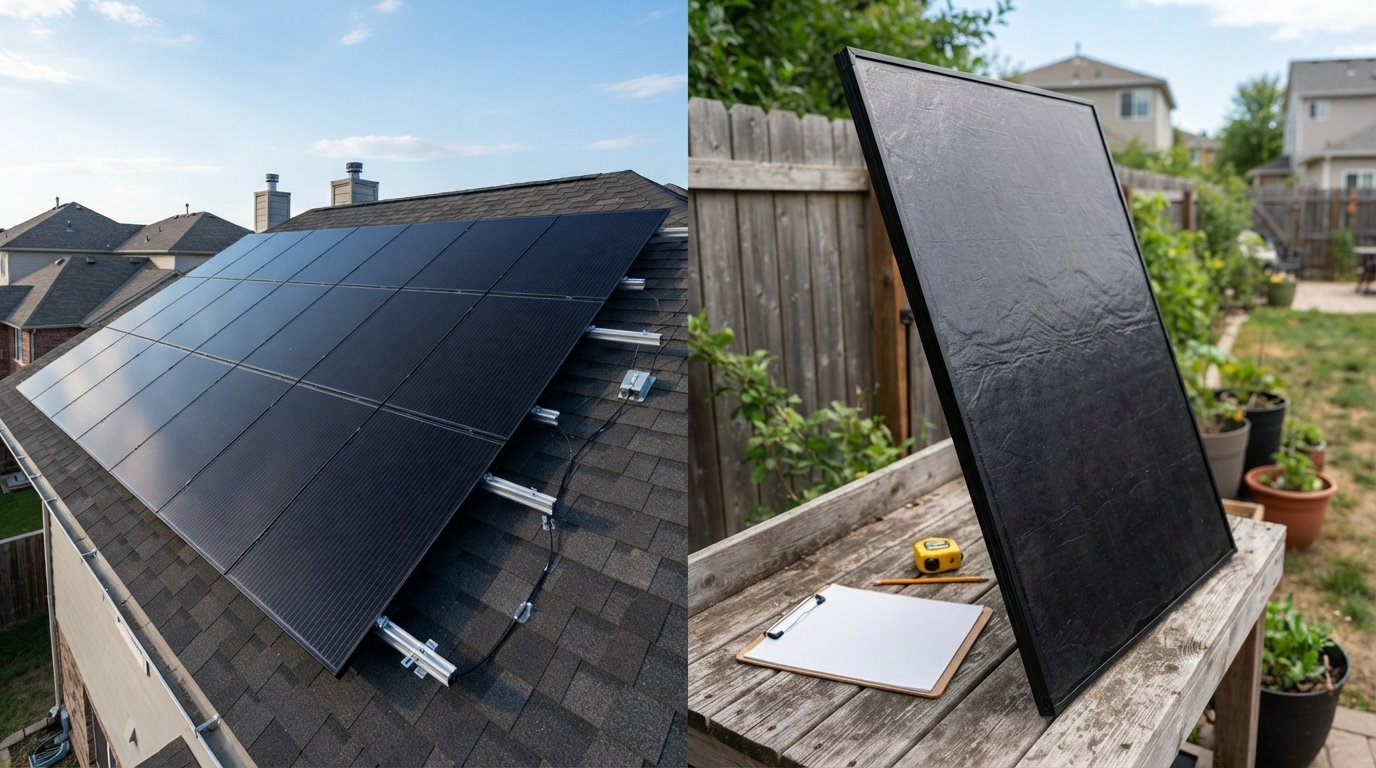
Monocrystalline panels are cut from a single silicon crystal, which gives them a uniform dark appearance and high efficiency. Thin film panels use layers of semiconductor material deposited on a substrate such as glass or flexible plastic. That manufacturing difference drives nearly every trade-off you will encounter: efficiency, weight, heat tolerance, and cost per watt.
For a typical US home, monocrystalline dominates because roof space is limited. A 20-panel monocrystalline array might produce the same output as 30 or more thin film panels. That matters when your south-facing roof is only 400 square feet. Thin film shines in niche situations, such as low-slope commercial roofs or structures with weight limits, but residential rooftops rarely fall into those categories.
Efficiency numbers tell the story. Most monocrystalline residential panels on the US market today convert 19% to 22% of sunlight into electricity. Thin film panels typically range from 10% to 13%. Higher efficiency means fewer panels, less racking, and lower labor costs per watt, which often offsets the higher per-panel price of monocrystalline.
Efficiency, Durability, and Warranty Differences Without the Jargon
Efficiency is simply how much of the sun's energy a panel turns into usable electricity. Monocrystalline wins here, and that advantage compounds over time because you need fewer panels to hit your energy target. Fewer panels mean fewer roof penetrations, less wiring, and a cleaner install.
Durability is closer than many homeowners expect. Monocrystalline panels typically carry 25-year product and performance warranties, with degradation of about 0.5% per year. Thin film warranties vary widely; some manufacturers offer 10 to 25 years, and degradation can run 0.5% to 1% annually depending on the technology. For a US home you plan to own for decades, the longer warranty and lower degradation of monocrystalline usually provide more predictable savings.
Heat is another factor. Thin film has a lower temperature coefficient, meaning it loses less output on scorching days. However, monocrystalline's higher baseline efficiency usually more than compensates, even in hot climates like Texas or Arizona. Unless you are working with a very specific roof constraint, the heat advantage of thin film rarely changes the final economics for a US home.
Where Thin Film Makes Sense for US Homes
Thin film is not obsolete; it is specialized. The technology fits when standard panels create structural or aesthetic problems. Low-slope roofs, for example, may not support traditional racking, and thin film can be adhered directly to the membrane. Homes with weight limits, such as certain manufactured or historic structures, may also benefit from lightweight thin film modules.
High-heat environments with abundant space can favor thin film because the lower temperature coefficient reduces output loss. If you have a large, unshaded roof and your primary goal is lowest upfront cost per watt, thin film may pencil out, though you will need more square footage. The following use cases are where thin film deserves a closer look:
- Low-slope or flat roofs where traditional racking is difficult or expensive
- Structures with weight restrictions that rule out glass-heavy monocrystalline panels
- Large, unshaded roof areas where space is not a constraint
- Projects prioritizing lowest initial cost per watt over maximum output per square foot
Outside these scenarios, monocrystalline is the safer default for US homes. Most residential roofs are pitched, space-constrained, and expected to last 25 years or more, which plays directly to monocrystalline's strengths.
Cost per Watt: Why Monocrystalline Dominates Residential
On paper, thin film can have a lower manufacturing cost per watt. In practice, the installed cost for a US home often favors monocrystalline because balance-of-system costs (racking, wiring, labor, permits) are spread across fewer panels. If thin film requires 40% more panels to reach the same output, you pay more for racking, labor, and roof penetrations even if each panel is cheaper.
Monocrystalline prices have fallen dramatically over the past decade, narrowing the raw cost gap. For most homeowners, the question is not which panel is cheaper per unit but which system delivers the best return on investment. Higher efficiency usually means a smaller, simpler array with lower installation overhead. That is why monocrystalline remains the default choice in residential solar quotes across the US.
Financing also tilts toward monocrystalline. Lenders and installers are more familiar with the technology, and standardized designs make quotes easier to compare. If you are weighing financing options, understanding how system size affects your loan or lease payment is critical, and panel type directly influences that size. For a deeper look at how monocrystalline technology works and why it leads the residential market, see this guide to monocrystalline solar panel efficiency.
How Panel Type Affects Inverter Pairing and System Sizing
Panel type influences the rest of your system design more than most homeowners realize. Monocrystalline panels typically pair with string inverters or microinverters designed for higher DC voltages and currents. Thin film panels may require different inverter specifications, and some older thin film technologies have unique grounding or rapid shutdown requirements. A mismatch here can add cost or complicate permitting.
System sizing is where the efficiency gap becomes concrete. Suppose your home uses 10,000 kWh per year and your roof gets 1,400 sun hours annually. You need roughly a 7.1 kW system. With 400-watt monocrystalline panels, that is about 18 panels. With 250-watt thin film panels, you need about 29 panels, plus more racking and wiring. If your roof cannot fit 29 panels, thin film is not viable regardless of its other advantages.
Inverter pairing also affects future upgrades. If you plan to add battery storage or expand the array later, monocrystalline's smaller footprint leaves more room for growth. Thin film systems that max out roof space on day one leave little flexibility. Before signing, confirm the proposed inverter is optimized for the panel type and that the design leaves room for the unexpected.
Questions to Ask Installers About Module Choice
Installers quote what they know and what their suppliers stock, so ask direct questions about module selection. A reputable installer will explain why a specific panel fits your roof, climate, and budget rather than defaulting to a single brand. Use the following questions to compare quotes apples to apples:
- Which module brand and model are you quoting, and what are its efficiency and degradation specs?
- Why did you choose this panel type for my roof orientation, shading, and space constraints?
- What inverter are you pairing with these panels, and is it optimized for this module?
- How does the panel warranty compare with the workmanship warranty, and who honors each?
- If I want to expand the system later, how much roof space will remain?
Compare at least three quotes and look beyond the headline price. A slightly higher price per watt for monocrystalline often delivers a smaller system, fewer roof penetrations, and better long-term output. If an installer pushes thin film without a clear structural or cost reason, ask for the math. For independent guidance on comparing providers and understanding your options, NewSolarQuotes offers educational resources and cost calculators that can help you sanity-check any proposal.
Finally, verify local incentives and net metering rules, because they can shift the calculus. Some states and utilities have specific requirements for system sizing or equipment that may favor one technology. Always confirm current program details with official sources, as incentives and rates change.
Making the Right Choice for Your Home
For most US homeowners, monocrystalline panels are the practical choice: higher efficiency, stronger warranties, and a smaller roof footprint that lowers balance-of-system costs. Thin film remains a valid option for low-slope roofs, weight-limited structures, and large unshaded areas where space is not a constraint. The key is to let your roof and energy goals drive the decision, not a sales pitch.
Before you commit, get multiple quotes, ask the module questions above, and run the numbers on system size and payback. A well-designed monocrystalline system often costs less per installed watt than a thin film system that needs 40% more panels. With clear information and a few sharp questions, you can choose the technology that actually fits your home and your budget.