
String Inverter vs Microinverter: Which Is Right for You?
Understand string inverters, their benefits, and how they compare to microinverters to choose the best solar setup for your home.

By Nathan Russell
Learn more about Solar Panel Installation and Repair for guides, costs, and what to expect.
Compare Solar Panel Installation and Repair Pros Near You

Enter your ZIP code to compare top-rated local professionals and request free quotes.
When you decide to go solar, one of the most important equipment choices you will make involves the inverter. This device converts the direct current (DC) electricity produced by your solar panels into the alternating current (AC) electricity that powers your home. Among the available options, the string inverter remains the most common and cost-effective choice for many homeowners. Understanding how it works, its advantages, and its limitations will help you make an informed decision that maximizes your energy savings and return on investment.
What Is a String Inverter and How Does It Work?
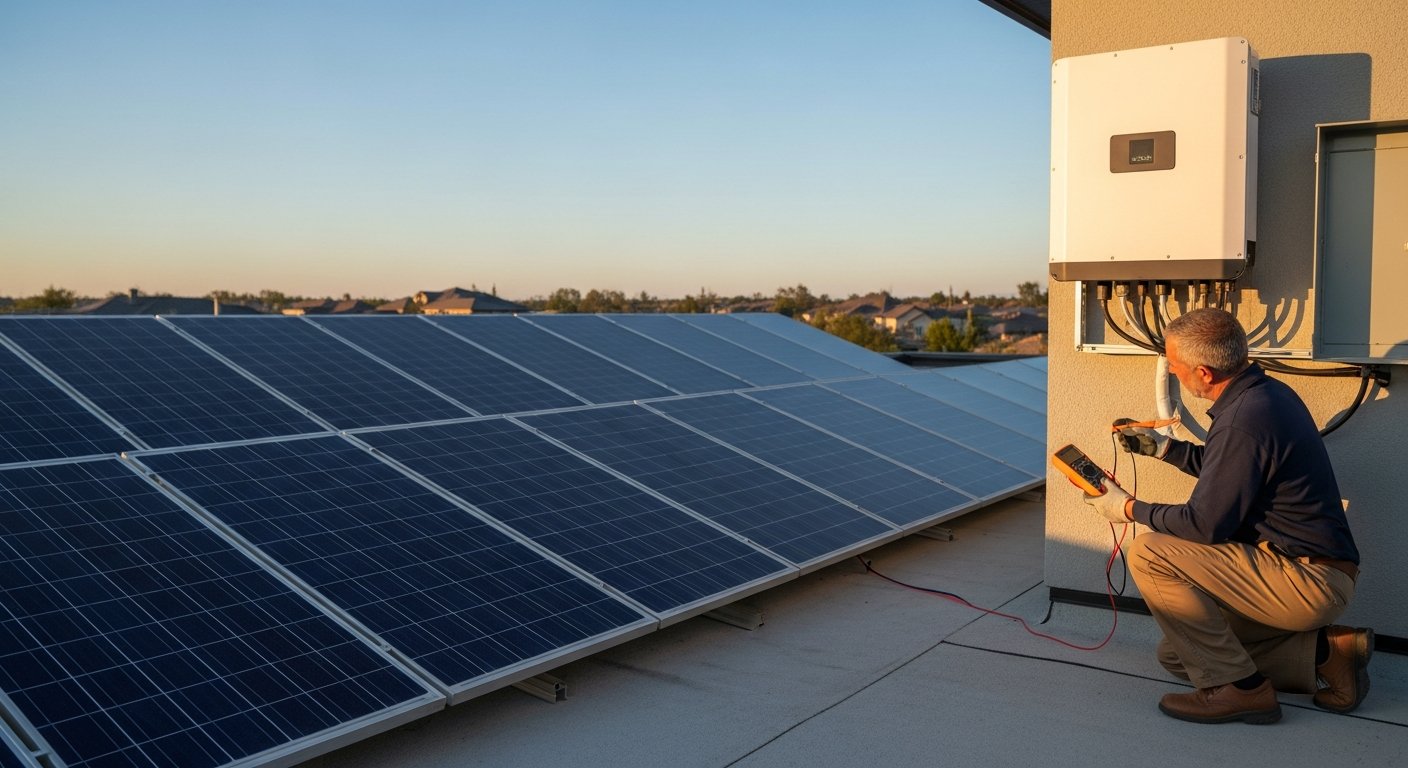
A string inverter is a centralized device that connects a series of solar panels, known as a string, into a single inverter unit. Solar panels are wired in series, and the combined DC electricity flows to the inverter, which converts it to AC power for your home. This design has been the backbone of residential and commercial solar systems for decades due to its simplicity and reliability.
In a typical setup, all panels in a string are connected to one inverter. The performance of the entire string is determined by the weakest panel, as the current is limited by the lowest-producing panel. This is often called the Christmas light effect, where one shaded or faulty panel can reduce the output of the whole string. However, modern string inverters often include power optimizers, which are devices attached to each panel to mitigate this issue.
Key Benefits of Choosing a String Inverter
String inverters offer several compelling advantages that make them the preferred choice for many solar installations, especially for homeowners on a budget or with unshaded roofs.
- Lower upfront cost: String inverters are typically the least expensive inverter option, reducing the overall cost of your solar system.
- Simpler maintenance: With a single, accessible unit, troubleshooting and repairs are straightforward, often located near your main electrical panel.
- Proven technology: String inverters have been used for decades, with a long track record of reliability and well-understood performance.
- Easier replacement: When a string inverter fails, replacement is simple and often less expensive than replacing multiple microinverters.
For many U.S. homeowners, these benefits translate into a faster payback period and a simpler overall system. If your roof receives full sun for most of the day and has no significant shading, a string inverter can deliver excellent performance at a lower price point. Additionally, the centralized design makes it easier to monitor the system's health through a single portal, although this does not provide panel-level data.
String Inverter vs. Microinverters: A Head-to-Head Comparison
Microinverters are small inverters attached to each individual solar panel. They convert DC to AC right at the panel level, which means each panel operates independently. This is the main alternative to string inverters, and the choice between them depends on your specific site conditions and priorities.
String inverters are best suited for simple, unshaded roofs where panels are installed on a single plane. They are also ideal for larger systems where the cost savings per watt are significant. Microinverters excel in complex installations with multiple roof angles, partial shading, or where panel-level monitoring is desired. They also allow for easier system expansion, as you can add panels without worrying about string sizing limitations.
However, microinverters come with a higher upfront cost and are more difficult to service, as they are located on the roof under the panels. In contrast, a string inverter is typically mounted at ground level or on a wall, making repairs and replacements much safer and more convenient. For many homeowners, the lower cost and easier maintenance of a string inverter outweigh the benefits of microinverters, especially when shading is not a major concern.
Power Optimizers: Bridging the Gap
If you like the idea of panel-level optimization but prefer the cost savings of a string inverter, power optimizers offer a hybrid solution. These small devices are attached to each panel, but instead of converting DC to AC, they condition the DC electricity and send it to a centralized string inverter. This allows each panel to work at its maximum power point, mitigating the impact of shading or panel mismatch.
Power optimizers provide many of the benefits of microinverters, such as individual panel monitoring and optimized performance, but at a lower cost. They also retain the advantage of a centralized inverter for easier maintenance. This makes them a popular middle ground for homeowners who want to avoid the performance penalties of traditional string inverters without paying the premium for microinverters. When comparing quotes, ask about the option of adding power optimizers to your string inverter system, as it may be a worthwhile investment for your specific roof layout.
When Should You Choose a String Inverter?
The decision to use a string inverter should be based on a careful assessment of your property and energy goals. Here are the key scenarios where a string inverter is the optimal choice:
- Unshaded, simple roof: If your roof has no trees or structures casting shadows, and all panels face the same direction, a string inverter will perform efficiently.
- Budget-conscious projects: For homeowners looking to minimize upfront costs, string inverters offer the best value per watt.
- Ground-mount or commercial systems: For larger installations, the cost savings of string inverters become even more pronounced, and the centralized maintenance is a significant advantage.
- Easy access for maintenance: If you have a garage or utility room wall where the inverter can be mounted, repairs and replacements are hassle-free.
In these situations, a string inverter can provide excellent reliability and financial returns. However, if your roof has complex angles, experiences significant shading, or you desire individual panel monitoring, you may need to consider microinverters or power optimizers. A reputable solar installer can perform a site assessment to determine the best configuration for your home.
String Inverter Lifespan and Warranties
The typical lifespan of a string inverter is around 10 to 15 years, which is shorter than the 25+ year lifespan of solar panels. This is a crucial factor to consider in your long-term financial planning. Most manufacturers offer warranties ranging from 5 to 12 years, with some premium models providing extended warranties up to 20 years for an additional cost.
Because the inverter is the component most likely to fail in a solar system, it is wise to factor in the potential cost of replacement when calculating your return on investment. The good news is that string inverter prices have been steadily declining, making replacement less expensive than it was a decade ago. To avoid surprise bills, consider purchasing a system with a robust warranty and ask your installer about the cost of a future inverter replacement. This transparency will help you budget effectively and ensure your solar investment continues to pay off for decades.
How to Get the Most Out of Your String Inverter System
To maximize the performance and longevity of your string inverter, regular maintenance and monitoring are essential. Most modern string inverters come with built-in monitoring capabilities, allowing you to track your system's energy production through a mobile app or web portal. Checking this data regularly can help you detect issues early, such as a sudden drop in output that may indicate a panel or inverter problem.
Physical maintenance is minimal, but keeping the inverter's cooling fans clear of dust and debris and ensuring the surrounding area is well-ventilated can prevent overheating. Additionally, cleaning your solar panels periodically, especially in dusty climates, will maintain optimal energy production. When you compare quotes from different installers, ask about the monitoring features and maintenance recommendations for the specific string inverter model they propose. This will give you confidence in the long-term performance of your system.
Financing and Incentives for Your String Inverter System
The lower cost of a string inverter system can also make it easier to finance. Whether you choose to purchase your system outright, take out a solar loan, or enter into a lease or power purchase agreement (PPA), the reduced upfront cost lowers your monthly payments and shortens your payback period. Additionally, federal and state incentives, such as the Investment Tax Credit (ITC), apply to the entire cost of your solar system, including the inverter, which can significantly reduce your net investment.
It is important to note that solar incentives vary by state and can change over time. For the most accurate and up-to-date information, consult the Database of State Incentives for Renewables and Efficiency (DSIRE) or speak with a qualified solar advisor. By taking advantage of these financial incentives, you can further improve the already attractive return on investment that a string inverter system offers.
Getting a Free, No-Obligation Solar Quote
Choosing the right inverter is just one step in the solar journey. The best way to determine if a string inverter is right for you is to consult with experienced solar professionals who can assess your home and provide personalized recommendations. At FreeSolarPowerQuotes, we connect you with reputable third-party solar providers in your area who can offer free, no-obligation quotes tailored to your energy needs and budget. You can compare multiple options, ask about string inverter vs. microinverter configurations, and evaluate financing plans without any pressure.
Our service is designed to simplify the process of going solar, providing transparent information and helping you make an educated decision. We are not a solar installer or utility company, but rather a facilitator that matches you with trusted providers. By using our free quote service, you can save time, avoid high-pressure sales tactics, and secure a solar system that delivers maximum savings and reliability for years to come. Start your solar journey today and see how a string inverter system can benefit your home.
In summary, string inverters remain a highly reliable, cost-effective choice for many American homeowners. Their simpler design, lower upfront cost, and easier maintenance make them an attractive option, especially for unshaded roofs. While microinverters offer premium performance, the financial savings of a string inverter can be redirected towards other energy efficiency upgrades or simply increase your overall return on investment. By understanding your unique situation and comparing multiple quotes, you can confidently choose the inverter technology that best fits your home and energy goals.