
Solar Panel Performance in Wildfire Smoke and Haze
Wildfire smoke cuts solar output, but proper cleaning and maintenance protect your system. Call (833)-793-7166 for expert guidance and free quotes.

By Caleb Morgan
Learn more about Solar Panel Cleaning for guides, costs, and what to expect.
Compare Solar Panel Cleaning Pros Near You

Enter your ZIP code to compare top-rated local professionals and request free quotes.
When wildfire smoke blankets the sky, the sun dims to an eerie orange glow, and homeowners with solar panels watch their energy production charts with concern. Does smoke permanently damage a solar array, or is it just a temporary inconvenience? The answer is more nuanced than a simple yes or no. Solar panel performance in wildfire smoke and haze depends on several factors, including the duration of exposure, the type of particulate matter, and how the system owner responds. Understanding these dynamics is essential for protecting your investment and maintaining realistic expectations during fire season.
Wildfire smoke consists of a complex mixture of gases, water vapor, and fine particulate matter (PM2.5), which scatters and absorbs sunlight before it reaches your roof. This atmospheric interference reduces the amount of solar irradiance available to your panels, directly impacting energy yield. While a light haze might cause only a minor dip in production, dense smoke can slash output by 50 percent or more. The good news is that modern solar panels are built to withstand harsh environmental conditions, and with proper care, most systems recover fully once the air clears. This article explores how smoke affects solar performance, outlines safe cleaning protocols, addresses air quality and safety considerations, and answers common insurance and warranty questions after a nearby fire.
How Wildfire Smoke and Haze Reduce Solar Energy Production
The primary mechanism by which wildfire smoke affects solar panels is the reduction of solar irradiance, which is the amount of solar energy that reaches the panel surface. Smoke particles, especially those in the fine and ultrafine range, scatter incoming sunlight in multiple directions, preventing a significant portion from reaching the photovoltaic cells. This scattering effect is similar to what happens on a cloudy day, but wildfire smoke can be far more variable and intense. According to research from the National Renewable Energy Laboratory (NREL), heavy smoke plumes can reduce solar irradiance by 30 to 70 percent, depending on the density and altitude of the smoke.
Energy yield, the actual electricity generated by your system, drops proportionally with irradiance. However, the relationship is not always linear because solar panels respond differently to different wavelengths of light. Wildfire smoke tends to absorb more blue and ultraviolet light while allowing some red and infrared wavelengths to pass through. Since most solar panels are most efficient at converting specific portions of the spectrum, the net effect can vary. In practical terms, a homeowner in California or Oregon might see daily production fall from 30 kWh to 15 kWh during a severe smoke event, while a lighter haze might cause only a 10 to 20 percent reduction.
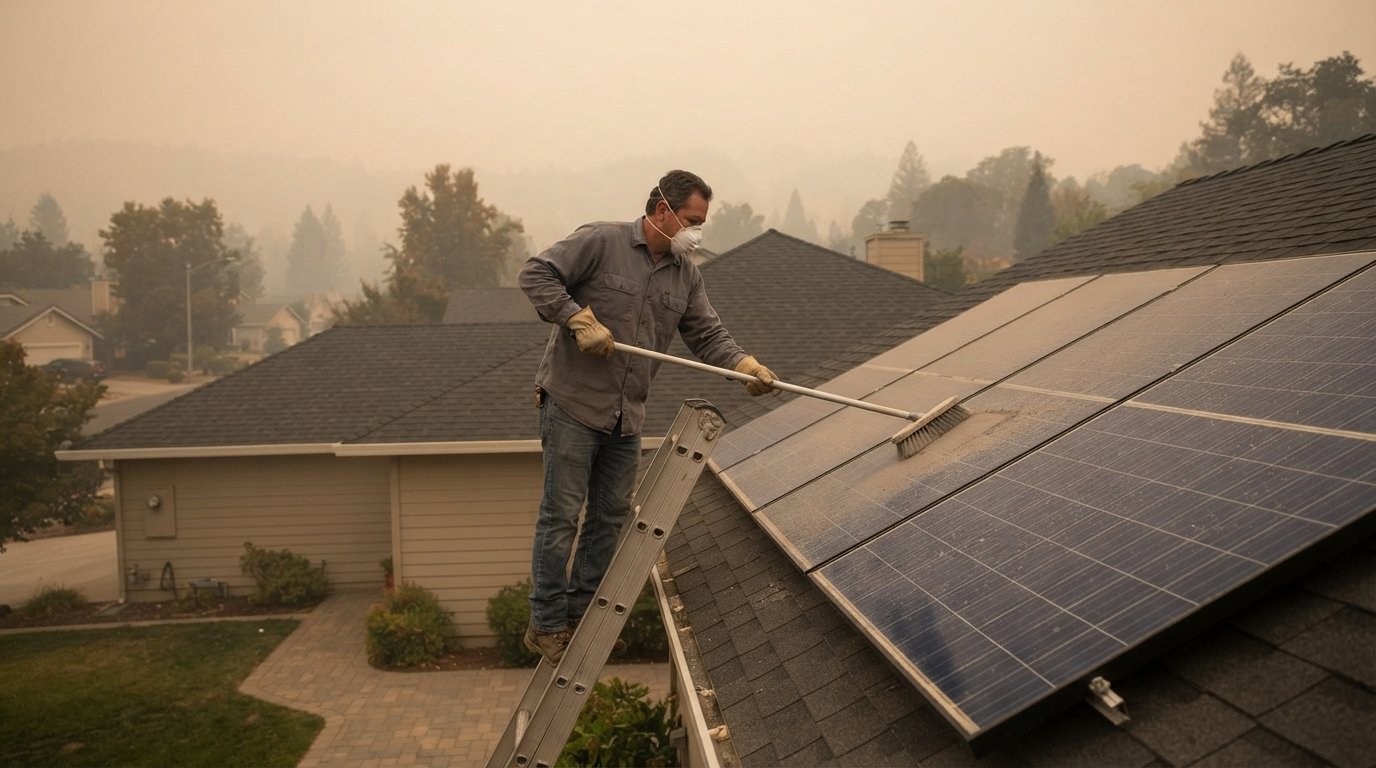
Beyond the immediate reduction in irradiance, persistent smoke can lead to ash accumulation on panel surfaces. A thin layer of ash acts like a dirty windshield, blocking additional sunlight and creating hot spots where uneven soiling causes localized heating. Over time, this can stress the panels and reduce their overall efficiency. It is important to note that while smoke itself is a temporary atmospheric condition, ash deposition is a physical fouling issue that requires proactive management. The combination of reduced irradiance and surface soiling makes wildfire season a challenging period for solar production, but it is rarely a permanent setback.
The Role of Particulate Size and Smoke Density
Not all smoke is created equal. The size and composition of particulate matter influence how much sunlight is blocked. Larger particles, such as ash flakes, tend to settle quickly and can be easily washed away, while fine particles (PM2.5) remain suspended in the air for days or weeks, creating a persistent haze that continuously dims the sun. Dense, low-lying smoke from a nearby fire will have a more pronounced effect than high-altitude smoke that has traveled hundreds of miles. Homeowners should monitor local air quality indexes and solar production data to understand the specific impact on their system. In many cases, the reduction in output is temporary and rebounds as soon as the smoke dissipates.
Ash Cleaning Protocols That Avoid Panel Damage
Cleaning ash off solar panels requires a gentle touch. Unlike ordinary dust, ash is abrasive and can contain corrosive compounds, especially if it includes residues from burned synthetic materials. Improper cleaning can scratch the glass surface, void warranties, or even cause electrical hazards. The safest approach is to wait until the smoke has cleared and the panels have cooled, then use a soft brush or a leaf blower to remove loose ash before it becomes wet and sticky. Never use a pressure washer, as high-pressure water can force ash into the panel frame and damage seals. For a deeper clean, use a garden hose with a gentle spray and a soft microfiber cloth or sponge. Avoid abrasive sponges, squeegees with hard edges, and any cleaning solution that contains ammonia or harsh chemicals.
Here is a step-by-step protocol for safely cleaning ash from solar panels:
- Wait for safe conditions: Ensure the smoke has cleared, air quality is acceptable, and the panels are cool to the touch (early morning is ideal).
- Remove dry ash first: Use a leaf blower on a low setting or a soft brush to gently blow away loose ash without scrubbing it into the glass.
- Rinse with water: Use a garden hose to gently rinse the panels from top to bottom, avoiding high pressure.
- Wash with a soft cloth: If needed, use a mild soap solution and a microfiber cloth to wipe the surface, then rinse thoroughly.
- Inspect for damage: After cleaning, check for any cracks, hot spots, or loose wiring, and contact a professional if you notice anything unusual.
Following these steps helps preserve the anti-reflective coating on the glass and prevents micro-scratches that can permanently reduce efficiency. If you are unsure about cleaning your panels, or if they are mounted on a steep roof, it is best to hire a professional solar cleaning service. Safety should always come first, and many installers offer maintenance packages that include ash removal after wildfire events.
When to Call a Professional
While light ash can be managed with basic tools, certain situations warrant professional intervention. If your panels are covered in a thick, sticky layer of ash, or if the ash contains visible debris such as charred wood or metal fragments, do not attempt to clean them yourself. These materials can cause micro-damage and pose health risks. Additionally, if your system is ground-mounted and accessible, you may have an easier time, but roof-mounted systems require fall protection and experience. If you are considering a solar quote or need help finding a reputable installer for maintenance, resources like a solar quote request form can connect you with pre-vetted professionals who understand wildfire-related maintenance.
Another consideration is the timing of cleaning. Cleaning immediately after a fire while ash is still airborne can be counterproductive, as new ash will settle within hours. Wait for a sustained period of clear air before investing time and effort. Also, avoid cleaning during peak sun hours when the panels are hot; thermal shock from cool water on hot glass can cause cracks. Early morning or late afternoon is ideal.
Air Quality and Safety Considerations for System Owners
Wildfire smoke poses significant health risks, not just to your solar panels but to you and your family. The same fine particles that dim sunlight can penetrate deep into your lungs and bloodstream, exacerbating respiratory and cardiovascular conditions. Homeowners should monitor local Air Quality Index (AQI) levels and take precautions, such as staying indoors with windows closed and using air purifiers with HEPA filters. If you need to inspect or clean your panels, wear an N95 respirator and limit outdoor exertion. It is also wise to create a clean room in your home with filtered air to protect vulnerable family members.
For solar system owners, safety extends to the electrical components. While solar panels themselves are generally safe during smoke events, the inverter and wiring can be affected by extreme heat or ash infiltration. Ensure that your inverter is installed in a shaded, ventilated area and check for any accumulation of ash around the unit. If you notice any unusual smells, sparks, or error codes, shut down the system and contact a licensed electrician. Additionally, if you rely on solar batteries for backup power, be aware that smoke does not directly impact battery performance, but power outages caused by fires can drain your reserves faster than expected. Understanding your system's capabilities during an emergency is part of being a prepared homeowner.
In some regions, utilities may proactively shut off power during high fire-risk periods (Public Safety Power Shutoffs). If you have a solar-plus-storage system, this is when it proves its worth. However, without storage, your panels will also shut down during a grid outage for safety reasons. Planning for energy resilience should include regular maintenance and perhaps a backup generator or battery. For homeowners in fire-prone areas, investing in a solar system with battery backup can provide peace of mind, ensuring critical loads stay powered even when the grid goes down.
Insurance and Warranty Questions After a Nearby Fire
After a wildfire, homeowners often wonder whether their solar panels are covered by insurance and whether smoke damage is covered under warranty. The short answer is that most homeowner insurance policies cover damage from wildfires, including smoke and ash, if the damage is deemed significant. However, cosmetic issues like a thin layer of ash are typically not covered, as they are considered maintenance. If your panels are physically damaged by fire, falling debris, or heat, you should file a claim promptly. Document the damage with photos and contact your insurance agent. Keep in mind that deductibles and policy limits apply, and some policies may have specific exclusions for certain types of fire damage.
Manufacturer warranties for solar panels generally cover defects in materials and workmanship, as well as power output degradation beyond normal levels. Smoke and ash are considered environmental factors, and most warranties do not explicitly cover cleaning or damage from soot. However, if smoke exposure causes a panel to fail prematurely due to a manufacturing defect that is exacerbated by the environment, you may have a case. Review your warranty documents carefully and contact the manufacturer if you suspect a defect. It is also worth noting that improper cleaning can void a warranty, so always follow the manufacturer's recommendations. For broader home improvement and repair resources, including finding qualified contractors to assess fire-related damage, consider exploring a trusted contractor directory to connect with local experts.
If you are considering installing a new solar system in a fire-prone area, discuss insurance options with your provider before installation. Some insurers offer discounts for fire-resistant materials or may require specific clearances around the array. Additionally, ask about coverage for smoke events and whether you need a separate rider for solar equipment. Being informed upfront can save you headaches later.
Documenting Damage and Working with Adjusters
If your system has sustained damage, thorough documentation is key. Take clear photos of the panels, inverter, and any surrounding damage. Keep receipts for any cleaning or repairs. When working with an insurance adjuster, be prepared to explain the function of your solar system and provide evidence of its pre-fire performance, such as monitoring data. Adjusters may not be familiar with solar technology, so a concise explanation can help expedite your claim. If your system is leased or financed, contact the leasing company or lender as well, as they may have specific requirements for repairs.
In the aftermath of a fire, many homeowners also take the opportunity to upgrade their energy systems for greater resilience. If you are considering adding battery storage or replacing damaged panels, gathering multiple quotes is essential. A free quote request service can simplify the process, connecting you with installers who specialize in fire-resistant installations and post-fire recovery. Taking a proactive approach to your solar investment ensures it continues to perform reliably, even in the face of environmental challenges.
Solar panel performance in wildfire smoke and haze is a concern that many homeowners face, but with the right knowledge and precautions, you can protect your system and maintain energy production. By understanding how smoke reduces irradiance, adopting safe cleaning protocols, prioritizing air quality and safety, and navigating insurance and warranty issues, you can confidently manage your solar investment through fire season and beyond. Remember to verify all financial and warranty details with official sources, as policies and incentives can change.