
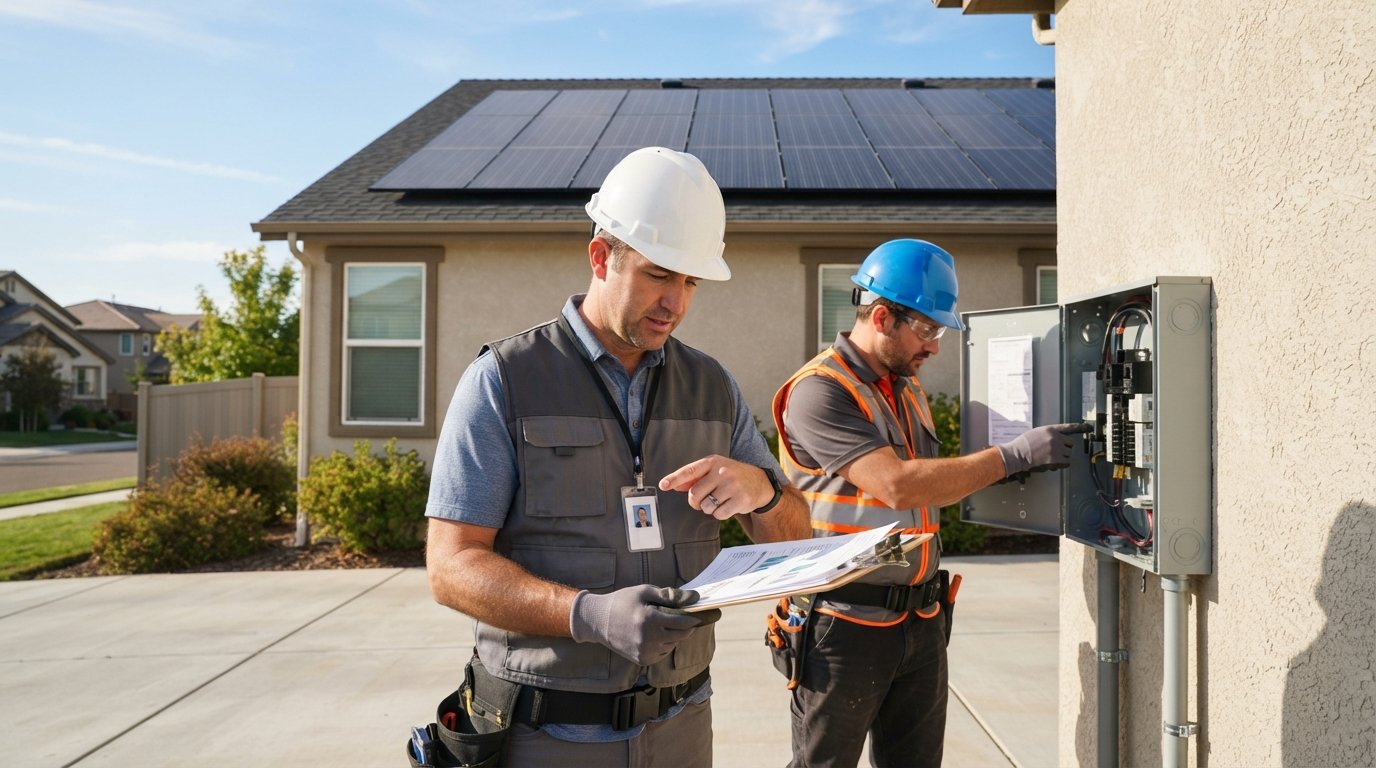
Solar Installer Certifications and Accreditations to Look For
Learn solar installer certifications and accreditations to look for, plus how to verify them. Call (833)-793-7166 for free quotes.

By Liam Parker
Learn more about Solar Panel Installation and Repair for guides, costs, and what to expect.
Compare Solar Panel Installation and Repair Pros Near You

Enter your ZIP code to compare independent local professionals and request free quotes.
Signing a solar contract is a major financial commitment, often ranging from $15,000 to $30,000 before incentives. Yet many homeowners focus almost entirely on price and panel brand, overlooking the credentials of the team doing the work. A poorly installed system can underperform for decades, void manufacturer warranties, and even create safety hazards. The difference between a smooth, profitable solar investment and a costly repair nightmare often comes down to one factor: the qualifications of your installer. This guide breaks down the solar installer certifications and accreditations to look for, explains what each one signals, and shows you how to verify them independently.
Why Credentials Matter More Than a Low Quote
Solar installation is not a simple handyman job. It involves complex electrical work, roof penetrations, structural loading calculations, and interconnection with the utility grid. Mistakes can lead to roof leaks, electrical fires, or systems that produce far less power than promised. Unfortunately, the solar industry has its share of fly-by-night operators who disappear after the check clears. When you choose an installer with recognized certifications and accreditations, you are stacking the odds in your favor for a safe, code-compliant, and warranty-backed installation.
Credentials also affect your access to incentives and financing. Some utilities and lenders require proof of proper licensing before approving applications. And if you ever sell your home, a system installed by a credentialed professional is far easier to transfer and more attractive to buyers. In short, certifications are not just pieces of paper; they are signals of accountability, training, and a commitment to industry best practices.
NABCEP Certification: The Gold Standard for Solar Professionals
The North American Board of Certified Energy Practitioners (NABCEP) is the most widely recognized certification body in the solar industry. Unlike a simple business license, NABCEP certification requires installers to pass rigorous exams, demonstrate field experience, and complete continuing education. There are several NABCEP credentials, each indicating a different level of expertise.
- NABCEP PV Installation Professional (PVIP): This is the flagship certification for individual installers. It requires a combination of advanced training, documented installation experience, and a comprehensive exam covering system design, safety, and code. A crew led by a PVIP has proven technical competence.
- NABCEP PV Associate: An entry-level credential that shows foundational knowledge but does not require field experience. It is a good sign for someone new to the industry, but it is not a substitute for the PVIP.
- NABCEP Solar Heating Installer: Specialized for solar thermal (hot water) systems, relevant if you are installing solar water heating.
- NABCEP Energy Storage Installation Professional (ESIP): For battery storage installations, this certification demonstrates expertise in safely integrating storage with solar.
When you see a NABCEP-certified professional on a crew, it signals that at least one key person has met a high bar for training and experience. However, be aware that NABCEP certifies individuals, not companies. A company may advertise "NABCEP-certified installers" on staff, but you should ask for the specific name and credential of the person who will be on your job site. Also, note that NABCEP certification is voluntary; some excellent installers may not hold it, but the absence of any certified personnel on a large crew is a yellow flag.
State and Local Licensing: The Legal Minimum
Solar installers must hold the proper state and local licenses to operate legally. Licensing requirements vary widely by state. In some states, a general contractor license is required for any solar installation. In others, a specific electrical contractor license is needed for the electrical work, and a roofing license may be required for roof penetrations. Some states have a dedicated solar contractor license. For example, California requires solar contractors to hold a C-46 license, while Florida requires a solar contractor license or an electrical contractor license depending on the scope.
Verifying a license is straightforward. Most state licensing boards offer an online lookup tool where you can search by contractor name or license number. Ask the installer for their license number and the name under which it is held, then verify it yourself. Check that the license is active, in the correct classification, and has no disciplinary actions. Also confirm that the license covers the type of work you need (e.g., electrical, roofing, general contracting). A legitimate installer will happily provide this information; evasiveness is a major red flag.
Keep in mind that licensing requirements are not just bureaucratic hoops. They ensure that the contractor has met minimum standards for experience and knowledge, and they provide recourse through the state if something goes wrong. Hiring an unlicensed contractor can leave you financially responsible for injuries or property damage, and may void your homeowner's insurance coverage for solar-related issues.
Manufacturer Certifications and Warranty Eligibility
Solar panel and inverter manufacturers often require installers to be certified or approved partners to offer extended warranties or performance guarantees. For instance, certain panel manufacturers offer a 25-year product warranty only if the system is installed by a certified professional. Similarly, some battery and inverter brands have certified installer programs that include specialized training on their equipment.
These manufacturer certifications matter because they can affect your warranty coverage. If an uncertified installer puts up a system, the manufacturer may deny a claim for defective equipment, leaving you to pay for replacements out of pocket. To protect yourself, ask the installer which manufacturer certifications they hold and confirm with the manufacturer directly if possible. Common certifications include those from Enphase, SolarEdge, Tesla (for Powerwall), and various panel manufacturers like SunPower and LG.
Additionally, some manufacturers offer online directories of certified installers. Checking these directories is a quick way to verify a claim. If an installer says they are a "certified partner" but does not appear in the manufacturer's database, that is a warning sign. Keep in mind that manufacturer certifications are not a substitute for NABCEP or state licensing; they are an additional layer of assurance specific to the equipment being installed.
Insurance, Bonding, and Workers Compensation Documentation
Even the most skilled installer can make a mistake or have an accident. That is why you must verify that the contractor carries adequate insurance and bonding. General liability insurance covers damage to your property (e.g., a dropped panel breaking your roof tiles). Workers compensation insurance covers injuries to workers on your property; without it, you could be held liable if a worker is hurt. A surety bond provides a financial guarantee that the contractor will fulfill their obligations, and you can claim against it if they fail to complete the work or violate codes.
Request certificates of insurance for general liability, workers compensation, and auto liability. The certificate should list the contractor's business name and policy limits. Call the insurance company to confirm the policy is active and that the limits are sufficient (typically at least $1 million for general liability). Also ask for the bond certificate and verify it with the bonding company. Do not accept a verbal assurance; insist on seeing the documents. This is standard practice for reputable contractors and should not be a source of friction.
If the installer uses subcontractors, ask for proof that the subcontractors also carry insurance and workers compensation. Some states require general contractors to verify subcontractor insurance, but ultimately you want to ensure that anyone working on your roof is covered. A contractor who cannot provide these documents may be cutting corners elsewhere.
Red Flags: Missing Credentials, Subcontracted Labor, and Pressure Tactics
While positive credentials are reassuring, certain warning signs should prompt you to walk away. One major red flag is an installer who cannot or will not provide a license number, NABCEP certification details, or insurance certificates. Another is a company that subcontracts all installation work to unknown third parties without disclosing their credentials. Subcontracting is common in the industry, but you have the right to know who will be on your roof and whether they are properly credentialed. If the salesperson is vague about who performs the work, ask for the name of the installation crew and their qualifications.
High-pressure sales tactics are another serious red flag. Be wary of installers who demand a decision on the spot, offer a "today only" discount, or discourage you from getting multiple quotes. Reputable companies encourage comparison shopping and give you time to review contracts. Also, watch for promises that seem too good to be true, such as guaranteed savings or no-cost systems. These are often bait-and-switch tactics or signs of predatory lending. If you feel rushed or uncomfortable, trust your instincts and walk away.
Finally, be cautious of companies that have no physical address or only a P.O. box, or that have been in business for less than a year. While startups can be legitimate, longevity and a local track record provide additional assurance. Check online reviews and complaints with the Better Business Bureau and your state's consumer protection agency, but remember that reviews can be gamed; use them as one data point among many.
How to Verify Solar Installer Certifications and Accreditations
Verification is a step-by-step process that you can complete in an afternoon. Start by gathering the installer's license number, NABCEP credential information, and insurance certificates. Then follow this sequence:
- Check the state licensing board website: Search for the contractor's license, confirm it is active, and review any disciplinary history.
- Verify NABCEP certification: Visit the NABCEP website and use their online directory to confirm the individual's certification is current.
- Contact the manufacturer: If the installer claims a manufacturer certification, call the manufacturer's installer support line or check their online directory.
- Confirm insurance and bonding: Call the insurance company listed on the certificate to verify active coverage and policy limits.
- Ask for references and inspect a past installation: Request references from recent customers and, if possible, visit a completed job site to see the workmanship.
This verification process may seem time-consuming, but it pales in comparison to the time and money you could lose dealing with a botched installation. Many homeowners skip these steps out of excitement or urgency, only to regret it later. By doing your due diligence, you signal to installers that you are an informed consumer, which often results in better service and more competitive pricing.
Beyond Certifications: Company Reputation and Business Model
While individual credentials are essential, the company's overall reputation and business model also matter. A company with a strong local presence, positive customer feedback, and transparent pricing is more likely to deliver a good experience. It is also wise to understand how the installer operates: do they use their own employees or subcontractors? Do they offer financing options, and if so, through which lenders? Are they a local company or a national chain with local offices? Each model has trade-offs, and knowing what to expect can help you avoid surprises. For a deeper dive into this topic, see our guide on solar installer business models explained.
Another factor is the installer's relationship with utilities and permitting authorities. A company that regularly pulls permits and has established relationships with local utilities can navigate the interconnection process more smoothly. Ask how many installations they have completed in your area and whether they handle all permitting and utility paperwork. Some installers leave those tasks to the homeowner, which can add stress and delays.
Finally, consider the installer's commitment to ongoing service and maintenance. Solar systems are relatively low-maintenance, but issues can arise. A company that offers monitoring, maintenance plans, and a clear process for warranty claims is more likely to be around when you need them. Ask about their service offerings and response times.
Protecting Your Investment: Contracts and Warranties
Even with a credentialed installer, the contract and warranty terms are critical. Review the contract carefully, paying attention to the scope of work, payment schedule, completion timeline, and warranty details. Warranties should cover workmanship (typically 5 to 10 years) in addition to product warranties from manufacturers. Make sure the contract specifies which party is responsible for warranty claims and how disputes are resolved. Avoid contracts with large upfront payments; a deposit of 10 to 20 percent is standard, with the balance due after completion and inspection.
Also, confirm that the installer will provide you with all documentation, including permits, inspection reports, and equipment manuals. This documentation is important for warranty claims and for selling your home. If the installer is evasive about providing these documents, consider it a red flag.
For homeowners who want to compare quotes from independent local providers, ContractorHomeQuotes offers a free service to help you find professionals for home improvement projects, including solar. They provide educational resources and cost data to help you make informed decisions.
Frequently Asked Questions
Is NABCEP certification required by law?
No, NABCEP certification is voluntary and not a legal requirement in any state. However, it is widely recognized as a mark of excellence and is often preferred by utilities and manufacturers. State licensing, on the other hand, is mandatory where required.
How can I check if an installer is licensed?
Visit your state's licensing board website, which typically has an online lookup tool. You will need the contractor's license number or business name. Verify that the license is active and in the correct classification for solar work.
What if my installer uses subcontractors?
Subcontracting is common, but you should ask for the names and credentials of the subcontractors. Ensure they are licensed and insured. The general contractor should provide proof of their insurance and workers compensation as well.
Do manufacturer certifications really affect warranties?
Yes, some manufacturers require installation by a certified professional to validate extended warranties. Always read the warranty terms and confirm the installer's status with the manufacturer.
What are the biggest red flags when choosing a solar installer?
Missing credentials, refusal to provide license or insurance documents, high-pressure sales tactics, and vague answers about who will perform the work are all warning signs. Trust your instincts and walk away if something feels off.
By taking the time to verify solar installer certifications and accreditations to look for, you protect yourself from costly mistakes and ensure that your solar investment delivers the savings and performance you expect. Remember that the lowest quote is not always the best value; quality installation by a credentialed professional is worth a premium. When in doubt, ask questions, request documentation, and compare multiple installers before signing.