
Solar for Multifamily Apartment Buildings: Landlord Guide
Unlock solar savings for your apartment building with our landlord guide. Call (833)-793-7166 to compare independent provider quotes.

Learn more about Solar Panel Installation and Repair for guides, costs, and what to expect.
Compare Solar Panel Installation and Repair Pros Near You

Enter your ZIP code to compare independent local professionals and request free quotes.
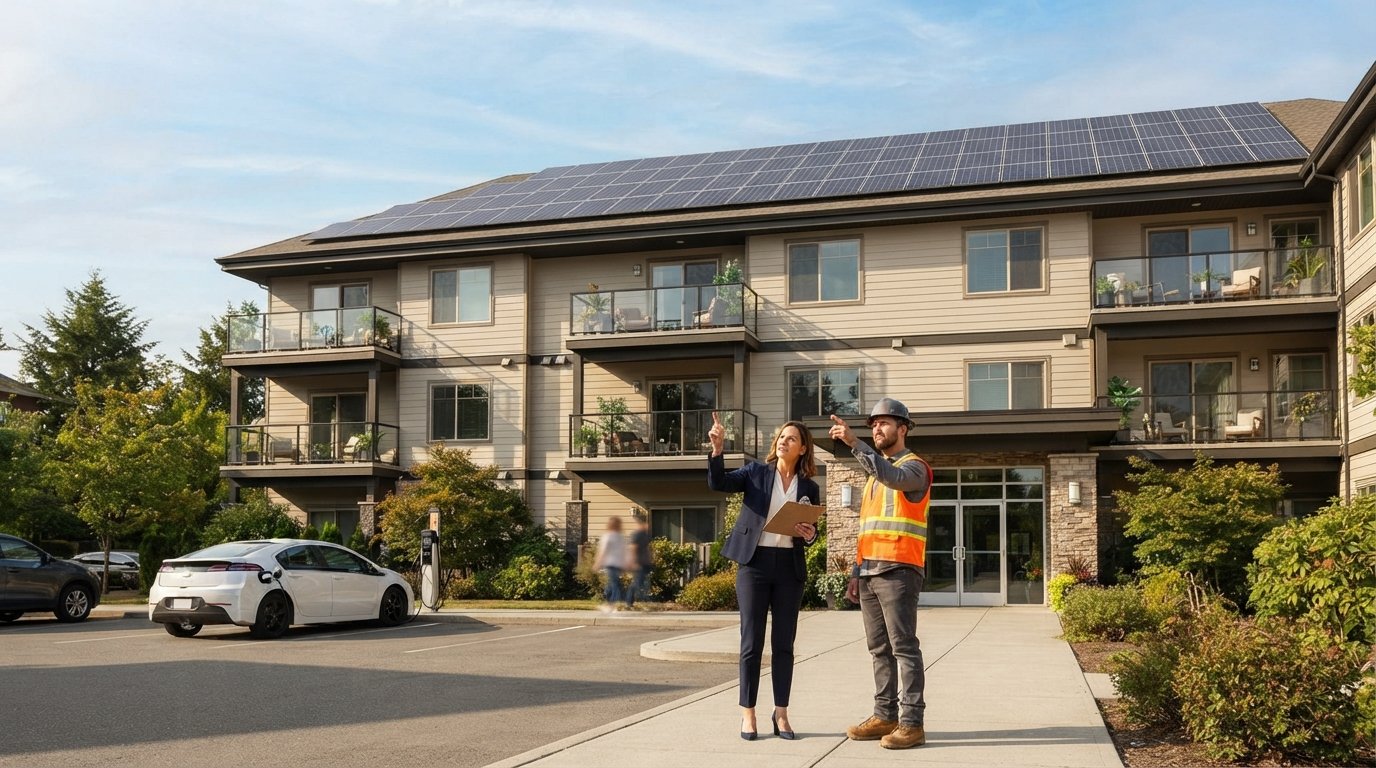
Multifamily property owners face a unique challenge: how do you capture the financial and environmental benefits of solar when your building serves many residents, not just one? The answer depends on your building's metering setup, your state's utility rules, and how you structure ownership. This solar for multifamily apartment buildings landlord guide walks you through the key decisions, from master-metered versus tenant-metered configurations to virtual net metering, EV charging amenities, financing options, and tenant communication. By the end, you will understand how to evaluate a solar project that works for your property and your residents.
Master-Metered vs. Tenant-Metered: The First Decision
Your building's metering configuration determines how solar electricity flows and who receives the savings. In a master-metered building, the landlord buys electricity from the utility through a single meter and then either includes utilities in rent or submeters tenants. When you add solar, the system offsets the master meter's consumption, directly reducing the landlord's electricity bill. This is the simplest scenario: the landlord owns the solar system, pays for it, and keeps the savings. The payback period depends on your building's load profile and local electricity rates.
In a tenant-metered building, each apartment has its own utility account. A single rooftop solar array cannot directly offset multiple tenant bills unless your utility offers a program like virtual net metering (VNM) or you install a submetering arrangement. Without such programs, the landlord can still install solar to power common areas (hallways, laundry, parking lighting), but the savings are smaller. Some landlords choose to become a small utility by purchasing power from the solar system and selling it to tenants, but this introduces regulatory complexity. The key takeaway: before sizing a system, confirm how your building is metered and what your utility allows. If you are unsure, start by reviewing your utility bill and asking whether VNM or aggregate net metering is available.
Virtual Net Metering and Submetering Approaches
Virtual net metering lets a single solar array's credits be shared across multiple tenant accounts. Instead of physically wiring the panels to each apartment, the utility allocates kilowatt-hour credits proportionally. This is ideal for tenant-metered buildings because it allows tenants to benefit directly from solar production without complex wiring. However, VNM availability varies by state and utility. Some states, like Massachusetts and California, have robust VNM policies for multifamily affordable housing, while others offer limited or no programs. Landlords should verify current rules with their utility and state public utility commission before assuming VNM is an option.
Submetering is another approach: the landlord installs a private meter on each tenant's circuit and resells electricity, including solar generation. This requires compliance with local submetering regulations and careful billing. A simpler alternative is a common-area solar system, where solar powers shared spaces and the landlord retains the savings. For landlords interested in maximizing tenant benefits, VNM is often the cleanest path, but it requires utility cooperation. To explore how solar can improve community health and reduce energy burden, see our guide on how solar power improves air quality, which can be a useful talking point with tenants and local officials.
Solar Plus EV Charging for Tenant Amenities
Electric vehicle ownership is rising, and tenants increasingly expect charging options. Pairing solar with EV charging stations creates a compelling amenity that can justify higher rents or reduce vacancy. The solar array offsets the electricity used by the chargers, lowering the landlord's operating cost. In master-metered buildings, the landlord can install Level 2 chargers in common parking areas and bill tenants through a charging network or a flat fee. In tenant-metered buildings, the landlord might install chargers on a separate meter and use a subscription model. Either way, solar plus EV charging demonstrates environmental leadership and can attract eco-conscious renters.
Before installing chargers, assess your electrical capacity and parking layout. Many utilities offer make-ready programs that cover infrastructure costs, though you should verify current offerings. Also consider time-of-use rates: charging during solar production hours (midday) maximizes the solar benefit. If you are in a state with strong solar incentives, the combined project may qualify for additional support. For landlords exploring financing, the federal Investment Tax Credit (ITC) can apply to solar plus storage and EV charging if certain conditions are met, but always confirm with a tax advisor. The ITC is a federal incentive, and its availability and percentage may change, so verify current rules.
Financing and Ownership Structures for Multifamily Properties
Multifamily solar projects can be financed through cash purchase, loans, leases, or power purchase agreements (PPAs). Cash purchase offers the highest long-term return but requires upfront capital. Loans spread the cost over time, and the solar savings often exceed the loan payment. Leases and PPAs allow a third party to own the system and sell the electricity to the landlord at a fixed rate, typically with no upfront cost. For tenant-metered buildings with VNM, a landlord might use a PPA to sell credits to tenants, but this structure requires careful contracts. Ownership structures also matter: a single-member LLC or the property entity can own the system, and depreciation and tax credits flow to the owner. If you have investors, clarify how solar incentives are allocated.
When evaluating financing, compare the levelized cost of solar electricity to your current utility rate. Also factor in maintenance and insurance. Many landlords prefer to own the system to capture the full ITC and accelerated depreciation, but third-party ownership can simplify operations. For independent guidance on home improvement and repair providers, including solar installers, you can visit PlanRemodel's service directory to find educational resources and local providers. Always obtain multiple quotes and review contract terms carefully. FreeSolarPowerQuotes connects landlords with independent third-party solar providers for free, no-obligation quotes, which can help you compare options without pressure.
Maintenance and Tenant Communication Considerations
Solar panels require minimal maintenance, but multifamily systems need a plan for cleaning, monitoring, and repairs. Dust and debris can reduce production, so schedule periodic cleaning based on local conditions. In snowy climates, snow removal may be necessary, though panels often shed snow naturally. Monitoring software alerts you to underperformance, and most installers offer monitoring as part of the service. Establish a maintenance budget of roughly 1% of system cost annually. For tenant communication, be transparent about the project: explain how solar benefits the building, what construction will involve, and how savings will be shared. If you are using VNM, provide tenants with clear instructions on how credits appear on their bills. Host a meeting or distribute a FAQ sheet. Good communication reduces complaints and builds support for future sustainability initiatives.
Also consider the end-of-life plan for the system. Panels last 25 to 30 years, and inverters may need replacement around year 10 to 15. Include these costs in your financial model. If you sell the building, solar can increase property value, but the ownership structure and contracts must be transferable. Work with legal and financial advisors to ensure a smooth transition.
Key Steps to Evaluate Solar for Your Multifamily Building
To move from interest to action, follow a structured evaluation process. Start by gathering your utility bills and metering details, then assess your roof's condition and orientation. Next, research local policies and incentives, and finally, request quotes from multiple providers. The following numbered list summarizes the core steps:
- Review your building's metering configuration and utility tariffs to determine solar eligibility.
- Assess roof age, structural capacity, and shading to confirm solar suitability.
- Research state and utility programs, including virtual net metering and interconnection rules.
- Obtain at least three quotes from independent solar providers and compare equipment, warranties, and financing.
- Model financial outcomes under different ownership and financing scenarios, including maintenance and insurance.
After completing these steps, you will have a clear picture of whether solar makes sense for your property. Remember that incentives and policies change, so verify all details with official sources before signing a contract. FreeSolarPowerQuotes provides educational resources and a matching service to help you compare quotes from independent providers, but it does not perform installations or provide financial advice. Use it as a starting point for your research.
Solar for multifamily apartment buildings can be a smart investment when you align the system design with your metering setup and local rules. By understanding the options and planning for maintenance and tenant communication, landlords can unlock savings and add value. Take the first step by reviewing your utility bills and requesting quotes from independent providers in your area.