
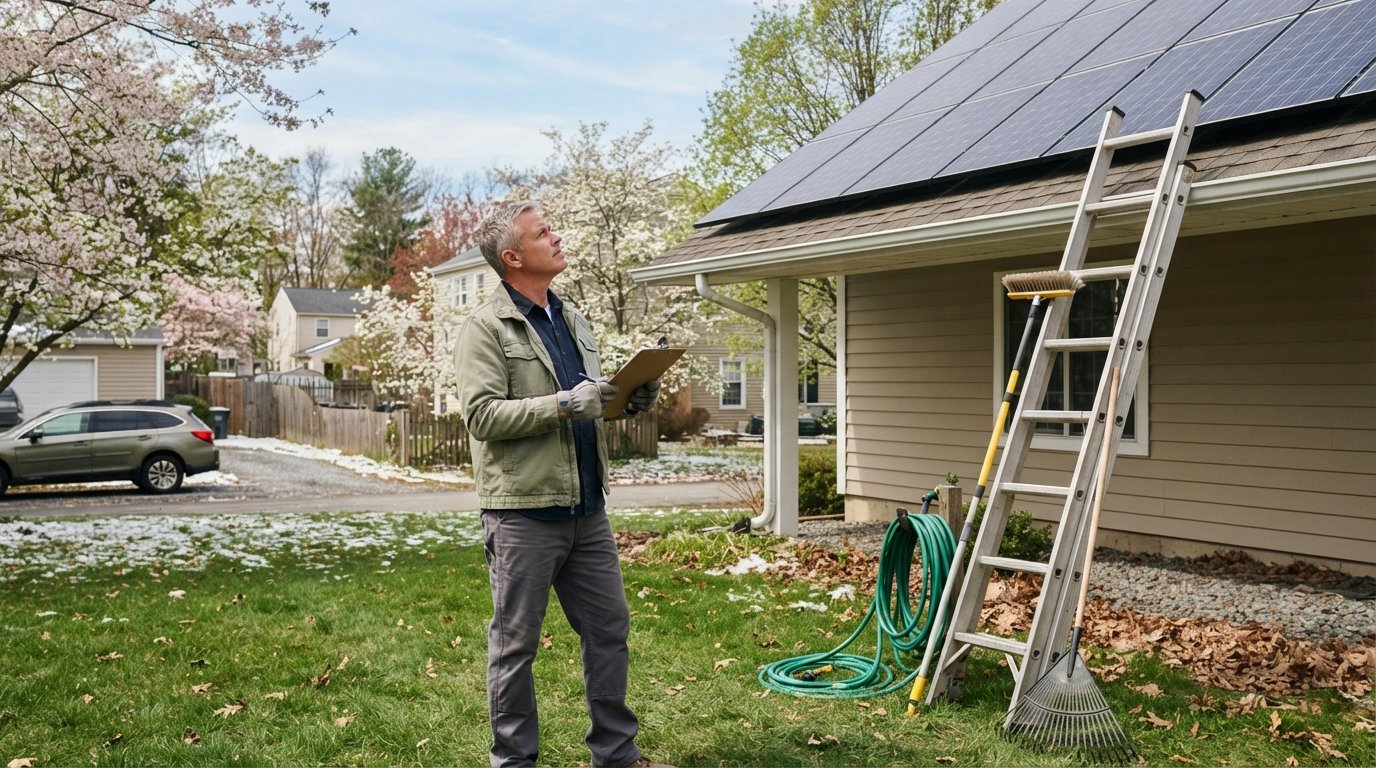
Solar Panel Maintenance Schedule by Season: A Homeowner's Guide
Keep your solar panels efficient with a seasonal maintenance schedule. Call (833)-793-7166 for free quotes from local pros and protect your investment.

By Nathan Russell
Learn more about Solar Panel Cleaning for guides, costs, and what to expect.
Compare Solar Panel Cleaning Pros Near You

Enter your ZIP code to compare top-rated local professionals and request free quotes.
Your solar panels are built to last for decades, but they are not maintenance-free. Dust, pollen, leaves, snow, and even bird droppings can quietly erode your energy production and, over time, put your warranty at risk. A smart, season-by-season maintenance schedule keeps your system running at peak efficiency and helps you spot small issues before they become expensive repairs. Whether you just signed a solar contract or have owned a system for years, this guide walks you through the tasks that matter most in spring, summer, fall, and winter. And if you ever need a professional hand, FreeSolarPowerQuotes connects you with vetted local installers for free, no-obligation quotes.
Why a Seasonal Maintenance Schedule Matters
Solar panels have no moving parts, so it is tempting to assume they need no attention. In reality, environmental factors vary dramatically across the year, and each season brings its own set of challenges. Pollen in spring can coat your panels like a yellow film, summer heat stresses wiring and inverters, fall leaves clog gutters and shade arrays, and winter snow and ice can block production for days. Ignoring these seasonal shifts often leads to a slow decline in output that you may not notice until your utility bill creeps back up.
A structured schedule also protects your warranty. Most manufacturers require reasonable upkeep, and documented maintenance can help you prove you have done your part if a claim arises. Regular inspections catch micro-cracks, loose mounting hardware, and rodent damage early. For a deeper look at what can go wrong when maintenance is neglected, see our guide on solar panel failure and how to protect your investment.
The good news: you do not need to be a solar technician. Most tasks are simple visual checks and light cleaning that any homeowner can handle. The key is consistency. Think of your solar panel maintenance schedule by season as a gentle rhythm: a few minutes each month, a slightly deeper check each quarter, and one or two professional visits when needed.
Spring Maintenance: Pollen, Debris, and System Wake-Up
Spring is when your system shakes off winter and starts producing at higher levels again. It is also when pollen season hits hard in many parts of the country. A thick layer of pollen can reduce output by 5 to 15 percent or more, and if it mixes with dust or light rain, it can form a stubborn film. Your top priority in spring is a gentle cleaning and a thorough visual inspection.
Start with a simple check of your monitoring app or inverter display. Compare current production to the same period last year. A sudden drop of more than 10 percent often points to soiling or shading. Then, on a cool morning, walk your array and look for the following:
- Pollen, dust, or bird droppings on the glass surface
- Loose or damaged wiring visible around the panels
- Debris (twigs, leaves, or nests) lodged under or between panels
- Signs of water pooling or roof damage near mounting points
For cleaning, use a soft brush or squeegee with plain water. Avoid abrasive sponges, harsh soaps, or high-pressure washers, which can scratch the glass or force water into sealed components. If your roof is steep or your panels are high, hire a professional cleaner; the cost is small compared to the risk of a fall. Spring is also a good time to trim any trees that have grown close to your array, since even partial shading can disproportionately cut production.
Summer Maintenance: Heat, Inspections, and Vegetation Control
Summer brings the highest energy production of the year, but heat is the enemy of efficiency. Solar panels actually produce less power as they get hotter, and extreme heat can stress inverters and wiring. Your summer maintenance should focus on keeping airflow clear and catching heat-related issues early.
Check the area around your inverter and any junction boxes. These components need ventilation; if they are boxed in or covered with debris, they can overheat and shut down. Look for signs of scorching, melted insulation, or unusual smells. If you see any of these, turn off the system and call a licensed electrician immediately. Also inspect the panels for any new shading from summer foliage. Trees grow fast in summer, and a branch that was small in spring can cast a shadow by July.
Vegetation management is a key summer task. Keep grass and weeds trimmed around ground-mounted systems, and make sure nothing is touching the panels or wiring. On roof-mounted systems, check that leaves and debris are not accumulating in the gutters, as this can lead to water backup and roof damage. If you are planning a move this summer, resources like Moving.Homes offer checklists and guides that can help you coordinate home maintenance tasks, including solar system care, before a relocation.
Summer is also a good time to review your monitoring data for any unusual patterns. Spikes in voltage or frequent inverter restarts can indicate a problem that warrants a professional inspection. Many installers offer annual check-up packages; scheduling one in late spring or early summer ensures your system is ready for peak season.
Fall Maintenance: Leaves, Gutters, and Pre-Winter Prep
Fall is transition time. Production begins to taper off as days shorten, and falling leaves can create big problems for solar arrays. Leaves that accumulate on panels block sunlight, and when they get wet they can stick to the glass and cause staining. Leaves and debris in gutters can also lead to water overflow that damages roof-mounted systems.
Your fall checklist should include a thorough cleaning of the panels and gutters. If you are comfortable on a ladder, clear gutters carefully; otherwise, hire a professional. Check the panels for any cracked glass or damaged frames that may have occurred during summer storms. Also inspect the mounting hardware for loose bolts or corrosion. Cooler weather is a good time to tighten anything that has worked loose.
Before winter sets in, test your system's performance by comparing output to expected values for the month. If production is lower than usual, it may be due to soiling or an emerging issue. Fall is also the ideal time to schedule a professional inspection if you have not had one in the past year. A technician can check torque on mounting bolts, test electrical connections, and verify that the inverter is functioning correctly. This pre-winter check can prevent snow and ice from exacerbating small problems.
Winter Maintenance: Snow, Ice, and Monitoring
Winter is the most challenging season for solar in many regions. Snow accumulation on panels can completely halt production, and ice dams can form along the roof edge, potentially damaging both panels and roofing. Your winter maintenance should prioritize safety and monitoring over aggressive cleaning.
Do not climb onto a snowy roof to clear panels. The risk of a fall is high, and you could damage the panels or yourself. Instead, use a soft roof rake with an extended handle to gently pull snow off the lower edge of the array from the ground. Never use a sharp tool or apply force; the goal is to remove loose snow, not to scrape ice. If your panels are difficult to reach, consider hiring a professional snow removal service that specializes in solar systems.
Keep an eye on your monitoring app during winter. A sudden drop to zero output when the sun is shining could indicate snow cover or a fault. Check the inverter for error codes and consult your manual. Also watch for ice dams: if you see icicles hanging from the roof edge near the panels, it may indicate poor attic insulation or ventilation, which is a home energy issue worth addressing. Winter is also a good time to review your energy bills and compare them to previous years; if you see a spike, it may be due to snow cover or a system issue. For more on diagnosing problems, refer back to our article on solar panel failure.
Building Your Year-Round Maintenance Routine
To make seasonal maintenance easy, create a simple calendar and set reminders. Here is a sample framework you can adapt to your climate and system type:
- Monthly: Check monitoring data for output drops, visually inspect panels from the ground, and note any new shading.
- Quarterly: Clean panels if needed (especially in spring and fall), check gutters, and inspect wiring for visible damage.
- Annually: Schedule a professional inspection, test inverter functionality, and review warranty terms to ensure compliance.
- After extreme weather: Inspect for damage and document any issues with photos for insurance or warranty claims.
Remember that your solar panel maintenance schedule by season should be adjusted for your local climate. In snowy regions, winter tasks focus on snow management; in dusty areas, cleaning may be needed more often. Document each maintenance activity with dates and photos. This record not only helps you track your system's health but also serves as evidence if you ever need to file a warranty claim.
If you are unsure about any task, or if your system is over 10 years old, consider an annual service plan from a reputable installer. FreeSolarPowerQuotes can connect you with local professionals who offer maintenance packages. Getting a few quotes is free and can give you peace of mind.
When to Call a Professional
While many maintenance tasks are DIY-friendly, some situations require a licensed solar technician. Call a professional if you notice any of the following: cracked or broken panels, exposed wiring, a burning smell from the inverter, persistent ground faults, or a sudden, unexplained drop in production that does not improve after cleaning. Also, if your roof is steep or your panels are mounted high, do not attempt cleaning yourself. Professionals have the safety equipment and experience to handle these jobs safely.
Regular professional inspections, even every two to three years, can extend your system's life and catch issues that are hard to see from the ground. Many installers offer affordable check-up services that include thermal imaging to detect hot spots and electrical testing. This is especially valuable in summer and winter when stress on the system is highest.
By following a seasonal maintenance schedule, you protect your investment, maximize your energy savings, and keep your solar panels producing clean power for decades. A little effort each season goes a long way.