
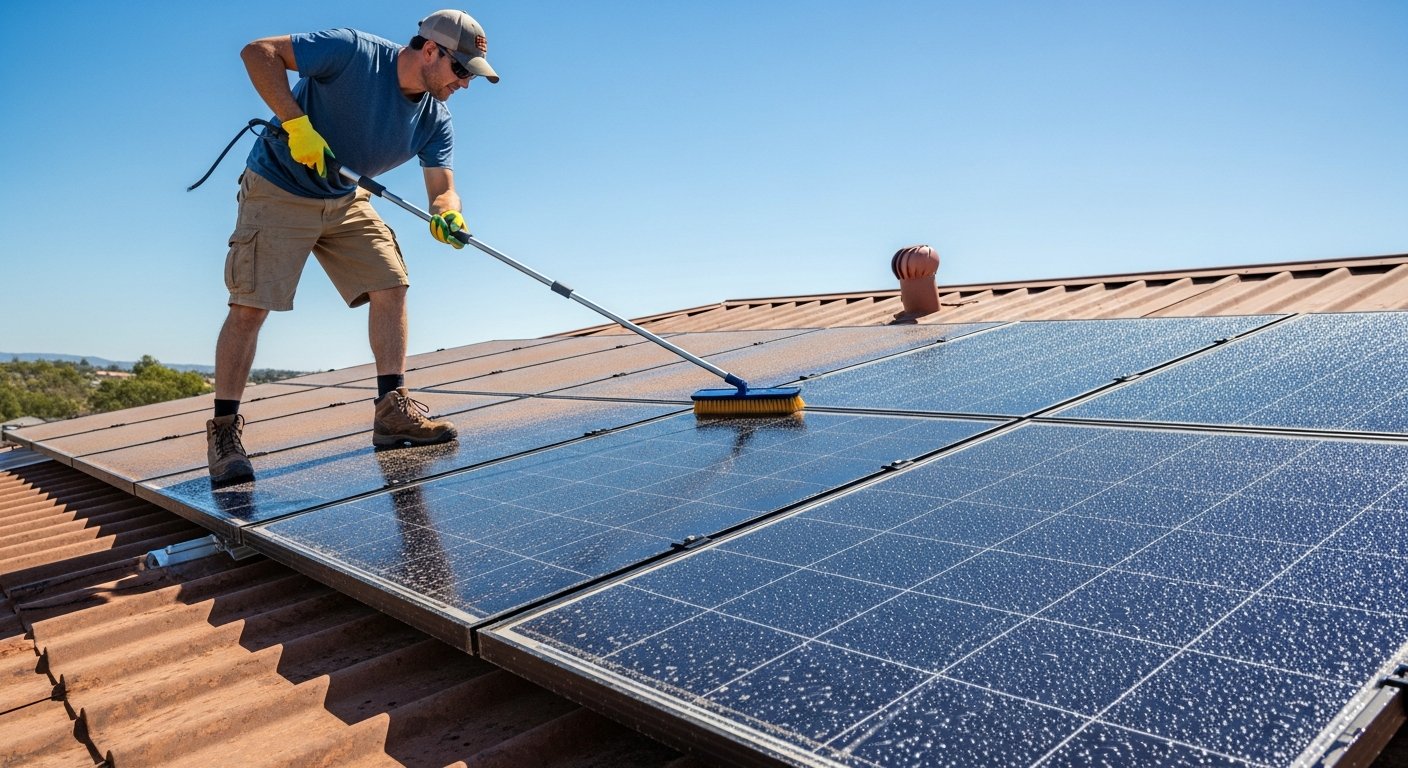
Solar Panel Cleaning: Boost Power and Savings
Regular solar panel cleaning prevents efficiency loss up to 25%, protecting your investment and maximizing energy savings for years.

By Caleb Morgan
Learn more about Solar Panel Cleaning for guides, costs, and what to expect.
Compare Solar Panel Cleaning Pros Near You

Enter your ZIP code to compare top-rated local professionals and request free quotes.
When you invest in solar panels, you expect them to generate maximum power and deliver the financial savings that convinced you to go solar. Yet a thin layer of dust, pollen, bird droppings, or urban grime can quietly reduce your system's output by 5 to 25 percent, depending on your location and the season. That lost production means lower electricity savings and a longer payback period. The good news is that regular solar panel cleaning is a simple, low-cost maintenance task that can restore your system's efficiency and protect your investment. In this guide, we will cover why cleaning matters, how often you should do it, the safest methods, and when to hire a professional. You will also learn how to pair proper maintenance with a high-efficiency system, such as a 410 watt solar panel, to get the most from every ray of sunlight.
Why Solar Panel Cleaning Matters for Your Energy Production
Solar panels convert sunlight into electricity, but anything that blocks light from reaching the photovoltaic cells reduces their output. Dust, dirt, pollen, and debris accumulate on the glass surface over time, creating a barrier between the sun and the cells. Even a small amount of dirt can cause a noticeable drop in performance, and in dry, dusty regions like Arizona or Texas, the impact can be severe. Studies have shown that uncleaned panels can lose up to 25 percent of their efficiency in extreme cases, and even a light layer of dust can cause a 5 percent loss.
Beyond dust, bird droppings and leaf litter can create hot spots on the panel surface. These hot spots not only reduce efficiency but can also cause long-term damage to the cells, leading to premature failure. Regular cleaning removes these contaminants and helps maintain the health of your panels. In addition, clean panels reflect more light and operate at cooler temperatures, which further improves their performance. Solar panels are rated under standard test conditions, but real-world conditions are rarely perfect. Keeping the surface clean is one of the most effective ways to ensure your system performs close to its rated capacity.
It is also worth noting that the financial impact of dirty panels compounds over time. If your system loses 10 percent of its output for six months each year, you are losing a significant portion of your expected savings. For a typical residential system that produces 10,000 kWh annually, a 10 percent loss means 1,000 kWh of free electricity wasted. At an average rate of $0.15 per kWh, that is $150 per year in lost savings, and over the 25-year life of your panels, that amounts to $3,750. Regular cleaning is a small investment that pays for itself many times over.
How Often Should You Clean Solar Panels?
The frequency of cleaning depends on several factors, including your location, the local climate, and the tilt of your panels. In general, most homeowners only need to clean their panels two to four times per year. However, if you live in a dusty area, near a construction site, or in a region with frequent pollen seasons, you may need to clean more often. Similarly, if your panels are mounted flat or at a low angle, they will accumulate more debris than panels tilted at 30 degrees or more, because rain can wash away dirt more easily on steeper angles.
- Rainfall: In areas with regular rain, natural precipitation may be enough to keep panels reasonably clean. But rain can leave behind mineral deposits and streaks, so occasional manual cleaning is still recommended.
- Bird activity: If birds frequently perch on or above your panels, droppings can accumulate quickly. Prompt removal prevents hot spots and staining.
- Pollution and smoke: Urban areas with high traffic or nearby industrial activity can produce a film of grime that requires more frequent cleaning.
- Pollen season: In spring, a yellow coating of pollen can significantly block sunlight. A quick rinse or gentle wash during this period can restore output.
One way to tell if your panels need cleaning is to monitor your energy production. If you notice a sudden drop in output that is not explained by weather or shading, it may be time to inspect the panels. Some monitoring systems even allow you to compare daily production to historical averages, making it easy to spot a decline. Remember that cleaning more often than necessary is not harmful, but it does take time and water, so it is best to match your schedule to your local conditions.
DIY vs. Professional Solar Panel Cleaning
You have two main options for cleaning your solar panels: do it yourself or hire a professional. Both approaches have advantages and drawbacks, and the right choice depends on your comfort level, the complexity of your system, and your budget. DIY cleaning is cheaper, but it carries risks, especially if your panels are on a steep roof or if you are not comfortable working at heights. Professional cleaning services have the right equipment, training, and insurance to handle the job safely and effectively, but they come at a cost.
If you decide to clean the panels yourself, you must follow safety guidelines. Always turn off the system before cleaning, use a soft brush or sponge with a long handle, and avoid harsh chemicals or abrasive materials. Use plain water or a mild soap solution, and rinse thoroughly to avoid leaving residue. Never use a pressure washer, as the high pressure can damage the seals and the glass. Also, avoid cleaning panels when they are hot, as rapid temperature changes can cause cracking. Morning or evening, when the panels are cool, is the best time to clean.
Professional cleaning services typically charge between $150 and $400 per visit, depending on the size of your system and the difficulty of access. While this is an ongoing expense, it is often worth the peace of mind, especially for larger systems or those with complex roof configurations. Some services also provide a detailed inspection of your system, identifying potential issues early. If you have a ground-mounted system or panels that are easily accessible, DIY cleaning is a practical and cost-effective option.
Best Practices for Safe and Effective Cleaning
Whether you choose DIY or professional cleaning, following best practices ensures that you get the best results without damaging your panels. Here is a step-by-step approach to cleaning solar panels safely and effectively.
- Check the manufacturer's warranty: Some warranties have specific cleaning requirements or restrictions. Review your warranty to avoid voiding it.
- Turn off the system: Before cleaning, shut down the inverter to prevent electrical hazards and to allow the panels to cool.
- Use the right tools: A soft brush, a squeegee, a hose with a spray nozzle, and a bucket of water with a mild, non-abrasive soap are all you need. Avoid steel wool, harsh detergents, and pressure washers.
- Start with a rinse: Gently spray the panels with water to remove loose dust and debris. This also helps to loosen dried-on grime.
- Scrub gently: Use the soft brush or sponge to wipe the surface in a circular motion, working from top to bottom. Do not apply excessive pressure, as this can scratch the glass.
- Rinse again: Thoroughly rinse off all soap and dirt, ensuring no residue remains. Standing water can leave mineral spots, so it is best to dry the panels with a squeegee or leave them to air dry on a clear day.
It is also important to clean the area around the panels, such as gutters and roof valleys, to prevent debris from accumulating on the panels. Trimming overhanging branches can reduce leaf litter and bird activity. If you notice stubborn stains like bird droppings, you can soak them with water for a few minutes before gently scrubbing. For tough mineral deposits, a solution of vinegar and water (one part vinegar to three parts water) can be effective, but always test in a small area first.
When to Call a Professional for Solar Panel Cleaning
While many homeowners can handle basic cleaning, certain situations call for professional expertise. If your panels are installed on a high-pitched roof, a multi-story home, or a roof with difficult access, attempting to clean them yourself can be dangerous. Falls from ladders or roofs are a leading cause of injury among DIY solar maintenance. Professional cleaners have safety harnesses, ladders, and experience working at heights, reducing the risk of accidents.
Additionally, if your system is large (e.g., a commercial installation) or if you have a complex mounting system, a professional can clean more efficiently and thoroughly. Some companies use deionized water and specialized brushes that leave no residue, resulting in a superior clean. They can also identify issues like micro-cracks, loose connections, or corrosion that you might miss. If you are planning to sell your home or want to maximize your system's output before a performance verification, a professional cleaning is a wise investment.
When hiring a professional, look for companies that specialize in solar panel maintenance and have proper insurance and certifications. Ask for references and compare quotes from at least two providers. A reputable company will inspect your system, explain the process, and offer a warranty on their work. Remember to verify that the cleaning method is safe for your panel type and that they use non-abrasive tools and environmentally friendly cleaning solutions.
Cleaning and Your Solar Panel System's Longevity
Regular cleaning not only boosts immediate energy production but also extends the lifespan of your solar panels. Dirt and debris can cause micro-scratches over time, which can reduce light transmission and lead to discoloration. More importantly, accumulated grime can trap heat, increasing the operating temperature of the panels. High temperatures reduce efficiency and can accelerate the degradation of the cells, shortening the usable life of the system. By keeping your panels clean, you help them run cooler and more efficiently, which means they will continue to produce power for 25 years or more.
In addition to cleaning, routine inspections are crucial for long-term performance. While cleaning, check for any visible damage, such as cracked glass, loose mounting brackets, or frayed wiring. These issues, if left unaddressed, can lead to more costly repairs or even system failure. A proactive maintenance plan, including regular cleaning and inspections, ensures that your solar investment delivers maximum returns throughout its lifetime.
Pairing proper maintenance with high-efficiency panels further enhances your savings. For example, a 540 watt solar panel, which offers one of the highest power ratings on the market, will benefit even more from regular cleaning because the higher output means greater potential losses when dirty. Similarly, if you are considering a system expansion or a new installation, choosing efficient panels and committing to a cleaning schedule will maximize your return on investment. For those on a budget, affordable 5K solar panels can be a cost-effective entry point, and keeping them clean ensures they perform at their best.
Frequently Asked Questions About Solar Panel Cleaning
Many homeowners have questions about the specifics of solar panel cleaning, from whether rain is enough to what happens if you never clean your panels. Here are answers to some of the most common queries.
Does Rain Clean Solar Panels?
Rain can help wash away loose dust and debris, but it is not a substitute for regular cleaning. Rainwater can leave behind mineral deposits, and if your panels are at a low tilt, water may pool and dry, leaving spots. In dry climates, rain is infrequent, so manual cleaning is essential. Even in rainy regions, a quick rinse or wipe every few months can remove residue that rain cannot.
Can I Use a Pressure Washer?
No. Pressure washers are too aggressive for solar panels and can damage the glass, the anti-reflective coating, and the seals around the frame. The high pressure can also force water into the electrical components, causing corrosion or short circuits. Always use a gentle hose spray or a soft brush.
What Is the Best Time of Day to Clean?
Early morning or late afternoon is ideal, because the panels are cooler. Cleaning hot panels can cause thermal shock, leading to micro-cracks. Also, cleaning in direct sunlight can cause soap and water to dry quickly, leaving streaks. Cloudy days are also great for cleaning, as long as there is no risk of lightning.
Do Cleaning Products Harm Panels?
Harsh chemicals, solvents, and abrasive cleaners can damage the panel surface and void the warranty. Stick to plain water or a mild, non-abrasive soap, and avoid any product that contains ammonia, alcohol, or petroleum-based ingredients. If in doubt, check the manufacturer's recommendations.
How Much Does Professional Cleaning Cost?
The cost varies based on system size, accessibility, and your location, but you can expect to pay between $150 and $400 per visit. For large or commercial systems, the cost may be higher. This expense is often tax-deductible as a maintenance cost for business properties, and it is far less than the cost of replacing a damaged panel.
Maximizing Your Solar Investment
Solar panel cleaning is a simple yet powerful way to protect your investment and ensure you get the maximum financial return from your system. Whether you choose to clean the panels yourself or hire a professional, the effort pays off in increased energy production, lower electricity bills, and a longer system lifespan. By incorporating cleaning into your regular maintenance routine, you are not just keeping your panels shiny; you are safeguarding the savings that motivated you to go solar in the first place.
If you are considering upgrading your system or are in the market for new panels, remember that efficient panels, such as those rated at 410 or 540 watts, combined with regular cleaning, will give you the best performance. For those just starting, affordable 5K solar panels offer a practical entry point, and keeping them clean will ensure they meet your expectations. Whatever your system size, a commitment to maintenance is a commitment to long-term savings.
Finally, if you have not yet gone solar or are thinking about expanding your current setup, the team at FreeSolarPowerQuotes can connect you with trusted providers who can help you choose the right panels and understand the maintenance requirements. Getting a free, no-obligation quote is the first step toward cleaner energy and lower bills. And once your panels are installed, remember that a little cleaning goes a long way in keeping your savings bright.
Learn more about Solar Panel Cleaning for guides, costs, and what to expect.
Compare Solar Panel Cleaning Pros Near You
Enter your ZIP code to compare top-rated local professionals and request free quotes.