Have you opened your electricity bill recently and felt a jolt of surprise? You’re not alone. With energy costs steadily climbing, more homeowners are looking for a way to take control. The solution many are finding is solar energy, powered by panels on their own roof. This guide will explain solar financing for homeowners, a practical path to reducing those monthly bills and becoming less dependent on the unpredictable grid.
Understanding Solar Financing for Homeowners
Solar financing for homeowners is simply the various ways you can pay for a solar panel system without a large, upfront cash payment. Think of it like financing a car or a home improvement project, but for an asset that generates its own value by creating electricity. The core idea is to use the money you save on your power bill to cover the cost of the system.
Instead of paying the utility company, you make payments on your solar loan or lease. Over time, especially once the system is paid off, the savings become pure financial benefit. This model has made clean, renewable energy accessible to a much wider audience, turning a significant investment into a manageable monthly expense.
Why Solar Energy Is Becoming More Popular
The shift to solar power is driven by a powerful combination of financial and environmental factors. Homeowners are tired of unpredictable rate hikes from their utility companies. Solar panels offer a predictable energy cost, locking in savings for decades.
Alongside the desire for lower bills is a growing commitment to sustainability. Generating your own clean electricity significantly reduces your household’s carbon footprint. It’s a tangible step toward energy independence, knowing your power comes from the sun shining on your own home.
If you are considering solar power for your home, comparing installation quotes can help you understand your options. Request a free solar quote or call to learn more.
Common Questions Homeowners Have About Solar
It’s normal to have questions before making a change to your home. The good news is that the solar industry is mature, and most concerns have straightforward answers. A professional installer can address all these points during a consultation.
Common questions often revolve around cost, practicality, and performance. Homeowners want to know if their investment will pay off and if their home is even a good candidate. Here are some of the most frequent questions we hear:
- How much do solar panels really cost?
- Is my roof suitable for solar panels?
- What happens on cloudy days or at night?
- How long do solar panels last?
- Will solar panels increase my property taxes?
- What maintenance is required?
How Solar Panel Installation Works
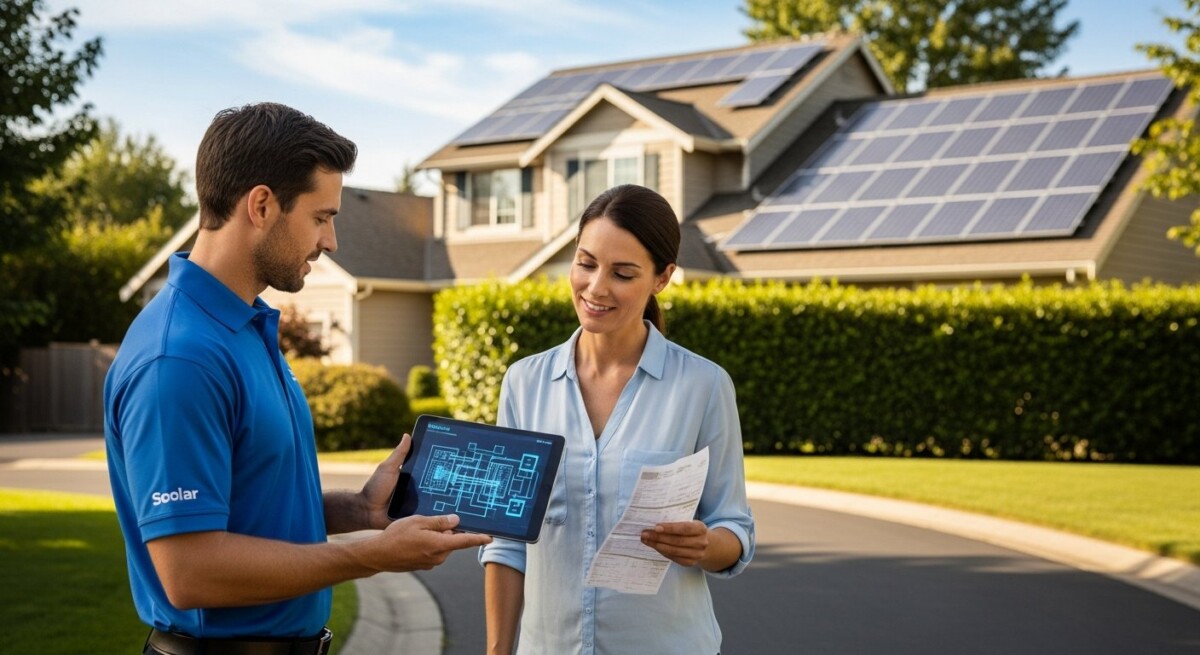
The installation process is handled by professionals from start to finish, making it surprisingly smooth for the homeowner. It begins with an expert evaluation of your home’s energy use and physical characteristics. This ensures the system is designed specifically for your needs.
Your installer manages all the necessary permits and paperwork, including applications for government incentives. Once approved, the physical installation is typically completed in just a few days. The final step is connecting your system to the grid and flipping the switch on your new power source.
- Home Energy Assessment: Reviewing your past bills and evaluating your roof.
- System Design: Creating a custom plan for panel placement and equipment.
- Permits and Approvals: Securing local permits and utility interconnection agreements.
- Panel Installation: Mounting the racking, panels, and inverter on your roof.
- System Activation: Final inspection and permission to operate from your utility.
Speaking with experienced installers can help you determine the best solar solution for your home. Compare solar quotes here or call to explore available options.
Signs Your Home May Be Ideal for Solar
While solar can work in many situations, some homes are naturally better positioned to maximize savings. The most important factor is access to sunlight. A roof with minimal shading from trees or other structures is key.
Your current energy habits also play a major role. Homes with higher electricity bills see a faster return on investment because the solar system offsets more expensive grid power. If you plan to stay in your home for the long term, you’ll have more years to enjoy the free electricity after your system is paid off.
- Your roof gets direct sunlight for most of the day.
- You have high or rising monthly electricity bills.
- Your roof is in good condition and has adequate space.
- You plan to own your home for 5-10+ years.
- Your local utility has net metering or other favorable policies.
- You are interested in reducing your environmental impact.
What Affects Solar Installation Costs
The final price of a solar system isn’t one-size-fits-all. Several key factors influence the total investment. The size of the system, measured in kilowatts (kW), is the biggest driver,a larger system for a bigger home costs more.
Equipment quality, roof complexity, and local labor rates also play a role. Crucially, available government incentives like the federal solar tax credit can reduce your net cost by thousands of dollars. Understanding these variables is why comparing detailed quotes is so valuable. For a deeper dive into the different ways to pay, our guide on solar financing options explained breaks down each method.
The cost of solar installation varies depending on your home and energy needs. Request personalized solar quotes or call to see what options are available.
Tips for Choosing a Reliable Solar Installer
Your installer is your partner in this long-term investment, so choosing a reputable company is critical. Look for established companies with a strong track record in your community. They should be licensed, insured, and offer robust warranties on both equipment and workmanship.
Always check customer reviews and ask for references. A trustworthy installer will be transparent, answer all your questions, and never use high-pressure sales tactics. Most importantly, get multiple proposals to compare equipment, costs, and projected savings side-by-side.
- Verify licenses, insurance, and certifications (like NABCEP).
- Read customer reviews and ask for local references.
- Compare the warranties offered on parts and labor.
- Get detailed quotes from at least three different companies.
- Ensure they handle the entire permit and interconnection process.
Long-Term Benefits of Installing Solar Panels
The immediate benefit of solar is watching your electric bill shrink. But the long-term advantages are even more compelling. Once your system is paid off, you can enjoy 10-15 years or more of virtually free electricity, locking in massive savings as utility rates continue to rise.
Solar panels are also a proven home improvement that increases property value. Beyond finances, you gain peace of mind through energy independence and the satisfaction of powering your life with clean, renewable energy. It’s an investment that pays you back for decades.
How does solar financing work?
Solar financing allows you to pay for a solar panel system over time, rather than all at once. Options include loans, leases, and Power Purchase Agreements (PPAs). You use the savings on your electric bill to cover the monthly financing payment, often coming out ahead immediately. To understand the key differences between popular methods, our comparison of PPA vs loan for solar provides a clear breakdown.
Are there government incentives for solar?
Yes. The federal government offers a significant Investment Tax Credit (ITC), which allows you to deduct a percentage of your system cost from your federal taxes. Many states, utilities, and local governments also offer additional rebates, tax credits, or performance-based incentives to further reduce the net cost.
What is net metering?
Net metering is a billing arrangement with your utility company. When your solar panels produce more electricity than your home uses, the excess is sent to the grid, and your meter runs backward. You receive credits for this power, which you can use to draw electricity from the grid at night or on cloudy days.
Do solar panels work in cold or cloudy climates?
Yes, solar panels work in cold, cloudy, and even snowy climates. They generate electricity from light, not heat, and can perform well in cold temperatures. While production is highest on sunny days, modern panels are efficient enough to generate significant power even under cloudy skies.
How long do solar panels last?
Most high-quality solar panels come with a performance warranty guaranteeing they will still produce at least 80-90% of their original output after 25 to 30 years. The panels themselves can continue to function well beyond that timeframe, making them a very durable, long-term investment.
What maintenance do solar panels require?
Solar panels require very little maintenance. In most climates, rainfall naturally cleans the panels. It’s a good idea to have them visually inspected periodically and cleared of heavy debris or snow. Your installer can recommend a monitoring app to easily track your system’s performance.
Exploring solar financing is a smart step toward taking control of your energy costs and investing in your home’s future. By understanding your options and comparing quotes from trusted installers, you can make a confident decision that leads to decades of savings and satisfaction. Start your journey today by seeing what solar can do for you.