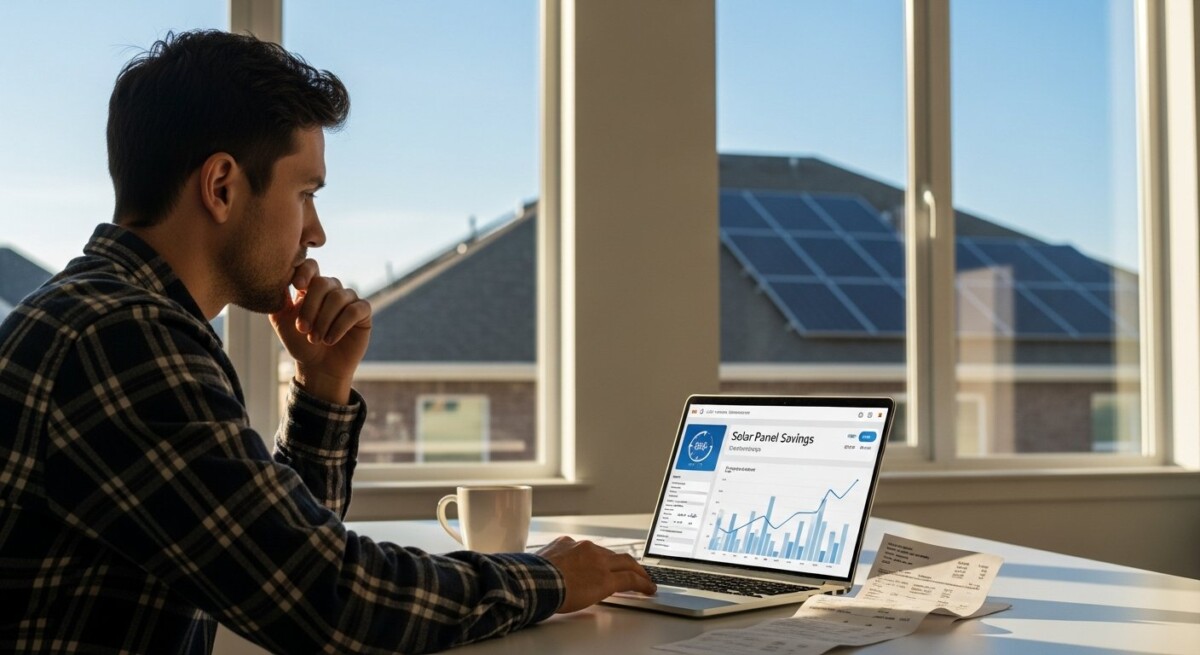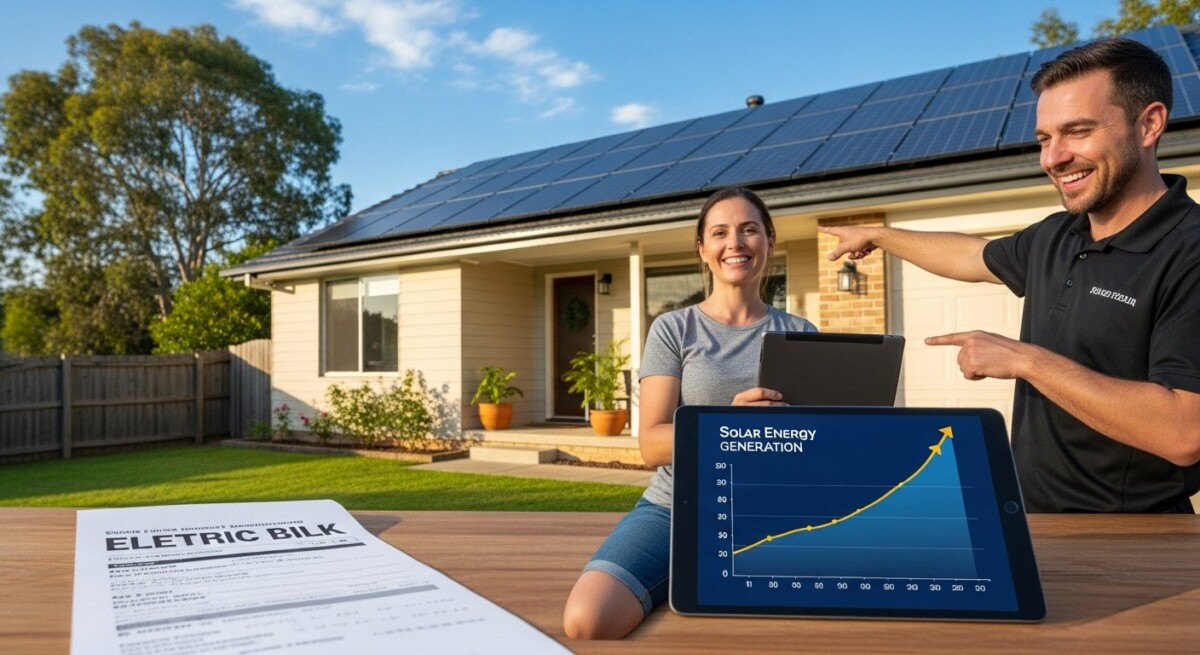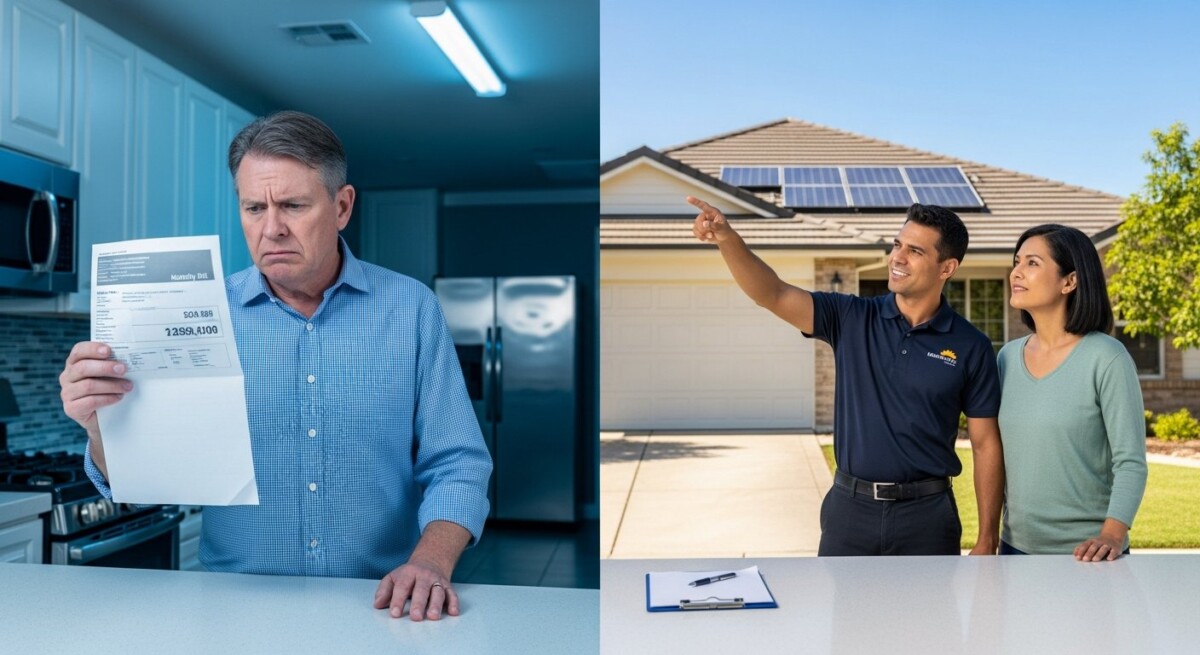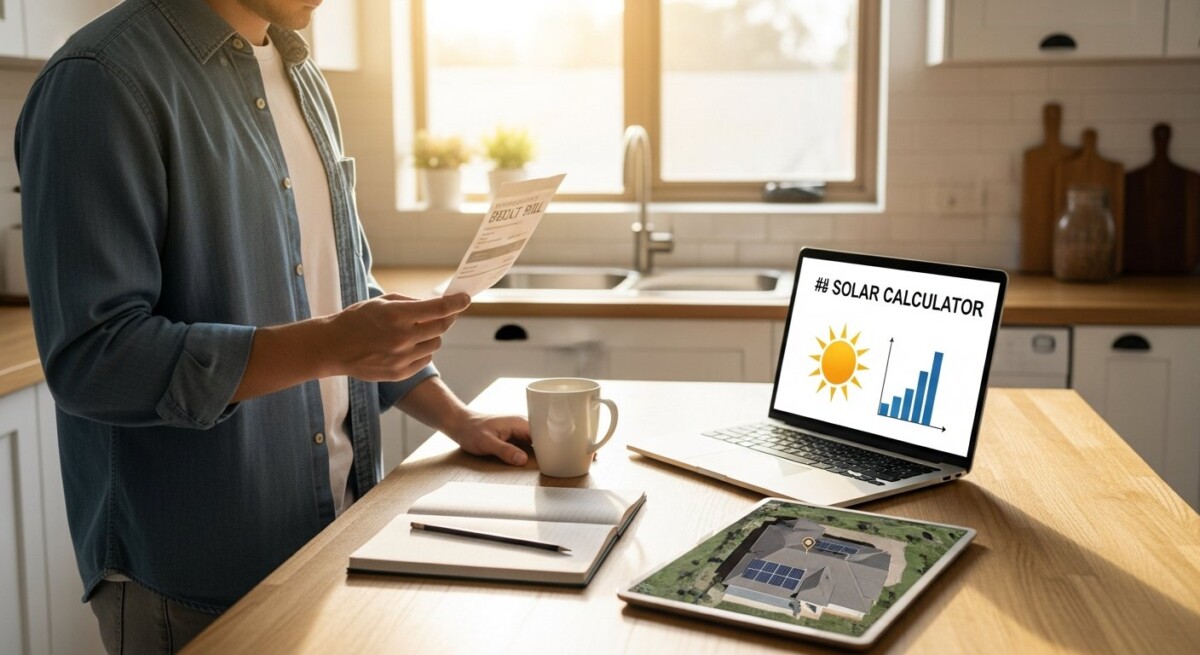
You open your monthly electricity bill and feel a familiar sting. Rates keep climbing, and you wonder if there is a better way. This is why so many homeowners begin searching for how to estimate solar system needs before making the switch. Understanding your energy usage and roof potential can help you reduce monthly bills and gain greater energy independence.
Understanding How to Estimate Solar System Needs
Estimating your solar system needs means figuring out how many panels and what size system will cover your household electricity consumption. The goal is to match your energy production with your typical usage so you can offset most or all of your electric bill.
Start by looking at your past 12 months of electricity bills. Add up the total kilowatt-hours (kWh) used and divide by 12 to find your average monthly consumption. This number tells you how much energy your solar system must produce each month.
Next, consider your roof’s sun exposure. A south-facing roof with little shade is ideal, but east and west orientations can also work. Professional installers use tools like solar pathfinders or satellite data to estimate the sunlight your roof receives each day.
What Goes Into a Solar Estimate
A complete estimate also factors in your local climate, panel efficiency, and inverter type. Most residential solar panels produce between 250 and 400 watts each. By dividing your annual energy needs by your region’s peak sun hours, you can get a rough panel count. For example, a home using 10,000 kWh per year in an area with 5 peak sun hours might need about a 6 kW system.
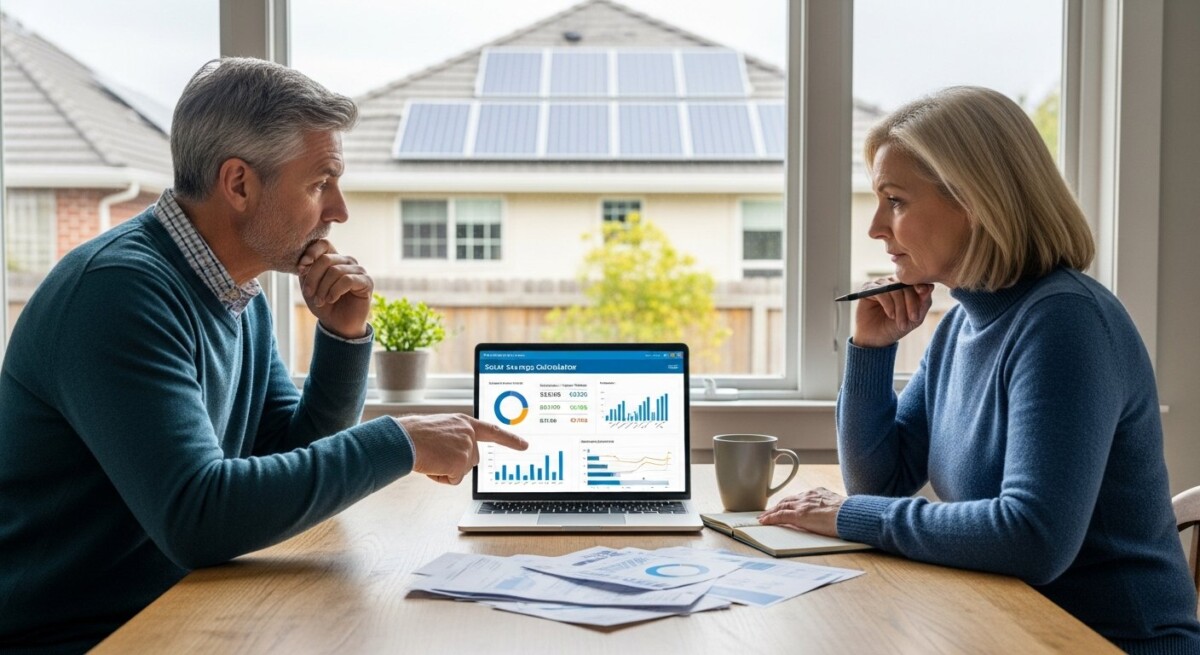
Online calculators can give you a ballpark figure, but nothing replaces an on-site evaluation. A certified installer will measure your roof, check its condition, and review your utility rate structure to design a system that fits your home and budget. In our guide on how solar system pricing is calculated, we explain how equipment choices and local factors influence the final cost.
Why Solar Energy Is Becoming More Popular
Electricity rates have risen steadily over the past decade, and many homeowners worry about future increases. Solar panels allow you to lock in a predictable energy cost and protect yourself from rate hikes.
Environmental concerns also drive adoption. Generating your own clean energy reduces your carbon footprint and helps combat climate change. Solar power produces no emissions during operation, making it one of the cleanest energy sources available.
Long-term savings are compelling. Most homeowners recoup their investment within 6 to 10 years through lower electricity bills. After that, the electricity your panels produce is essentially free for the remaining 15 to 20 years of the system’s life.
If you are considering solar power for your home, comparing installation quotes can help you understand your options. Request a free solar quote or call to learn more.
Common Questions Homeowners Have About Solar
It is natural to have questions before making a significant investment. Many homeowners wonder about the upfront cost and whether their roof can support panels. Others ask about performance on cloudy days or during winter.
Solar panels are durable and designed to last 25 to 30 years. They still produce electricity on cloudy days, though at reduced output. Modern systems are also equipped with monitoring tools so you can track production in real time.
- How much does a typical solar system cost?
- Will solar panels work during a power outage?
- Do I need to replace my roof before installation?
- How long does the installation process take?
- What maintenance do solar panels require?
- Can I add more panels later if my energy needs increase?
How Solar Panel Installation Works
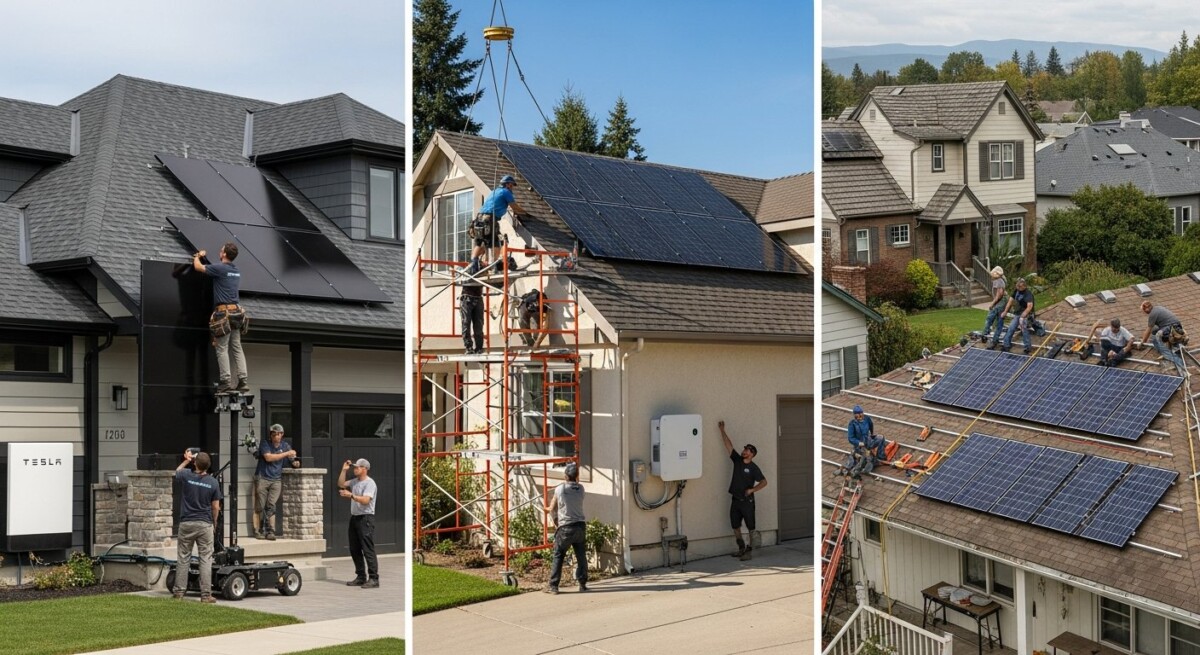
The installation process is more straightforward than many people expect. Once you choose a provider, they handle most of the work from start to finish. The entire process typically takes one to three months from signing a contract to flipping the switch.
Installers begin with a detailed home energy assessment. They review your utility bills, inspect your roof, and discuss your energy goals. After that, they design a system tailored to your home and submit the necessary permits to your local government and utility company.
- Home energy assessment and roof inspection
- System design and equipment selection
- Permit applications and utility approvals
- Panel mounting, wiring, and inverter installation
- Final inspection and system activation
Speaking with experienced installers can help you determine the best solar solution for your home. Compare solar quotes here or call to explore available options.
Signs Your Home May Be Ideal for Solar
Not every home is equally suited for solar, but many are. The best candidates have unshaded roof space that faces south, east, or west. A roof that is in good condition and less than 15 years old is also ideal.
Homes with high electricity bills benefit the most because solar offsets a larger expense. If you plan to stay in your home for at least five more years, you will have time to recoup your investment through savings.
- Your roof receives strong, direct sunlight for most of the day
- Your monthly electricity bills are consistently high
- You have at least 200 to 400 square feet of usable roof space
- Your roof is in good condition and structurally sound
- You plan to live in your home for several more years
- Your local utility offers net metering or other solar incentives
What Affects Solar Installation Costs
The cost of a solar system depends on several factors. System size is the biggest driver,larger systems cost more but also save more on electricity. Equipment quality also matters; premium panels and inverters are more efficient but carry a higher price tag.
Installation complexity can increase costs. A complicated roof with multiple angles, skylights, or heavy shading requires more labor and specialized mounting hardware. Local permitting fees and labor rates also vary by region.
Government incentives significantly reduce the net cost. The federal solar investment tax credit (ITC) allows you to deduct 30% of the system cost from your federal taxes. Many states and utilities offer additional rebates or performance-based incentives. For a deeper breakdown of system costs, read our post on 8 kW solar system cost.
The cost of solar installation varies depending on your home and energy needs. Request personalized solar quotes or call to see what options are available.
Tips for Choosing a Reliable Solar Installer
Choosing the right installer is just as important as choosing the right equipment. A reputable company will guide you through the process, handle permits, and stand behind their work. Start by looking for installers with at least five years of experience and positive customer reviews.
Warranties are a sign of confidence. Look for a 25-year performance warranty on panels and at least a 10-year workmanship warranty on the installation. Comparing multiple quotes helps you spot fair pricing and avoid overpaying.
- Verify the installer’s licenses, certifications, and insurance
- Check product and workmanship warranties carefully
- Read online reviews on sites like Google, Yelp, and the Better Business Bureau
- Ask for references from recent local installations
- Compare at least three quotes before making a decision
Long-Term Benefits of Installing Solar Panels
Solar panels provide decades of financial and environmental benefits. The most immediate benefit is lower electricity bills. Many homeowners see a 50% to 90% reduction in their monthly energy costs, depending on system size and local rates.
Solar also increases your home’s resale value. Studies show that homes with solar panels sell for a premium compared to similar homes without solar. Buyers recognize the value of lower utility bills and energy independence.
From an environmental perspective, a typical residential solar system offsets about 3 to 4 tons of carbon dioxide each year. That is equivalent to planting more than 100 trees annually. Energy independence also protects you from future rate increases and grid instability.
Frequently Asked Questions
How do I calculate how many solar panels I need?
Start with your annual kilowatt-hour usage from your electricity bills. Divide that number by your region’s average peak sun hours per year. Then divide that result by the wattage of the panels you are considering. A professional installer can refine this estimate based on your roof’s orientation and shading.
What is the average cost of a solar system for a home?
The national average cost for a residential solar system ranges from $15,000 to $25,000 before incentives. After the 30% federal tax credit, the net cost drops to roughly $10,500 to $17,500. Your actual cost depends on system size, equipment, and local labor rates.
How long do solar panels last?
Most solar panels carry a performance warranty for 25 years, but they often continue producing electricity for 30 years or more. Panels slowly degrade over time, typically losing about 0.5% to 0.8% of their output each year. Even after 25 years, most panels still operate at 80% to 85% of their original capacity.
Do solar panels work during winter or cloudy weather?
Yes, solar panels still generate electricity on cloudy days and during winter. They produce less energy than on sunny summer days, but modern panels are designed to capture diffuse light. Snow can actually help by reflecting sunlight onto panels, though heavy accumulation may temporarily reduce output.
Can I go completely off-grid with solar panels?
It is possible but requires a much larger system and battery storage to cover nighttime and cloudy periods. Most homeowners choose grid-tied systems because they are more affordable and allow net metering, where excess power is credited to your account. Off-grid systems are typically only practical for remote locations.
What government incentives are available for solar?
The federal solar investment tax credit (ITC) lets you deduct 30% of your system cost from your federal taxes. Many states offer additional rebates, tax credits, or performance-based incentives. Some utilities also provide net metering programs that credit you for excess power sent to the grid.
Will solar panels damage my roof?
Properly installed solar panels do not damage your roof. Installers use mounting systems that attach to the roof structure and seal all penetrations to prevent leaks. In fact, panels can protect the roof area beneath them from sun, rain, and hail, potentially extending the life of your shingles.
How much maintenance do solar panels require?
Solar panels require very little maintenance. Rain typically washes away dust and debris. You may need to clean panels once or twice a year if you live in a dry or dusty area. Most systems include monitoring software that alerts you to any performance issues.
Estimating your solar system needs is the first step toward lower electricity bills and a cleaner energy future. By understanding your usage, evaluating your roof, and comparing professional quotes, you can make a confident decision. Reach out to multiple installers to compare options and find the system that fits your home and budget.