
Bidirectional EV Charging Power Home With Solar Systems
Unlock true energy independence by using your EV's battery to power your home with solar. Learn the benefits and costs of this emerging technology.

By Ethan Whitaker
Learn more about Solar Panel Installation and Repair for guides, costs, and what to expect.
Compare Solar Panel Installation and Repair Pros Near You

Enter your ZIP code to compare top-rated local professionals and request free quotes.
The concept of your electric vehicle serving as a backup battery for your home has moved from science fiction to a practical, albeit complex, reality. Bidirectional EV charging, which allows electricity to flow both into and out of your car, is poised to transform how we think about home energy management. When paired with a solar panel system, this technology offers the tantalizing possibility of true energy independence. This article explores how to use bidirectional EV charging to power your home with solar, examining the benefits, the equipment required, and the economic considerations that will shape its adoption.
Defining Bidirectional Charging and Its Key Modes
To understand the potential, it is essential to distinguish between the two main types of bidirectional charging. The first is Vehicle-to-Home (V2H), which allows your EV to power your household appliances, typically during an outage or during peak electricity pricing periods. The second is Vehicle-to-Grid (V2G), which allows your EV to send power back to the utility grid, potentially earning you credits or payments. Both modes rely on the same underlying hardware but serve different purposes.
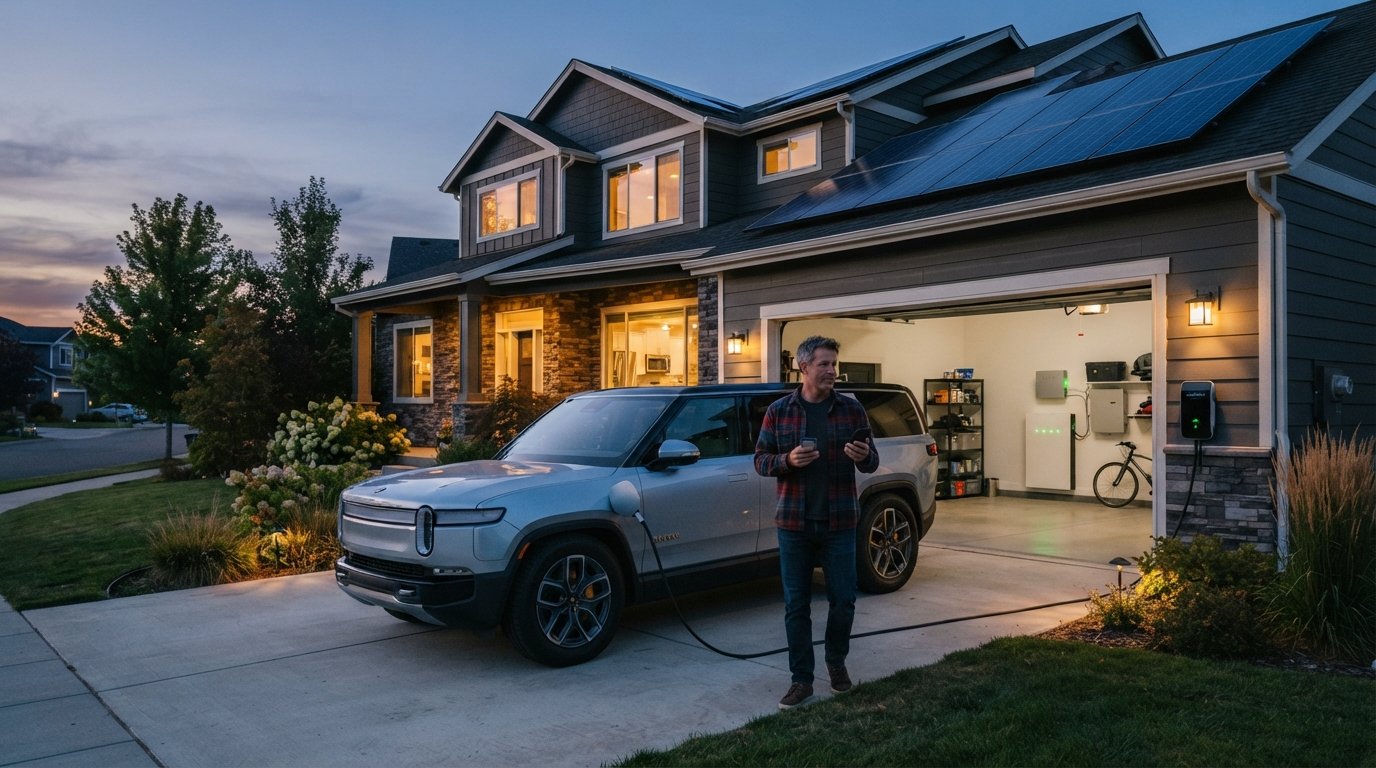
In the context of a solar-powered home, V2H is the more immediately relevant application. It enables you to store excess solar energy in your car's battery during the day and then use that energy to power your home at night or during periods of low solar production. This effectively turns your EV into a massive, mobile home battery. The capacity of a typical EV battery, often ranging from 60 to 100 kilowatt-hours, dwarfs the 10 to 20 kilowatt-hours of a standard stationary home battery like the Tesla Powerwall. This additional capacity can be a game-changer for homeowners looking to maximize their self-consumption of solar energy.
The Core Components of a V2H Solar System
Before you can start powering your home from your EV, you need the right equipment. The system is more involved than a simple plug-and-play setup. Here are the critical components required:
- Bidirectional Charger: This is not your standard EV charger. It must be specifically designed to handle power flow in both directions, converting DC power from the vehicle back into AC power for your home.
- EV with V2G/V2H Capability: Not all EVs are created equal. Your vehicle must have the onboard hardware and software to support bidirectional charging. Current compatible models include the Nissan Leaf (via CHAdeMO), the Ford F-150 Lightning, and the Hyundai Ioniq 5, with more manufacturers announcing support.
- Islanding Inverter or Transfer Switch: This safety device is crucial. It disconnects your home from the grid when it detects an outage, ensuring that power from your EV does not backfeed into the grid and endanger utility workers. It also allows your home to operate independently, or as an island, on battery power. For grid-tied V2H, a smart inverter is necessary to manage the interaction.
- Solar PV System: Your solar panels are the generator in this system. To truly power your home with solar, the panels must produce enough energy to both run your home and charge your EV. A system with a capacity of at least 10 kW or more is often recommended for homes with an EV, but this depends on your energy consumption and driving habits.
- Energy Management System (EMS): This is the brain of the operation. It monitors solar production, home consumption, EV state of charge, and utility rates to decide the most efficient and economical time to charge or discharge the battery.
This is a significant undertaking, and it is not a DIY project. It requires professional installation and permits. The integration of these components is complex, and the costs are currently higher than those for a standard solar-plus-storage setup. However, as technology matures and becomes more standardized, the process will likely become simpler and more affordable.
Economic Benefits: Maximizing Solar Investment and Reducing Bills
The primary financial driver for adopting bidirectional EV charging is to maximize the return on your solar investment. Without a battery, any excess solar energy you produce is typically exported to the grid. Under net metering policies, you may receive credits for this energy, but the rates are often less than what you pay for electricity. By storing that excess energy in your EV, you can avoid buying expensive electricity from the utility at night or during peak demand times, which can significantly increase your savings.
Consider a typical scenario: your solar panels produce a surplus during the day. With a bidirectional charger, you can program your car to charge only from this surplus. Then, in the evening, when your panels are no longer producing, the car can supply power to your home. This practice, known as load shifting, can be particularly profitable if your utility has time-of-use rates, where electricity costs more during the late afternoon and early evening. The ability to shift your consumption to cheaper solar-generated power can shave a substantial amount off your annual energy bill.
Moreover, in the event of a power outage, your EV can serve as a reliable and extended backup power source. While a standard home battery might last for a day or two on essential loads, an EV battery can power your home for several days, or even weeks, if you manage your usage carefully. For homeowners in areas prone to extreme weather, this resilience is a tangible benefit that goes beyond pure economics. It provides peace of mind and can save significant costs associated with spoiled food, hotel stays, or lost work.
When you are ready to explore how to integrate solar and bidirectional charging into your home, getting a clear picture of your potential savings is the first step. An independent resource like NewSolarQuotes can help you understand the cost and performance of different solar systems, and you can also use a free quote service like FreeSolarPowerQuotes to get unbiased estimates from local installers.
Choosing the Right Equipment and Installation
Selecting the correct bidirectional charger and compatible inverter is paramount. The market is currently experiencing a transition. Many early systems used the CHAdeMO connector, which is now being phased out in favor of the CCS (Combined Charging System) standard. Most major automakers are committing to CCS, which supports bidirectional communication. However, not all CCS chargers are bidirectional, and not all EVs with a CCS port have the necessary hardware. It is essential to verify that your specific EV model and the charger you choose are compatible.
When you engage a solar installer, you must clearly state your intention to implement V2H. They will need to design your system to accommodate the additional load and control signals. The installation process involves several steps: a site assessment to determine your energy needs and panel capacity, the physical installation of the charger and transfer switch, electrical work to connect it to your main panel, and configuration of the energy management software. This cannot be done by a generic electrician; it requires a specialist familiar with solar and EV integration.
The cost of a bidirectional EV charger can range from $3,000 to $6,000 or more, excluding installation. This is significantly higher than the $500 to $1,200 cost of a standard Level 2 charger. The additional hardware, such as the transfer switch and EMS, can add several thousand more to the project. It is a significant investment, but for many, the benefits of energy resilience and the potential to offset the cost of a dedicated home battery can be compelling.
Grid Services, V2G, and the Future of Energy
While V2H is the primary use case for homeowners today, the future of bidirectional charging lies in Vehicle-to-Grid (V2G) technology. With V2G, your car can sell power back to the grid during high-demand periods. This not only benefits you by generating revenue, but it also provides the utility with a distributed energy resource that can help stabilize the grid and integrate more renewable energy. In some regions, utilities are testing programs that compensate EV owners for providing this service.
Participating in V2G requires a more advanced energy management system that can communicate with your utility and respond to price signals. You would need to set a minimum state of charge for your battery to ensure you have enough range for your daily driving. The potential for income is real, but it is still an emerging market. The wear and tear on your EV battery from frequent charging and discharging is also a consideration, although modern battery management systems are designed to mitigate degradation.
The integration of bidirectional EV charging with solar power is a natural progression toward a more decentralized and resilient energy grid. It aligns perfectly with the goals of homeowners who are already investing in solar to reduce their carbon footprint and gain control over their energy costs. As the technology becomes more standardized and the costs decrease, this will become an increasingly common feature of new solar installations. Many solar providers are already starting to offer V2H-capable systems, and as you see in our guide on solar EV charging and how to match your schedule to sunlight, the key is to design a system that is optimized for your specific lifestyle and consumption patterns.
Is Bidirectional Charging Right for Your Solar Home?
Deciding whether to invest in a bidirectional EV charging system is a personal choice that depends on several factors. It is not a one-size-fits-all solution. To help you evaluate, consider the following:
- Your EV's Capability: Is your current or planned EV equipped for V2H? If not, you may need to wait for a newer model.
- Your Utility Rates: Does your utility offer time-of-use plans that make load shifting financially rewarding? If you are on a flat rate, the savings from V2H will be less.
- Your Outage Risk: Do you live in an area with frequent power outages? The backup power capability could be a primary motivator.
- Your Budget: The upfront cost is substantial. Can you justify the investment based on projected savings and resilience?
- Your Solar System Size: Is your solar array large enough to generate a surplus that can be stored in your EV without compromising your home's daytime consumption?
For many homeowners, the most cost-effective approach today might be to install a standard solar and battery system now and plan for a future bidirectional upgrade. The prices for bidirectional chargers are expected to fall as they become more common. Waiting also allows you to take advantage of more mature technology and potentially better federal incentives. However, if you are building a new home or replacing your roof, it is wise to ensure that your electrical panel and infrastructure are V2H-ready, even if you do not install the charger immediately.
The decision to use your EV to power your home with solar is ultimately a strategic one. It is an investment in energy independence that can provide both financial and resilience dividends. By carefully evaluating your energy needs, your vehicle's capabilities, and the economics of your local utility, you can determine if this exciting technology is the right choice for your household.
In the coming years, the line between your car and your home's energy system will continue to blur. The concept of the electric vehicle as a mode of transport is evolving into a vision of the EV as a versatile energy asset. As we move into 2026 and beyond, the ability to harness the sun's power during the day and store it in your car for use at night will become a hallmark of the modern, sustainable home.