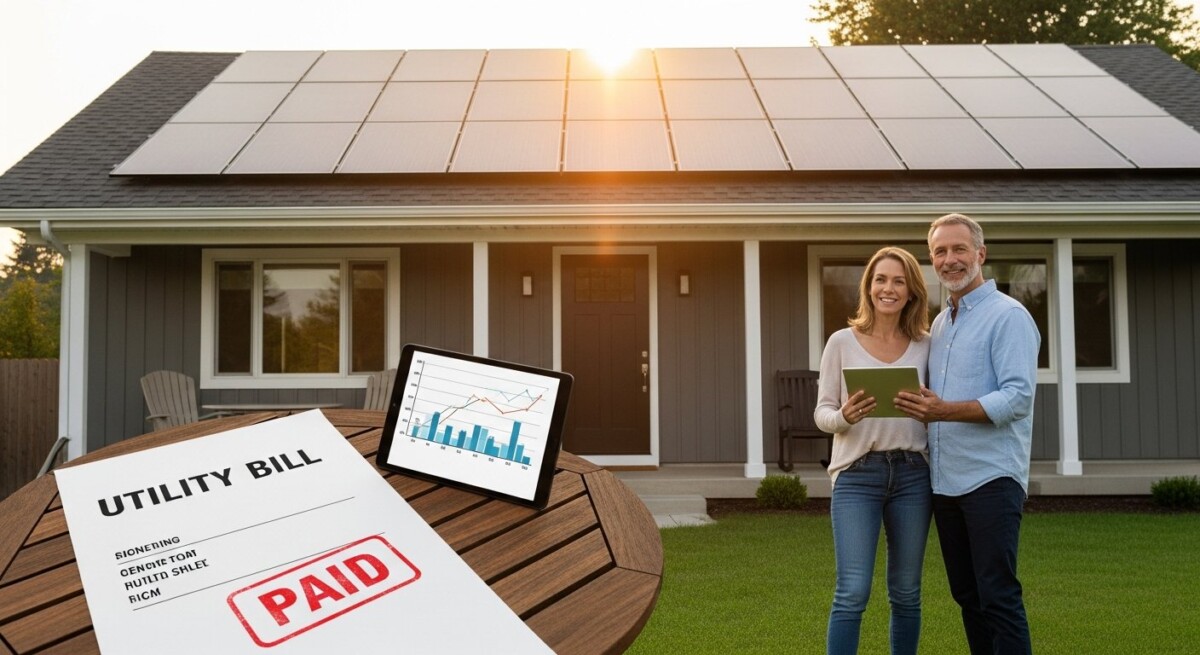
Your monthly electricity bill keeps climbing, and you have started wondering if there is a way to lower it for good. Like many homeowners, you have likely searched online for “can solar be installed with no upfront cost” because the idea of free energy sounds great, but the price tag of solar panels can feel intimidating. The good news is that going solar does not always require a large check written on day one. Several financing options let you start saving on energy bills immediately while paying nothing at installation.
Understanding can solar be installed with no upfront cost
The short answer is yes, you can install solar panels with zero money down. This is possible through solar loans, leases, and power purchase agreements (PPAs) that cover the upfront equipment and labor costs. With a solar lease or PPA, a third-party company owns the panels on your roof, and you pay a fixed monthly fee or a lower rate for the electricity the system produces.
With a zero-down solar loan, you borrow the money to buy the system and then make monthly payments that are often lower than your previous electric bill. The key difference is ownership: loans let you own the panels and claim incentives like the federal solar tax credit, while leases and PPAs leave ownership with the installer. More homeowners are choosing these options because they remove the biggest barrier,the initial cost,and allow families to start saving from month one.
How zero-down solar financing actually works
When you choose a $0-down solar loan, a lender pays the installation company directly. You then repay that loan over 10, 15, or 20 years at a fixed interest rate. Because your new solar panels reduce or eliminate your grid electricity bill, the loan payment typically fits within your former energy budget. Solar leases and PPAs work similarly but without the loan,you simply pay for the energy produced, often at a rate lower than your utility charges.
Why solar energy is becoming more popular
Electricity rates across the United States have risen steadily over the past decade, and many homeowners feel the pinch each month. Solar power offers a way to lock in a lower, predictable energy cost and protect yourself from future rate hikes. At the same time, growing awareness about climate change has motivated families to reduce their carbon footprint without sacrificing comfort or convenience.
Long-term savings remain the strongest driver. A typical residential solar system pays for itself within six to ten years and then produces free electricity for another fifteen to twenty years. Add in government incentives such as the 30% federal Investment Tax Credit, and the financial case becomes even stronger. These factors together explain why solar adoption has grown by more than 40% annually in recent years.
If you are considering solar power for your home, comparing installation quotes can help you understand your options. Request a free solar quote or call (855) 956-0007 to learn more.
Common questions homeowners have about solar
Many homeowners hesitate because they are unsure whether solar will work for their specific situation. Questions about cost, roof condition, and system performance come up again and again. The good news is that most concerns have straightforward answers, and a professional site assessment can clear up any doubts.
Understanding these common worries can help you make an informed decision without pressure. Here are some of the most frequent questions homeowners ask before going solar:
- How much does a solar system cost after incentives? After the 30% federal tax credit, a typical 6-kW system costs between $10,000 and $15,000, but zero-down financing eliminates the upfront payment.
- Do I need a new roof first? Ideally, your roof should have at least 10,15 years of life left. Installers can work with older roofs, but replacing shingles later adds cost.
- Will solar work in cloudy or cold climates? Yes. Solar panels generate electricity from daylight, not direct heat. Germany, a cloudy country, leads the world in solar adoption.
- What happens if I move? If you own the panels, solar can increase your home resale value. If you lease, the new buyer can take over the lease or you can buy out the contract.
- How long does installation take? Most residential installations are completed in one to three days after permits are approved, which can take two to six weeks.
- Can I add a battery later? Yes. In our guide on adding a battery to solar later, we explain how to plan for energy storage even if you start with panels only.
How solar panel installation works
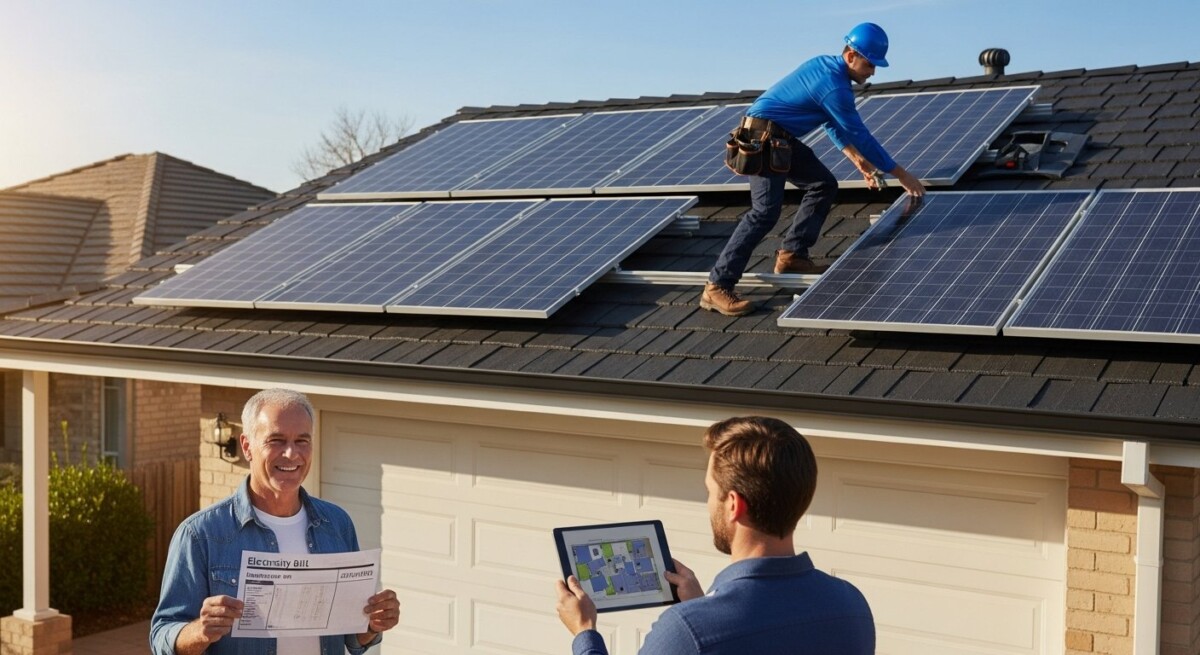
The process of going solar is simpler than most homeowners expect. Professional installers handle everything from the initial energy assessment to flipping the switch that turns your system on. You do not need to be a DIY expert or coordinate multiple contractors,the solar company manages the project from start to finish.
Here is a typical step-by-step timeline for a residential solar installation:
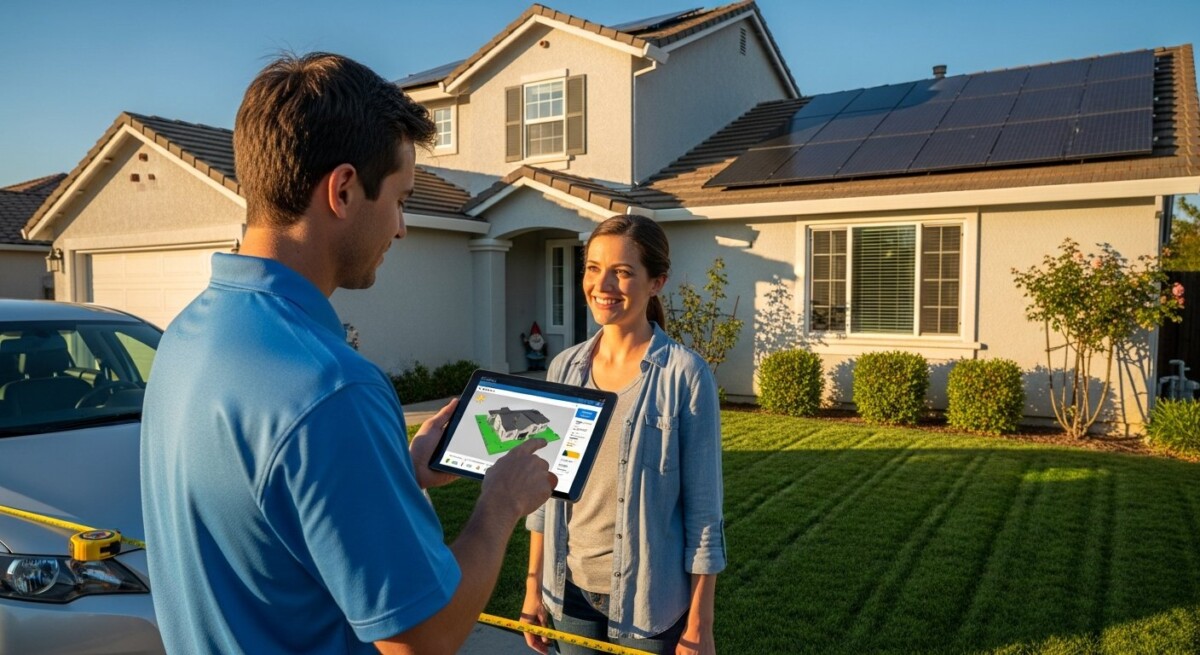
- Home energy assessment , An installer reviews your past electric bills, examines your roof, and measures sunlight exposure to size the right system.
- System design , Using satellite imagery and on-site measurements, the company designs a layout that maximizes energy production for your roof.
- Permits and approvals , The installer submits permit applications to your local government and interconnection paperwork to your utility company.
- Panel installation , A crew mounts the racking system, attaches the panels, and connects the inverter and wiring, usually within one to three days.
- System activation , After a final inspection and utility approval, your system is turned on and begins generating electricity.
Speaking with experienced installers can help you determine the best solar solution for your home. Compare solar quotes here or call (855) 956-0007 to explore available options.
Signs your home may be ideal for solar
Not every home is equally suited for solar panels, but many are. The best candidates share a few common characteristics that make installation straightforward and savings meaningful. If your home checks most of these boxes, you are likely a strong candidate for solar with no upfront cost.
Here are the key indicators that your home is ready for solar panels:
- Strong sunlight exposure , A south-facing roof with minimal shade from trees or neighboring buildings produces the most energy.
- High electricity bills , If you pay more than $100 per month for electricity, solar can offset a significant portion of that cost.
- Suitable roof space , Most homes need about 300,500 square feet of unobstructed roof area for a typical 6-kW system.
- Long-term home ownership plans , Solar pays back best over 7,10 years, so staying in your home for at least that long maximizes financial returns.
- Good roof condition , A roof in good shape with 10+ years of life remaining avoids the need for early removal and reinstallation.
- Supportive local policies , States with net metering, tax credits, or rebates make solar more affordable and faster to pay off.
What affects solar installation costs
The price of a solar system depends on several variables that differ from home to home. Understanding these factors helps you compare quotes accurately and choose the right system for your budget. The good news is that even the most expensive residential system is far cheaper today than it was a decade ago.
System size is the biggest cost driver. A larger home with higher energy consumption needs more panels, which increases the total price. Equipment quality also matters,premium panels and microinverters cost more but often produce more energy and last longer. Installation complexity, such as a steep roof, multiple stories, or electrical panel upgrades, can add labor costs. Finally, local incentives and utility rebates vary by state and can reduce your net price by thousands of dollars.
The cost of solar installation varies depending on your home and energy needs. Request personalized solar quotes or call (855) 956-0007 to see what options are available.
Tips for choosing a reliable solar installer
Choosing the right installer is just as important as choosing the right equipment. A trustworthy company will guide you through financing options, handle permits correctly, and stand behind their work for decades. Taking a few extra steps before signing a contract can save you from headaches later.
Here are practical tips for vetting solar installation companies:
- Review installer experience , Look for companies with at least five years in business and a track record of installing systems similar to what you need.
- Check warranties , Reputable installers offer a 25-year panel performance warranty and a 10-year workmanship warranty at minimum.
- Read customer reviews , Check Google, Yelp, and the Better Business Bureau for honest feedback about communication and quality.
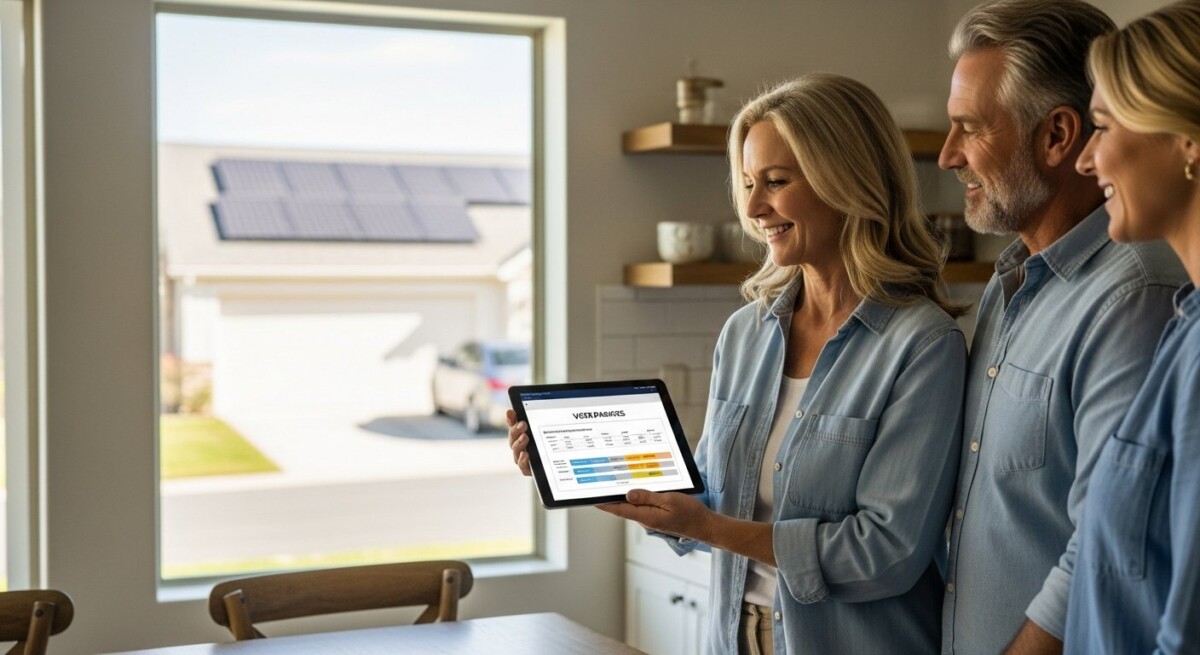
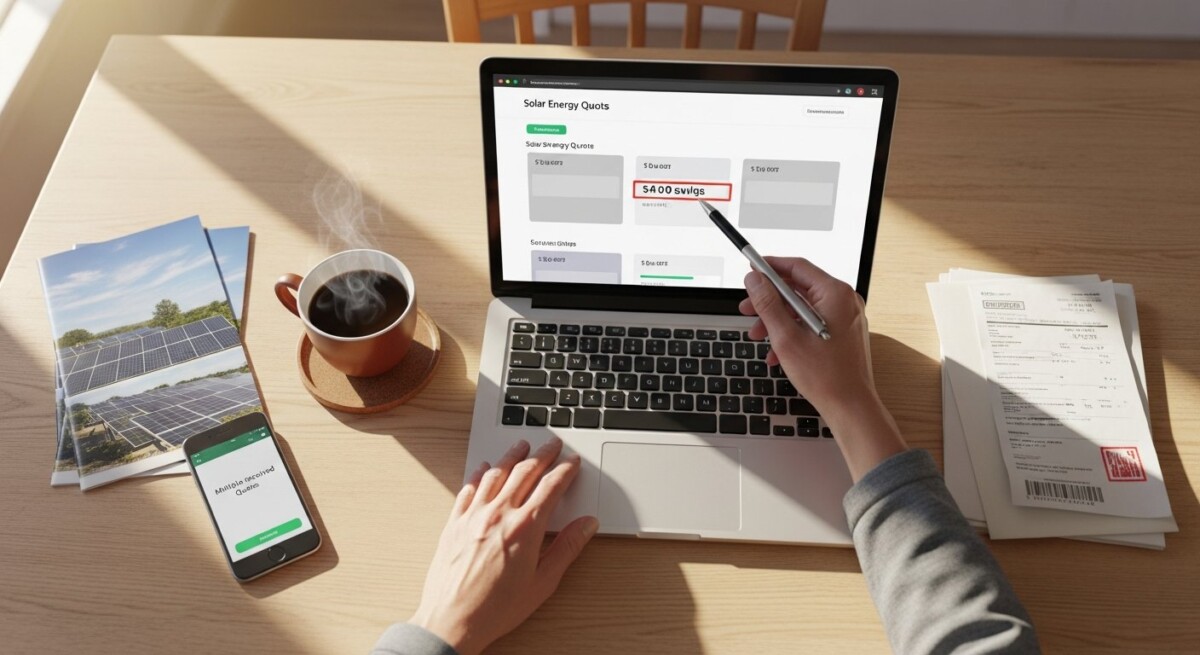
- Compare multiple quotes , Get at least three quotes from different installers to compare pricing, equipment, and financing terms side by side.
- Verify licensing and insurance , Ensure the company holds the required state contractor license and carries liability and workers’ compensation insurance.
Long-term benefits of installing solar panels
Going solar is not just about saving money each month,it is a long-term investment in your home, your finances, and the planet. Over the 25- to 30-year lifespan of a solar system, the benefits compound in ways that go far beyond lower electric bills. Homeowners who make the switch often describe it as one of the best financial decisions they have ever made.
Lower electricity bills are the most immediate reward. Many homeowners see their monthly utility costs drop by 50,90%, and some even eliminate their electric bill entirely. Over time, those savings add up to tens of thousands of dollars. At the same time, solar panels increase your home’s resale value. Studies from the National Renewable Energy Laboratory show that homes with solar sell for about 4% more than comparable non-solar homes.
Energy independence is another powerful benefit. By generating your own electricity, you become less vulnerable to grid outages and rising utility rates. And of course, every kilowatt-hour of solar energy reduces carbon emissions, helping create a cleaner environment for future generations.
Frequently Asked Questions
Can I really get solar panels with no money down?
Yes. Solar loans, leases, and power purchase agreements all offer zero-down options. With a loan, you own the system and make monthly payments. With a lease or PPA, you pay for the energy produced without owning the equipment.
What is the catch with no upfront cost solar?
There is no hidden catch, but you should understand the terms. With a lease or PPA, you do not qualify for the federal tax credit because the installer owns the system. With a loan, you pay interest over time, though the total savings still outweigh the cost.
How long does it take for solar panels to pay for themselves?
Most homeowners recover their investment in 6 to 10 years. After that, electricity from your panels is essentially free for the remaining 15,20 years of the system’s life.
Will solar panels work during a power outage?
Standard grid-tied solar systems shut off during outages for safety reasons. If you want backup power, you need a battery storage system, which can be added now or later. Learn more in our article on charging a Tesla with solar panels.
Do I need to clean my solar panels regularly?
In most areas, rain naturally cleans panels well enough to maintain efficiency. Annual cleaning may help in dusty regions, but it is rarely required for optimal performance.
What happens to my solar panels at the end of their life?
Solar panels have a 25- to 30-year warranty and often produce electricity beyond that. Recycling programs exist for panel materials, and many manufacturers offer take-back programs.
Can I install solar panels myself to save money?
DIY solar is possible but risky. Improper installation can void warranties, create safety hazards, and fail inspection. Professional installers handle permits, electrical work, and roof sealing correctly.
How do I know if a solar quote is fair?
Compare at least three quotes from different installers. Look at the price per watt, equipment brand, warranty terms, and financing options. A fair quote balances quality and cost without extreme lowball or high-pressure tactics.
Solar power is more accessible than ever, and the option to install with no upfront cost makes it possible for almost any homeowner to start saving. By understanding how zero-down financing works, evaluating your home’s suitability, and comparing quotes from trusted installers, you can make a confident decision that benefits your wallet and the environment for decades. Take the first step today by requesting free quotes and seeing what solar can do for you.