
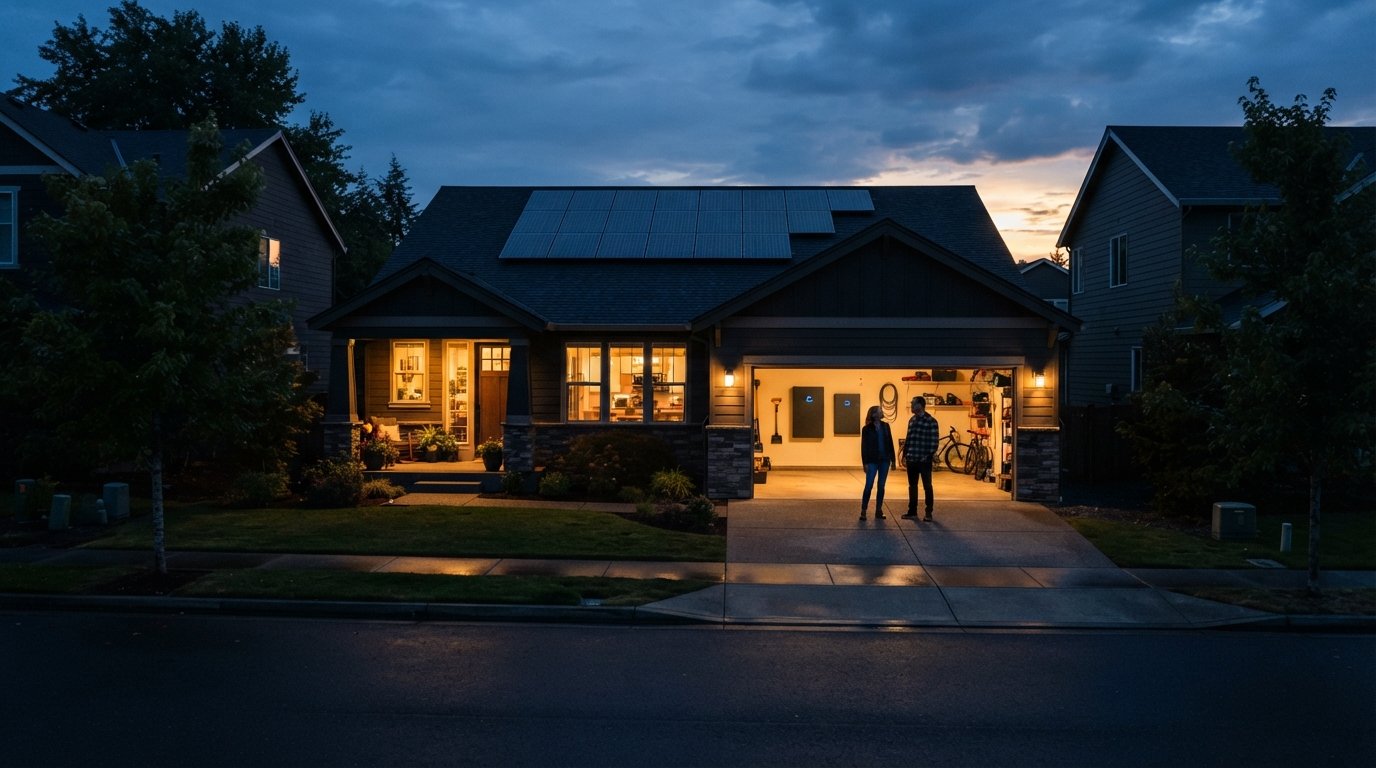
Solar Power for Disaster Preparedness: Home Energy Resilience
Solar power for disaster preparedness home energy resilience keeps critical loads running during outages. Call (833)-793-7166 for expert guidance.

By Thomas Hayes
Learn more about Solar Panel Installation and Repair for guides, costs, and what to expect.
Compare Solar Panel Installation and Repair Pros Near You

Enter your ZIP code to compare top-rated local professionals and request free quotes.
When the grid goes down, the difference between a minor inconvenience and a major crisis often comes down to one thing: whether your home can keep the lights on, the refrigerator running, and medical devices powered. Hurricanes, wildfires, ice storms, and rolling blackouts are no longer rare events, and utility restoration timelines can stretch from hours to weeks. Solar power for disaster preparedness home energy resilience is not just about saving money on monthly bills; it is about ensuring your household remains safe, functional, and self-sufficient when the outside world loses power.
This guide explains how to design a solar and storage system that performs when it matters most. You will learn which circuits to prioritize, how batteries behave during multi-day outages, how to pair solar with generators for worst-case scenarios, and what permitting and planning steps make resilience-focused installations smoother. The goal is practical: a home energy strategy that keeps critical systems alive without requiring you to become an off-grid survivalist.
Why Solar Plus Storage Changes the Outage Equation
Traditional grid-tied solar systems without batteries automatically shut down during a power outage. This is a safety feature called anti-islanding, which prevents solar panels from sending electricity onto power lines while utility crews are working. The result is frustrating: your roof is generating electricity, but your home cannot use it. Adding battery storage solves this problem. A hybrid inverter or AC-coupled battery system can disconnect from the grid and form its own microgrid, allowing your solar panels to continue powering your home and charging the battery during daylight hours.
The resilience benefit is straightforward. During a short outage, a battery covers evening loads and recharges each morning. During a multi-day disaster, the combination of solar generation and battery storage can keep critical loads running indefinitely, provided the sun shines and your system is sized correctly. This is why solar power for disaster preparedness home energy resilience has become a central topic for homeowners in hurricane zones, wildfire corridors, and regions with aging grid infrastructure.
However, resilience does not happen by accident. A solar system designed purely to minimize electric bills will often prioritize total production and may not include the battery capacity, inverter features, or critical load panel needed for outages. You need to plan for resilience from the start, or retrofit with those goals in mind. If you already have solar and are considering storage, our guide on adding a battery to solar later explains compatibility checks, inverter requirements, and cost considerations.
Critical Loads: What to Power First When the Grid Fails
During an extended outage, you cannot run your entire home as usual unless you have an exceptionally large battery bank and a massive solar array. Instead, you prioritize. Critical loads are the circuits that keep your household safe, healthy, and comfortable enough to ride out the event. The exact list varies by climate and family needs, but most resilience plans start with a core set of systems.
Here are the most common critical loads homeowners prioritize during disasters:
- Medical equipment: CPAP machines, oxygen concentrators, insulin refrigeration, and other devices that cannot tolerate a power gap.
- Refrigeration and food safety: A refrigerator and chest freezer to prevent food spoilage and reduce post-disaster expenses.
- Lighting and communications: LED lights, phone chargers, internet router, and a battery-powered radio for emergency alerts.
- Heating or cooling: A space heater, window air conditioner, or furnace blower depending on the season and climate.
- Water and sanitation: A well pump, sump pump, or sewage ejector pump if your home relies on them.
After identifying these loads, you calculate their wattage and daily energy use. A typical refrigerator uses 1 to 2 kWh per day. A CPAP machine uses less than 0.5 kWh. A window AC unit might use 6 to 10 kWh per day if run continuously. A well pump might use 1 to 3 kWh per day depending on usage. Summing these loads gives you a daily energy budget that your battery and solar array must meet.
The next step is to isolate these circuits in a critical load subpanel. During normal grid operation, the subpanel is powered by the grid or your main solar system. During an outage, the battery inverter energizes only that subpanel, automatically shedding non-essential loads like the pool pump, electric dryer, or central air conditioning. This approach lets you use a smaller, less expensive battery while still covering what matters most.
How Solar Plus Battery Performs in Multi-Day Disasters
Multi-day outages are where resilience planning either pays off or falls apart. A battery that covers one night is useful, but a hurricane or wildfire evacuation zone may leave you without grid power for a week or more. Performance depends on three factors: solar production, battery capacity, and load management.
Solar production during a disaster is often lower than on a clear, sunny day. Smoke from wildfires, cloud cover from hurricanes, and debris on panels can reduce output by 50 percent or more. A system that produces 40 kWh on a sunny day might produce only 15 to 20 kWh under smoky or overcast conditions. Battery capacity determines how much of that production you can store and use overnight. Load management determines how far that stored energy stretches.
Consider a real-world example. A homeowner in Florida has a 10 kW solar array and a 13.5 kWh battery. During a hurricane outage with partial cloud cover, the array produces 20 kWh per day. The battery charges during the day and powers critical loads at night. The homeowner runs the refrigerator, lights, internet, phone chargers, and a small window AC unit in one room. Daily consumption is 12 kWh. The system keeps running indefinitely because production exceeds consumption. If the homeowner added a second battery or ran the central AC, the math would change and the system might deplete after two or three days.
The lesson is that solar power for disaster preparedness home energy resilience requires honest load planning. You do not need to power everything. You need to power the right things for the duration of the event. Many hybrid inverters include monitoring apps that show real-time battery state of charge and solar production, so you can adjust usage as conditions change. Some systems also allow remote control of loads, letting you turn off non-essential circuits from your phone to extend battery life.
Fuel Storage and Generator Pairing for Worst-Case Backup
Even the best solar and battery system has limits. Extended periods of heavy smoke, snow covering panels, or unusually high energy demand can drain a battery before the sun returns. For worst-case scenarios, pairing solar with a fuel-based generator provides a layered defense. The generator does not need to run continuously; it can recharge the battery when solar production is insufficient, then shut off. This approach reduces fuel consumption, noise, and maintenance compared to running a generator 24/7.
Fuel storage is the critical constraint. Gasoline degrades in 3 to 6 months without stabilizer, and storing large quantities is dangerous and often regulated. Propane stores indefinitely and burns cleaner, making it a better choice for standby generators. Natural gas generators avoid fuel storage entirely but depend on gas infrastructure, which can fail during earthquakes or widespread disasters. Diesel stores longer than gasoline but requires more maintenance.
A practical resilience setup might include a 7 to 10 kW propane generator with a 250-gallon tank, paired with a solar and battery system. The battery handles daily cycling and short outages. The generator runs for a few hours every few days during a prolonged disaster to recharge the battery and run high-load appliances like a well pump or electric stove. This hybrid approach balances fuel efficiency, reliability, and cost.
If you are planning a solar installation with resilience in mind, discuss generator integration with your installer. Some hybrid inverters support generator input and can automatically start the generator when battery state of charge drops below a set threshold. This feature turns your solar system into a self-managing microgrid that uses the cleanest and cheapest energy first, then falls back to fuel only when necessary.
Planning and Permitting Tips for Resilience-Focused Solar
Resilience-focused solar systems often require more planning than standard grid-tied installations. The permitting process varies by state, county, and utility, but a few best practices apply across most jurisdictions. Start by checking local rules for battery placement, setback requirements, and fire code compliance. Some areas require batteries to be installed in garages or exterior walls with specific clearances. Others restrict lithium-ion batteries in attached garages due to fire risk.
Next, confirm your utility's interconnection rules for backup power. Many utilities require an approved disconnect switch and may have specific requirements for how your system islands from the grid. Your installer should handle this paperwork, but you should understand the timeline. In some regions, permission to operate can take four to eight weeks after installation. If you are installing solar primarily for disaster preparedness, factor this delay into your planning, especially if you live in a region with a defined hurricane or wildfire season.
Finally, consider future expandability. Battery technology is improving, and prices are falling. A system that meets your needs today may be insufficient in five years if you add an electric vehicle or a home office. Ask your installer to size the inverter and wiring for future battery additions. If you are moving to a new home and want to plan solar around your relocation, resources like Moving.Homes offer checklists and guides that can help you coordinate the transition. The goal is to avoid costly rework later by planning for growth now.
Financial incentives can also offset resilience upgrades. The federal Investment Tax Credit (ITC) covers a percentage of solar and battery installation costs, and some states offer additional rebates for storage systems. These incentives change over time, so verify current details with a tax professional or official source before finalizing your budget. Many homeowners find that the resilience benefit alone justifies the investment, even without factoring in energy savings.
Designing Your Resilience Plan: A Step-by-Step Approach
Putting it all together requires a methodical approach. You do not need to solve everything at once, but you do need a clear sequence that ensures your system works when you need it most. The following steps provide a framework that works for most homes.
- Identify your critical loads and daily energy budget. List the circuits you must power during an outage and calculate their daily kWh usage. This number drives battery and solar sizing.
- Evaluate your solar potential and site conditions. Consider roof orientation, shading, local weather patterns, and whether you need ground-mounted panels for better production.
- Choose a hybrid inverter and battery system. Select equipment that supports backup power, generator input, and future expansion. Confirm compatibility with your existing solar if you are retrofitting.
- Plan for fuel or generator backup if needed. Decide whether a propane, natural gas, or diesel generator makes sense for your worst-case scenario, and size fuel storage accordingly.
- Work with a qualified installer on permitting and interconnection. Ensure your system meets local codes and utility requirements, and confirm the timeline for approval and installation.
After installation, test your system during a planned outage. Simulate a grid failure by turning off your main breaker and observing how the battery and solar respond. Check that critical loads stay powered and that the battery recharges the next day. This test reveals any wiring or configuration issues before a real emergency. Repeat the test annually, especially before disaster season.
Solar power for disaster preparedness home energy resilience is ultimately about control. You cannot prevent hurricanes, wildfires, or grid failures, but you can decide how your home responds. A well-designed solar and storage system turns your house from a passive victim of infrastructure failure into an active, self-reliant participant in its own safety. The investment pays off not only in monthly savings but in peace of mind when the grid goes dark.