
Solar Panel Soiling Losses: Dust and Pollen Prevention
Solar panel soiling losses from dust and pollen can cut output by 30 percent. Learn prevention strategies that protect your savings and ROI.

By Brandon Moore
Learn more about Solar Panel Cleaning for guides, costs, and what to expect.
Compare Solar Panel Cleaning Pros Near You

Enter your ZIP code to compare top-rated local professionals and request free quotes.
Your solar panels are quietly losing money every day they sit under a film of dust, pollen, and airborne grit. A system that should be producing at full capacity can silently drop by 15 to 30 percent in output, and in some dusty regions, losses climb even higher. The frustrating part is that most homeowners never notice until their utility bill tells the story. Solar panel soiling losses from dust and pollen are among the most underestimated threats to your return on investment, yet they are also among the easiest problems to prevent with the right knowledge and a simple maintenance routine.
Understanding how soiling works, what triggers it, and how to stop it gives you direct control over your system's performance. Whether you live in the dusty Southwest, the pollen-heavy Southeast, or anywhere in between, the strategies in this guide will help you protect your investment and keep every kilowatt-hour working for you.
What Is Solar Panel Soiling and Why Does It Matter?
Soiling is the accumulation of any foreign material on the surface of a solar panel that blocks or scatters sunlight before it reaches the photovoltaic cells underneath. Dust, pollen, bird droppings, agricultural spray drift, industrial emissions, and even salt spray near coastlines all contribute to soiling. Each particle that lands on the glass creates a tiny shadow, and those shadows add up fast across a large array.
The financial impact is not trivial. Research from the National Renewable Energy Laboratory and independent field studies consistently show that soiling reduces energy output by an average of 5 percent in mild environments and up to 30 percent or more in arid, dusty regions. For a typical 8-kilowatt residential system generating roughly $1,500 in annual electricity savings, a 15 percent soiling loss translates to about $225 per year lost. Over a 25-year system lifespan, that figure compounds into thousands of dollars of foregone savings, money that should be offsetting your electric bill or paying down your solar loan.
What makes soiling particularly dangerous is its gradual nature. Unlike a broken inverter or a cracked panel, soiling does not trigger an alert. Production declines slowly, week by week, and most monitoring apps show a smooth curve that looks normal until you compare it against a clean baseline. By the time homeowners notice a problem, they may have already lost months of optimal production.
Soiling losses also interact with other performance factors. Panels that are already running warm due to high ambient temperatures lose additional efficiency when covered in dust, because the dust absorbs heat and prevents the glass from radiating it away. In this way, soiling amplifies the effects of heat degradation, creating a compounded performance penalty that is easy to overlook.
Dust, Pollen, and Other Common Soiling Agents
Not all soiling is created equal. Different contaminants behave differently on panel surfaces, and understanding them helps you choose the right prevention strategy for your location and environment.
Dust and particulate matter are the most widespread soiling agents. Fine mineral dust from dry soil, unpaved roads, construction sites, and desert winds settles on panels and forms a thin, uniform film. In the American Southwest, dust storms and dry seasons can coat an entire array in a matter of hours. Dust particles are small enough to adhere through electrostatic forces, making them difficult to remove with a simple breeze or light rinse.
Pollen presents a different challenge. During spring and early summer, trees, grasses, and weeds release massive quantities of pollen that stick to glass surfaces, especially when the panels are slightly damp from morning dew. Pollen is sticky and often leaves a yellowish residue that attracts more dust, creating a layered crust that is far harder to clean than dust alone. In the Southeast and Midwest, pollen season can add 10 to 20 percent in additional losses on top of normal dust soiling.
Bird droppings are small in volume but disproportionately damaging. A single dropping can shade an entire cell string, and because solar panels are wired in series, one shaded cell can drag down the output of an entire panel or even a whole string. Bird droppings also contain uric acid that can etch the glass if left in place for extended periods.
Agricultural and industrial fallout includes crop dust, fertilizer spray, exhaust particulates, and ash from wildfires. These contaminants can be chemically reactive and may leave residues that require specialized cleaning agents. In farming regions, seasonal planting and harvest activities can dramatically increase soiling rates for weeks at a time.
Other less common agents include salt spray in coastal areas, lichen and moss growth in humid climates, and snow or ice that traps dirt against the glass as it melts. Each of these requires slightly different handling, but the core prevention principles remain the same.
How Soiling Losses Affect Your Solar ROI
The connection between soiling and return on investment is direct and measurable. Every percentage point of production lost to soiling is a percentage point of savings you do not realize. For homeowners who financed their systems with a solar loan or lease, the monthly payment stays the same regardless of how much electricity the panels produce, which means soiling losses come straight out of your pocket.
Consider a homeowner in Phoenix with a 10-kilowatt system. Under clean conditions, that system might generate 16,000 kilowatt-hours per year. At an average utility rate of 14 cents per kilowatt-hour, that is roughly $2,240 in annual savings. If soiling reduces production by 20 percent, which is realistic in the desert without regular cleaning, the homeowner loses about $448 per year. Over a 25-year lifespan, that is more than $11,000 in lost savings, enough to pay for a battery backup system or a significant portion of the original installation cost.
Soiling also affects the payback period. A system that was projected to pay for itself in eight years might take ten or eleven years if soiling is not managed. This extended timeline can be especially frustrating for homeowners who chose solar specifically to reduce long-term energy costs.
Beyond direct financial losses, heavy soiling can mask other performance issues. If a panel is underperforming due to a faulty connection or microcrack, soiling may hide the symptom by making the entire array look uniformly dirty. Regular cleaning and inspection help you distinguish between soiling losses and equipment problems, which is critical for catching warranty issues before they expire.
For businesses, the stakes are even higher. Commercial solar arrays are often larger and financed with more complex structures, and a 10 percent soiling loss on a 500-kilowatt system can mean tens of thousands of dollars in lost annual revenue. Commercial operators typically invest in automated cleaning systems or scheduled maintenance contracts for exactly this reason.
Prevention Strategies: Keeping Panels Clean and Productive
The best way to manage soiling losses is to prevent them from accumulating in the first place. Prevention is cheaper than cleaning, and it keeps your system operating at peak efficiency year-round. The following strategies, used in combination, will dramatically reduce soiling losses in most environments.
1. Optimize panel tilt and orientation. Panels mounted at a steeper angle shed dust and pollen more effectively than flat-mounted panels. Rainwater also runs off more completely, carrying contaminants with it. If you are designing a new system, work with your installer to choose a tilt angle that balances energy production with natural self-cleaning. In most US latitudes, a tilt of at least 15 to 20 degrees provides meaningful soiling reduction.
2. Apply anti-soiling coatings. Hydrophobic and oleophobic coatings are available that make panel glass resistant to dust adhesion and easier to clean. These coatings can reduce soiling rates by 30 to 50 percent and are increasingly offered by manufacturers as factory-applied options or aftermarket treatments. Some coatings also provide anti-reflective benefits that boost light transmission.
3. Install automated cleaning systems. For larger systems or high-soiling environments, automated cleaning robots and spray systems can be cost-effective. These systems use brushes, microfiber rollers, or water jets to clean panels on a programmed schedule without manual labor. While the upfront cost is higher, they eliminate the safety risks of roof work and ensure consistent cleaning.
4. Time your cleaning around pollen seasons. In regions with heavy pollen, cleaning just before pollen season begins and again after it ends prevents the worst accumulation. Cleaning during peak pollen is often counterproductive because new pollen lands immediately after you finish.
5. Use water-efficient cleaning methods. Dry brushing or using a leaf blower to remove loose dust before wet cleaning reduces water consumption and prevents muddy streaks. When wet cleaning, use deionized or filtered water to avoid leaving mineral deposits that create their own soiling layer.
6. Create physical barriers where possible. Windbreaks, vegetation buffers, and ground covers can reduce the amount of dust and pollen that reaches your panels. However, avoid planting trees that produce heavy pollen or drop sap near the array, as these can make soiling worse.
7. Monitor production data regularly. Use your system's monitoring app to track daily and weekly production. A sudden or gradual decline that cannot be explained by weather or seasonal changes is a signal that soiling or another issue is affecting performance. Setting alerts for production drops below a threshold helps you catch problems early.
Combining several of these strategies gives you the best protection. For example, a steep tilt plus an anti-soiling coating plus scheduled cleaning around pollen season will keep losses well below 5 percent in most residential settings.
Cleaning Best Practices and Safety
When cleaning is necessary, doing it correctly protects both your panels and your safety. Improper cleaning can scratch the glass, void warranties, or create electrical hazards.
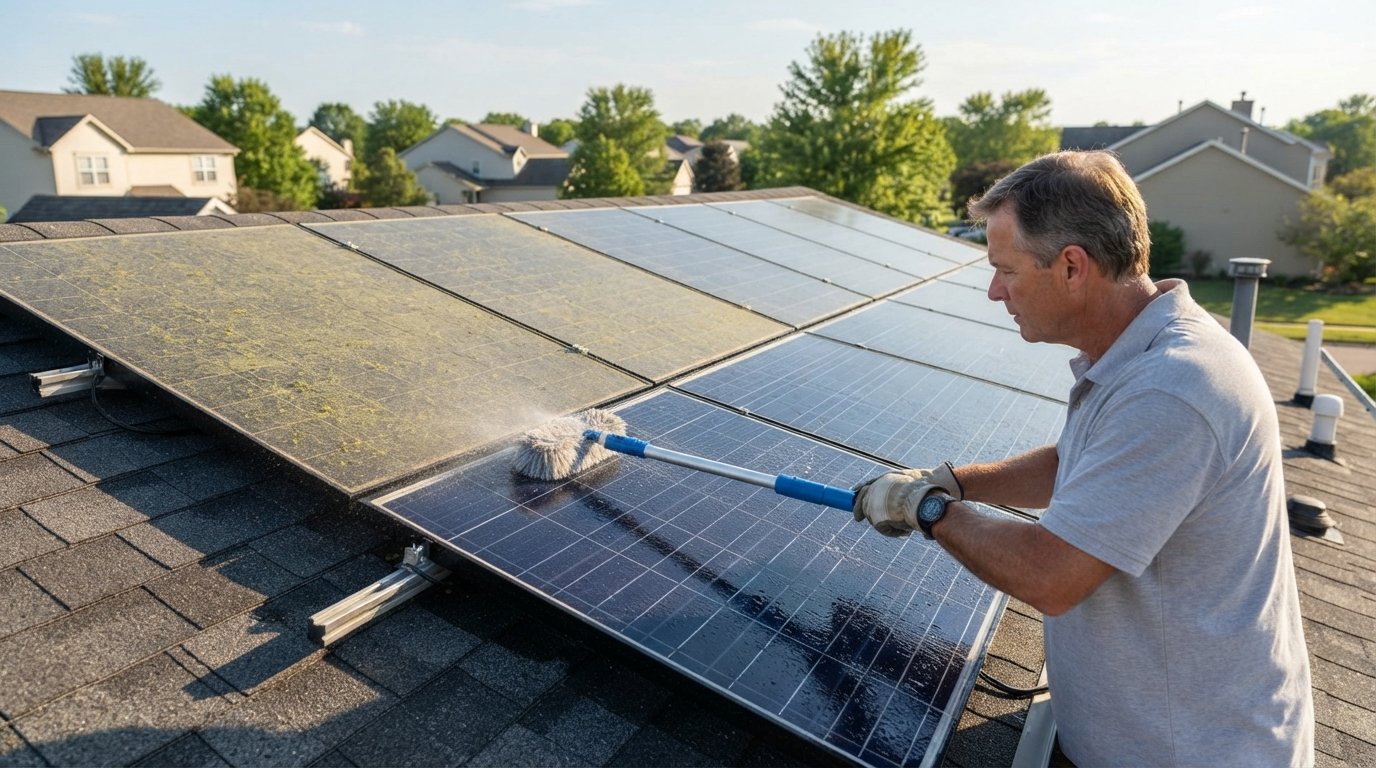
Always turn off your solar system at the inverter or disconnect switch before cleaning, and never spray water on a system while it is actively producing power. Use a soft-bristled brush or microfiber cloth, and avoid abrasive sponges, steel wool, or harsh chemicals. A mild soap solution is usually sufficient for stubborn grime, but check your manufacturer's guidelines first, as some coatings and glass treatments require specific products.
Clean panels early in the morning or late in the evening when they are cool to the touch. Cleaning hot panels can cause thermal shock, which may crack the glass. It also causes water to evaporate too quickly, leaving streaks and mineral deposits.
For roof-mounted systems, safety is paramount. If your roof is steep, high, or difficult to access, hire a professional cleaning service. The cost of a professional cleaning is small compared to the risk of a fall. Many solar installers and maintenance companies offer cleaning as part of an annual service package.
If you are unsure whether your panels need cleaning, a simple test can help. Compare the production on a clear day against your system's expected output. If production is more than 5 to 10 percent below expectations and the weather is not the cause, soiling is likely the culprit.
For homeowners who want to understand the full range of risks that can affect a solar investment, from soiling to equipment failure, our guide on what happens when solar panels fail provides a comprehensive overview of warning signs and protection strategies.
When to Call a Professional
While light cleaning is a manageable DIY task for many homeowners, there are situations where professional help is the smarter choice. If your panels are mounted on a steep or multi-story roof, if you notice cracked glass or exposed wiring, or if soiling is severe and repeated, a professional cleaning and inspection service is worth the investment.
Professionals have the right equipment, including telescopic brushes, deionized water systems, and safety harnesses. They can also inspect for damage, loose connections, and other issues that might be contributing to performance losses. Many solar companies offer annual maintenance plans that include cleaning, inspection, and performance reporting.
If you are still in the process of choosing a solar installer, ask about their maintenance and cleaning services upfront. A good installer will explain how to care for your system and may offer a service plan that covers soiling management. FreeSolarPowerQuotes connects homeowners with reputable local installers who can provide free, no-obligation quotes and answer questions about ongoing maintenance.
For broader guidance on solar energy systems, incentives, and financing, SolarEnergy.ai offers a comprehensive platform with expert resources, calculators, and industry insights for homeowners and businesses across the United States.
Seasonal and Regional Considerations
Soiling patterns vary dramatically by region and season. Understanding your local conditions helps you plan a cleaning and prevention schedule that matches reality.
In the Southwest, dust is a year-round concern, with peak soiling during dry, windy months. Spring and early summer often bring the worst conditions, and wildfire season can add ash and smoke particles to the mix. Panels in this region typically need cleaning every two to four months.
In the Southeast, pollen is the dominant seasonal threat. Pine, oak, and grass pollen coat panels in a thick yellow film from March through May. Humidity also encourages mold and mildew growth on panels that stay damp. Cleaning before and after pollen season is essential, and anti-microbial coatings can help.
In the Midwest, agricultural dust and pollen combine with seasonal snow and ice. Panels may stay covered for days or weeks in winter, and the freeze-thaw cycle can trap dirt against the glass. Spring cleaning is critical to remove winter accumulation.
Coastal areas face salt spray, which is corrosive and conductive. Regular rinsing with fresh water is important to prevent salt buildup, and panels near the ocean may need more frequent cleaning than inland systems.
Urban and industrial areas have their own challenges, including soot, exhaust particulates, and construction dust. In these environments, soiling rates can be higher than in rural areas, and more frequent cleaning may be necessary.
Regardless of your region, tracking production data and adjusting your cleaning schedule based on actual performance is the most reliable approach. A system that produces well after a rainstorm is self-cleaning to some degree; one that does not may need more frequent intervention.
Protecting Your Solar Investment Long-Term
Solar panel soiling losses from dust and pollen are preventable, and the effort required is modest compared to the financial benefits. By understanding the sources of soiling, monitoring your system's performance, and implementing a combination of prevention and cleaning strategies, you can keep your panels operating at or near peak efficiency for decades.
The key takeaways are simple: choose a steep tilt when possible, consider anti-soiling coatings, clean strategically around pollen and dust seasons, and never compromise safety. If you are unsure about any aspect of maintenance, consult a professional. Your solar investment is designed to last 25 years or more, and protecting it from soiling is one of the simplest ways to ensure it delivers the savings you expect.
Whether you are a new solar owner or considering a system for the first time, the right maintenance habits make all the difference. Take action today to protect your panels, and let the sun do the rest.