You’ve opened your electricity bill and felt that familiar wince. Costs seem to climb every month, making you wonder if there’s a better way. More and more homeowners are looking to solar energy to reduce their energy bills and become less dependent on the power grid. But when you start researching, you quickly discover that solar panel quotes can vary widely, leaving you to wonder: what affects solar panel quotes, and how can you ensure you’re getting the best value?
Understanding What Affects Solar Panel Quotes
A solar panel quote is a detailed proposal from an installer outlining the cost and specifications of your potential system. It’s more than just a price tag; it’s a blueprint for your home’s energy future. Understanding the factors behind this number is the key to making a confident, cost-effective decision for your family.
These quotes are influenced by a combination of your home’s unique characteristics, the equipment chosen, and the installer’s expertise. By learning what drives the cost, you can better compare offers and focus on long-term value over just the initial price.
Why Solar Energy Is Becoming More Popular
The shift to solar power is driven by a powerful mix of financial and environmental motives. Consistently rising electricity prices make a fixed-cost solar system an attractive shield against unpredictable utility hikes. For many, the desire to take control of their energy source and reduce their carbon footprint is equally compelling.
Government incentives, like the federal solar tax credit, significantly lower the upfront investment, making solar more accessible. Combined with the promise of decades of reduced bills, it’s a practical long-term investment in both your home’s value and the planet’s health.
If you are considering solar power for your home, comparing installation quotes can help you understand your options. Request a free solar quote or call to learn more.
Common Questions Homeowners Have About Solar
It’s normal to have questions when considering a significant home upgrade like solar. Homeowners often worry about the initial cost, unsure if the long-term savings will be worth it. Others question if their roof is suitable or if they’ll still have power during a grid outage.
Professional installers are there to answer these questions and provide clarity. A reputable company will conduct a thorough assessment of your home and energy usage to provide accurate, personalized answers, helping you avoid costly mistakes.
- How much will a solar panel system really cost?
- Is my roof strong enough and facing the right direction?
- Will solar panels work on cloudy days or in my climate?
- How long will the installation process take?
- What happens if I need to repair my roof?
- How do maintenance and warranties work?
How Solar Panel Installation Works
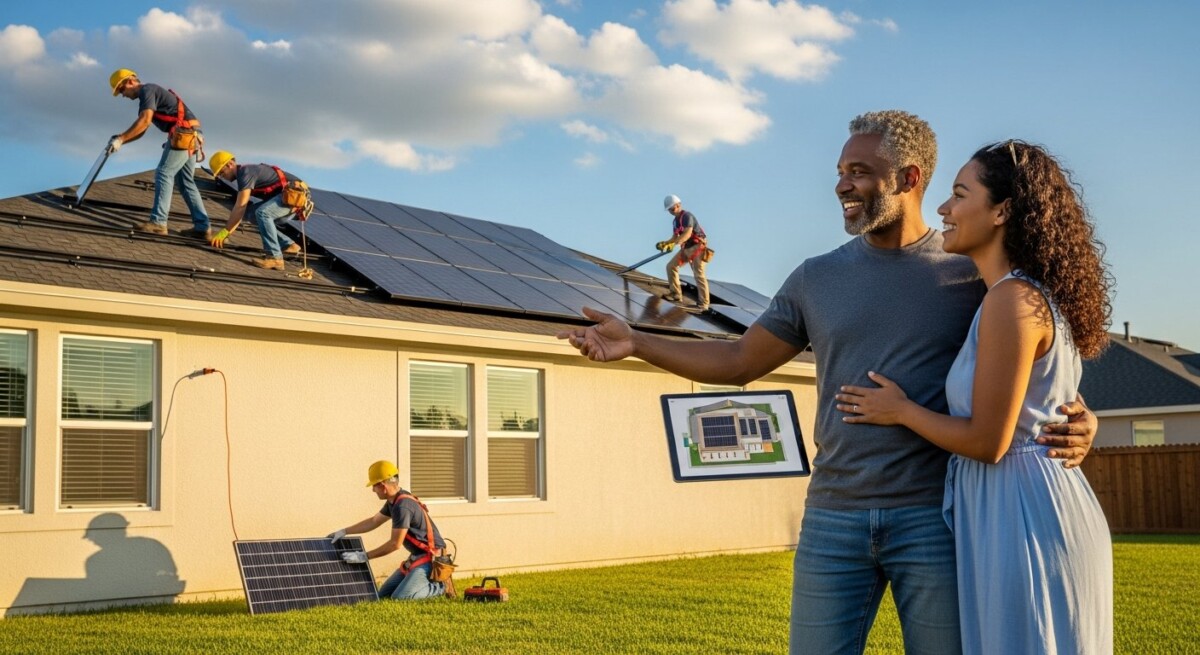
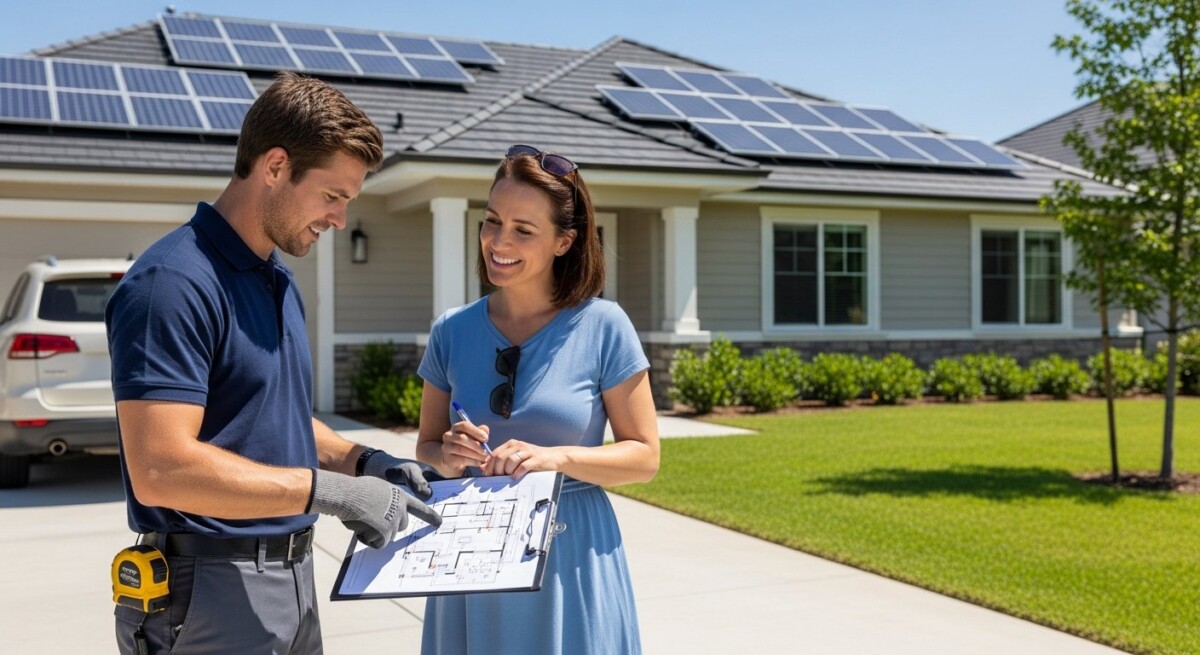
The installation process is a coordinated series of steps managed by your chosen professional. It begins with a detailed consultation and energy assessment to understand your needs. The installer then designs a custom system, handles all necessary permits, and schedules the installation.
This streamlined approach ensures your system is safe, efficient, and compliant with local regulations. A good installer will guide you through each phase, making the transition to solar energy smooth and straightforward.
- Home Energy Assessment & Consultation
- Custom System Design & Proposal
- Permitting & Utility Approvals
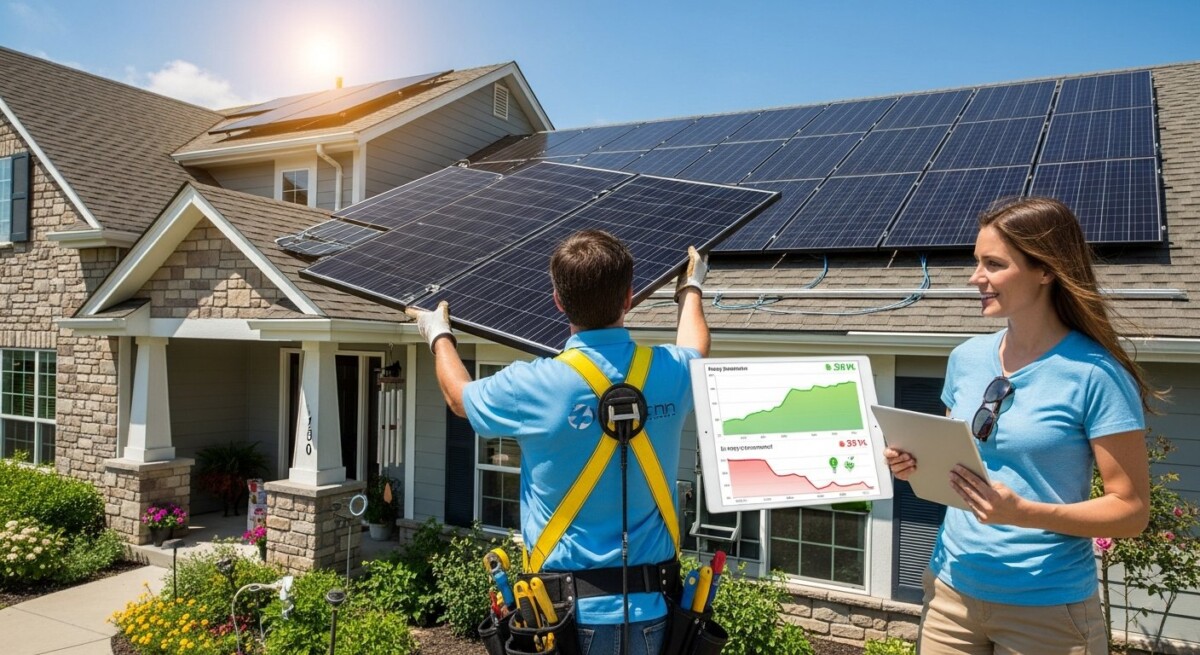
- Physical Installation of Panels & Inverter
- Final Inspection & System Activation
Speaking with experienced installers can help you determine the best solar solution for your home. Compare solar quotes here or call to explore available options.
Signs Your Home May Be Ideal for Solar
While many homes can benefit from solar, some characteristics make the investment particularly advantageous. The most obvious sign is a high monthly electricity bill, as solar savings are greatest when offsetting expensive grid power. A roof with good, unshaded exposure to the south, east, or west is also a major plus.
If you plan to stay in your home for the long term, you’ll maximize the financial return on your investment. Even if your roof isn’t perfect, ground-mounted systems or community solar options might be viable alternatives worth exploring.
- You pay high monthly electricity bills.
- Your roof gets strong, direct sunlight for most of the day.
- You have ample, unobstructed roof space.
- You plan to own your home for 5+ years.
- Your roof is in good condition and less than 15 years old.
- You live in an area with strong net metering policies.
What Affects Solar Installation Costs
The total cost of your solar system is the single biggest factor in your quote. This is primarily determined by the system’s size, measured in kilowatts (kW), which should match your energy consumption. A solar panel pricing guide can help you understand how system size and local averages influence your final price.
Equipment quality also plays a role; premium, high-efficiency panels and inverters cost more but may produce more energy over time. Installation complexity, such as a steep or multi-level roof, can increase labor costs. Crucially, local and federal incentives can substantially reduce your net cost, making it essential to factor them into any comparison.
The cost of solar installation varies depending on your home and energy needs. Request personalized solar quotes or call to see what options are available.
Tips for Choosing a Reliable Solar Installer
Your installer’s expertise is as important as the equipment they use. A reliable company ensures your system is designed correctly, installed safely, and performs optimally for decades. They are your partner in navigating incentives, permits, and maintenance.
Always verify credentials like licenses and insurance. Ask about their experience with installations similar to yours and request references. A trustworthy installer will be transparent, answer all your questions, and never use high-pressure sales tactics.
- Check for proper licensing, insurance, and certifications (like NABCEP).
- Read customer reviews and ask for local references.
- Compare the warranties offered on both equipment and workmanship.
- Get detailed, written quotes from at least three different companies.
- Ensure they handle the entire process, from permits to activation.
Long-Term Benefits of Installing Solar Panels
The most immediate benefit is slashing your monthly electricity bill, often by 50% to 100%. This predictable energy cost provides financial stability for years to come. Over the system’s 25+ year lifespan, these savings typically far exceed the initial investment.
Solar panels also increase your property value and market appeal while significantly reducing your household’s carbon footprint. Perhaps most importantly, they move you toward energy independence, giving you more control over your power source and costs, a valuable asset in an era of rising utility rates.
How long does it take for solar panels to pay for themselves?
The payback period, or the time it takes for your savings to equal the system cost, typically ranges from 6 to 12 years. This depends on your local electricity rates, system cost after incentives, and how much sun your home receives. After this point, the electricity your system produces is essentially free for the remainder of its lifespan.
Can I get solar if my roof isn’t perfect?
Yes, in many cases. Installers have solutions for various roof types and conditions. If your roof is heavily shaded, older, or oddly shaped, they might recommend higher-efficiency panels, a different layout, or even a ground-mounted system. A professional assessment is the best way to know your options.
What is net metering and how does it work?
Net metering is a billing arrangement with your utility company. When your solar panels produce more electricity than you use, the excess is sent to the grid, and your meter runs backward, giving you credit. At night or on cloudy days, you draw power from the grid, using those credits. It’s like using the grid as a giant battery.
Do solar panels require a lot of maintenance?
Solar panels require very little maintenance. They have no moving parts and are designed to withstand the elements. Occasional cleaning with water to remove dust, pollen, or bird droppings is usually sufficient to keep them operating at peak efficiency. Most systems can be monitored via an app to ensure they are performing correctly.
What happens to solar panels after 25 years?
Solar panels don’t suddenly stop working after 25 years; that’s simply the point where their power output typically degrades to about 80-85% of their original capacity. They can continue producing electricity for many years after. Reputable installers also offer recycling programs for panels at the end of their useful life.
How do I know what size system I need?
A professional installer will determine the ideal system size by analyzing 12 months of your electricity bills to understand your usage patterns. They will also consider your roof’s size, orientation, and any future changes in electricity use, like buying an electric vehicle. For a deeper dive into this process, our article on understanding solar panel system quotes explains how installers calculate your needs.
Understanding what affects solar panel quotes empowers you to make a smart investment in your home’s future. By focusing on long-term value, quality equipment, and a trusted installer, you can unlock decades of energy savings and independence. The best next step is to gather personalized information,starting by comparing detailed quotes from qualified local professionals.