
Thin Film Solar Panels: Pros, Cons, and Costs
Explore thin film solar panels: their pros, cons, costs, and whether this lightweight, flexible technology is the right fit for your home.

By Brandon Moore
Learn more about Solar Panel Installation and Repair for guides, costs, and what to expect.
Compare Solar Panel Installation and Repair Pros Near You

Enter your ZIP code to compare top-rated local professionals and request free quotes.
When you picture solar panels, you likely imagine the blue or black crystalline modules mounted on rooftops. However, a quieter revolution has been underway in solar technology: thin film solar panels. These lightweight, flexible alternatives are changing how and where we can harness the sun. Unlike traditional panels made from silicon wafers, thin film panels are created by depositing photovoltaic material onto a surface like glass, metal, or plastic. This fundamental difference opens up a world of possibilities, but it also comes with its own set of trade-offs. If you are exploring solar for your home or business, understanding thin film technology is essential to making the right choice for your energy needs.
This guide will walk you through everything you need to know about thin film solar panels, from how they work and their key advantages to their limitations and cost considerations. By the end, you will have a clear picture of whether this innovative technology aligns with your property, budget, and sustainability goals. We will also connect you with trusted solar providers who can offer personalized advice and quotes tailored to your situation.
What Are Thin Film Solar Panels?
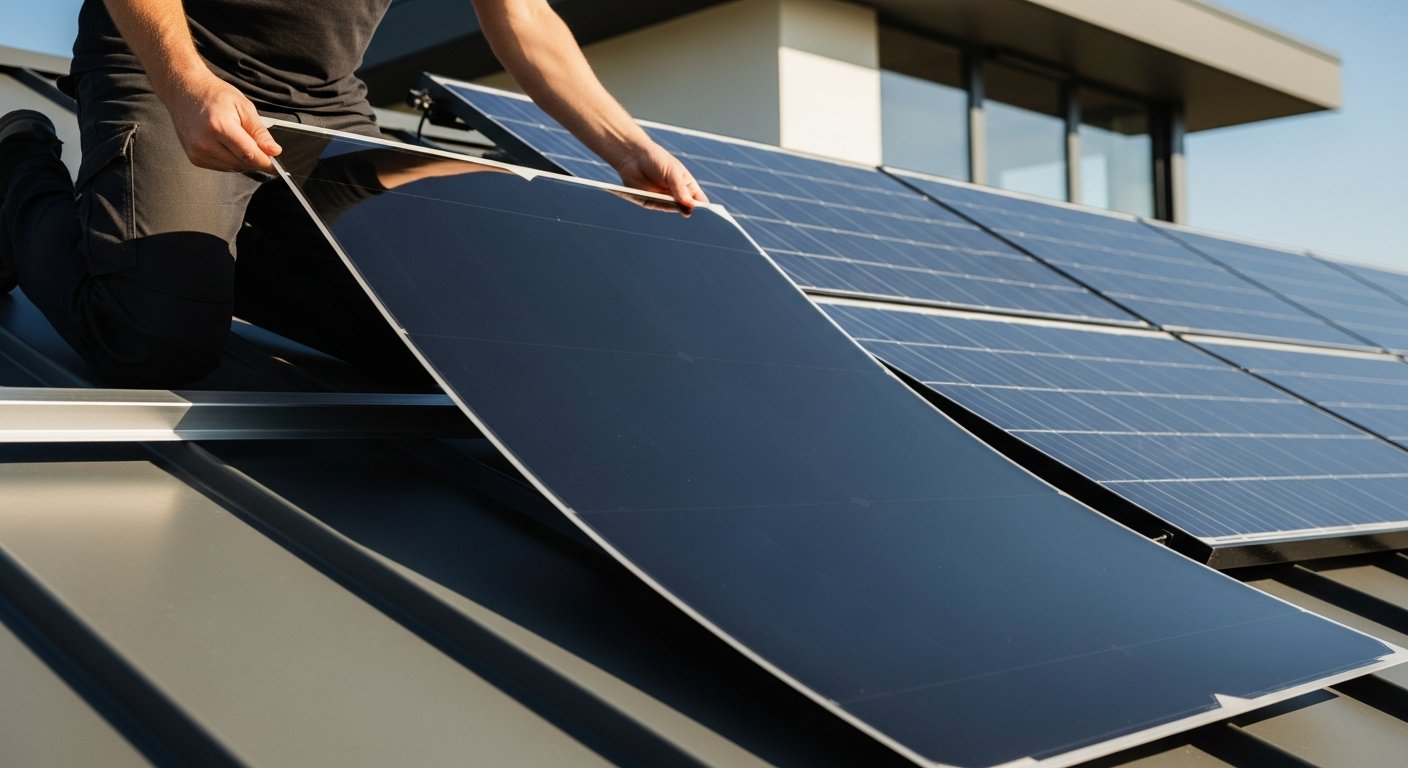
Thin film solar panels are a type of photovoltaic (PV) panel that uses one or more thin layers of semiconductor material to convert sunlight into electricity. The active layer is typically just a few micrometers thick, hence the name. This is a stark contrast to traditional crystalline silicon panels, which use rigid wafers cut from silicon ingots. The most common thin film materials include cadmium telluride (CdTe), copper indium gallium selenide (CIGS), and amorphous silicon (a-Si). Each material has its own characteristics, efficiencies, and manufacturing processes.
The manufacturing process for thin film panels involves depositing the semiconductor material onto a substrate, which can be glass, stainless steel, or even a flexible polymer. This allows for the production of panels that are not only lighter but also bendable. For example, CIGS panels can be made on flexible substrates, opening up applications like solar shingles, portable chargers, and integration into building materials. On the other hand, CdTe panels are typically made on glass and are used in large-scale utility projects due to their cost-effectiveness and decent efficiency.
Because they use significantly less semiconductor material than crystalline panels, thin film panels are often cheaper to produce. However, this cost advantage is offset by their lower efficiency. While a typical monocrystalline panel might have an efficiency of 20% to 22%, thin film panels generally range from 10% to 15%, with some high-end CIGS models reaching up to 15% to 18%. This means you need more surface area to generate the same amount of electricity, which is a critical factor when roof space is limited.
The Main Advantages of Thin Film Technology
Thin film solar panels are not just a niche product; they offer distinct benefits that make them the preferred choice in many situations. Understanding these advantages can help you see why this technology is gaining traction despite its lower efficiency.
- Lightweight and flexible: These panels are much lighter than crystalline ones and can be bent or rolled, making them ideal for curved surfaces, RVs, boats, and portable applications.
- Better performance in high temperatures: Thin film panels have a lower temperature coefficient, meaning they lose less efficiency as temperatures rise. In hot climates like Arizona or Texas, they can outperform crystalline panels in real-world conditions.
- Shade tolerance: They tend to handle partial shading better than traditional panels, which can be a boon for rooftops with intermittent shade from trees or chimneys.
- Cost-effective manufacturing: The production process uses less material and energy, which can translate into lower upfront costs for large-scale installations.
These attributes make thin film panels particularly attractive for commercial buildings with large, flat roofs or for projects where weight is a concern, such as on older structures that cannot support the load of traditional panels. For homeowners, the flexibility opens up creative options like solar carports, pergolas, or even integrating panels into the building's facade. However, the performance in high temperatures and shade tolerance are significant practical benefits that can offset some efficiency losses in specific environments.
Drawbacks and Limitations to Consider
While thin film panels offer unique benefits, they are not without their downsides. The most significant drawback is their lower efficiency. As mentioned, you need more panels to produce the same amount of power. For a typical home with limited roof space, this can be a dealbreaker. If you have a small or oddly shaped roof, crystalline panels are usually the more practical choice to meet your energy needs.
Another concern is the degradation rate. Some thin film technologies, particularly amorphous silicon, are known to degrade faster than crystalline silicon. While warranties typically guarantee 80% performance after 25 years, the actual degradation can vary. This could mean lower energy production over the lifespan of the system compared to a premium monocrystalline panel. Additionally, the availability of certain materials, like indium and tellurium, is limited, which could impact future supply and cost stability. Finally, the aesthetic is different; some people find the appearance of thin film panels less appealing, though this is subjective and depends on the application.
It is also worth noting that the recycling infrastructure for thin film panels is less mature than for crystalline panels. While companies like First Solar have robust recycling programs for their CdTe panels, the industry as a whole is still developing. When you are considering the long-term environmental impact, this is a factor to weigh, although the materials used in thin film panels are often less energy-intensive to extract than silicon.
Thin Film vs. Crystalline: Cost and Efficiency Compared
Choosing between thin film and crystalline solar panels ultimately comes down to a cost-benefit analysis. The table below provides a snapshot comparison to help you understand the key differences at a glance.
| Feature | Thin Film (CdTe, CIGS) | Monocrystalline Silicon |
|---|---|---|
| Efficiency (Typical) | 10% to 15% | 18% to 22% |
| Cost per Watt | Lower (0.70 to 1.00 USD) | Higher (0.90 to 1.50 USD) |
| Temperature Coefficient | Excellent (low loss) | Good (moderate loss) |
| Space Requirement | High (needs more area) | Low (needs less area) |
| Lifespan/Warranty | 20 to 25 years | 25 to 30 years |
| Flexibility | Yes (some types) | No (rigid) |
As the table shows, thin film panels are cheaper per watt, which can be attractive for large-scale installations where space is abundant. However, the lower efficiency means you will need more panels and potentially more racking and labor, which can offset some of the upfront savings. For a residential rooftop, the higher efficiency of monocrystalline panels often makes them the better financial choice over time, as they produce more electricity in the same space, lowering your payback period. In contrast, a ground-mounted system on a large property might benefit from the lower cost per watt of thin film, even with the extra land requirement.
If you are interested in comparing specific panel sizes and their power outputs, we have detailed reviews on various options. For instance, you can read about 440W solar panels to see how they stack up in terms of efficiency and space. Similarly, our guide on 360W solar panels offers insights into mid-range options. And for those on a budget, our article on affordable 5K solar panels can help you find value without sacrificing quality.
Applications and Use Cases for Thin Film Panels
Thin film solar panels are not just for utility-scale farms; they have carved out niches where their unique properties are highly valued. Here are some of the most common applications:
- Utility-scale power plants: CdTe panels are widely used in large solar farms due to their low cost and high output in sunny climates. Companies like First Solar have made this technology a cornerstone of the industry.
- Building-integrated photovoltaics (BIPV): The flexibility and aesthetic options allow for solar panels to be integrated into windows, facades, and roof tiles. This is an emerging market with huge potential for modern architecture.
- Portable and off-grid devices: From solar backpacks and phone chargers to foldable panels for camping, thin film's lightweight nature makes it perfect for mobility.
- Automotive and marine: Solar cars, boats, and RVs can use curved or flexible thin film panels that conform to their surfaces, providing a trickle charge or supplemental power.
For homeowners, the most relevant application is likely BIPV, such as solar shingles. While these products are still relatively new and can be more expensive than traditional panels, they offer a sleek, integrated look that many find appealing. If you are building a new home or doing a major roof renovation, exploring thin film BIPV options could be a smart move, especially if your roof has unconventional angles or materials. However, for most existing homes, a conventional rooftop system with crystalline panels remains the most cost-effective and efficient route.
Is a Thin Film System Right for Your Home?
Deciding whether to install thin film solar panels requires a careful assessment of your specific circumstances. Start by evaluating your available roof space. If you have a large, unobstructed roof that can accommodate the extra panels needed for the same output, thin film could be a viable option, especially if you live in a hot climate where its temperature tolerance is a plus. On the other hand, if your roof is small or shaded, the higher efficiency of crystalline panels is likely necessary.
Next, consider your budget and long-term goals. While thin film panels may have a lower upfront cost per watt, the total system cost could be higher due to additional mounting hardware and labor. Also, think about the aesthetics. Are you okay with the look of thin film panels, which can have a uniform, dark appearance, or do you prefer the classic look of crystalline modules? Finally, check with your local utility and permitting authorities, as some may have specific requirements or incentives for certain types of solar installations.
It is also crucial to work with a reputable installer who has experience with thin film technology. Not every solar company is familiar with the nuances of installing and maintaining these systems. A good installer will conduct a thorough site assessment and provide a detailed quote that outlines the expected energy production, costs, and payback period. They can also help you navigate the complex world of incentives and financing. At FreeSolarPowerQuotes, we simplify this process by connecting you with vetted solar providers in your area. You can receive free, no-obligation quotes from multiple installers, allowing you to compare options and find the best fit for your home.
If you are leaning toward traditional panels, our guide on affordable 5K solar panels can give you a baseline for what to expect in terms of cost and performance. Conversely, if you are curious about higher-wattage options, our review of 440W solar panels might be more relevant. The key is to gather as much information as possible to make an educated decision.
The Future of Thin Film Solar
The thin film solar industry is not standing still. Researchers are constantly working on improving the efficiency of existing materials and developing new ones, such as perovskite solar cells, which have shown remarkable progress in the lab. Perovskite cells can be made even thinner and more flexible than current thin film technologies, and they have the potential to achieve efficiencies comparable to crystalline silicon. However, challenges remain in terms of stability and scalability.
Another exciting development is the use of tandem solar cells, which stack different materials to capture more of the solar spectrum. For example, a perovskite layer on top of a silicon cell can boost overall efficiency beyond what either material can achieve alone. These innovations could eventually make thin film panels more competitive for residential use, offering a blend of low cost, flexibility, and high performance. For now, though, crystalline silicon remains the dominant technology for home installations, but thin film is a great option to consider for specific applications like large ground mounts or BIPV.
As the industry evolves, staying informed is key. The solar market is dynamic, with new products and incentives emerging regularly. Whether you choose thin film, monocrystalline, or polycrystalline panels, the most important step is to take action. Solar energy has the power to reduce your electricity bills, increase your property value, and shrink your carbon footprint. By getting multiple quotes and consulting with experts, you can make the best choice for your unique situation.
In summary, thin film solar panels offer a compelling set of advantages, particularly for large-scale and specialized applications. Their lightweight, flexible nature and better performance in heat make them a practical choice in certain scenarios. However, their lower efficiency and potential for higher degradation mean they are not the go-to option for most homeowners. The decision ultimately hinges on your energy needs, roof characteristics, and budget. We encourage you to explore all your options and get professional advice tailored to your home. With the right information, you can confidently navigate the world of solar and find the perfect system to power your future.