
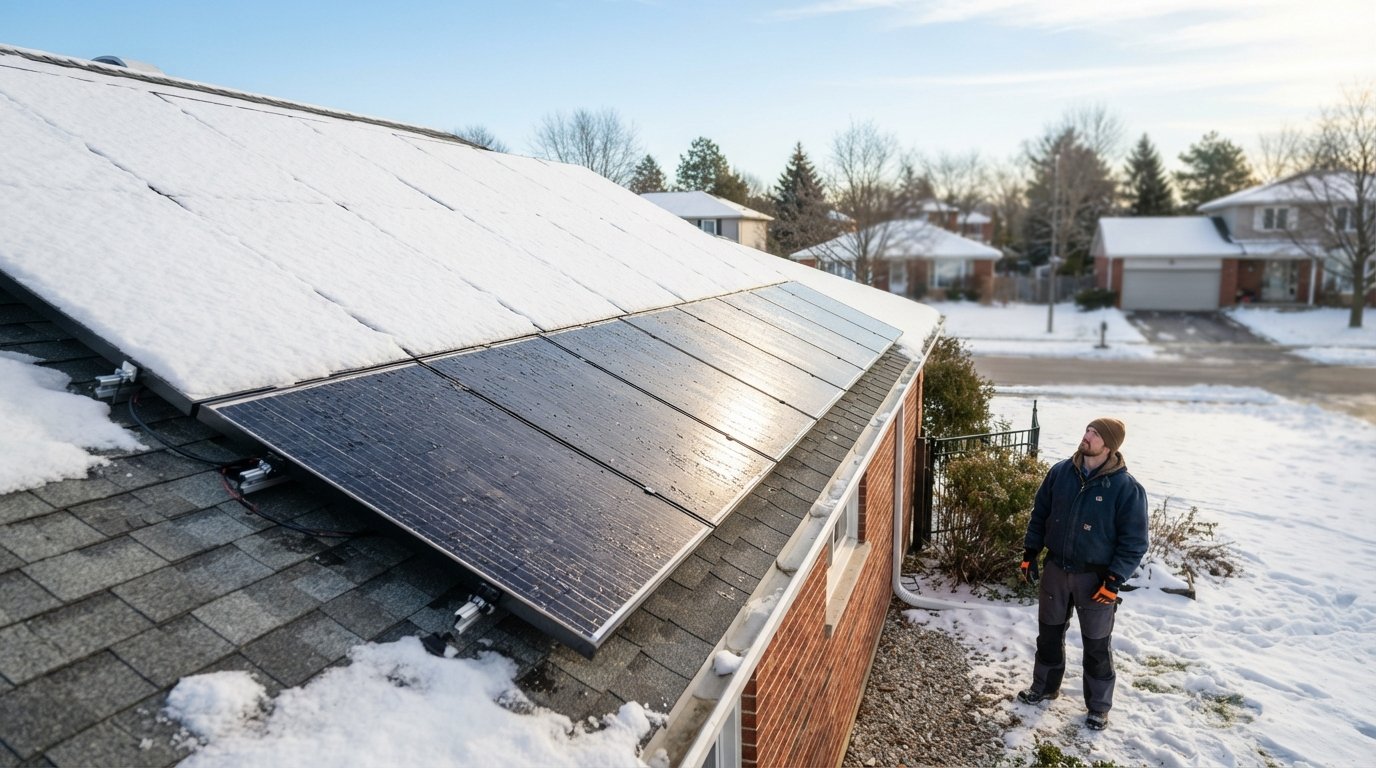
Solar Panel Snow and Ice Performance: Winter Maintenance Tips
Protect your solar investment this winter. Get smart solar panel snow and ice performance winter maintenance tips. Call (833)-793-7166 for expert guidance.

By Nathan Russell
Learn more about Solar Panel Cleaning for guides, costs, and what to expect.
Compare Solar Panel Cleaning Pros Near You

Enter your ZIP code to compare top-rated local professionals and request free quotes.
When winter storms bury your solar array under a foot of snow, it is natural to worry that your investment has gone dark until spring. The truth is more nuanced and, in many cases, more reassuring. Solar panels do lose production when covered in snow, but the loss is usually temporary, and the right maintenance approach protects both your equipment and your safety. Understanding how snow and ice interact with your system helps you set realistic expectations, avoid unnecessary risks, and make smart decisions when the forecast turns ugly.
How Much Production Is Lost to Snow Cover, and How Fast Do Panels Recover?
Snow cover reduces output dramatically while it lasts. A thick, opaque layer can cut production to nearly zero on the affected panels. However, the loss is rarely as severe or as long-lasting as homeowners fear. Several factors determine how quickly panels bounce back: the angle of your roof, the outside temperature, sunlight intensity, and the texture of the snow itself.
Steeply pitched roofs shed snow more readily than shallow ones. Dark panels absorb sunlight and warm up slightly even on cold days, which helps melt the bottom layer of snow and loosen the pack. Once a small patch of dark glass is exposed, that area heats faster, and the melting spreads. In many climates, a sunny day after a storm clears most of the array within 24 to 48 hours. Light, powdery snow slides off more easily than heavy, wet snow, and ice is far more stubborn than either.
Research and field reports suggest that annual snow-related production losses in snowy regions often fall in the range of 1 to 5 percent of total yearly output, depending on local weather patterns. That is because the heaviest snow months coincide with the lowest sun angles and shortest days, when the system would produce less anyway. In other words, the absolute energy lost is smaller than the visual drama of a snow-covered roof suggests.
It also helps to understand how snow affects the system as a whole. Most residential arrays are wired in strings, so if one panel is heavily shaded or covered, it can drag down the performance of others on the same string. Modern systems with module-level power electronics, such as microinverters or DC optimizers, mitigate this effect by allowing each panel to operate independently. If you are planning a new installation and live in a snowy region, ask your installer about these components as part of your overall system design.
Why Clearing Panels Is Often Unnecessary, and When It Becomes Risky
The most important winter maintenance tip is also the least intuitive: in most cases, you should not climb onto your roof to clear snow. The risks of injury, roof damage, and voided warranties usually outweigh the modest production gains. Panels are designed to withstand snow loads and temperature swings, and the sun does most of the clearing work for you.
That said, there are situations where intervention makes sense. If snow has lingered for weeks and the forecast shows no sun, or if a heavy ice layer is putting stress on the mounting system, a professional evaluation may be warranted. The key is to recognize when a problem is genuinely urgent versus when patience is the better strategy.
Consider these guidelines before you act:
- Do not use a roof rake or broom on the panels themselves. Scraping or striking the glass can cause micro-cracks or scratch the anti-reflective coating, and both damage performance permanently.
- Avoid standing on a snowy roof. Falls are the leading cause of home maintenance injuries in winter, and snow hides skylights, vents, and fragile sections.
- Never use hot water, salt, or de-icing chemicals. Thermal shock can crack glass, and salt can corrode frames and mounting hardware.
- Call a professional if snow has not cleared after several sunny days, or if you see sagging, cracked glass, or unusual ice buildup. A qualified solar technician can assess the situation safely.
If you do want to remove snow from ground-mounted panels, use a soft-bristled broom or a purpose-made foam snow rake, and work from the ground, never from a ladder placed against the array. Even then, gentle is the rule: push snow off rather than scrape it, and avoid touching the glass with metal tools. For roof-mounted systems, the safest approach is almost always to let nature take its course and to schedule a professional inspection if you are concerned.
Snow Guards, Roof Load, and Ice Dam Considerations Around Arrays
Adding solar panels changes how snow behaves on your roof. Panels sit a few inches above the roofing surface, creating a gap where snow can accumulate and meltwater can refreeze. This can contribute to ice dams at the eaves, especially on roofs that already had marginal insulation or ventilation. An ice dam is a ridge of ice that forms at the roof edge and prevents melting snow from draining, potentially forcing water under shingles and into the attic.
Snow guards are small projections installed on the roof to hold snow in place and allow it to melt gradually rather than sliding off in a sudden sheet. They are common on metal roofs and can be added around solar arrays, but they must be designed carefully so they do not shade the panels or interfere with mounting hardware. If your roof already has snow guards, verify that the solar installer accounted for them during the design. If not, a roofing professional can advise whether adding them makes sense.
Roof load is another consideration. Solar panels and mounting hardware add weight to the roof, and snow adds more. In most cases, the combined load remains well within structural limits, but older homes or roofs with questionable framing may need an engineering review. Building codes in snowy regions specify snow load requirements, and a reputable installer will confirm that your roof can handle both the panels and the expected snow. If you are unsure, a structural engineer can provide peace of mind.
Ice dams are best addressed at the source: improve attic insulation and ventilation so the roof deck stays cold and snow melts evenly. From the solar side, keep the area around the array clear of debris and ensure that meltwater has a path to drain. If you notice icicles forming heavily beneath the panels or water stains in the attic, call a professional to investigate before the damage spreads.
Cold-Weather Efficiency Gains and Winter Bill Expectations
Here is a fact that surprises many homeowners: solar panels actually perform better in cold temperatures. Photovoltaic cells convert sunlight to electricity more efficiently when they are cool, so a bright winter day can produce slightly more power per unit of sunlight than a hot summer day. The catch is that winter days are shorter and the sun sits lower in the sky, so total daily production is lower even though the panels are operating efficiently.
This means your winter electric bills will likely be higher than your summer bills, especially if you rely on electric heating. Setting realistic expectations is part of good winter maintenance. Review your last few utility bills and compare them with your solar production data if your system has monitoring. Most monitoring apps show daily and monthly production, which helps you see how snow events affect output and how quickly the system recovers.
If your system is tied to net metering, any excess production you banked in sunnier months may help offset winter consumption, depending on your utility's rules. Policies vary widely, so check with your utility and review your net metering agreement. For a broader look at how to evaluate quotes and financing options before you buy, see this guide on how a solar quote request form saves you money, which explains how comparing multiple quotes can reveal important details about winter performance guarantees and maintenance responsibilities.
It also helps to plan for occasional snow losses in your financial model. If your installer projected annual savings, ask whether the estimate accounted for snow. A conservative projection will assume some winter production loss, while an aggressive one may not. Understanding the assumptions helps you avoid surprises when the first big storm hits.
What Warranty Terms Say About Snow Damage and Removal
Solar panel warranties typically cover manufacturing defects and performance degradation, but they rarely cover damage caused by improper snow removal or neglect. Most manufacturers explicitly exclude damage from scraping, impact, or unauthorized modifications. If you or a contractor damages a panel while clearing snow, the repair may not be covered.
Workmanship warranties from the installer are separate and may cover mounting or weatherproofing issues, but they usually require that maintenance be performed according to the manufacturer's guidelines. Before you attempt any snow removal, read your warranty documents or ask your installer what is permitted. In many cases, the safest path is to document the snow event with photos and contact the installer if you have concerns.
Homeowners insurance is another layer of protection. Standard policies may cover damage from falling ice or snow, but coverage for gradual ice dam damage or poor maintenance is often limited. Review your policy and talk to your agent about winter-related risks. If you need help finding qualified professionals for roof or solar inspections, platforms like Repairmen connect homeowners with vetted local service providers for maintenance and repairs, which can be useful when you need an expert assessment after a severe storm.
Finally, keep a simple winter maintenance log. Note the dates of major snow events, when the panels cleared, and any observations about ice dams or unusual snow buildup. This record helps you spot patterns, supports warranty claims if needed, and gives your installer useful information during annual inspections. A little documentation goes a long way toward protecting your investment.
Winter does not have to be a season of anxiety for solar owners. With realistic expectations, a hands-off approach to snow removal, and attention to roof and warranty details, your system will weather the cold months and be ready to perform when the sun returns. If you are still shopping for a system or want to compare maintenance terms across installers, request free, no-obligation quotes from reputable providers and ask specifically how they handle winter performance and snow-related service calls.