If you’ve watched your electricity bill climb year after year, you’re not alone. More homeowners are looking to solar panels as a powerful solution to reduce their energy costs and gain independence from the utility grid. But the upfront cost can be a hurdle, which is why understanding the solar loan vs solar lease comparison is a critical first step toward making a smart, long-term investment in your home.
Understanding Solar Loan vs Solar Lease Comparison
When you decide to go solar, you typically have three main paths: paying cash, financing with a loan, or entering a lease or Power Purchase Agreement (PPA). Since paying cash upfront isn’t feasible for everyone, the solar loan vs solar lease comparison becomes essential. Both options let you go solar with little to no money down, but they work in fundamentally different ways.
A solar loan is a financing product you use to purchase your solar panel system outright. You own the equipment, just like you would if you paid cash. You make monthly payments on the loan, but you also own all the electricity the system produces and are entitled to all the financial benefits, like tax credits and increased home value.
A solar lease or PPA is more like renting the system. A third-party company owns and maintains the solar panels on your roof. In a lease, you pay a fixed monthly rent. In a PPA, you pay a set rate for the kilowatt-hours of electricity the system generates. In both cases, you benefit from lower energy costs but do not own the equipment.
Why Solar Energy Is Becoming More Popular
Homeowners are turning to solar power for a powerful combination of financial and personal reasons. Consistently rising electricity prices make a fixed solar payment an attractive hedge against future utility rate hikes. This predictability brings peace of mind and long-term budget stability.
Beyond the bills, there’s a strong desire for energy independence and environmental stewardship. Generating your own clean power reduces your carbon footprint and makes your home less vulnerable to grid outages and price fluctuations. With supportive government incentives like the federal solar tax credit, the switch has never been more financially accessible.
If you are considering solar power for your home, comparing installation quotes can help you understand your options. Request a free solar quote or call to learn more.
Common Questions Homeowners Have About Solar
It’s normal to have questions before making a significant home upgrade. Many people wonder if their roof is suitable, how the system will perform in different weather, and what the true long-term savings look like. A reputable solar installer will address all these concerns during a detailed home assessment.
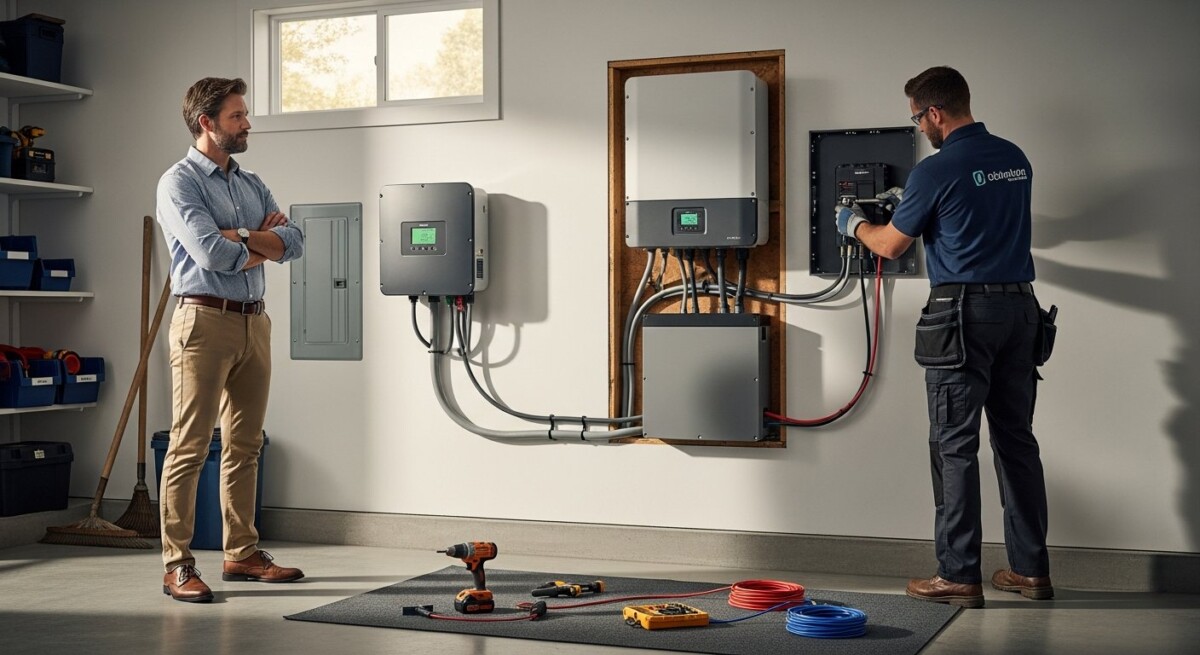
Professional installers are experts at evaluating your unique situation. They can assess your roof’s condition, angle, and sun exposure to design a system that maximizes your energy production. They also handle all the complex paperwork for permits, interconnection, and incentives, guiding you through the entire process.
- Will solar panels work on my roof?
- What happens on cloudy days or at night?
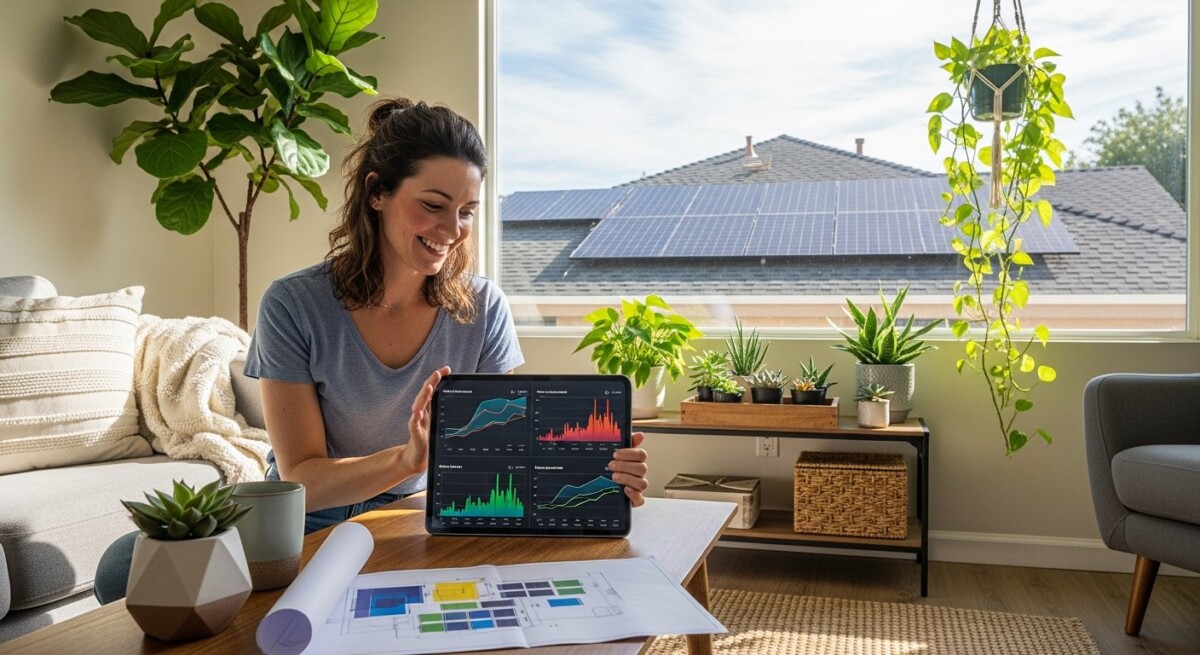
- How much will I really save on my electric bill?
- What maintenance is required?
- How do tax credits and rebates work?
- Will solar increase my property value?
How Solar Panel Installation Works
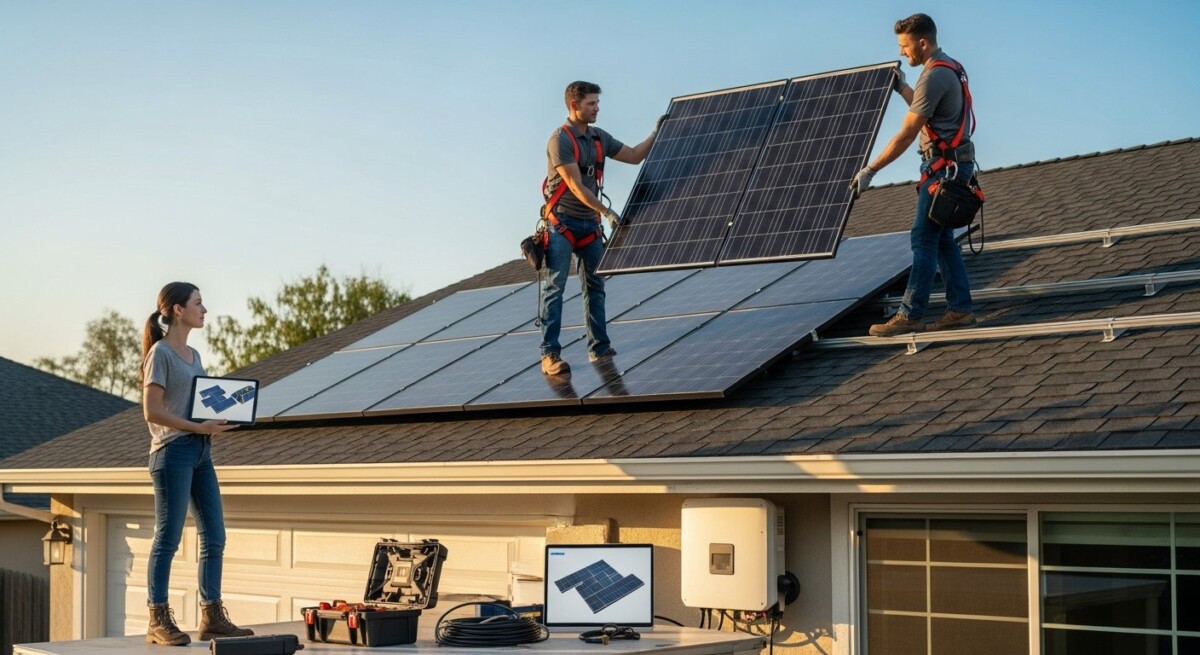
The solar installation process is designed to be straightforward for the homeowner. It begins with a professional consultation and energy assessment to understand your electricity usage and goals. The installer then designs a custom system tailored to your roof and energy needs.
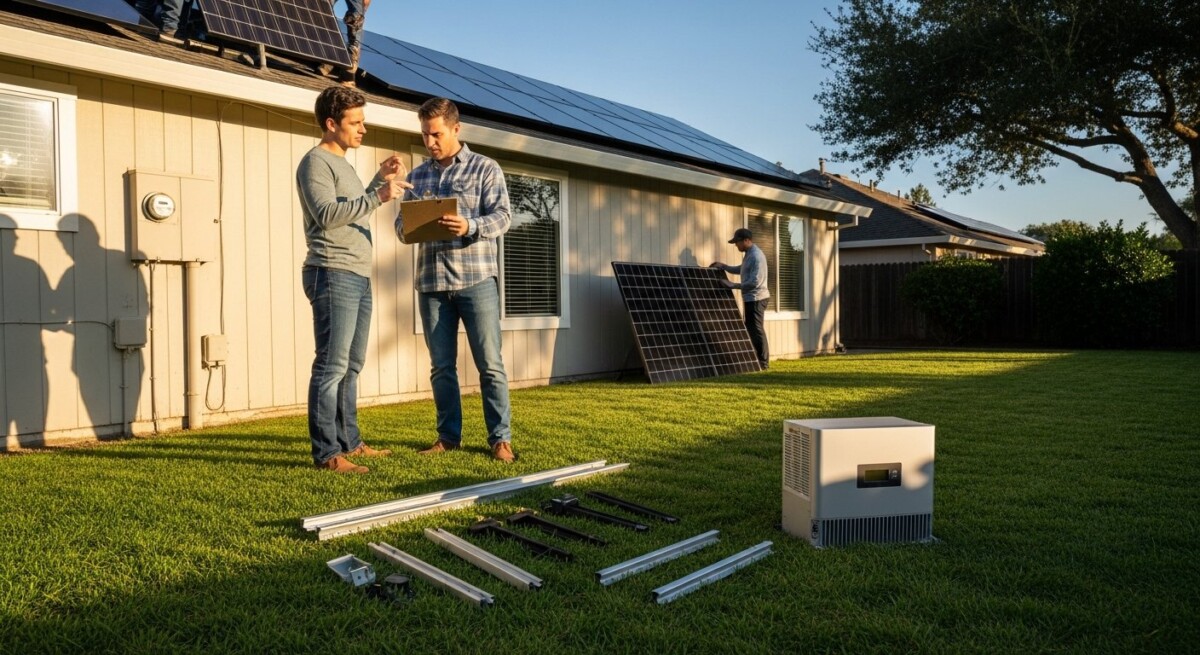
Once you approve the design, the installer manages all the logistics. This includes securing local permits, applying for utility interconnection, and scheduling the installation. The physical installation is typically completed in one to three days, with minimal disruption to your household.
- Home Energy Consultation & Assessment
- Custom System Design & Proposal
- Permitting & Utility Approvals
- Solar Panel & Equipment Installation
- Final Inspection & System Activation
Speaking with experienced installers can help you determine the best solar solution for your home. Compare solar quotes here or call to explore available options.
Signs Your Home May Be Ideal for Solar
While many homes are excellent candidates for solar, some characteristics make the investment particularly advantageous. The most important factor is access to strong, unobstructed sunlight for the majority of the day. A south-facing roof is ideal, but east and west-facing roofs can also work very well.
Your current energy habits and future plans also play a key role. If you have high monthly electricity bills, solar can deliver significant savings. Furthermore, if you plan to stay in your home for the long term, you’ll have more time to enjoy the payback from your investment and the increased home value.
- Your roof gets direct sunlight for most of the day.
- You have high or rising monthly electricity costs.
- Your roof is in good condition and has ample space.
- You plan to own your home for 5+ years.
- You live in an area with strong solar incentives.
- You want to lock in a stable energy cost.
What Affects Solar Installation Costs
The total cost of your solar system depends on several key factors. The size of the system, measured in kilowatts (kW), is the primary driver,a larger system to offset more usage will cost more. The quality and efficiency of the panels and inverters you choose also influence the price.
Installation complexity, such as roof type and pitch, can affect labor costs. Most importantly, available government incentives dramatically reduce the net cost. The federal Investment Tax Credit (ITC) allows you to deduct a significant percentage of the system cost from your federal taxes, and many states and utilities offer additional rebates.
The cost of solar installation varies depending on your home and energy needs. Request personalized solar quotes or call to see what options are available.
Tips for Choosing a Reliable Solar Installer
Selecting the right installer is as important as choosing between a loan and a lease. A trustworthy company will be your partner for decades, ensuring your system performs as promised. Start by looking for installers with strong local experience, proper licensing, and positive customer reviews.
Always compare detailed quotes from multiple companies. Look beyond the bottom-line price and examine the equipment brands, warranty terms, and projected energy production. A good installer will provide a clear, transparent proposal and answer all your questions without high-pressure sales tactics.
- Verify licenses, insurance, and certifications.
- Check online reviews and ask for local references.
- Compare warranties on equipment, workmanship, and production.
- Review multiple detailed quotes side-by-side.
- Ensure they handle the full process, from permits to activation.
- Choose a company with a strong track record and financial stability.
Long-Term Benefits of Installing Solar Panels
The long-term advantages of solar power extend far beyond the initial reduction in your monthly bill. By owning your system (typically through a solar loan or cash purchase), you essentially lock in a low, predictable rate for electricity for the 25+ year life of the panels. This protects you from unpredictable utility rate increases.
Solar panels are also a proven home improvement that increases property value. Studies show buyers are willing to pay more for homes with owned solar systems. Furthermore, you gain greater energy independence and make a substantial positive impact on the environment by reducing reliance on fossil fuels.
What is the main difference between a solar loan and a lease?
With a solar loan, you own the system. With a lease or PPA, a company owns it. Ownership through a loan means you get all tax credits and rebates, and you keep the system’s value. A lease offers lower upfront cost but you pay for the electricity it produces without the ownership benefits.
Which option saves more money in the long run: a loan or a lease?
Typically, purchasing a system with a solar loan saves more money over 20+ years. While loan payments may be higher than lease payments initially, you stop paying once the loan is paid off and you get free electricity for the rest of the system’s life. With a lease, you have payments for the entire contract term.
Can I get solar with a low credit score?
Yes, options exist. While a higher credit score secures better loan rates, some lenders specialize in solar loans for lower credit scores. It’s crucial to explore these options, as explained in our guide on solar loans for low credit scores, to understand how you can still save on energy bills.
Do I qualify for the federal solar tax credit with a loan or lease?
You only qualify for the federal Investment Tax Credit (ITC) if you own the system. This means you can claim it if you purchase with cash or a solar loan. If you enter a lease or PPA, the third-party owner claims the tax credit, which may be reflected in your lower payment rate.
What happens to my solar lease if I sell my house?
Selling a home with a solar lease can add a step to the process. The new homeowner must qualify for and agree to assume the lease contract. This is generally smoother with an owned system, which often increases home value and is more attractive to potential buyers.
Are solar panels a good investment?
For most homeowners with suitable roofs and sunny locations, solar panels are an excellent investment. The combination of immediate utility bill savings, protection from rate hikes, increased home value, and significant tax incentives typically results in a strong financial return over time.
How long do solar panels last?
High-quality solar panels are very durable and are typically guaranteed to produce at least 80% of their original output after 25 years. With minimal maintenance, they can continue generating electricity for 30 years or more. Inverters may need replacement once during the system’s lifetime.
Choosing between a solar loan and a lease is a major financial decision that depends on your goals, budget, and how long you plan to stay in your home. By understanding the key differences in ownership, savings, and benefits, you can select the path that best aligns with your vision for energy independence and long-term value. The most important step you can take is to gather information from trusted local professionals. Comparing multiple, detailed solar installation quotes is the best way to see real numbers for your specific home and make a confident, informed choice for your energy future.