
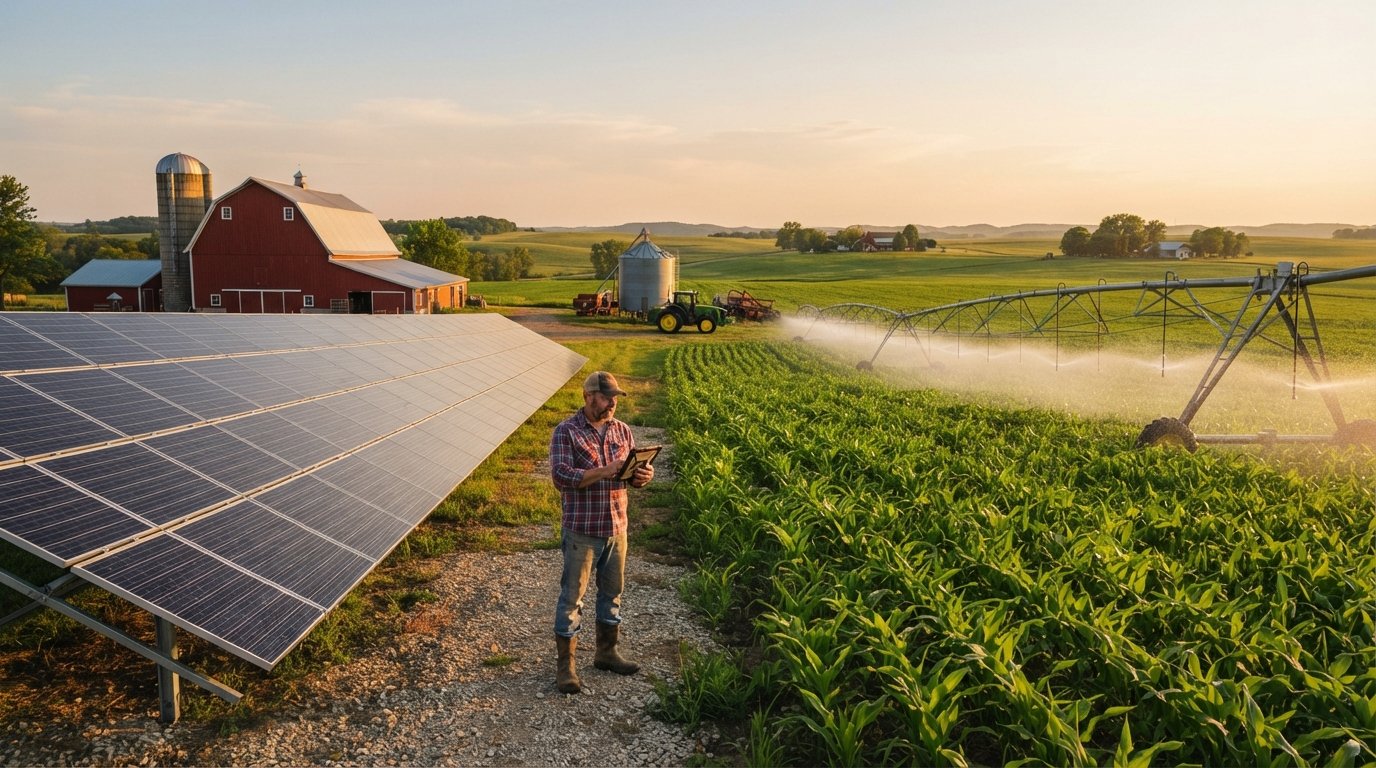
Solar for Agricultural Businesses: Farms Benefits Guide
Discover how solar for agricultural businesses and farms cuts energy costs, boosts profit, and enhances long-term resilience.

By Liam Parker
Learn more about Solar Panel Installation and Repair for guides, costs, and what to expect.
Compare Solar Panel Installation and Repair Pros Near You

Enter your ZIP code to compare top-rated local professionals and request free quotes.
For agricultural businesses, energy costs are not just a line item; they are a fundamental factor in profitability. From powering irrigation systems and climate-controlled barns to running milking machines and grain dryers, farming operations consume substantial electricity. As utility rates continue to climb, many farm owners are discovering a powerful way to stabilize their operating costs: solar energy. This guide explores the concrete benefits of adopting solar for agricultural businesses, demonstrating how farms can transform an unavoidable expense into a strategic asset.
Why Agriculture and Solar Energy Are a Perfect Match
The synergy between agriculture and solar power goes beyond simple cost savings. Farms typically have vast, open spaces and high energy demands during daylight hours, which aligns perfectly with solar production. This natural alignment allows agricultural operations to use a larger percentage of the electricity they generate, maximizing the financial return on a solar investment. Unlike residential installations, which may export surplus energy to the grid, many farms can channel that excess power into other on-site operations or store it for later use, creating a more self-sufficient energy ecosystem.
Moreover, the agricultural sector faces unique pressures from fluctuating energy prices, weather-related disruptions, and the need for sustainable practices to meet consumer demand. Solar energy addresses these challenges head-on. By generating their own power, farms can shield themselves from volatile utility rates, reduce their carbon footprint, and even enhance their brand appeal by marketing sustainably produced goods. This makes solar not just an environmental choice, but a strategic business decision that strengthens long-term resilience.
The Financial Advantages of Going Solar on the Farm
The most compelling reason for agricultural businesses to adopt solar is the substantial, long-term financial benefit. For many farms, electricity constitutes up to 20% of total operating expenses. A well-designed solar system can reduce or even eliminate this cost for 25 to 30 years. This is not just about monthly savings; it is about predictable cash flow. With a solar loan or power purchase agreement (PPA), farms can lock in energy rates that are lower and more stable than the ever-increasing utility rates, making budgeting and financial planning significantly easier.
Beyond direct savings, there are significant tax incentives available. The federal Investment Tax Credit (ITC) allows farms to deduct 30% of the cost of a solar installation from their federal taxes. Additionally, many states offer specific agricultural solar incentives, such as grants, rebates, or exemptions from property taxes for the added value of the solar system. Combined, these incentives can substantially reduce the upfront cost and shorten the payback period, which often ranges from 5 to 10 years, after which the electricity generated is essentially free.
Here are the key financial benefits to consider:
- Predictable Energy Costs: Lock in a lower, fixed rate for electricity, protecting the farm from future utility price hikes.
- Federal Tax Credit: Reduce installation costs by 30% through the Investment Tax Credit (ITC).
- Accelerated Depreciation: Businesses can also benefit from a modified accelerated cost recovery system (MACRS) to further reduce tax liability.
- Increased Property Value: Solar installations can increase the resale value of the farm property and its infrastructure.
- Revenue from Net Metering: In many regions, farms can sell excess energy back to the grid, creating a new revenue stream.
The payback period for agricultural solar systems is often more attractive than for residential systems because of the higher energy consumption and the ability to utilize more of the generated power. A farm that uses 100% of its solar power will see a return on investment much faster than a homeowner who exports a large portion. This makes the financial case for solar exceptionally strong for agricultural operations.
Boosting Operational Efficiency and Energy Resilience
Solar energy does more than cut costs; it also enhances the operational efficiency and resilience of a farm. By generating power on-site, farms reduce their reliance on the grid, which is especially valuable in rural areas where power outages can be more frequent and longer-lasting. Pairing solar panels with battery storage creates a microgrid that can keep critical systems running during an outage, protecting livestock, preserving perishable crops, and maintaining essential irrigation. This energy independence is a critical advantage in an industry where downtime can mean significant losses.
Furthermore, the integration of solar power can support the growing trend of precision agriculture. Technologies like automated irrigation systems, soil sensors, and drone monitoring all require electricity. Solar power ensures that these technologies can operate reliably and cost-effectively, allowing farmers to optimize water usage, reduce waste, and improve crop yields. This synergy between renewable energy and modern farming techniques positions forward-thinking agricultural businesses at the forefront of efficiency and innovation.
Environmental Stewardship and Market Opportunities
Consumers today are more conscious than ever about the environmental impact of their food. Farms that adopt solar energy can leverage this to their advantage. By reducing their carbon footprint, they can market their products as sustainably produced, which can command premium prices and open doors to new markets, such as organic or eco-certified supply chains. This is a powerful way to differentiate the farm and build brand loyalty among environmentally conscious consumers.
Beyond marketing, solar energy supports the long-term health of the land. By reducing dependence on fossil fuels, farms contribute to cleaner air and water in their local communities. Solar installations can also be designed to work in harmony with agricultural activities, such as using pollinator-friendly ground cover under panels or integrating them into grazing pastures. This approach, known as agrivoltaics, can even improve crop and livestock conditions by providing shade and reducing water evaporation, demonstrating that solar is not just a compromise but a complementary asset to traditional farming.
Financing and Incentives: Making Solar Accessible for Farms
The upfront cost of a solar system can seem daunting, but numerous financing options are tailored to agricultural businesses. Farmers can choose from cash purchases, solar loans, leases, and power purchase agreements (PPAs). A cash purchase offers the highest long-term return, while a solar loan allows for ownership with manageable monthly payments. Leases and PPAs require little to no upfront cost, allowing farms to start saving immediately, though they do not provide the same long-term equity benefits. Understanding these options is crucial for making a decision that aligns with the farm's financial strategy.
In addition to the federal ITC, which applies to both residential and commercial systems, there are USDA programs like the Rural Energy for America Program (REAP) that provide grants and loan guarantees for renewable energy projects in rural areas. Many states and local utilities also offer additional rebates or performance-based incentives specifically for agricultural producers. For a comprehensive look at how these incentives work for different property types, including the unique considerations for historic homes, you might find our guide on solar on historic homes insightful, as it highlights similar financial nuances. To navigate these opportunities, it is often beneficial to consult with a solar professional who understands agricultural operations.
Real-World Examples: Farms Thriving with Solar
Across the United States, farms are demonstrating the tangible benefits of solar energy. A dairy farm in Wisconsin, for example, installed a solar array to power its milking equipment and refrigeration, cutting its energy bills by over 70%. The savings allowed the family to invest in new technology and expand their herd without increasing their carbon footprint. Similarly, a vineyard in California uses solar power to run its irrigation pumps and climate control systems, ensuring that its delicate grapevines are protected from both frost and heat, while also reducing its operating costs during the peak harvest season.
In the poultry industry, a large egg producer in Iowa turned to solar to power its entire operation, including lighting, ventilation, and egg collection systems. This move not only stabilized their energy costs but also gave them a marketing edge, as they could now label their eggs as produced with renewable energy. These examples illustrate the versatility of solar across different agricultural sectors, proving that from row crops to livestock, solar is a scalable, practical solution with a clear return on investment.
Getting Started: Steps for Agricultural Solar Adoption
Transitioning to solar energy involves a systematic process. Here is a practical guide to help you get started:
- Energy Audit: Begin by analyzing your farm's energy consumption patterns. Identify which operations use the most electricity and when. This will help you size the solar system correctly.
- Site Assessment: Evaluate your available land or roof space, considering factors like sun exposure, shading, and structural integrity. Ground-mounted systems are often ideal for farms because they can be optimally positioned.
- Financial Planning: Determine your budget and explore financing options. Calculate the projected payback period and return on investment using your energy audit data and current incentives.
- Get Quotes: Contact multiple reputable solar installers with experience in agricultural projects. Request detailed quotes that outline system size, equipment, costs, and projected savings.
- Incentives and Permits: Your installer should help you navigate the necessary permits and submit applications for federal, state, and local incentives, such as the ITC and USDA REAP grants.
Taking these steps in a structured manner will ensure that your solar investment is tailored to your farm's specific needs, maximizing both financial and operational benefits. For more detailed guidance on the installation process, you can explore resources on SolarEnergy.ai, which offers comprehensive industry insights and tools for evaluating solar projects.
In conclusion, the benefits of solar for agricultural businesses are clear and multifaceted. It is a strategic investment that reduces operational costs, enhances energy security, supports environmental stewardship, and creates new market opportunities. With the availability of strong financial incentives and flexible financing, the path to solar has never been more accessible for farms of all sizes. By embracing solar, agricultural businesses are not only future-proofing their operations against rising energy costs but also contributing to a more sustainable and resilient food system. The time to consider solar is now, transforming one of the farm's largest expenses into its most reliable asset.