
Microinverter vs String Inverter: 2026 Homeowner Guide
Microinverters boost solar output per panel, simplify expansion, and come with 25-year warranties. See if they are worth the extra cost.

By Ethan Whitaker
Learn more about Solar Panel Installation and Repair for guides, costs, and what to expect.
Compare Solar Panel Installation and Repair Pros Near You

Enter your ZIP code to compare top-rated local professionals and request free quotes.
When you start shopping for solar panels, you will hear a lot about inverters. The inverter is the brain of your solar system. It converts the direct current (DC) electricity your panels produce into the alternating current (AC) electricity your home uses. For years, the standard choice was a single string inverter. But a newer option, the microinverter, has changed the game. This guide explains how microinverters work, their real-world benefits, and how to decide if they are worth the extra cost for your home.
What Is a Microinverter and How Does It Work?
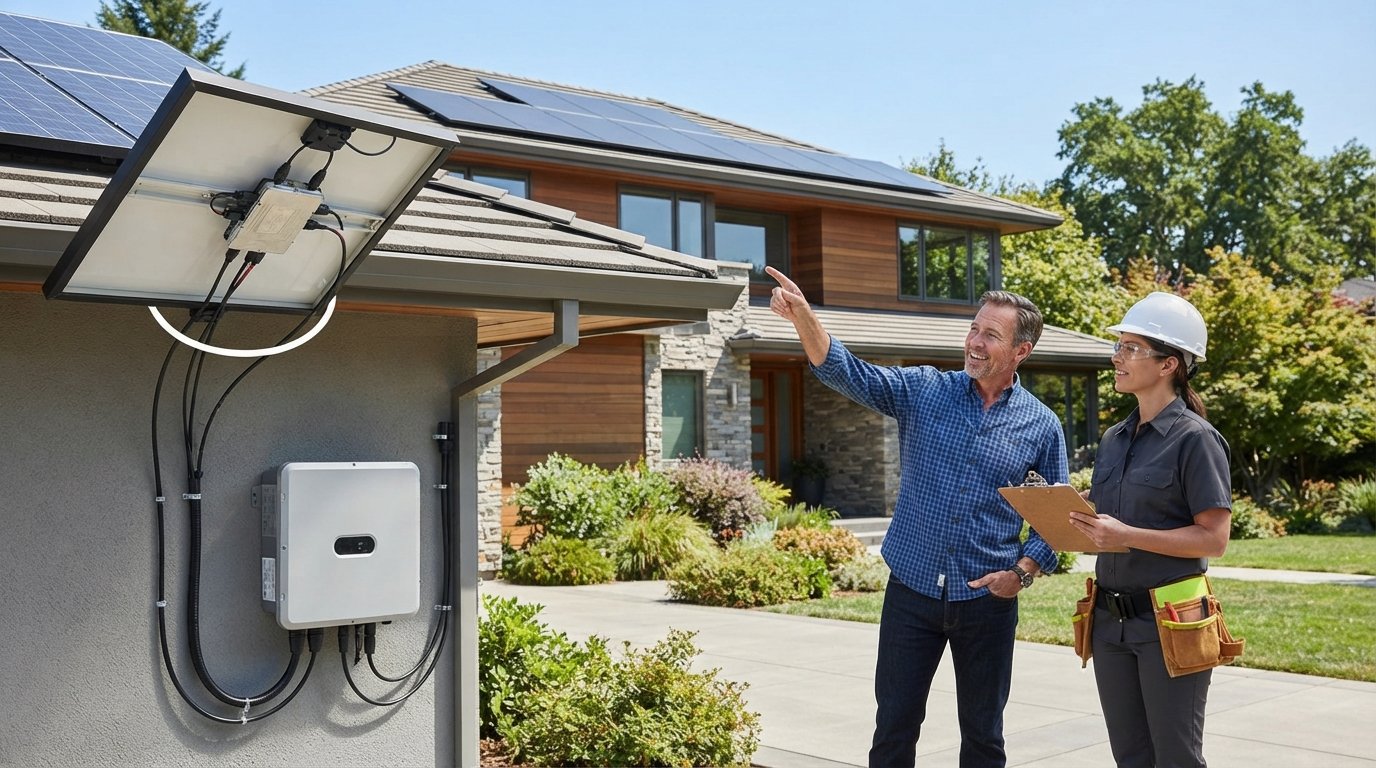
A microinverter is a small device attached to each individual solar panel. Unlike a central string inverter that handles the output of many panels at once, a microinverter optimizes and converts power at the panel level. Each panel operates independently, which means one shaded or dirty panel does not drag down the performance of the rest of your array.
This architecture is fundamentally different from a traditional string system. In a string system, panels are wired together in series, and the inverter processes the combined DC power. If one panel underperforms, it reduces the current for the entire string. With microinverters, every panel feeds its own AC power directly to your breaker panel. This is often called module-level power electronics (MLPE).
Key Components of a Microinverter System
Each microinverter contains its own maximum power point tracker (MPPT). This tracker continuously adjusts the electrical load to extract the maximum possible power from that specific panel. The system also includes monitoring software, usually accessible through a smartphone app or web portal, so you can see the production of each panel in real time.
Most modern microinverters are designed to last 25 years, matching the warranty of the solar panels themselves. This is a major advantage over string inverters, which typically last 10 to 15 years and may require replacement during the life of your system.
Microinverter vs. String Inverter: The Core Differences
To understand whether a microinverter is right for you, it helps to compare it directly to a string inverter. The choice affects your upfront cost, energy production, system monitoring, and long-term maintenance.
Energy Production and Shading
The most significant difference is how each system handles shading. With a string inverter, if one panel is shaded by a tree or chimney, the entire string's output drops to the level of the weakest panel. This is known as the Christmas light effect. Microinverters eliminate this problem entirely. Each panel works at its own maximum capacity, so a shaded panel only affects itself.
This makes microinverters ideal for roofs with partial shading, multiple roof planes, or panels facing different directions. If your roof is simple and unshaded, a string inverter may perform nearly as well, but microinverters still offer better monitoring and flexibility.
System Monitoring and Maintenance
String inverters typically offer monitoring at the system level. You can see total production, but you cannot tell if one panel is underperforming. Microinverters provide panel-level monitoring. You can identify a failing panel immediately, which makes troubleshooting faster and more precise.
When a string inverter fails, it takes your entire system offline until it is replaced. With microinverters, a single unit failure only affects one panel, and the rest of your system continues to generate power. This is a critical advantage for homeowners who want maximum reliability.
Cost and Complexity
Microinverters are more expensive per watt than string inverters. A typical residential system with a string inverter might cost $2.50 to $3.00 per watt, while a microinverter system adds $0.20 to $0.40 per watt. For a 6 kW system, that is an additional $1,200 to $2,400 upfront.
However, the higher cost can be offset by increased energy production, especially in partially shaded conditions, and by avoiding the cost of replacing a central inverter mid-system. Many solar professionals now recommend microinverters as the default for residential installations.
Five Compelling Reasons to Choose Microinverters
If you are still weighing the options, here are five specific benefits that often tip the scale toward microinverters:
- Panel-level optimization: Each panel produces its maximum possible power, regardless of the performance of neighboring panels.
- Simplified system design: You can mix different panel wattages and orientations on the same roof without complex string sizing calculations.
- Enhanced safety: Microinverter systems operate at lower DC voltages, reducing the risk of arc faults and electric shock for installers and firefighters.
- Scalability: You can start with a few panels and add more later, since each panel is independent and does not require inverter capacity upgrades.
- Longer warranty: Most microinverters come with 25-year warranties, compared to the 10- to 12-year standard for string inverters.
These advantages make microinverters particularly attractive for homeowners who want maximum performance, easy expansion, and peace of mind over the long term. The slightly higher upfront cost is often justified by the increased energy yield and reduced maintenance risk.
When a String Inverter Might Still Be a Better Choice
Despite the benefits of microinverters, string inverters are not obsolete. They remain a cost-effective option for simple, unshaded roofs with a single, south-facing plane. If your roof is large and clear, a string inverter with power optimizers can provide similar performance at a lower cost.
String inverters are also easier to service. When one fails, you replace a single unit, usually within a few hours. Microinverters are located under the panels, which makes replacement more labor-intensive. However, the reliability and warranty of modern microinverters mean failures are relatively rare.
For large commercial or utility-scale projects, string inverters are often preferred because of their lower cost per watt and centralized maintenance. But for residential systems, the trend is clearly moving toward microinverters.
How Microinverters Affect Your Solar ROI
The return on investment (ROI) of a solar system depends heavily on energy production. Even a 5% increase in annual output can shorten your payback period by several months. Microinverters often deliver that extra production, especially in real-world conditions where roofs are not perfectly oriented or are partially shaded.
Microinverters also protect your investment over time. Since they come with 25-year warranties, you are unlikely to incur the $1,500 to $2,500 cost of replacing a central inverter after 12 years. This long-term saving can be more significant than the initial price difference.
If you are financing your solar system, the extra cost of microinverters is spread across your loan payments. The increase in monthly payment is often small, while the boost in production can make your system break even sooner. In our guide on string inverter vs microinverter tradeoffs, we break down the financial math for different roof types.
Installation Considerations for Microinverters
Installing a microinverter system is not dramatically more complex than a string system, but there are a few extra steps. Each panel needs a microinverter mounted underneath it, and the AC wiring must be run to a junction box and then to your main electrical panel. The installers must also set up the monitoring gateway, which connects to your home WiFi and communicates with the manufacturer's cloud service.
Roof space is rarely an issue, as microinverters are compact and attach directly to the panel frame. However, the presence of multiple microinverters means each one has its own connector, so proper torque and sealing are important to prevent corrosion or water ingress. A professional installer will follow the manufacturer's torque specs and use appropriate strain reliefs.
Because microinverters are a mature technology, most major solar manufacturers offer them. The leading brands include Enphase, SolarEdge (which actually makes optimizers, not microinverters, but serves a similar purpose), and APSystems. Enphase is the dominant player in the residential microinverter market, with a strong reputation for reliability.
Monitoring Your Microinverter System
One of the most valuable features of microinverters is the monitoring platform. After installation, you will be able to log into an app or website and see the real-time production of each individual panel. This is not just a novelty; it is a powerful diagnostic tool.
If a panel drops in output, you will see it immediately in the monitoring dashboard. This allows you to contact your installer with specific data, rather than guessing. The monitoring system also tracks historical production, so you can verify that your system is performing as expected over time.
Most monitoring platforms also send alerts if a panel stops producing or if the system experiences a fault. This proactive notification can save you from prolonged downtime and lost savings. For example, if a bird nests under a panel and causes a hotspot, the monitoring system will flag it before it becomes a serious issue.
Battery Storage and Microinverters
If you are planning to add battery storage, microinverters offer a unique advantage. In a string system, you typically need a separate inverter or a hybrid inverter to manage battery charging and discharging. With microinverters, you can pair the system with an AC-coupled battery, such as the Enphase Encharge or Tesla Powerwall, which includes its own inverter.
This modular approach allows you to add storage later without disrupting your existing solar array. You can also size the battery independently of the solar system, which is simpler and more flexible. For homeowners who want backup power or to maximize self-consumption, microinverters are a natural fit.
However, AC-coupled batteries are slightly less efficient than DC-coupled systems because the energy goes through two conversion steps: DC to AC from the panels, then AC to DC to store in the battery. In practice, the difference is small, and the flexibility usually outweighs the efficiency loss.
Questions to Ask Your Solar Installer About Microinverters
Before you sign a solar contract, make sure you understand exactly what type of inverter is being quoted. Some installers will default to a string inverter to keep their bid low, hoping you will not notice. Others may recommend microinverters without explaining why. Here are a few questions to ask:
- What is the brand and model of the microinverter, and what is its warranty length?
- How does the system monitor individual panel performance, and will I have access to the app?
- Is the microinverter compatible with the solar panels being proposed?
- What happens if one microinverter fails, and how is the replacement handled under warranty?
- Can I expand the system later without changing the inverters?
The answers to these questions will help you compare bids accurately and avoid surprises down the road. A reputable installer will be happy to discuss the technology and provide documentation.
If you are still deciding between inverter types, take a look at our detailed comparison of string inverters and microinverters to see which one aligns with your roof and budget. That guide includes real-world examples and cost projections.
The Future of Microinverters
Microinverter technology continues to evolve. The latest generation of microinverters offers higher efficiency, lower cost, and integrated safety features such as rapid shutdown. As solar panel prices fall, the inverter is becoming a larger share of the system cost, so manufacturers are pushing for more advanced and more affordable MLPE solutions.
We are also seeing microinverters with built-in power line communication, which eliminates the need for a separate monitoring gateway. This reduces installation time and improves reliability. Some manufacturers are even integrating microinverters directly into the panel frame, creating a single, plug-and-play product.
For homeowners, the trend is clearly toward more granular control and better performance. The days of a single, dumb inverter managing your entire array are fading. Whether you choose microinverters now or wait for the next generation, the direction is unmistakable.
Making Your Final Decision
Choosing between a microinverter and a string inverter is one of the most important decisions in your solar project. The right choice depends on your roof, your budget, and your long-term goals. If you have a simple, unshaded roof and want to minimize upfront cost, a string inverter with optimizers may be sufficient. But if you value monitoring, reliability, and the ability to expand, microinverters are worth the extra investment.
At FreeSolarPowerQuotes, we help homeowners compare quotes from pre-screened installers who can explain the differences and recommend the best system for your home. Our goal is to make the process transparent and straightforward. We are not an installer, so you get unbiased guidance.
The most important step is to get multiple quotes and ask each installer about their inverter choice. This allows you to see how the technology affects pricing and performance. In our experience, homeowners who choose microinverters are consistently satisfied with their decision, especially when they monitor their system's output over time.
To get started, request free, no-obligation quotes from local solar professionals. They can assess your roof, discuss your electricity usage, and provide a detailed proposal that includes the inverter type. With the right information and the right installer, you can enjoy the full benefits of solar energy for decades to come.
If you are ready to explore your options, our solar comparison resource can help you understand the tradeoffs and make an informed choice.
Microinverters are not just a passing trend; they are becoming the standard for residential solar. Their ability to maximize production, simplify design, and provide detailed monitoring makes them a smart choice for most homeowners. The slightly higher upfront cost is a small price to pay for the peace of mind and long-term performance they deliver.
As you move forward with your solar project, remember that the inverter is just as important as the panels themselves. Take the time to understand the technology, ask the right questions, and choose a system that fits your needs. With microinverters, you are investing in a more intelligent, more resilient, and more productive solar energy system.