
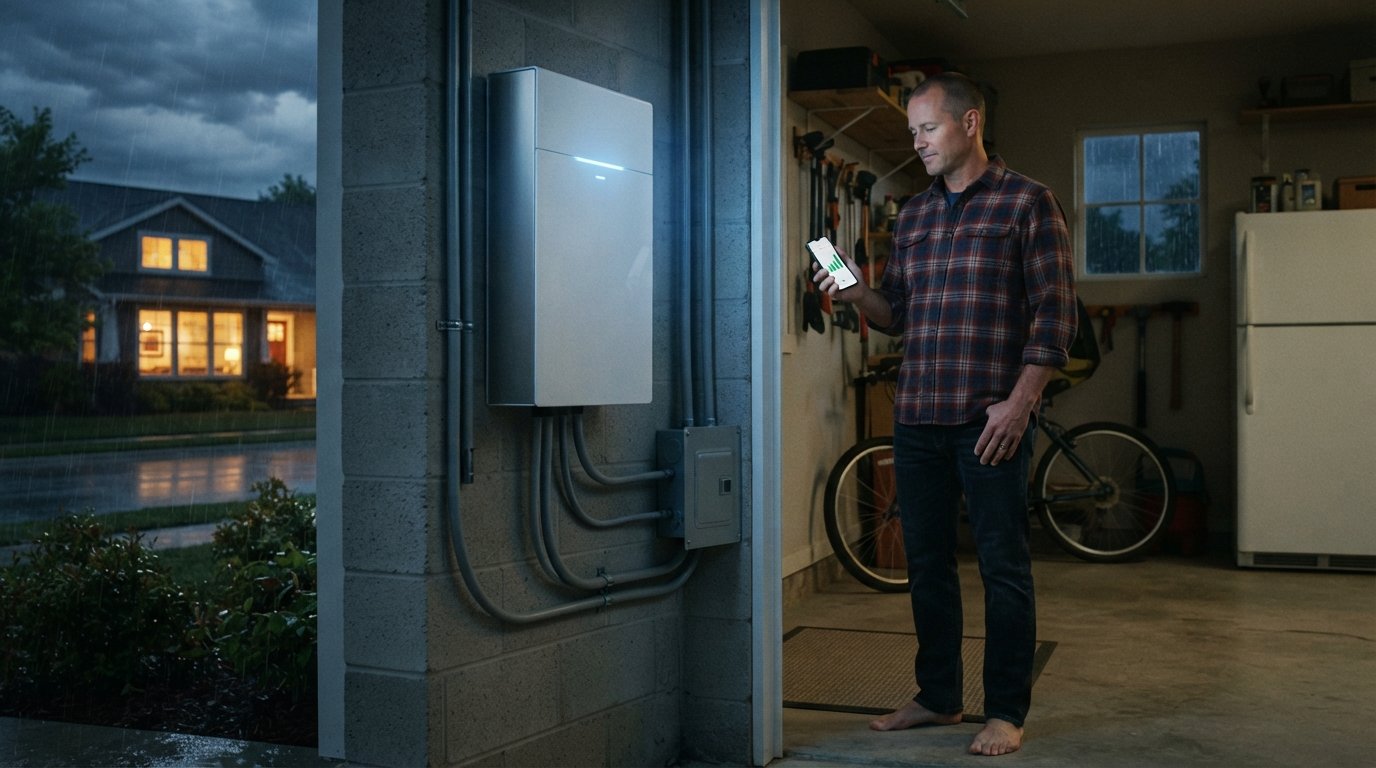
Home Battery Backup: Power Outage Protection for Less
Protect your home from outages and cut energy bills with home battery backup. Learn costs, benefits, and sizing in this 2026 guide.

By Nathan Russell
Learn more about Solar Panel Installation and Repair for guides, costs, and what to expect.
Compare Solar Panel Installation and Repair Pros Near You

Enter your ZIP code to compare top-rated local professionals and request free quotes.
When the grid goes down, most homeowners are left in the dark, literally and figuratively. A home battery backup system changes that equation. It stores electricity for use when you need it most, whether that means keeping your refrigerator running during a storm or powering your home through a planned outage. As utility rates climb and extreme weather events become more frequent, battery storage has shifted from a luxury item to a practical investment. This guide explains how home battery backup works, what it costs, and how to choose the right system for your needs.
What Is Home Battery Backup and How Does It Work?
Home battery backup refers to a system that stores electrical energy for later use. Most systems today use lithium-ion batteries, similar to the technology in electric vehicles but scaled for residential use. The battery connects to your home's electrical panel and can be charged from solar panels or from the grid when electricity rates are low.
When a power outage occurs, an automatic transfer switch disconnects your home from the grid and routes power from the battery to critical circuits. This switch happens in milliseconds, so you may not even notice the transition. Depending on the battery's capacity and your energy usage, you can keep essential appliances running for hours or even days.
There are two main configurations: AC-coupled and DC-coupled. AC-coupled systems are simpler to retrofit onto an existing solar array, while DC-coupled systems are more efficient for new installations. Your installer can recommend the best option based on your current setup and future plans.
Key Benefits of Installing a Home Battery Backup
The value of a battery system extends beyond just emergency power. Here are the primary advantages homeowners experience:
- Outage protection: Keep lights, Wi-Fi, medical devices, and refrigeration running during grid failures.
- Lower electricity bills: Shift your energy usage to off-peak hours when rates are cheaper, or store excess solar power instead of sending it back to the grid at low rates.
- Solar self-consumption: Use more of the clean energy your panels produce, reducing your reliance on the utility.
- Energy independence: Reduce your dependence on the grid and protect yourself from rising utility rates.
These benefits combine to create a system that pays for itself over time. The exact return on investment depends on your local utility rates, solar production, and available incentives, but many homeowners see payback periods between 5 and 10 years.
How Battery Backup Complements Solar Panels
If you already have solar panels, adding a battery allows you to store excess daytime generation for use at night. Without a battery, you export surplus power to the grid and earn credits through net metering. However, net metering policies are changing in many states, and some utilities now pay lower rates for exported power. A battery lets you keep that energy for your own use, maximizing the value of every kilowatt-hour your panels produce.
For those considering solar, a battery can also help you qualify for certain incentive programs. Some states and utilities offer rebates specifically for solar-plus-storage installations, making the combined system more affordable than either component alone.
How Much Does Home Battery Backup Cost?
The cost of a home battery backup system has dropped significantly over the past decade. As of 2026, the average installed cost ranges from $10,000 to $20,000 for a standard 10 kWh to 15 kWh system, including equipment, installation, and permits. Prices vary based on brand, capacity, and whether you are retrofitting an existing solar array or installing new.
Here is a rough breakdown of what you can expect to pay:
- Battery unit: $8,000 to $15,000 for most lithium-ion models.
- Installation labor: $2,000 to $5,000, depending on complexity.
- Electrical panel upgrades: $1,000 to $3,000 if your panel needs modification.
- Permits and inspection fees: $200 to $500.
Fortunately, the federal Investment Tax Credit (ITC) covers 30% of the total system cost for installations that include solar panels or are connected to solar. Many states also offer additional rebates or performance-based incentives. To get an accurate estimate for your home, use a solar cost calculator or request quotes from pre-screened installers.
Home Battery Backup vs. Generator: Which Is Better?
This is one of the most common questions homeowners ask when planning for outages. The answer depends on your priorities. Generators, particularly standby models, can run indefinitely on natural gas or propane, providing unlimited power as long as fuel is available. They are ideal for extended outages or homes with high energy demands, such as those with electric heating or well pumps.
Batteries, on the other hand, offer silent operation, zero emissions, and no fuel storage requirements. They also provide power instantly, with no startup delay. However, they have a finite capacity and will eventually run out if the outage lasts longer than a day or two. For most homeowners, a battery is sufficient for typical outages that last a few hours to a day, while a generator is better for prolonged emergencies.
Our detailed comparison of home battery backup vs. generator covers the pros and cons of each system, including long-term costs and maintenance. Reading that guide will help you decide which approach aligns with your budget and resilience goals.
Key Features to Look For in a Home Battery
Not all batteries are created equal. When shopping for a system, pay attention to these specifications:
- Usable capacity (kWh): The amount of electricity you can actually draw from the battery. Higher is better, but you only need enough to cover your critical loads.
- Power output (kW): The maximum amount of power the battery can deliver at once. This determines which appliances you can run simultaneously.
- Round-trip efficiency: The percentage of energy that remains after charging and discharging. Look for systems with 90% or higher efficiency.
- Warranty: Most reputable brands offer 10-year warranties with a certain number of cycles or throughput guarantee.
- Scalability: Can you add more battery modules later if your needs grow?
Also consider whether the battery has a built-in inverter or requires a separate one. Integrated systems are easier to install and often have a cleaner aesthetic, while separate components can be more flexible for complex setups.
How to Size Your Home Battery Backup
Sizing a battery correctly is crucial for maximizing value. Too small, and you will run out of power during outages. Too large, and you will spend money on capacity you never use. Here is a simple process to determine the right size:
- List your critical loads: Identify which appliances you need during an outage, such as refrigerator, lights, internet modem, and medical equipment. Note their wattage.
- Estimate your usage: Multiply the wattage of each appliance by the hours you expect to run it per day. Add these up to get your daily energy requirement in kWh.
- Choose a capacity: Select a battery that can cover at least one full day of critical usage. Many homeowners opt for two days of capacity for extra security.
- Consider solar charging: If your battery is paired with solar, you can recharge it during daylight hours, which allows you to get by with a smaller battery.
For example, a typical home with a refrigerator (1.5 kWh/day), lights (0.5 kWh/day), and electronics (1 kWh/day) needs about 3 kWh per day. A 10 kWh battery would provide over three days of backup, which is ample for most situations.
Incentives and Financing for Home Batteries
The upfront cost of a battery can be daunting, but several programs can reduce your out-of-pocket expense. The federal ITC remains the most significant incentive, offering a 30% tax credit for systems installed through 2032. Some states, such as California and Massachusetts, offer additional rebates through programs like SGIP or the ConnectedSolutions initiative.
Utility companies are also beginning to offer battery incentives. Some pay homeowners to enroll their batteries in demand response programs, allowing the utility to draw power from the battery during peak times. These programs can generate annual payments of $200 to $500 or more, depending on your market.
Financing options include solar loans, home equity lines of credit, and specialty financing from battery manufacturers. Many installers offer $0-down financing plans that allow you to pay for the system over time with monthly payments. To explore your options and get personalized quotes, visit our solar battery backup explained guide, which breaks down the financial side of storage in detail.
Installation Process and What to Expect
Installing a home battery is a straightforward process that typically takes one to two days. A licensed electrician will:
- Assess your electrical panel: Determine if it can handle the additional load and whether a subpanel is needed for critical circuits.
- Mount the battery: Install the unit on a wall or floor, usually in a garage, utility room, or outside. Ensure proper ventilation and clearance.
- Connect the system: Wire the battery to your panel and, if applicable, to your solar inverter.
- Configure settings: Program the battery's software for your preferred mode, such as backup-only or whole-home backup.
- Inspect and test: Pass a local inspection and run a full discharge test to confirm everything works.
Before installation, check with your local building department about permits. Your installer should handle this for you, but it is worth confirming. Also, review your homeowner's insurance policy to see if your premium changes with the addition of a battery system.
Is Home Battery Backup Worth It in 2026?
The answer depends on your goals and circumstances. If you live in an area with frequent outages, experience high electricity rates, or want to maximize your solar investment, a battery is likely a wise purchase. The peace of mind that comes from knowing your family is protected during emergencies is difficult to quantify, but for many, it is the primary motivation.
Financially, the combination of the 30% federal tax credit, declining battery prices, and utility rate structures that penalize peak-hour usage make batteries more attractive than ever. In states with time-of-use rates, a battery can shift your consumption to cheaper periods, saving hundreds of dollars annually. In regions with net metering changes, batteries are becoming essential to maintain the value of solar generation.
If you are still uncertain, start by getting a few quotes from reputable installers. Ask for a detailed cost-benefit analysis based on your specific utility rates and outage history. Many companies offer free consultations, and comparing multiple proposals will give you a clear picture of the costs and savings. For an overview of the smart investment case, read our article on whole home battery backup.
Ultimately, a home battery is an investment in resilience and control. It turns your home into a self-sufficient energy hub, ready for whatever the grid throws your way. With incentives available and prices falling, there has never been a better time to explore your options.
Learn more about Solar Panel Installation and Repair for guides, costs, and what to expect.
Compare Solar Panel Installation and Repair Pros Near You
Enter your ZIP code to compare top-rated local professionals and request free quotes.