
What Happens to Solar Panels During a Power Outage
What happens to solar panels during a power outage? Most grid-tied systems shut down for safety, but battery storage keeps your lights on.

By Ethan Whitaker
Learn more about Solar Panel Installation and Repair for guides, costs, and what to expect.
Compare Solar Panel Installation and Repair Pros Near You

Enter your ZIP code to compare top-rated local professionals and request free quotes.
Imagine the sky is clear, your solar panels are soaking up the sun, and your home is humming along on clean energy. Then, without warning, the grid goes down. Your neighbor's lights go out, but yours stay on. Or do they? This is one of the most common misconceptions about solar energy: that a solar system automatically keeps the lights on when the utility grid fails. In reality, what happens to solar panels during a power outage depends entirely on the type of system you own and whether it includes battery storage. Understanding these nuances is critical for anyone considering solar, especially if energy resilience is a priority. This article breaks down the technical, safety, and financial aspects of solar performance during grid failures, so you can make an informed decision about your energy future.
Why Most Solar Systems Shut Down During an Outage
When you install solar panels without a battery, your system is what the industry calls "grid-tied." These systems are designed to work in harmony with the utility grid. They produce electricity during the day, and any excess power is sent back to the grid through a process called net metering. In return, you draw power from the grid at night or when your panels are not producing enough. This symbiotic relationship keeps your home powered and your utility bills low.
However, this reliance on the grid introduces a critical safety feature: anti-islanding protection. If the grid goes down, your solar inverter automatically shuts off within milliseconds. This is not a malfunction; it is a mandatory safety requirement. The reason is simple: utility workers repairing downed power lines could be electrocuted if your solar system continues to send electricity into the grid. Known as "islanding," this scenario poses a severe risk to line workers and anyone else who might come into contact with energized lines. Therefore, without a battery, your solar panels will stop producing power during a blackout, even if the sun is shining brightly.
This shutdown is instantaneous and automatic. You do not need to flip a switch or take any action. The inverter detects the loss of grid power and disconnects your system from the grid. As a result, your home loses power just like any other home on the block. For many homeowners, this is a surprising and disappointing realization, especially if they invested in solar primarily for backup power. The key takeaway is that a standard grid-tied solar system is not a backup power solution; it is a bill-reduction tool.
How Battery Storage Changes the Equation
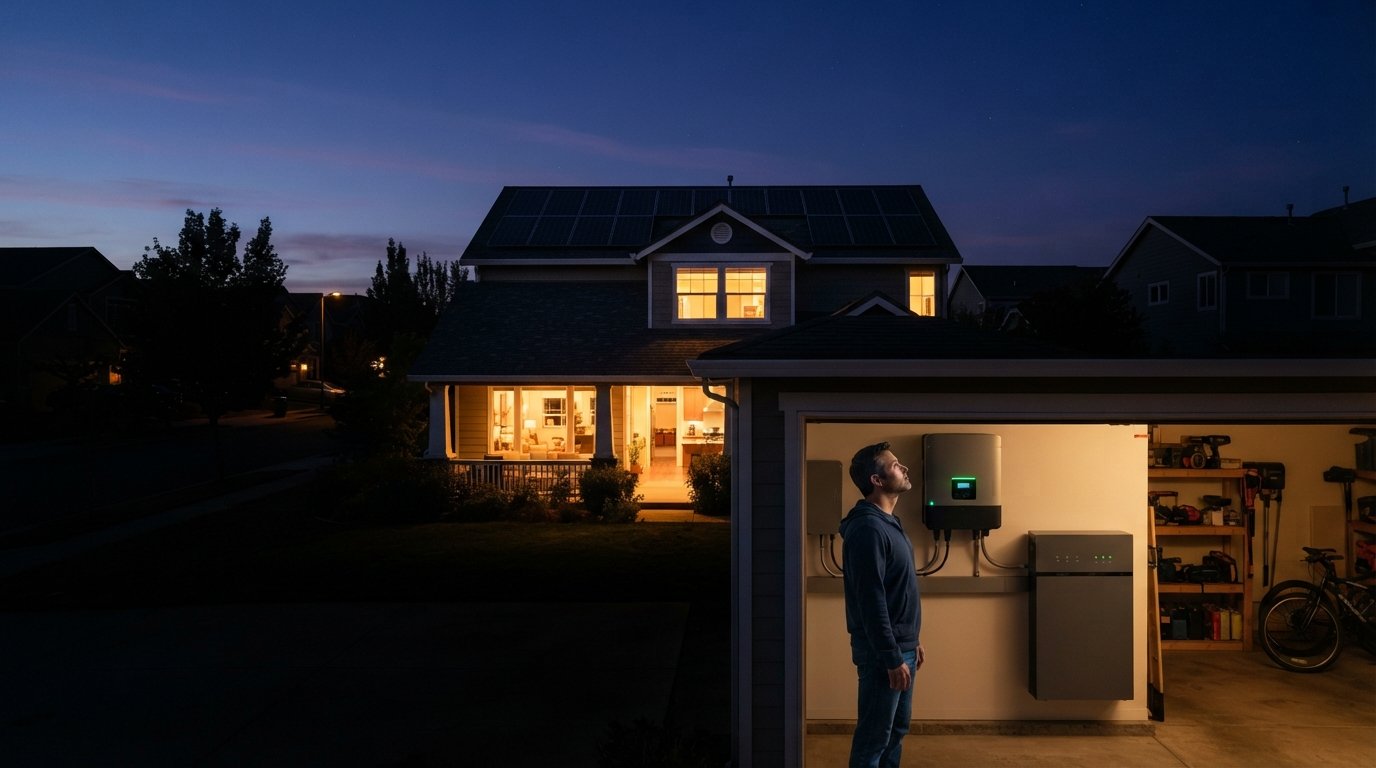
If you want your solar panels to keep producing and powering your home during an outage, you need to add a battery storage system. A battery allows your solar system to disconnect from the grid and form its own mini-grid, a process called "islanding" in a controlled and safe manner. When the grid goes down, your inverter switches to battery mode, and your home continues to run on stored energy. During the day, your solar panels recharge the battery, and at night, the battery discharges to keep your essential loads running.
Modern home batteries, such as the Tesla Powerwall or Enphase IQ Battery, are designed to seamlessly transition to backup power. The switchover typically happens in less than a second, so your lights may not even flicker. However, the amount of power you can use during an outage is limited by the battery's capacity and the size of your solar array. Most homeowners choose to back up only critical loads, such as refrigeration, lighting, internet, and medical equipment, rather than the entire house. This approach extends the battery's runtime and ensures you have power for the most important needs.
It is also important to note that not all battery systems are created equal. Some are designed for whole-home backup, while others are intended for partial backup. The cost and complexity increase with the amount of power you want to have available during an outage. For those considering battery storage, it is wise to consult with a qualified solar installer who can assess your energy usage and recommend a system that matches your resilience goals. You can also explore our guide on solar panel failure and protection to understand how to safeguard your investment against various risks.
What Happens When the Grid Goes Down and You Have No Battery
If you have a grid-tied solar system without a battery, your experience during a power outage will be identical to that of your neighbors who do not have solar. Your home will go dark, your appliances will shut off, and you will wait for the utility to restore power. The only difference is that your solar panels will also stop producing, even though they are perfectly capable of generating electricity. This is because the inverter needs a reference voltage from the grid to operate. Without that reference, it cannot function.
Some homeowners mistakenly believe that they can simply flip a switch and use their solar power during an outage. Unfortunately, this is not possible with standard grid-tied systems. The anti-islanding feature is built into the inverter and cannot be overridden by the user. Attempting to bypass this safety mechanism is illegal and extremely dangerous. It is also a violation of electrical codes and could result in fines or liability if someone is injured.
That said, there are a few exceptions. If you have a "grid-tied with battery backup" system, you are covered. If you have a "hybrid" system that includes a battery and a special inverter, you can also use solar during an outage. And if you have a completely off-grid system with its own battery bank, you are independent of the grid entirely. But for the vast majority of residential solar installations, which are grid-tied without batteries, a power outage means a solar shutdown.
The Role of the Inverter in Outage Situations
The inverter is the brain of your solar system. It converts the direct current (DC) electricity produced by your panels into alternating current (AC) electricity that your home can use. It also monitors the grid and ensures that your system operates safely. During an outage, the inverter's anti-islanding function is what causes the shutdown. This function is required by UL 1741, a safety standard for inverters. When the inverter senses that the grid voltage or frequency is outside normal parameters, it disconnects from the grid within a few milliseconds.
There are different types of inverters, and their behavior during an outage can vary. String inverters, which are the most common and cost-effective, typically shut down completely during an outage. Microinverters, which are installed on each panel, also shut down, but they can sometimes be paired with a battery system to provide backup power. Hybrid inverters are designed to work with batteries and can seamlessly switch to backup mode. If you are considering solar and want outage protection, you should discuss inverter options with your installer.
It is also worth noting that some inverters offer "secure power supply" features. For example, certain SMA inverters include a dedicated outlet that can provide up to 2,000 watts of power during an outage, even without a battery. This is a niche feature and not a substitute for a full battery backup, but it can be useful for charging small devices or running a refrigerator. However, this feature is only available on specific models and must be installed correctly.
How to Prepare for Power Outages with Solar
If energy resilience is a priority for you, there are several steps you can take to ensure that your solar system can keep your home powered during an outage. The most effective solution is to add battery storage to your solar system. A battery allows you to store excess solar energy during the day and use it at night or during a blackout. When choosing a battery, consider your critical load requirements, the battery's capacity, and its power rating. You should also think about whether you want whole-home backup or just essential circuits.
Another option is to install a generator in addition to solar. A natural gas or propane generator can provide backup power during an outage, and it can work in conjunction with your solar system. However, generators require fuel and regular maintenance, and they are not as clean or quiet as battery storage. For many homeowners, a battery is the preferred choice because it is silent, emissions-free, and integrates seamlessly with solar.
Here are some practical steps to prepare for outages with solar:
- Assess your critical loads: Determine which appliances and systems you absolutely need during an outage (refrigerator, lights, internet, medical devices).
- Choose the right battery: Select a battery that can cover your critical loads for the duration of a typical outage.
- Work with a qualified installer: Ensure your system is designed for backup power and that all safety features are in place.
- Consider a smart electrical panel: Devices like the Span panel allow you to control which circuits are backed up and monitor your energy usage in real time.
- Test your system: Periodically simulate an outage to confirm that your battery backup works as expected.
By taking these steps, you can turn your solar system into a reliable source of backup power. It is also a good idea to consult with your installer about the latest technologies and incentives available for battery storage. The federal Investment Tax Credit (ITC) currently covers 30% of the cost of battery storage when installed with solar, making it more affordable than ever.
Financial and Practical Considerations
Adding battery storage to your solar system increases the upfront cost, but it also provides tangible benefits. Beyond outage protection, a battery can help you maximize your solar savings by storing excess energy for use during peak rate periods. This is known as "time-of-use" optimization. In many states, utilities charge more for electricity during certain hours of the day. With a battery, you can draw on stored solar energy during those expensive peak hours, reducing your reliance on the grid and lowering your bills.
However, the payback period for a battery system can be longer than for solar alone. It is important to weigh the financial benefits against the value of energy resilience. For some homeowners, the peace of mind that comes with backup power is worth the investment. For others, a generator may be a more cost-effective solution. To explore financing options and incentives, you can visit NewSolarQuotes, an independent educational resource that offers guides and cost calculators for renewable energy.
It is also crucial to understand that battery technology is rapidly evolving. Prices are declining, and new products are entering the market regularly. If you are considering solar plus storage, it is wise to get multiple quotes from reputable installers and compare their recommendations. FreeSolarPowerQuotes can connect you with pre-screened local solar providers who can help you design a system that meets your needs and budget. Remember, the best system is one that is tailored to your specific energy usage, goals, and financial situation.
Common Misconceptions About Solar and Outages
There are several myths surrounding solar panels and power outages. One of the most persistent is that solar panels always work during an outage. As we have seen, this is only true if you have a battery or a specialized inverter. Another myth is that you can simply install a battery and expect to run your entire home as usual. In reality, most batteries have limited capacity and power output, so you may need to prioritize which circuits are backed up. It is also a misconception that solar systems are immune to grid failures. They are not; they are designed to shut down to protect utility workers.
Another common misunderstanding is that anti-islanding is optional. It is not. It is a mandatory safety feature required by law. Attempting to disable it is dangerous and illegal. Finally, some people believe that solar panels are fragile and easily damaged during storms or outages. In fact, solar panels are highly durable and designed to withstand harsh weather, including hail and high winds. The inverter is more susceptible to damage, but modern inverters are also quite robust.
By dispelling these myths, homeowners can make more informed decisions about their solar investments. If you are considering solar and want to ensure you have power during an outage, be sure to discuss your goals with your installer and explore battery storage options. With the right system, you can enjoy both energy savings and energy independence.
Understanding what happens to solar panels during a power outage is essential for anyone considering solar energy. While a standard grid-tied system will shut down during a blackout, adding battery storage transforms your solar array into a reliable backup power source. The decision to invest in battery storage depends on your priorities, budget, and desire for resilience. By working with a trusted solar provider and taking advantage of available incentives, you can design a system that keeps your lights on when the grid goes down. To get started, request free, no-obligation quotes from local solar installers and take control of your energy future.