
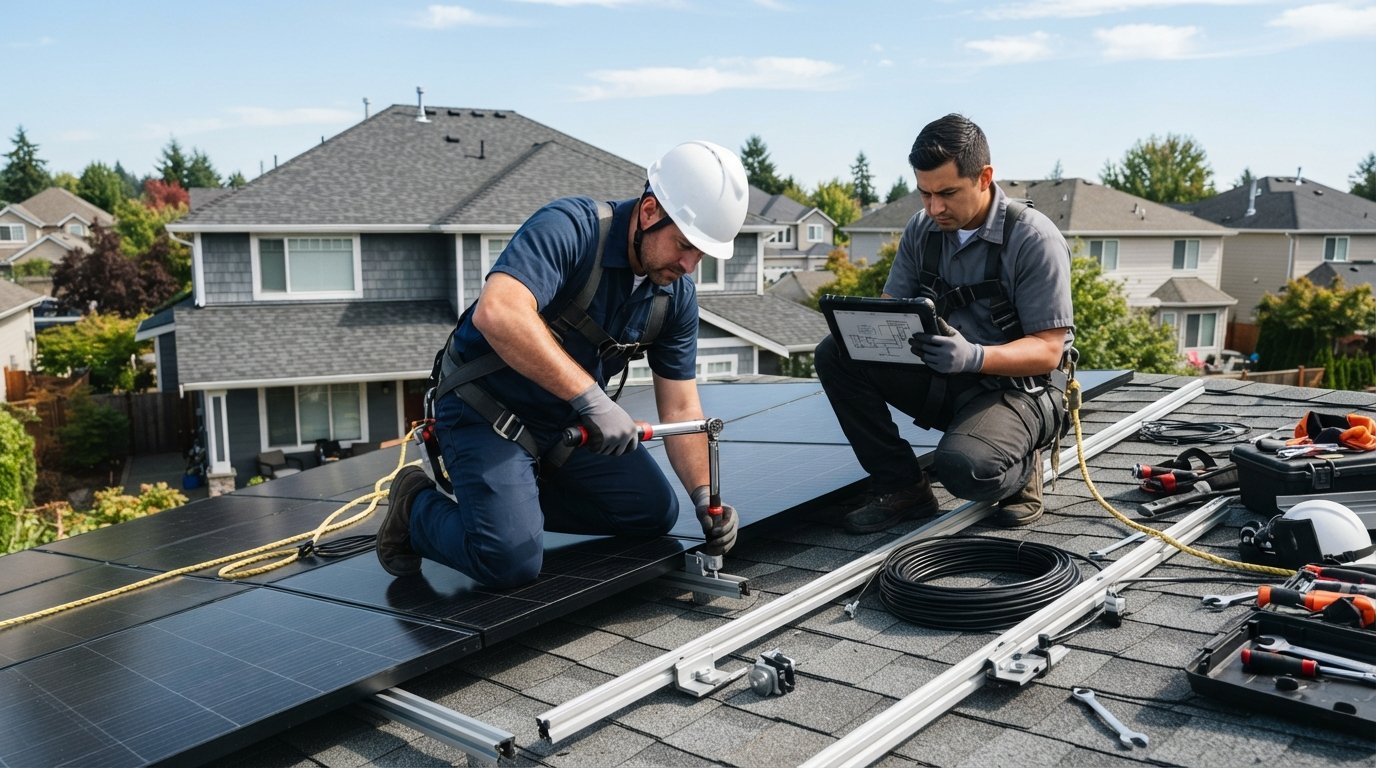
Top Solar Installation Mistakes to Avoid in 2026
Avoid costly solar installation mistakes with our expert guide. Learn how to pick the right installer, size your system, and protect your investment.

By Liam Parker
Learn more about Solar Panel Installation and Repair for guides, costs, and what to expect.
Compare Solar Panel Installation and Repair Pros Near You

Enter your ZIP code to compare top-rated local professionals and request free quotes.
Going solar is a big decision, and the excitement of cutting your electricity bills can sometimes overshadow the practical details. But here is the reality: the quality of your solar installation determines everything, from your daily energy production to the long-term health of your roof. A poorly planned or sloppy installation can turn a smart investment into a costly headache. The good news is that most problems are entirely preventable if you know what to look for before you sign on the dotted line. This guide highlights the most common solar installation mistakes to avoid, so you can protect your investment and enjoy clean energy with confidence.
Choosing the Wrong Solar Installer
Your installer is the single most important factor in your solar project. They design the system, handle the permits, and physically mount the panels on your roof. A bad installer can leave you with an underperforming system, roof leaks, and a long battle to get things fixed. Many homeowners make the mistake of choosing the first company that knocks on their door or offers the lowest price. This is one of the most critical solar installation mistakes to avoid, as the cheapest quote often comes with hidden risks, such as subpar equipment or inexperienced crews.
Before you hire anyone, take the time to research local solar companies thoroughly. Look for established businesses with a strong track record in your area. Check their reviews on Google, Yelp, and the Better Business Bureau, and ask for a list of recent local references. A reputable installer should be happy to provide you with examples of their work. Also, verify that they are licensed and insured, and ask about their warranties. A solid installation warranty should cover both the workmanship and the equipment performance for at least 10 to 25 years. For a deeper look at how to compare your options, you can use our guide on comparing solar installation quotes to maximize your savings, which outlines key questions to ask every potential contractor.
Underestimating Your Roof's Condition
Your roof is the foundation of your solar array, and its health is non-negotiable. A common oversight is proceeding with a solar installation without first having a structural engineer or professional roofer inspect the roof. Solar panels are designed to last 25 to 30 years, so they should be installed on a roof that can reliably support them for that entire period. Replacing a roof after solar panels are installed is a costly and complicated process that involves disconnecting and reinstalling the entire array.
The best time to go solar is right after a roof replacement. If your roof is older than 10 to 15 years, or if it shows signs of wear such as cracked or missing shingles, sagging areas, or leaks, you should address these issues before installation. Additionally, the angle and orientation of your roof matter. South-facing roofs with a slope between 15 and 40 degrees typically yield the highest energy production, but east and west-facing roofs can still be viable options. An experienced installer can assess your roof's solar potential and recommend the optimal panel layout. Ignoring these factors can lead to a system that underperforms or, worse, causes structural damage to your home.
Overlooking Your Energy Consumption Needs
One of the most frequent solar installation mistakes to avoid is sizing your system based on guesswork rather than actual data. A system that is too small will not cover your electricity usage, and you will still have large utility bills. A system that is too large will cost more upfront and may not offer a good return on investment, unless your utility offers generous net metering policies. The goal is to match your solar production as closely as possible to your annual electricity consumption.
To get this right, gather 12 to 24 months of your past utility bills. Look at your average monthly and annual kilowatt-hour (kWh) usage. A reputable solar installer will use this data to calculate the appropriate system size, taking into account seasonal variations and future changes in your energy usage, such as buying an electric vehicle or adding a pool. They should also explain how shading from trees or nearby buildings will affect production. You should be wary of any installer who gives you a quote without first asking to see your electric bills or conducting a site visit.
Ignoring Local Permits, Codes, and HOA Rules
Solar installations require the proper permits and must comply with local building codes and your homeowners association (HOA) rules. A professional installer will handle the permitting process, but it is still your responsibility to understand the requirements. Skipping this step can lead to fines, forced removal of the system, or problems when you try to sell your home. This is a critical solar installation mistake to avoid because it can create legal and financial headaches that far outweigh any initial savings.
Before installation begins, ask your installer about the specific permits they will pull and the timeline for approval. In many areas, the local utility company must also approve the interconnection agreement before your system can be tied to the grid. For HOA communities, you may need to submit an application for architectural review, which can take a few weeks. Some states, like Florida and Texas, have solar access laws that limit HOA restrictions, but you should still follow the proper process. A thorough installer will guide you through these steps and ensure your system is compliant from day one.
Choosing the Wrong Solar Equipment
Not all solar panels, inverters, and mounting systems are created equal. The market is flooded with options, and the difference in quality and efficiency can be significant. A common mistake is choosing the cheapest equipment without researching its performance, durability, and warranty. High-quality components may cost more upfront, but they often have better degradation rates, meaning they lose less efficiency over time, and they come with longer warranties that protect your investment.
When evaluating equipment, focus on the key specifications. For solar panels, look at the efficiency rating (typically 18-22%), the temperature coefficient, and the manufacturer's warranty (usually 25 years). For inverters, choose between string inverters, microinverters, or power optimizers. Each has its pros and cons. Microinverters, for example, are more expensive but can maximize production on roofs with partial shading. Your installer should explain why they recommend specific equipment for your home, and you should feel comfortable asking questions. This decision directly impacts your system's energy output and long-term reliability.
- Panel Type: Monocrystalline panels are more efficient and space-saving, but they cost more than polycrystalline panels.
- Inverter Technology: Microinverters offer panel-level monitoring and shade tolerance, while string inverters are simpler and less expensive.
- Warranty Coverage: Look for a 25-year performance warranty on panels and at least a 10- to 12-year warranty on inverters.
- Brand Reputation: Stick with established manufacturers that have a proven history of honoring their warranties.
After you choose your equipment, make sure it is clearly listed in your contract, including the brand, model, and performance specifications. This prevents the installer from substituting lower-grade parts during installation.
Poor Planning for the Main Panel and Electrical System
Your home's electrical panel, or breaker box, must be able to handle the additional power from a solar array. Many older homes have main panels that are already at their capacity, and adding solar requires an upgrade. This is often an unexpected cost that homeowners do not plan for. A solar installation mistakes to avoid is assuming that the quote you received includes all necessary electrical work. It is crucial to have your installer conduct a thorough electrical inspection before giving you a final price.
If your panel needs upgrading, the cost can range from $1,000 to $3,000 or more. In some cases, you might need to replace the entire panel to meet current code requirements. Your installer should include this in the initial proposal, not surprise you with it later. They should also plan for the proper placement of the inverter and disconnect switches, which must be easily accessible to the utility company and emergency responders. A clean, code-compliant electrical setup ensures your system operates safely and efficiently.
Neglecting the Fine Print in the Contract
Your solar contract is a legally binding document that outlines the scope of work, costs, equipment, warranties, and payment schedule. A major mistake is signing a contract without reading the fine print or fully understanding every clause. This can lead to disputes over pricing, project timelines, and what is actually covered. This is one of the most critical solar installation mistakes to avoid, as the contract is your primary protection if something goes wrong.
Before you sign, review the contract carefully and look for these key items:
- Total Cost: Ensure the final price is clear and includes all equipment, labor, permits, and any additional fees.
- Payment Schedule: Never pay the full amount upfront. A standard schedule is a small deposit, a payment upon delivery of equipment, and the final payment after the system passes inspection.
- Warranty Details: Make sure the contract specifies the workmanship warranty (typically 5-10 years) and the manufacturer's warranties on panels and inverters.
- Production Guarantee: Some installers offer a performance guarantee, which states that your system will produce a certain number of kWh per year.
- Cancellation Policy: Understand the terms for canceling the contract without penalty.
If anything is unclear, ask your installer for clarification. You can also have a lawyer review the contract before signing. It is a small investment in peace of mind that can prevent major headaches later.
Forgetting About the Future: Maintenance and Battery Storage
Solar panels require minimal maintenance, but they are not maintenance-free. They need to be kept clean and free of debris to operate at peak efficiency. While rain will wash away some dirt, you may occasionally need to have them professionally cleaned, especially in dusty or dry climates. Also, make sure to trim any tree branches that might cast shadows on your panels over time. This is a part of long-term system care that is often overlooked in the initial excitement.
Additionally, if you are considering adding a solar battery for backup power, it is wise to plan for it now, even if you do not install it immediately. Installing a battery later can be more expensive and complicated if your inverter is not battery-ready. Many modern inverters are AC-coupled and can work with batteries, but you need to ensure the system is designed with that future expansion in mind. Discuss your interest in battery storage with your installer from the start. They can recommend a system that allows for easy integration later, saving you money and hassle down the road.
Not Comparing Multiple Quotes
Solar pricing can vary significantly between installers for the same size system. One of the biggest solar installation mistakes to avoid is accepting the first quote you receive without comparing it to others. Getting multiple quotes allows you to understand the market rate and ensures you are not overpaying. It also gives you leverage in negotiations. According to the U.S. Department of Energy, solar costs have fallen dramatically, but there is still a wide range in what companies charge.
When you obtain quotes, compare them line by line. Look at the total price, the cost per watt, the financing terms, and the specific equipment being offered. A slightly higher quote might be justified by a better warranty or more efficient panels. By gathering three to four quotes, you can make an informed decision based on value, not just price. Using a free quote service like FreeSolarPowerQuotes can streamline this process by connecting you with multiple vetted installers in your area, saving you time and research effort.
Finally, before you commit, take a moment to think about the long-term performance of your system. A well-installed solar array can provide clean energy for decades. The best way to ensure that outcome is to avoid cutting corners during the planning and installation phase. For more detailed information on panel technology and what to expect, you can explore resources like SolarEnergy.ai, which offers insights into system design and performance.
Going solar is a significant investment, but it is one that can pay off handsomely in both financial savings and environmental benefits. By steering clear of these common pitfalls, you are setting yourself up for a smooth installation and a reliable, efficient system. Take your time, ask the right questions, and choose a partner you trust. Your future self will thank you for the diligence, and you will soon be enjoying the peace of mind that comes with producing your own clean power.