
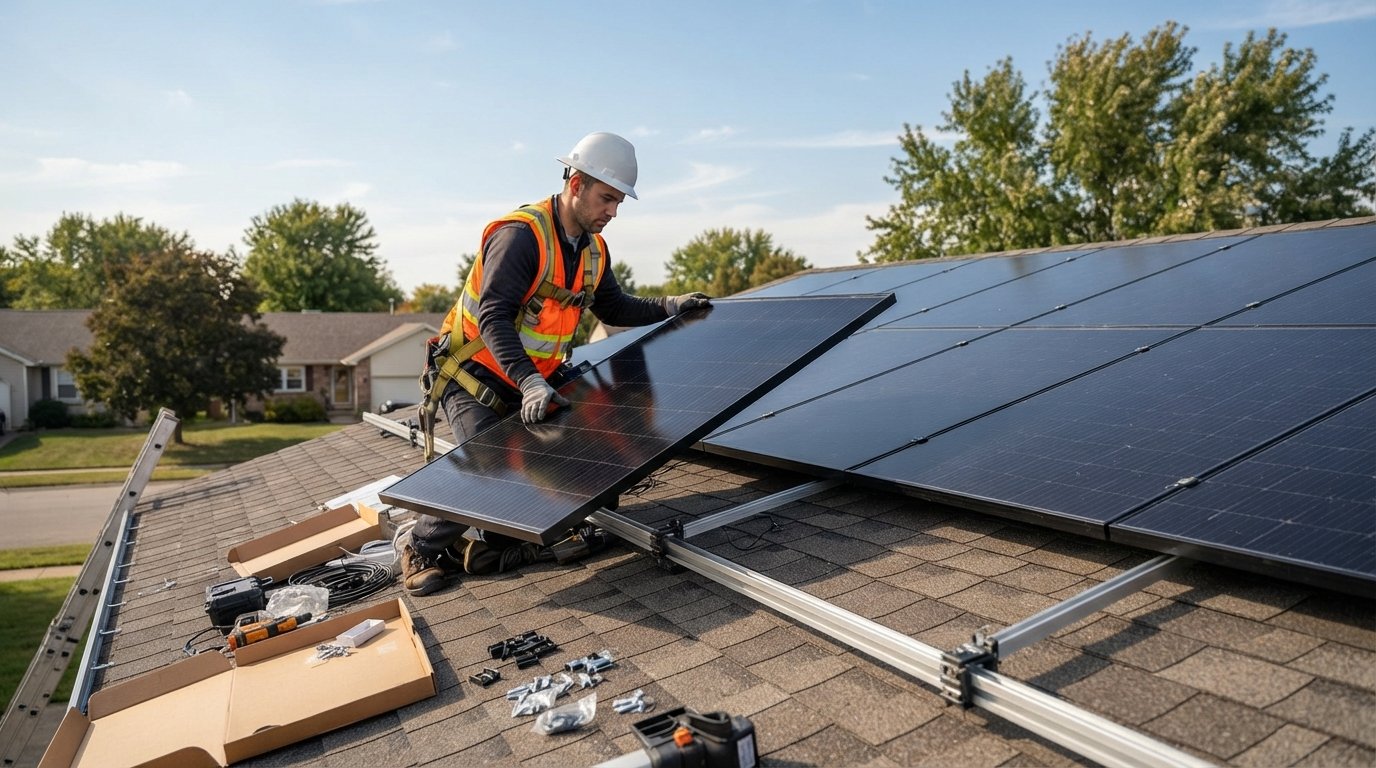
Solar System Expansion: Adding Panels to an Existing Array
Solar system expansion adding panels to an existing array boosts savings. Call (833)-793-7166 for expert guidance on compatibility and incentives.

By Olivia Ingram
Learn more about Solar Panel Installation and Repair for guides, costs, and what to expect.
Compare Solar Panel Installation and Repair Pros Near You

Enter your ZIP code to compare top-rated local professionals and request free quotes.
Your solar panels have been humming along for a few years, trimming your electric bills and maybe even earning you a credit from the utility. Then life changes: you buy an EV, add a heat pump, or finally decide to run that pool pump without guilt. Suddenly your system feels undersized, and you wonder whether you can just bolt on a few more panels. The short answer is yes, but solar system expansion adding panels to an existing array is rarely as simple as buying extra hardware. You need to match equipment, satisfy your utility, and protect your incentives. This guide walks you through every step, from inverter compatibility to net metering, so you can expand with confidence and avoid costly mistakes.
Why Expanding Your Solar Array Makes Sense (and When It Does Not)
Adding panels to an existing array is often the most cost-effective way to boost production. You already have a roof penetration plan, a mounting system, and a utility interconnection. The incremental cost per watt can be lower than a brand-new system because you reuse existing infrastructure. Common triggers include purchasing an electric vehicle, installing a heat pump or electric water heater, adding a home battery, or simply wanting to offset a larger share of your bill as rates rise.
However, expansion is not always the right move. If your original inverter is maxed out, your roof orientation is poor, or your utility has capped net metering, the payback may disappoint. In some cases, a separate new system or a battery retrofit delivers better value. Before you commit, review your original design and your current energy usage. A quick call with your installer can reveal whether your system was sized with future growth in mind. Many quality installations include a small buffer in the inverter or the racking, but you should never assume.
Matching New Panels to Your Existing Inverter and Equipment
The inverter is the heart of your solar system, and it dictates how much expansion you can accommodate. Inverters are rated in kilowatts (kW) and have a maximum DC input. If your original system already approaches that limit, adding panels will push the inverter beyond its safe operating range. In that case, you have three options: replace the inverter with a larger model, add a second inverter, or switch to a hybrid inverter that can manage both solar and battery storage. Each choice has cost and complexity implications.
Panel compatibility matters too. Mixing old and new panels on the same string can cause mismatch losses if their electrical characteristics differ. Ideally, you match the new panels to the old ones in voltage and current, or you use separate strings with independent maximum power point tracking (MPPT). Microinverters or DC optimizers can also mitigate mismatch by isolating each panel. If your original system used a string inverter, adding a second string with a separate MPPT input is often the cleanest path. Always check the age and condition of the existing racking and wiring; adding weight and current to aging components can void warranties or create safety hazards.
Before you buy anything, gather your original system documentation: inverter model, panel model, string configuration, and any monitoring data. A reputable installer can run a compatibility check and propose a design that respects your equipment limits. For a deeper dive into the financial trade-offs of upgrading versus replacing, see our guide on solar system investment analysis for homeowners.
Second Inverter or Hybrid Setup: Which Makes Sense?
When your existing inverter cannot handle more panels, adding a second inverter is often the simplest solution. A second string inverter dedicated to the new panels avoids complicated retrofits and lets you keep the original system untouched. This approach works well when the new panels face a different direction or have different specifications. The downside is additional equipment cost and a second point of failure, but modern inverters are reliable and come with long warranties.
A hybrid inverter is another option, especially if you plan to add battery storage later. Hybrid inverters can manage solar production, battery charging, and grid interaction in one unit. If your current inverter is nearing the end of its life or lacks battery compatibility, upgrading to a hybrid model can future-proof your system. However, hybrid inverters are more expensive and may require rewiring. They shine in scenarios where you want backup power or time-of-use optimization. If you are unsure which path fits your goals, a free consultation with a solar professional can clarify the trade-offs. You can also explore contractor home quotes to compare installation costs for different upgrade scenarios.
Incentive Eligibility for Add-On Capacity
The federal Investment Tax Credit (ITC) generally applies to the cost of adding panels to an existing system, as long as the addition is a qualified solar electric property. The credit is currently 30% of the cost for systems installed through 2032, with step-downs thereafter. However, the rules can be nuanced: if you add panels to a system that was placed in service in a prior year, the new panels are treated as a separate installation for tax purposes. You will need to file the appropriate tax forms and keep detailed records. State and local incentives may also be available, but they often have their own caps or eligibility windows.
One common pitfall is assuming that any expansion automatically qualifies for the full credit. For example, if you add a battery alongside the panels, the battery may qualify only if it is charged by solar and meets certain capacity requirements. Similarly, if you replace an inverter as part of the expansion, that cost may be eligible, but you should confirm with a tax professional. Always verify current incentive details with official sources, as programs can change. For a comprehensive overview of available incentives, visit our solar incentives guide.
Net Metering and Interconnection Rules for Expanded Systems
Net metering policies vary widely by state and utility, and expanding your system can affect your eligibility. Some utilities allow you to add capacity up to a certain percentage of your original system without changing your net metering agreement. Others require a new interconnection application and may place you under a new rate schedule with lower credits. In areas where net metering has been replaced by net billing or avoided-cost compensation, adding panels could reduce your overall export credit value. It is critical to contact your utility before you install new panels to understand the rules.
Interconnection is the formal process of getting utility approval to connect your expanded system to the grid. You will likely need to submit a new application, provide updated single-line diagrams, and pay any associated fees. Some utilities have fast-track processes for small additions, while others require a full review. If you are adding a second inverter or significantly increasing capacity, the utility may study the impact on the local grid. Plan for potential delays; it is not unusual for interconnection reviews to take several weeks. Your installer should handle the paperwork, but you should stay informed. For a step-by-step walkthrough of the interconnection process, see our article on net metering and interconnection.
Step-by-Step Guide to Expanding Your Solar Array
Expanding a solar array involves more than buying panels. Follow these steps to ensure a smooth and compliant process.
- Assess your current system: Gather documentation on your inverter, panels, and monitoring data. Determine how much headroom you have.
- Define your goals: Decide how much additional energy you need and whether you plan to add a battery or EV charger later.
- Consult a qualified installer: Get a professional evaluation of your roof, wiring, and equipment. Obtain multiple quotes to compare.
- Review utility rules: Contact your utility to understand net metering changes and interconnection requirements for expansion.
- Secure permits and approvals: Your installer will handle building permits and utility interconnection applications.
- Install and inspect: After installation, schedule inspections and update your monitoring system.
- File for incentives: Keep receipts and work with a tax advisor to claim the federal ITC and any state incentives.
Each step has nuances that can affect cost and timeline. For instance, if your roof is older, you may need to replace it before adding panels to avoid future removal costs. If your electrical panel is outdated, an upgrade may be required to handle the additional load. A good installer will flag these issues upfront.
Costs and Financial Considerations
The cost of expanding a solar array depends on the size of the addition, equipment choices, and labor. As a rough estimate, adding 3 kW to an existing system might cost between $6,000 and $9,000 before incentives, but prices vary significantly by region and system complexity. If you need a second inverter or a main panel upgrade, expect higher costs. The federal ITC can offset 30% of the cost, and some states offer additional rebates or credits.
To evaluate the financial return, compare the incremental cost to the additional energy savings. If you are on a time-of-use rate, adding west-facing panels can be more valuable because they produce during peak hours. If you are on a flat rate, south-facing panels typically maximize total production. Use a solar calculator or ask your installer for a production estimate and payback analysis. Remember that net metering changes can alter the value proposition, so model scenarios under current and potential future rules. For a deeper financial analysis, see our solar cost calculator.
Common Pitfalls and How to Avoid Them
One of the biggest mistakes is failing to check inverter capacity before purchasing panels. Another is ignoring utility notification requirements; installing without approval can lead to fines or forced removal. Homeowners also sometimes forget to update their insurance policy to reflect the increased system value. On the technical side, mismatched panels can cause inefficiency, and inadequate wiring can be a fire hazard. Always use licensed professionals and insist on a thorough site assessment.
Warranty issues are another concern. Adding panels may void your roof warranty if not installed correctly, and some inverter manufacturers require certified installers for warranty coverage. Review your original warranties and ask the new installer how they will protect your coverage. Finally, do not overlook monitoring: after expansion, your monitoring system should be updated to track the new panels separately or in aggregate.
Frequently Asked Questions
Can I add panels to my existing solar system myself?
While DIY solar is possible in some jurisdictions, expanding an existing grid-tied system involves complex electrical work, permitting, and utility interconnection. Most homeowners hire a licensed installer to ensure safety and compliance. Improper DIY work can void warranties and create insurance liabilities.
Will adding panels affect my net metering agreement?
It depends on your utility. Some allow small additions without changing your agreement, while others require a new application and may place you on a different rate schedule. Always check with your utility before installing.
How long does the expansion process take?
From contract to activation, expect four to twelve weeks depending on permitting, equipment availability, and utility review. Interconnection queues can be longer in high-demand areas.
Can I mix different panel brands?
It is possible but not ideal. Mixing panels with different electrical characteristics can reduce performance. Using separate MPPT inputs or microinverters can mitigate the issue. Consult your installer for the best approach.
Expanding your solar array is a smart way to keep pace with your energy needs, but it requires careful planning. By understanding your equipment limits, incentive rules, and utility requirements, you can add panels without compromising performance or savings. If you are ready to explore your options, reach out to a qualified solar professional for a free, no-obligation quote. With the right approach, your expanded system will deliver clean energy and financial returns for years to come.