
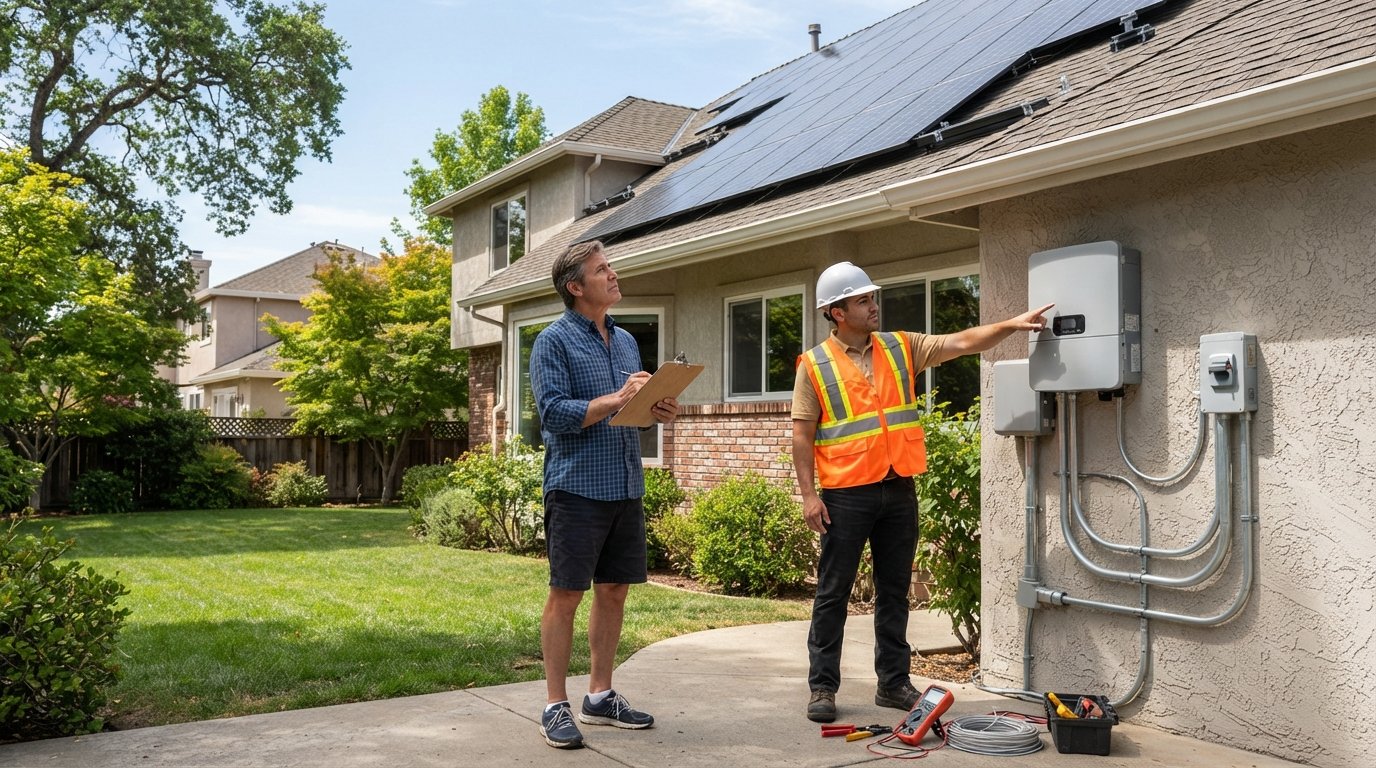
Solar System Commissioning Checklist Before Final Payment
Ensure your solar system is fully operational before paying. Call (833)-793-7166 for expert guidance on your commissioning checklist.

Learn more about Solar Panel Installation and Repair for guides, costs, and what to expect.
Compare Solar Panel Installation and Repair Pros Near You

Enter your ZIP code to compare top-rated local professionals and request free quotes.
You have signed the contract, watched the panels go up, and now the installer is asking for the final check. Before you release that payment, you need to confirm the system is fully commissioned and performing as promised. A solar system commissioning checklist before final payment is your best protection against paying for a system that is incomplete, underperforming, or missing critical documentation. This guide walks you through the essential steps, from verifying utility permission to operate to documenting panel serial numbers, so you can release funds with confidence.
Why a Commissioning Checklist Matters Before You Pay
Final payment is your last point of leverage. Once you pay, your ability to get the installer to return for punch-list items drops dramatically. Many homeowners discover issues months later, such as a loose conduit, a monitoring app that never worked, or missing warranty paperwork, and then struggle to get the installer back. A thorough commissioning checklist ensures you verify every component and document before money changes hands.
Commissioning is more than flipping a switch. It is the process of confirming that the system is safe, code-compliant, and producing at expected levels. It also confirms that you have the records needed for warranty claims, insurance, and future home sales. Skipping this step can cost you thousands in repairs or lost incentives.
If you want to understand the financial side of your investment, our guide on solar system investment analysis for homeowners explains how to evaluate payback and ROI. But before you calculate returns, you must ensure the system is actually complete and operational.
Permitting, Inspection, and Utility Permission to Operate
The first major milestone is receiving permission to operate (PTO) from your utility. Without PTO, your system cannot legally send power to the grid, and you may not qualify for net metering or incentives. The installer should handle the paperwork, but you must verify that PTO has been granted before final payment. Ask for a copy of the utility approval letter or email.
Building and electrical inspections are equally important. Your local jurisdiction must sign off on the installation to confirm it meets code. Ask for the inspection report and the signed permit card. If the inspector flagged any issues, ensure they have been corrected and re-inspected.
Here is a quick checklist for this phase:
- Utility permission to operate (PTO) letter received and on file.
- Final building inspection passed and documented.
- Electrical inspection passed and documented.
- All permit fees paid and closed out with the city or county.
Do not accept verbal assurances. Get copies of every document. If the installer cannot provide them, withhold final payment until they do.
Monitoring App Setup and Baseline Production Verification
Your monitoring system is how you will track performance and catch problems early. Before final payment, the installer should set up the monitoring app on your phone or computer and show you how to use it. Verify that the system is reporting data and that the panels are producing electricity.
Baseline production verification means comparing actual output to the expected output for that day and location. The installer should provide a commissioning report showing production metrics. If production is significantly lower than expected, there may be shading, wiring, or inverter issues that need fixing.
Ask these questions:
- Is the monitoring app connected and showing live data?
- Have you provided me with login credentials and a user guide?
- What is the expected daily production for this time of year?
- Does the actual production match the expected range?
If the monitoring system is not working, do not make final payment. A non-functional monitoring system makes it impossible to verify performance or file warranty claims later.
Racking, Conduit, and Flashing Quality Checks
Visual inspection of the installation quality is critical. Poor workmanship can lead to roof leaks, electrical hazards, and premature system failure. Walk around your property and look for these common issues:
- Racking: Are the mounts secure and properly sealed? Check for loose bolts or rust.
- Conduit: Is the conduit properly attached and painted to match your home? Are there any exposed wires?
- Flashing: Are all roof penetrations flashed and sealed to prevent leaks?
- Panel alignment: Are the panels straight and evenly spaced?
Take photos of everything, especially any areas that look questionable. If you see gaps in flashing or loose conduit, document them and request correction before final payment. These small issues can become expensive problems later.
Warranty Documents and Panel Serial Number Records
Solar equipment comes with warranties from manufacturers and often a workmanship warranty from the installer. You need copies of all warranty documents, including the terms and duration. Without them, you may not be able to claim coverage if a panel or inverter fails.
Panel serial numbers are equally important. Record the serial number of every panel and inverter. These numbers are required for warranty claims and can help verify that the equipment installed matches what you paid for. Create a folder (physical or digital) with all documents.
Your document checklist should include:
- Manufacturer warranties for panels, inverters, and batteries.
- Installer workmanship warranty.
- Panel and inverter serial numbers recorded.
- System design and electrical diagrams.
- Commissioning report and performance data.
If any document is missing, ask for it in writing. A reputable installer will provide these without hesitation.
What to Withhold or Escalate if Punch-List Items Are Unresolved
If you find issues during your inspection, create a punch list and ask the installer to fix them before you pay. Most contracts allow you to withhold final payment until punch-list items are completed. Do not let the installer pressure you into paying early with promises to return.
If the installer refuses to address legitimate concerns, escalate. Contact your state contractor licensing board or consumer protection agency. You can also seek mediation. In most cases, simply mentioning that you will escalate is enough to get action.
Remember that final payment is your leverage. Use it wisely. For more resources on comparing installers and understanding contracts, visit NewSolarQuotes, an independent educational resource that helps homeowners navigate the solar process.
Final Walkthrough and Sign-Off
Once all items are checked off, do a final walkthrough with the installer. Confirm that every punch-list item is resolved and that you have all documents. Then, and only then, release final payment. Keep a signed copy of the completion certificate for your records.
By following this solar system commissioning checklist before final payment, you protect your investment and ensure your solar system performs as expected for decades to come.