
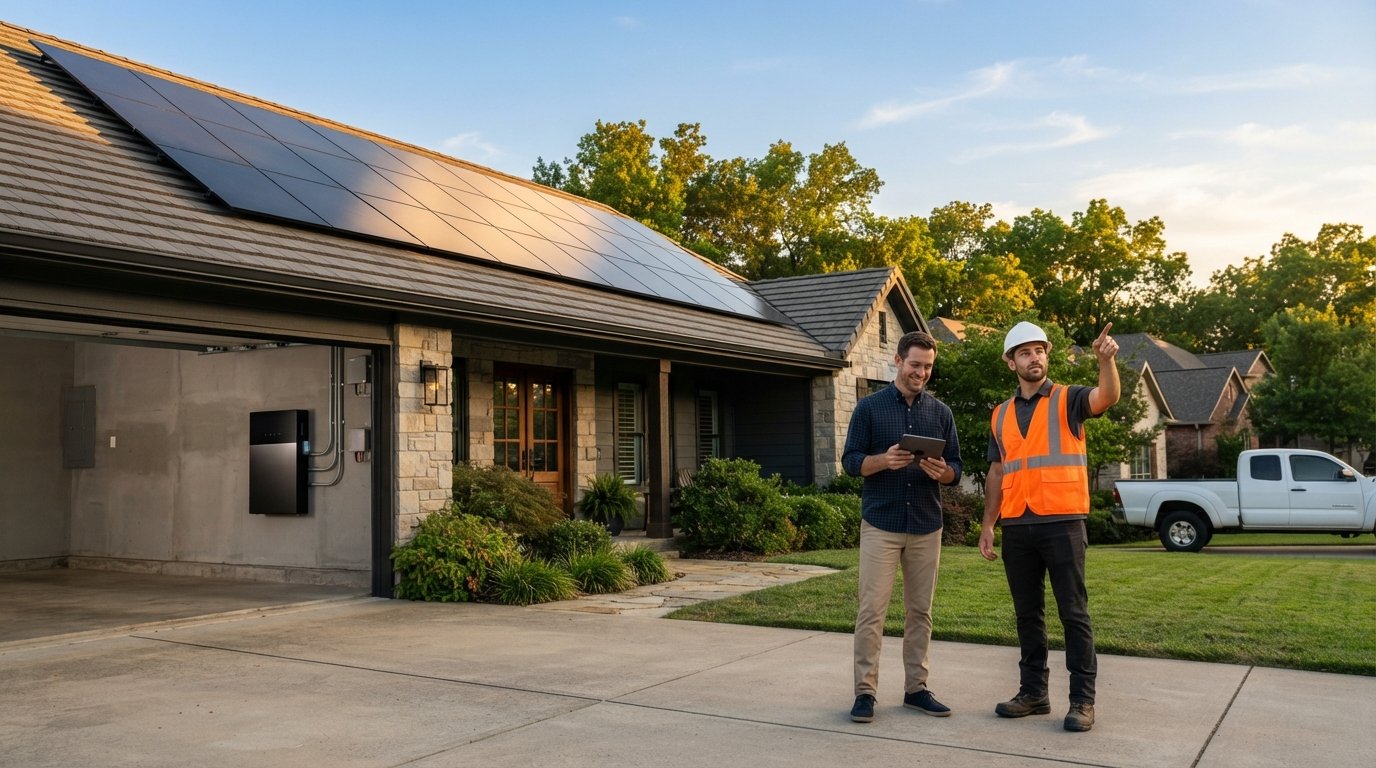
Solar Plus Storage for Net Zero Home 2026: A Guide
Solar plus storage for net zero home 2026 turns your property into a self-powered asset, cutting bills and keeping lights on during outages.

By Liam Parker
Learn more about Solar Panel Installation and Repair for guides, costs, and what to expect.
Compare Solar Panel Installation and Repair Pros Near You

Enter your ZIP code to compare top-rated local professionals and request free quotes.
Imagine a home that produces all the energy it needs, sends excess power back to the grid, and keeps the lights on during a blackout. That is the promise of a net zero home, and in 2026, solar plus storage is the engine that makes it possible. For homeowners across the United States, pairing solar panels with a home battery is no longer a niche upgrade: it is a practical path to energy independence, lower utility bills, and resilience against rising rates and extreme weather. This article breaks down how solar plus storage works, what it costs, which incentives apply in 2026, and how to design a system that truly reaches net zero.
What Net Zero Means for a Modern Home
A net zero home produces as much renewable energy as it consumes over the course of a year. That does not mean you never draw from the grid; it means your solar panels generate enough credits or direct power to offset your total usage. Reaching that balance requires more than slapping panels on a roof. You need to match production with consumption patterns, account for seasonal swings, and decide how to handle the evening hours when the sun goes down but demand peaks.
Storage changes the math. Without a battery, excess solar energy flows to the grid, and you rely on net metering or similar programs to bank those credits. With a battery, you can store that surplus and use it when you need it most, reducing reliance on utility rates and protecting yourself from policy changes. In 2026, more states have moved toward time-of-use rates and lower export compensation, making self-consumption far more valuable. As our guide on solar plus battery storage explains, storage turns a solar system from a daytime generator into a round-the-clock asset.
Net zero also involves the building itself. Efficient insulation, heat pumps, induction cooking, and LED lighting reduce the total load, meaning you need fewer panels and a smaller battery to hit your target. The most cost-effective net zero homes start with efficiency upgrades, then size solar plus storage to cover what remains.
How Solar Plus Storage Works in 2026
A solar plus storage system has three main components: solar panels, an inverter (or hybrid inverter), and a battery. The panels convert sunlight into direct current (DC) electricity. The inverter converts that DC into alternating current (AC) for your home. The battery stores excess energy for later use. In a modern setup, a hybrid inverter manages both solar production and battery charging, often with smart software that decides when to store, when to use, and when to export.
In 2026, most batteries use lithium iron phosphate (LFP) chemistry, which offers a long cycle life and improved safety compared to older chemistries. Popular models provide 10 to 20 kWh of usable capacity, enough to cover evening loads and critical circuits during outages. Many systems can be AC-coupled (battery added to an existing solar array) or DC-coupled (battery integrated with new solar). The choice depends on your existing equipment and whether you want backup power for the whole house or just selected circuits.
Key components and sizing basics
To design a system that reaches net zero, you need to know your annual electricity usage in kilowatt-hours (kWh), your roof's solar potential, and your backup goals. A typical U.S. home uses about 10,000 to 12,000 kWh per year. In sunny states like Texas, Arizona, or Florida, a 7 to 9 kW solar array can cover that usage. Battery capacity depends on how much of that energy you want to shift to evening hours or keep for outages. A 10 kWh battery might cover essential loads for a day, while a 20 kWh battery can run more of your home.
Software tools and installer assessments help you model production and consumption. Incentives also influence sizing: the federal Investment Tax Credit (ITC) covers a percentage of the total system cost, so bundling storage with solar can be more affordable than adding a battery later. Always verify current incentive details with a tax professional or official sources, as programs can change.
Why Storage Is the Missing Piece for Net Zero
Solar alone can get you close to net zero on paper, but storage makes it real. Without a battery, you export power during the day and buy it back at night, often at a higher rate. As utilities adjust net metering policies, the value of exported energy has dropped in many markets. Storage lets you keep that energy and use it when rates are highest, maximizing your savings and reducing your carbon footprint.
Storage also provides resilience. In 2026, extreme weather events and grid instability continue to affect millions of homeowners. A battery can keep your refrigerator, internet, lights, and medical devices running during an outage. For many families, that peace of mind is worth the investment on its own.
Finally, storage supports the grid. When thousands of homes have batteries, utilities can draw on that stored energy during peak demand, reducing the need for fossil-fuel peaker plants. Some programs even pay homeowners for allowing their batteries to be used during grid events. This concept, often called a virtual power plant, is growing in 2026 and can add a new revenue stream for solar plus storage owners.
Incentives and Costs in 2026
The federal ITC remains the biggest financial lever for solar plus storage. As of 2026, the credit covers a significant portion of the installed cost of solar and battery systems for eligible homeowners. Battery storage qualifies for the ITC even if it is added to an existing solar system, as long as it meets capacity and charging requirements. State and local incentives vary widely. Some states offer rebates, property tax exemptions, or sales tax exemptions for renewable energy equipment. Others have specific battery incentives or net metering alternatives.
To get a clear picture of your costs, you need quotes from local installers. Prices for solar plus storage have fallen over the past decade, but they still depend on system size, battery capacity, roof complexity, and local labor rates. A typical 8 kW solar plus 10 kWh battery system might range from $25,000 to $35,000 before incentives, though your numbers will vary. Financing options, including solar loans, leases, and power purchase agreements (PPAs), can reduce or eliminate upfront costs. For a deeper look at how these options compare, see our guide on solar financing options for homeowners in 2026.
When evaluating quotes, ask for a production estimate, a battery backup plan, and a breakdown of all incentives. Be wary of any installer who promises specific savings without a site assessment. Reputable providers will explain assumptions and help you understand your return on investment. FreeSolarPowerQuotes connects homeowners with pre-screened local installers who can provide free, no-obligation quotes, making it easier to compare offers side by side.
Designing Your Net Zero System: A Step-by-Step Approach
Reaching net zero with solar plus storage requires a thoughtful design process. Start with efficiency, then size your solar array, then choose a battery that matches your backup and energy-shifting goals. The following steps outline a practical framework.
- Audit your energy use. Review 12 months of utility bills to find your annual kWh usage and identify heavy loads like HVAC, water heating, and EV charging. Efficiency upgrades can reduce the solar and storage you need.
- Assess your site. Evaluate roof orientation, shading, and available space. A south-facing roof with minimal shade is ideal, but east-west arrays can still work well with storage.
- Size the solar array. Aim to cover 100% of your annual usage, or slightly more if you plan to add an EV or electrify appliances. Your installer can model production based on local weather data.
- Choose battery capacity. Decide how much backup you want and how much energy you want to shift to peak hours. A 10 kWh battery is a common starting point; larger homes may need 20 kWh or more.
- Select equipment and financing. Compare hybrid inverters, battery brands, and financing options. Look for warranties of at least 10 years on batteries and 25 years on panels.
- Get multiple quotes. Obtain at least three quotes from licensed installers. Compare not just price but also equipment quality, warranty terms, and customer reviews.
After installation, monitor your system through a mobile app or web portal. Track production, consumption, and battery state of charge. Adjust your settings seasonally: for example, reserve more battery capacity for backup during storm season, or prioritize self-consumption when utility rates are high. With smart controls, your system can automate much of this, but understanding the data helps you spot issues early.
Common Pitfalls to Avoid
Even with good intentions, homeowners can stumble on the path to net zero. One common mistake is oversizing solar without considering storage, then losing value when export rates drop. Another is choosing a battery that is too small to cover critical loads during an outage, leading to disappointment when the power goes out. A third pitfall is ignoring efficiency: adding more panels to compensate for an inefficient home is almost always more expensive than upgrading insulation or windows first.
It is also important to work with experienced installers who understand battery integration. Not all solar companies have deep expertise in storage, and poor wiring or configuration can reduce performance or create safety risks. Ask about certifications, training, and local references. Finally, read the fine print on warranties and financing agreements. Some solar leases and PPAs can complicate the sale of your home, and battery warranties may have specific throughput or capacity retention guarantees.
For homeowners who want to explore the broader landscape of solar information, tools, and industry insights, SolarEnergy.ai offers a comprehensive platform with guides, calculators, and resources to support your research. Combining independent educational sites with quotes from local installers gives you a well-rounded view before you commit.
The Future of Net Zero Homes in 2026 and Beyond
Technology continues to improve. Batteries are getting denser and cheaper, inverters are getting smarter, and utilities are launching new programs that reward home energy storage. Electric vehicles are becoming rolling batteries that can power homes during outages, and bidirectional charging is moving from pilot projects to mainstream offerings. These trends make net zero more attainable and more valuable every year.
Policy also plays a role. While the federal ITC provides a solid foundation, state and local rules can shift. Some states are adopting building codes that require solar-ready roofs or energy storage pre-wiring for new construction. Others are expanding community solar and virtual power plant programs. Staying informed helps you take advantage of new opportunities as they arise.
For homeowners planning a system in 2026, the key is to design for flexibility. A solar plus storage system that can be expanded later, either with more panels or additional battery capacity, protects your investment as your needs change. Whether you are building a new home or retrofitting an existing one, the combination of solar and storage is the most reliable route to net zero.
Ready to take the next step? Start by understanding your energy use, then gather quotes from reputable local installers. With the right design and incentives, your net zero home can deliver lower bills, greater comfort, and true energy independence for decades to come.