
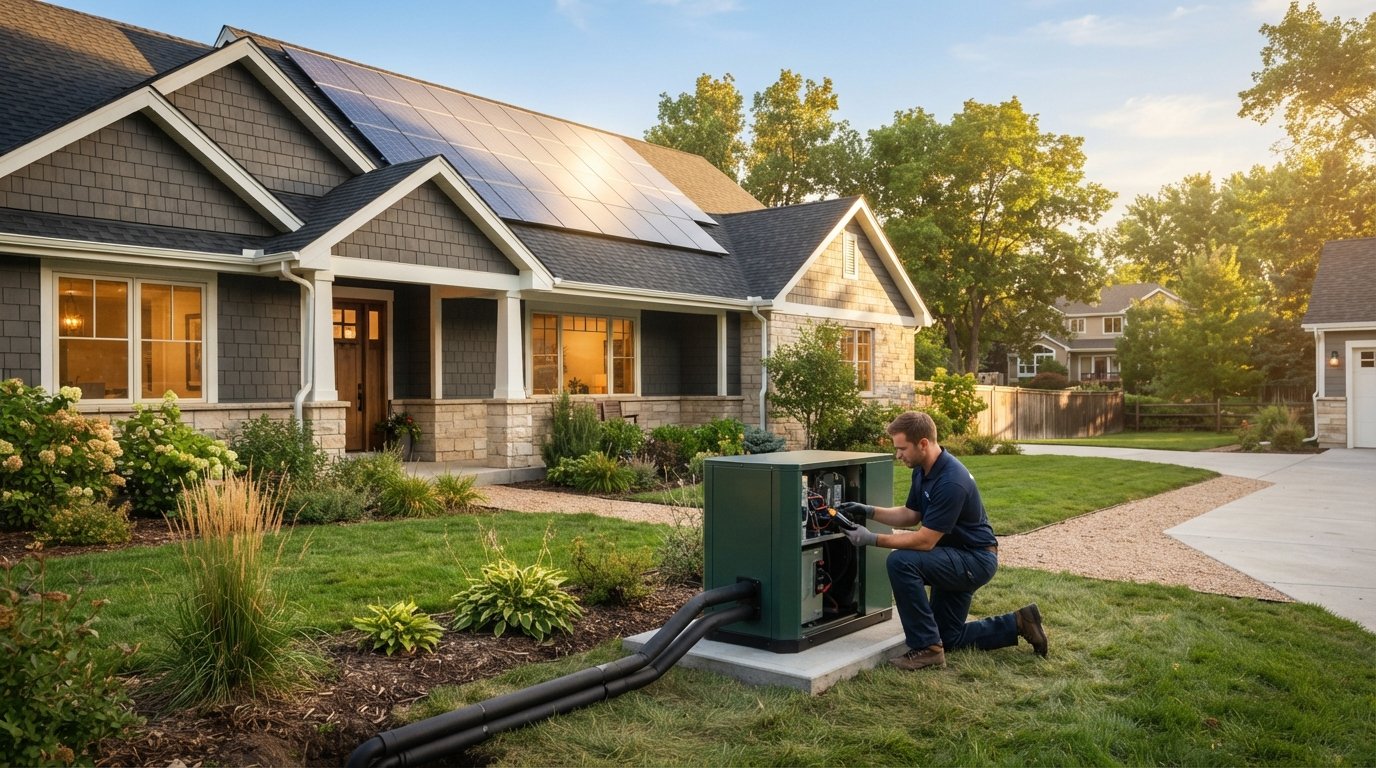
Solar Plus Geothermal Heat Pump Combination Guide
This solar plus geothermal heat pump combination guide explains how pairing these systems cuts utility bills, qualifies for 30% tax credits, and boosts home value.

By Liam Parker
Learn more about Solar Panel Installation and Repair for guides, costs, and what to expect.
Compare Solar Panel Installation and Repair Pros Near You

Enter your ZIP code to compare top-rated local professionals and request free quotes.
Pairing solar panels with a geothermal heat pump creates one of the most efficient home energy systems available today. While solar captures free electricity from the sun, geothermal taps stable underground temperatures to heat and cool your home at a fraction of the cost of conventional systems. Together, they reduce grid dependence, slash utility bills, and qualify for generous federal incentives. This solar plus geothermal heat pump combination guide walks you through how the technology works, what it costs, how to size each component, and where to find trusted installers.
Why Combine Solar and Geothermal?
Geothermal heat pumps (GHPs) are remarkably efficient. They move heat rather than generate it, delivering three to five units of heating or cooling for every unit of electricity consumed. That efficiency translates into lower operating costs, but the system still needs electricity. By pairing a GHP with solar panels, you generate that electricity on site, often for less than the retail rate from your utility.
The result is a home that heats, cools, and powers itself with minimal outside input. During summer, the geothermal system rejects heat into the ground while solar panels produce peak output. In winter, the ground loop extracts stored warmth, and solar (plus net metering or battery storage) offsets the electricity used. This synergy is why many energy experts consider the solar plus geothermal combination the gold standard for residential efficiency.
Beyond savings, the environmental impact is substantial. A typical home switching from fossil fuels to this combo can cut its carbon footprint by 60 to 80 percent. You also gain resilience: a battery-backed solar array keeps the geothermal pump running during outages, maintaining comfort when the grid goes down.
How the Combination Works
At its core, the system has three main parts: the solar array, the geothermal heat pump, and the ground loop. The solar panels generate direct current (DC) electricity. An inverter converts it to alternating current (AC) for home use. The geothermal heat pump uses that electricity to run a compressor, circulating refrigerant between the ground loop and your home's air distribution system.
The ground loop is the key to geothermal efficiency. Below the frost line, soil temperatures remain stable year-round (typically 45 to 75 degrees Fahrenheit depending on latitude). A GHP exchanges heat with this stable reservoir. In heating mode, it absorbs heat from the ground and releases it indoors. In cooling mode, it extracts heat from your home and deposits it into the cooler ground.
Because the solar array and geothermal system operate independently, you can add them in stages. Many homeowners install solar first, then retrofit a geothermal heat pump when their HVAC system needs replacement. Others build both at once during new construction. Either way, the controls can be integrated so that the solar inverter and geothermal thermostat communicate, maximizing self-consumption of solar energy.
Benefits of a Solar Plus Geothermal System
The advantages go beyond lower bills. Here are the most compelling reasons homeowners choose this combination:
- Dramatic energy savings: Geothermal systems can reduce heating and cooling costs by 30 to 70 percent compared to traditional HVAC, and solar covers most or all of the remaining electricity.
- Federal tax incentives: The 30 percent federal Investment Tax Credit (ITC) applies to both solar and geothermal heat pumps, potentially covering thousands of dollars of installed cost.
- Increased home value: Energy-efficient upgrades are attractive to buyers, and appraisers increasingly recognize renewable energy systems as value-add features.
- Long lifespan: Geothermal ground loops last 50+ years, and solar panels typically carry 25-year warranties. Both outlast conventional furnaces and air conditioners.
- Environmental impact: You drastically reduce greenhouse gas emissions and reliance on fossil fuels.
These benefits compound over time. While the upfront cost can be higher than separate systems, the long-term savings and incentives often make the combination financially superior. To estimate your specific savings, you can use a solar cost calculator and consult with geothermal specialists.
Costs and Financial Incentives
Understanding the financial picture is essential before committing. A geothermal heat pump system typically costs between $15,000 and $30,000 installed, depending on home size, loop type, and local labor rates. A solar array adds another $15,000 to $25,000 before incentives. However, the 30 percent federal ITC applies to both, and many states and utilities offer additional rebates.
Let's break down the typical net cost after the federal tax credit:
- Geothermal system: $20,000 gross, $14,000 after 30% ITC.
- Solar array (8 kW): $20,000 gross, $14,000 after 30% ITC.
- Total net investment: $28,000 for a system that can eliminate most heating, cooling, and electricity bills.
Depending on your local utility rates and usage, payback periods can range from 5 to 10 years. After that, you enjoy essentially free heating, cooling, and power. Some states offer additional performance-based incentives (like SRECs for solar) that further improve ROI. Always verify current incentives with a qualified tax professional and check official sources, as programs can change.
Financing options are available for both solar and geothermal. Many lenders offer green energy loans with favorable terms, and some utilities provide on-bill financing. When you request quotes through a trusted solar marketplace, you can compare financing offers side by side.
Sizing Your Solar Plus Geothermal System
Proper sizing ensures you maximize savings without overspending. The geothermal heat pump must be sized to your home's heating and cooling load, which depends on square footage, insulation, windows, and climate. A qualified contractor will perform a Manual J load calculation to determine the correct tonnage.
For the solar array, you need to cover the annual electricity consumption of the geothermal heat pump plus your other household loads. A typical home with a 3-ton GHP might use 10,000 to 12,000 kWh per year for heating and cooling. Adding general household usage, total annual consumption could be 15,000 to 20,000 kWh. In a sunny climate, an 8 to 12 kW solar system can generate that much.
If you have net metering, you can size the solar array to offset 100 percent of annual usage, using the grid as your battery. Without net metering, you may want to add battery storage to store excess solar for nighttime and cloudy days. Many homeowners start with solar and add batteries later.
Installation Process and What to Expect
Installing a combined system involves two distinct trades: solar installers and geothermal contractors. Ideally, you coordinate both to avoid delays. Here's a typical sequence:
- Energy audit and load calculation: A home energy audit identifies efficiency improvements (insulation, air sealing) that reduce system size and cost.
- Geothermal loop installation: If you're installing a ground loop, drilling or trenching occurs first. This can take several days depending on loop type (horizontal, vertical, pond).
- Heat pump and ductwork: The indoor heat pump unit and duct modifications are completed.
- Solar panel installation: Roof mounts or ground mounts are installed, followed by wiring and inverter connection.
- System commissioning: Both systems are tested, and you receive training on controls and monitoring.
The entire process can take two to six weeks from start to finish, depending on permits and weather. It's important to choose contractors with experience in both technologies, or at least a solar installer who has partnered with geothermal experts before.
Choosing the Right Installers and Getting Quotes
Because this is a specialized combination, finding qualified installers is critical. You want companies that understand how to integrate the two systems for maximum efficiency. Start by researching local solar and geothermal contractors, checking licenses, insurance, and customer reviews.
To simplify the process, you can use a free service like NewSolarQuotes to connect with pre-screened solar providers. While the site focuses on solar, many of its partners also offer geothermal or can refer you to trusted geothermal specialists. By submitting one request, you can receive multiple no-obligation quotes and compare options side by side.
When evaluating quotes, ask about experience with combined systems, warranty terms, and expected performance. A good installer will provide a detailed savings projection and explain how the solar and geothermal components will work together.
Common Mistakes to Avoid
Even with the best intentions, homeowners can stumble. Avoid these pitfalls:
- Oversizing the solar array without considering geothermal efficiency: A geothermal system uses less electricity than a traditional HVAC, so you may need fewer panels than you think.
- Forgetting about incentives: The 30 percent ITC can be claimed on both systems, but you must have sufficient tax liability. Consult a tax advisor.
- Ignoring the building envelope: Poor insulation or leaky ducts can undermine efficiency. Fix these first to reduce system size and cost.
- Choosing the lowest bid without vetting: Quality installation matters more than ever with complex systems. Check references and certifications.
By sidestepping these errors, you'll enjoy a smoother installation and better long-term performance.
Maintenance and Long-Term Performance
Both solar panels and geothermal heat pumps are known for low maintenance. Solar panels need occasional cleaning and an annual inspection. Geothermal systems require filter changes every few months and a professional check every 3 to 5 years. The ground loop itself is maintenance-free.
Monitoring your system's performance is easy with modern apps. You can track solar production and geothermal energy consumption in real time, ensuring everything works as expected. If you notice a dip in performance, contact your installer promptly.
Is This Combination Right for You?
If you live in a climate with extreme temperatures, have a decent amount of land or a suitable roof, and plan to stay in your home for at least 5 to 7 years, the solar plus geothermal combination is likely a smart investment. It offers unmatched efficiency, significant savings, and a smaller carbon footprint.
For those in milder climates, the payback may be longer, but the comfort and resilience benefits still make it attractive. And with federal incentives in place, the upfront cost is more manageable than ever. To explore your options, start by getting quotes from reputable installers. A free quote comparison can help you understand what's possible for your home and budget.
Combining solar and geothermal is a big step toward energy independence. With careful planning and the right partners, you can enjoy a home that heats, cools, and powers itself for decades to come.