
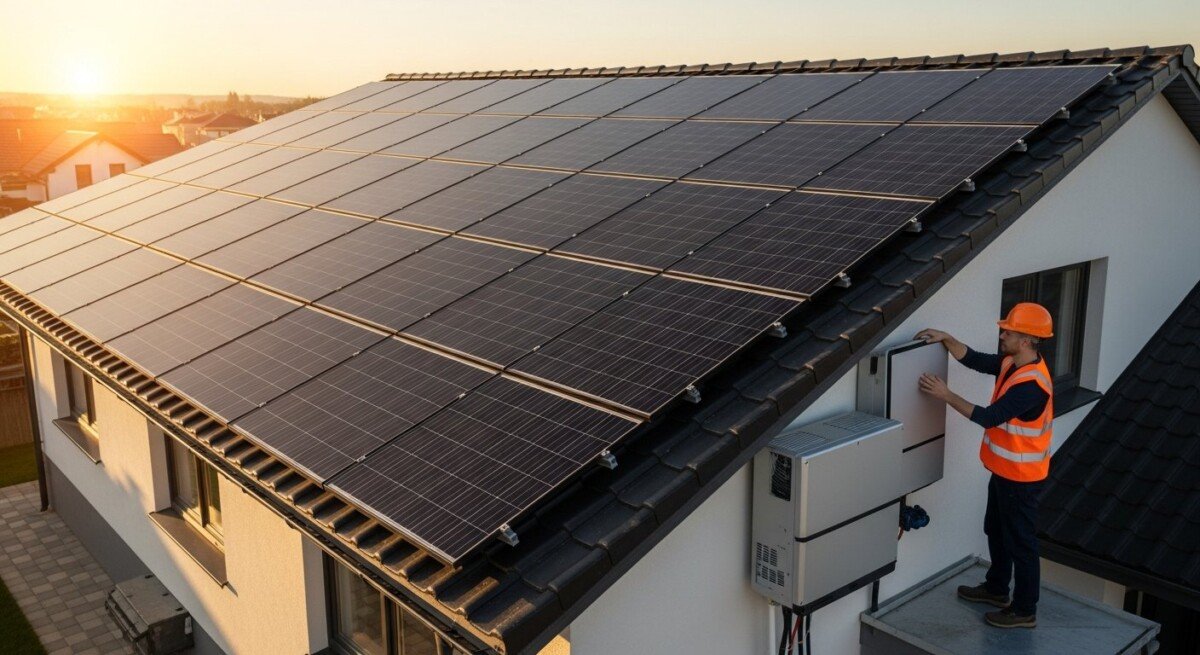
Solar Panels for Large Homes: Maximize Savings and Energy Independence
Discover how solar panels for large homes can slash electricity bills, increase energy independence, and provide long-term savings. A practical guide for homeowners.

By Ethan Whitaker
Learn more about Solar Panel Installation and Repair for guides, costs, and what to expect.
Compare Solar Panel Installation and Repair Pros Near You

Enter your ZIP code to compare top-rated local professionals and request free quotes.
If you own a large home, you’re likely no stranger to high electricity bills. As energy costs continue to rise, more and more homeowners are searching for a reliable way to reduce their monthly expenses and become less dependent on the power grid. Installing solar panels for large homes has emerged as a powerful, practical solution, offering significant long-term savings and a clear path toward energy independence.
Understanding Solar Panels for Large Homes
Solar panels for large homes are systems specifically designed to meet the higher energy demands of bigger properties. They work by converting sunlight directly into electricity through photovoltaic (PV) cells. This clean energy then powers your home’s appliances, lighting, and systems, directly offsetting what you would normally pull from the utility company.
For a large home, this typically means installing a larger array of panels,often 20 or more,and a correspondingly powerful inverter system. The goal is to generate enough electricity to cover a substantial portion, if not all, of your home’s annual energy consumption. This approach turns your roof or property into a personal power plant.
How Do They Connect to My Home?
The solar panels generate direct current (DC) electricity. An inverter then converts this into the alternating current (AC) electricity that your home uses. This system is safely connected to your main electrical panel. Any excess energy you produce can often be sent back to the grid in exchange for credits, a process called net metering.
Why Solar Energy Is Becoming More Popular
The shift toward solar power is driven by a powerful combination of financial and environmental factors. Homeowners are increasingly aware of their carbon footprint and seek ways to reduce their environmental impact. Generating clean, renewable energy from the sun is a direct and effective way to contribute to a healthier planet for future generations.
Financially, the case has never been stronger. With electricity prices fluctuating and generally trending upward, locking in a predictable, low-cost energy source provides immense peace of mind. Solar panels represent a stable investment that protects you from future rate hikes, leading to substantial savings over the 25+ year lifespan of the system.
If you are considering solar power for your home, comparing installation quotes can help you understand your options. Request a free solar quote or call to learn more.
Common Questions Homeowners Have About Solar
It’s normal to have questions when considering a significant home upgrade like solar. Many homeowners wonder about the upfront cost and how long it will take to see a return on their investment. Others are concerned about whether their roof is suitable or if they have enough sunlight.
Reliable professional installers are experts at answering these questions. They can assess your specific situation, provide accurate projections for savings, and design a system that maximizes your roof’s potential. Their guidance is invaluable in avoiding costly mistakes and ensuring your system performs optimally for decades.
- What is the total cost, and what financing options are available?
- How long will the installation process take?
- Will solar panels work on my roof type and in my climate?
- What happens to the system if I sell my house?
- How much maintenance do solar panels require?
- What happens during a power outage?
How Solar Panel Installation Works
The installation process for a large home is methodical and managed by professionals from start to finish. It begins with a detailed consultation and energy assessment to understand your consumption patterns. This data is crucial for designing a system that is neither too small nor unnecessarily large.
Once you approve the design, the installer handles all the necessary permits and paperwork with your local authorities and utility company. The actual installation is typically completed in a few days, with minimal disruption to your household. The final step is inspection and activation, flipping the switch on your new clean energy source.
- Home Energy Assessment & Consultation: Review your bills and evaluate your roof.
- Custom System Design: Engineers create a layout for optimal energy production.
- Permits & Approvals: The installer secures all required local and utility permissions.
- Physical Installation: Mounting racks, panels, inverters, and electrical wiring.
- Inspections & System Activation: Final checks and connection to the grid.
Speaking with experienced installers can help you determine the best solar solution for your home. Compare solar quotes here or call to explore available options.
Signs Your Home May Be Ideal for Solar
Large homes with specific characteristics are often perfect candidates for solar energy. The most obvious sign is a consistently high electricity bill, which indicates a strong potential for savings. If you plan to stay in your home for many years, you’ll have ample time to enjoy the financial returns and increased property value.
A suitable roof is also key. An unshaded, south-facing roof with ample space is ideal, but east and west-facing roofs can also be highly effective. Modern systems are versatile and can be tailored to various roof types and configurations, including ground-mounted options if roof space is limited.
- Your monthly electricity bills are a significant household expense.
- Your roof is in good condition and receives direct sunlight for most of the day.
- You have a large, relatively unobstructed roof area (or available land).
- You plan to own your home for the next 7-10 years or more.
- You are interested in reducing your environmental impact and gaining energy independence.
- Your local utility offers favorable net metering policies.
What Affects Solar Installation Costs
The cost of a solar system for a large home is influenced by several primary factors. The system’s size, measured in kilowatts (kW), is the biggest driver,larger homes need more panels to offset their usage. The quality and efficiency of the equipment you choose, such as premium panels or microinverters, also impact the price.
Installation complexity, like a steep or multi-faceted roof, can add to labor costs. Crucially, available government incentives, like the federal solar tax credit, and local rebates can dramatically reduce your net cost. A trustworthy installer will provide a transparent breakdown of all costs and savings. For a deeper look at equipment choices, our review of the most efficient solar panels available can help you understand the technology.
The cost of solar installation varies depending on your home and energy needs. Request personalized solar quotes or call to see what options are available.
Tips for Choosing a Reliable Solar Installer
Selecting the right installer is as important as choosing the right equipment. Look for a company with extensive experience, particularly with installations on homes similar to yours. They should be properly licensed, insured, and offer strong warranties on both their workmanship and the products they install.
Always check customer reviews and ask for references. A reputable installer will be transparent, answer all your questions patiently, and provide a detailed written proposal. Most importantly, get quotes from at least three different companies. This comparison is the best way to ensure you receive a fair price and a design tailored to your needs.
- Verify licenses, insurance, and certifications (like NABCEP).
- Choose an installer with several years of local experience.
- Review their portfolio and read customer testimonials.
- Understand the full scope of their warranties.
- Get and compare multiple detailed, written quotes.
Long-Term Benefits of Installing Solar Panels
The long-term advantages of going solar extend far beyond the initial motivation of lowering your bill. You effectively lock in a portion of your energy costs for decades, providing a hedge against unpredictable utility rate increases. This predictable energy cost leads to profound financial savings over the life of the system, often totaling tens of thousands of dollars.
Solar panels also increase your home’s market value and appeal to future buyers. Perhaps most rewarding is the knowledge that you are generating clean power, reducing your household’s carbon emissions, and moving toward true energy independence. You are less vulnerable to grid outages and contribute directly to a more resilient energy future. For the hands-on homeowner, understanding the process is valuable; our guide on how to install your own solar panels explains the complexities professionals manage.
How much can I really save on my electricity bills?
Savings depend on your local electricity rates, system size, and sunlight. For large homes with high consumption, it’s common to see monthly bill reductions of 70% to 100%. Over 25 years, total savings can easily reach $50,000 or more, making the system a highly valuable investment.
Will solar panels work if my roof isn’t south-facing?
Yes. While south-facing is optimal, east and west-facing roofs can still capture 80-90% of the potential energy. Modern installers use sophisticated modeling software to design efficient systems for any viable roof orientation.
What is the federal solar tax credit, and how does it work?
The federal Investment Tax Credit (ITC) allows you to deduct a significant percentage of your solar system’s cost from your federal income taxes. This direct dollar-for-dollar reduction lowers your net cost substantially. Always consult a tax professional for your specific situation.
Do I need to replace my roof before installing solar?
It’s highly recommended. Solar panels have a 25+ year lifespan. If your roof needs replacement in the next 5-10 years, it’s best to do it first to avoid the cost of removing and reinstalling the solar array later.
What happens to excess energy my panels produce?
Most areas have net metering policies. When your panels produce more power than your home uses, the excess is sent to the grid. Your utility company credits your account for that power, which you can draw from at night or on cloudy days.
How long does a solar panel system last?
High-quality solar panels are typically guaranteed to produce at least 80% of their original output after 25 years. The system itself, with minimal maintenance, can continue producing electricity for 30 years or longer.
For homeowners of large properties, solar panels represent a smart, forward-thinking investment. They provide a practical solution to rising energy costs while offering energy independence and environmental benefits. By taking the time to research and compare quotes from qualified installers, you can make a confident decision that will pay dividends for decades to come.
Learn more about Solar Panel Installation and Repair for guides, costs, and what to expect.
Compare Solar Panel Installation and Repair Pros Near You
Enter your ZIP code to compare top-rated local professionals and request free quotes.