
Solar Panel Recycling Options for Homeowners and Businesses
Solar panel recycling options for homeowners and businesses are expanding. Call (833)-793-7166 to find responsible disposal and recycling solutions.

By Elena Walsh
Learn more about Solar Panel Installation and Repair for guides, costs, and what to expect.
Compare Solar Panel Installation and Repair Pros Near You

Enter your ZIP code to compare top-rated local professionals and request free quotes.
When you install solar panels, you are making a 25 to 30 year commitment to clean energy. But what happens when those panels reach the end of their useful life? With millions of panels installed across the United States, the question of solar panel recycling options for homeowners and businesses has never been more important. Whether you are replacing an aging system, upgrading to newer technology, or decommissioning a commercial array, you need a clear plan for responsible disposal. The good news is that recycling infrastructure is growing, and several pathways exist to keep panels out of landfills while recovering valuable materials.
Why Solar Panel Recycling Matters Now
Solar panels contain glass, aluminum, copper, silver, and small amounts of silicon and other materials. While they are not classified as hazardous waste under federal law, they are bulky and do not decompose. Landfilling them wastes recoverable resources and can create environmental risks if panels break and leach trace metals. As the first wave of residential and commercial installations from the 2000s and early 2010s begins to age out, the volume of end-of-life panels is rising steeply. Industry analysts project that by 2030, the US will face hundreds of thousands of tons of retired panels annually. Homeowners and businesses that plan ahead can avoid the scramble and the potential costs of improper disposal.
Recycling also supports the circular economy. Recovered glass can be used in new products, aluminum can be smelted and reused, and silver and copper can be refined. This reduces the need for virgin mining and lowers the carbon footprint of the solar industry overall. For businesses, recycling aligns with sustainability goals and can enhance brand reputation. For homeowners, it is a responsible way to close the loop on their clean energy investment.
Current US Recycling Infrastructure and State Rules
The US solar recycling landscape is still developing, but several states have taken the lead. As of 2026, Washington is the only state with a mandatory solar panel takeback law, requiring manufacturers to fund the collection and recycling of panels sold in the state. Other states, including California, New York, and New Jersey, have proposed or passed legislation that classifies solar panels as universal waste or requires special handling. Some states, like Minnesota and North Carolina, have active recycling facilities that accept panels from both residential and commercial projects.
It is important to check your state and local regulations before disposing of panels. Some landfills will not accept them, while others charge a fee. In states without specific rules, panels may be treated as general construction debris. However, even where landfilling is allowed, recycling is often the better choice. The cost difference is narrowing as recycling capacity grows, and many installers now include recycling in their decommissioning services.
For a deeper look at the financial side of system ownership, including how to evaluate end-of-life costs, see our guide on Solar System Investment Analysis for Homeowners. It covers payback periods, maintenance, and long-term planning that can help you budget for eventual panel replacement or removal.
What Happens to Panels After Replacement or Decommissioning
When a solar system is replaced or removed, the panels are either reused, recycled, or landfilled. Reuse is the highest and best option when panels are still functional. Some companies specialize in reselling used panels for off-grid projects, remote power, or developing markets. If your panels are less than 15 years old and in good condition, they may have resale value. However, most panels removed after 25 or 30 years are no longer efficient enough for grid-tied use, so recycling becomes the primary path.
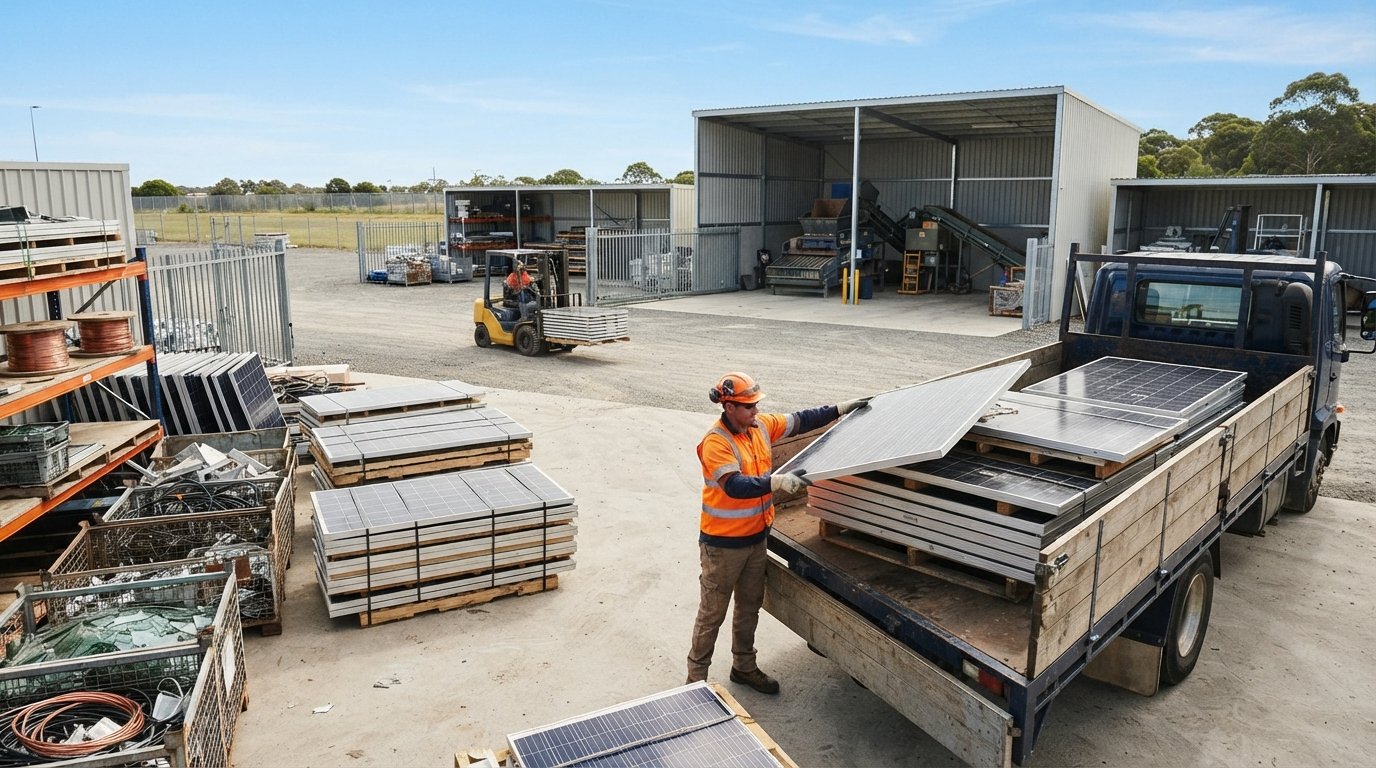
After removal, panels are typically transported to a recycling facility. There, they are separated into components. The aluminum frame is removed first, then the junction box and wiring. The glass and silicon layers are processed to recover glass, silicon, and metals like silver and copper. Some facilities use thermal or chemical methods to separate the layers, while others rely on mechanical shredding and sorting. The recovered materials are then sold to manufacturers. The process is not yet universally cost-effective, but it is improving as volumes increase and technology advances.
For businesses with large arrays, decommissioning often involves a formal plan that includes recycling. Commercial solar projects may have end-of-life requirements written into their leases or power purchase agreements. Working with a certified recycling partner ensures compliance and can provide documentation for sustainability reporting.
Costs and Logistics: Recycling vs. Landfill
The cost to recycle solar panels varies widely by location, volume, and the specific materials involved. On average, homeowners can expect to pay between $20 and $40 per panel for recycling, though some facilities charge by weight (often $0.20 to $0.50 per pound). Landfill tipping fees are typically lower, ranging from $30 to $80 per ton, but panels are bulky and may incur special handling charges. For a typical residential system of 20 to 30 panels, recycling might cost $400 to $1,200, while landfilling could cost $150 to $500. The gap is narrowing, and some states offer subsidies or grants to offset recycling costs.
Logistics are another consideration. Panels are fragile and must be handled carefully to avoid breakage, which can release dust and make recycling harder. Many recycling companies offer pickup services for a fee, or you can haul panels yourself if you have a truck or trailer. For businesses, coordinating a large-scale pickup is more efficient. Some installers include removal and recycling in their replacement quotes, which simplifies the process for the customer.
To decide between recycling and landfill, consider the following factors:
- State and local regulations: Some areas ban panels from landfills or require special handling.
- Volume and weight: Larger volumes may qualify for discounted recycling rates.
- Transportation distance: The nearest recycler may be hundreds of miles away, adding to cost.
- Environmental goals: Recycling recovers materials and reduces waste, aligning with sustainability commitments.
- Documentation needs: Businesses may need proof of responsible disposal for ESG reporting.
After weighing these factors, many homeowners and businesses find that recycling is worth the modest additional cost, especially when it supports a circular economy and avoids potential future liability.
Manufacturer and Installer Take-Back Programs
Several major solar manufacturers have launched take-back programs to ensure their panels are recycled at end of life. These programs are often voluntary and may be offered in partnership with dedicated recyclers. For example, some manufacturers accept panels from any brand, while others only take back their own. The terms vary: some charge a fee, while others offer free recycling if you purchase a new system from them. It is worth asking your installer or manufacturer about take-back options when you first install your system, as some programs require registration at the time of purchase.
Installers are also stepping up. Many reputable solar companies now include recycling in their decommissioning services. When you get quotes for a new system or a replacement, ask whether removal and recycling of old panels is included. Some installers will handle everything, from disconnecting the old system to transporting panels to a certified recycler. This is especially valuable for businesses that need a turnkey solution. If you are planning a move and need to coordinate solar removal with a relocation, resources like Moving.Homes offer checklists and expert guidance for managing complex moves, including specialized items. Their practical advice can help you plan the logistics of removing and transporting panels if you are relocating.
For homeowners, the best time to ask about take-back programs is during the initial purchase. Some manufacturers offer a recycling guarantee that covers the panels at end of life, which can save you money and hassle down the road. Even if you did not sign up initially, you can still contact the manufacturer to see if they have a program available. If not, third-party recyclers are your next best option.
How to Choose a Solar Panel Recycler
Not all recyclers are created equal. When selecting a recycling partner, look for certifications and transparency. The Solar Energy Industries Association (SEIA) has a national recycling program, and some recyclers are certified by third-party organizations like R2 or e-Stewards. These certifications ensure that materials are handled responsibly and not illegally exported or landfilled. Ask the recycler for details on their process, what materials they recover, and where the recovered materials go. A reputable recycler will provide documentation and may offer a certificate of recycling.
For businesses, it is also important to consider data security. While solar panels do not contain sensitive data, the associated monitoring equipment might. Ensure that any data storage devices are wiped or destroyed. For homeowners, the main concerns are cost, convenience, and environmental responsibility. Get quotes from at least two recyclers and compare services. Some offer pickup, while others require drop-off. Some charge by the panel, others by weight. Understanding the fee structure will help you avoid surprises.
Finally, consider the future. As recycling technology improves, more materials will be recoverable, and costs may come down. By choosing a recycler that invests in advanced processing, you support the growth of a sustainable industry. And by recycling your panels, you contribute to a cleaner, more circular solar economy.
Solar panel recycling options for homeowners and businesses are expanding every year. With careful planning, you can ensure that your solar investment ends its life responsibly, recovering valuable materials and reducing waste. Whether you are a homeowner replacing a single system or a business decommissioning a large array, the pathways are clear: check state rules, explore take-back programs, compare recyclers, and factor in logistics. The effort is modest, and the benefits, both environmental and practical, are well worth it.