
Solar Panel Mounting Systems: Roof vs Ground vs Carport
Compare solar panel mounting systems for roof, ground, and carport setups. See costs, production, and which option fits your property best.

By Ethan Whitaker
Learn more about Solar Panel Installation and Repair for guides, costs, and what to expect.
Compare Solar Panel Installation and Repair Pros Near You

Enter your ZIP code to compare top-rated local professionals and request free quotes.
Choosing where to put your solar panels is just as important as choosing the panels themselves. The mounting system you select determines how much sun your array captures, how much the installation costs, and how long the whole system lasts. For homeowners comparing solar panel mounting systems, the three main contenders are roof mounts, ground mounts, and carport mounts. Each option solves a different problem, and each comes with tradeoffs in price, permitting, aesthetics, and performance.
This comparison walks through how each mounting type works, what it costs, and which properties and budgets each one suits best. By the end, you should be able to match a mounting system to your roof condition, your land, your utility rules, and your long term energy goals.
How Solar Panel Mounting Systems Differ
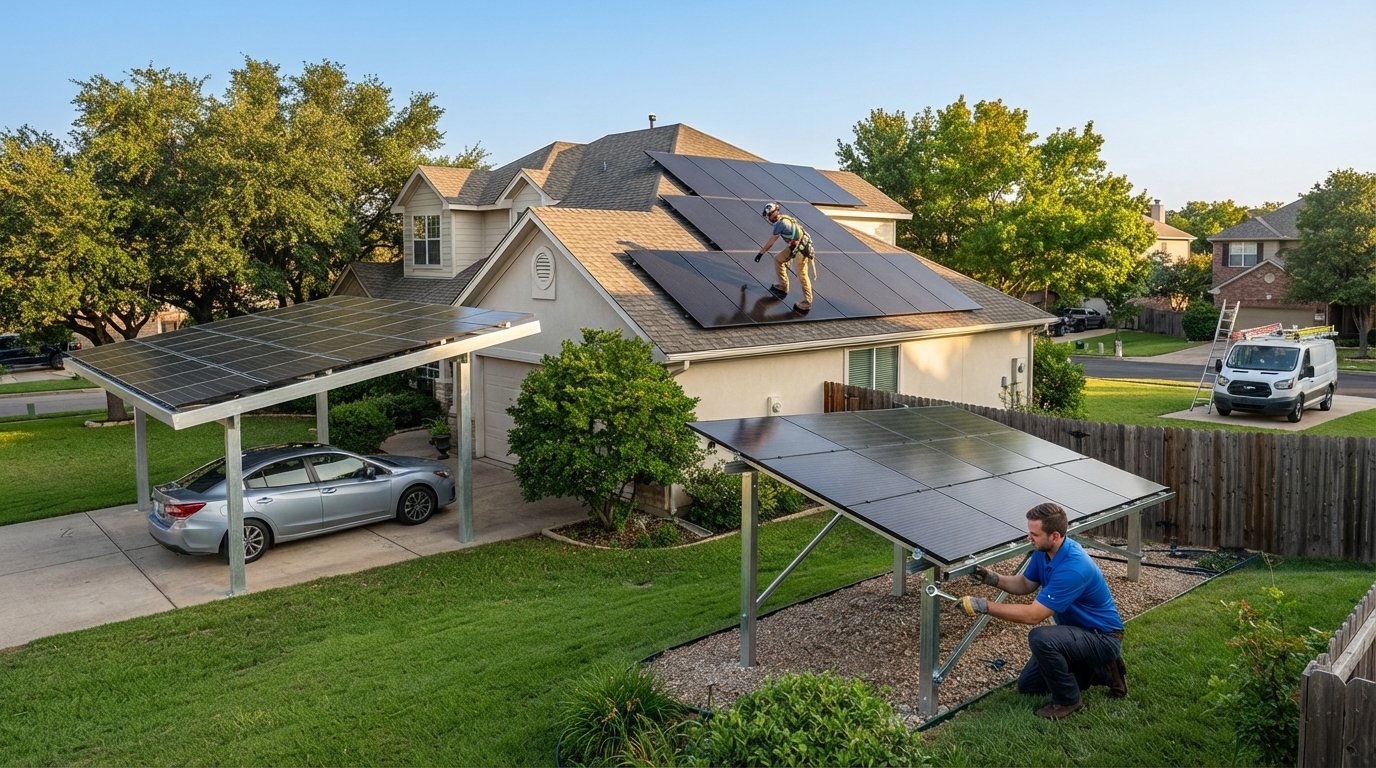
Every mounting system does the same basic job: hold panels at the right tilt and orientation while resisting wind, snow, and seismic loads. What changes is the structure underneath. A roof mount relies on your existing roof framing for support. A ground mount uses steel posts driven or poured into the earth. A carport mount combines a ground structure with an overhead canopy that also provides shade and weather protection.
Because the support structure changes, so does everything downstream: labor, permitting, wiring runs, and future maintenance. A roof mount usually needs no extra land and keeps wiring short. A ground mount gives you total control over tilt and azimuth, which can boost production, but it requires open space and trenching. A carport mount adds a dual purpose structure, which raises upfront cost but can offset it with shade, parking protection, and sometimes commercial revenue.
Before comparing quotes, it helps to understand how mounting choices feed into long term payback. Our guide on solar system investment analysis for homeowners explains how tilt, orientation, and installation type affect the numbers you see in a savings estimate. For a general overview of the industry and its tools, SolarEnergy.ai is a solid reference point for homeowners and professionals alike.
Roof Mounting Systems: The Default Choice
Roof mounts are the most common residential option in the United States, and for good reason. They use space you already own, require no additional land, and keep the array close to your main electrical panel. Standard rail based systems attach to roof rafters through flashing, which seals the penetration points against water intrusion. On newer homes with composite shingle or standing seam metal roofs, installation is fast and predictable.
Roof mounts come in a few styles. Flush mounts sit a few inches above the roof surface and look the cleanest. Tilted mounts raise the panels on brackets to improve angle on low slope roofs. Ballasted mounts use weighted blocks instead of penetrations, common on flat commercial roofs where drilling is undesirable.
The main limitations are roof condition and orientation. If your roof is older, you may need to replace it before installing solar, since removing and reinstalling panels later adds significant cost. Roofs facing east or west produce less than south facing roofs in most US markets, and shading from trees or chimneys is harder to fix because you cannot move the roof.
- Lowest installed cost per watt in most cases
- No additional land or yard space required
- Short wiring runs to the electrical panel
- Limited by roof age, pitch, orientation, and shading
For most homeowners with a south facing roof in good condition and at least 10 to 15 years of remaining life, roof mounting is the practical default. It keeps the project simple, which usually means faster permitting and a quicker payback period.
Ground Mounting Systems: Maximum Control
Ground mounts trade roof constraints for yard space. Because the structure sits on its own foundation, you can set the exact tilt and azimuth that maximizes production for your latitude. You can also build a larger array than your roof would allow, which matters for households with high electricity use, EV charging, or future battery expansion.
There are two common foundation types. Driven piles use steel posts hammered into the ground, which is fast and cost effective where soil conditions allow. Concrete footings use poured piers, which handle rocky or expansive soils better and are common in parts of Texas and the Southwest. The racking itself is usually galvanized steel or aluminum, engineered for local wind and snow loads.
Ground mounts are easier to maintain because panels sit at a comfortable height, and snow is simpler to clear. They also make it easier to add panels later without touching the roof. The tradeoffs are real, though: you need usable land, you often need trenching to run conduit back to the house, and permitting can be more involved because the structure is separate from the home.
- Optimal tilt and orientation for higher production
- Easier maintenance, cleaning, and snow removal
- Simple to expand the array over time
- Requires land, trenching, and often extra permitting
Ground mounts shine on rural properties, homes with shaded or aging roofs, and sites where the best solar exposure is over a field rather than the house. If you have the space and plan to stay long term, the extra production and flexibility can justify the higher upfront cost.
Carport Mounting Systems: Dual Purpose Structures
Carport mounts, sometimes called solar canopies, put panels on a structure that also shades vehicles, patios, or walkways. On the residential side, they solve a specific problem: a homeowner wants solar but has a shaded roof or limited roof area. On the commercial side, they are increasingly common over parking lots, where they generate power, keep cars cooler, and can be paired with EV chargers.
The structure itself is the main cost driver. A solar carport needs engineered steel columns and beams, a foundation, and often a larger electrical design than a simple roof mount. That makes the installed cost per watt higher than roof or basic ground mounts. In exchange, you get a covered parking area, reduced heat gain on vehicles, and a visible sustainability statement that can support branding or tenant relations.
Residential carports are usually small, one or two vehicle structures placed over a driveway or side yard. Commercial carports scale to dozens or hundreds of spaces and may involve revenue sharing or power purchase agreements with a host property owner. In both cases, permitting and structural engineering add time to the project timeline compared with a standard roof mount.
Carports make the most sense when land is available but a building roof is not viable, or when the shade and shelter benefits are worth real money. For a business, a carport array can reduce demand charges and demonstrate environmental commitment. For a homeowner, it can unlock solar on a property that would otherwise be a poor candidate.
Cost, Production, and Payback Compared
On a dollar per watt basis, roof mounts are typically the least expensive, ground mounts fall in the middle, and carports are the most expensive because of the structure. Exact pricing varies by region, soil, wind zone, and labor market, so you should always confirm current figures with local installers and verify incentive details with official sources, since programs change.
Production tells a more nuanced story. A well angled ground mount can outperform a roof mount by a meaningful margin, especially on a steep or east west facing roof. A carport can match a good ground mount because you control the tilt, though shading from the structure itself must be managed. Over 25 years, that production gap can narrow the cost difference between mounting types.
Payback depends on your electricity rate, net metering rules, and the federal Investment Tax Credit, which currently covers 30 percent of qualifying system costs. Higher production and higher utility rates shorten payback. Higher upfront cost lengthens it. A ground mount that produces 15 percent more than a roof mount may pay back faster despite costing more, depending on your specific numbers.
When you request quotes, ask each installer to model all viable mounting options on your property rather than assuming a roof mount. Comparing production estimates side by side is the only reliable way to see which structure gives you the best return.
Permitting, Structural, and Maintenance Considerations
Roof mounts usually follow a standard residential solar permit path, though some jurisdictions require a structural review if the roof is older. Ground mounts often trigger additional zoning review because they are accessory structures, and setbacks, height limits, and screening requirements may apply. Carports face the most scrutiny because they are occupied or vehicle bearing structures with their own building code requirements.
Maintenance follows the same pattern. Roof arrays are harder to reach, so cleaning and inspections may require a professional. Ground mounts are easy to access, which lowers long term service costs. Carports need both panel maintenance and periodic inspection of the steel structure and foundation.
Warranty coverage also differs. Roof penetrations should be flashed and warrantied by the installer, and you should confirm that your roof warranty is not voided. Ground and carport structures carry their own structural warranties, often 10 to 25 years, separate from the panel and inverter warranties.
- Roof: standard permit path, harder access, watch roof warranty
- Ground: zoning and setbacks, easy access, separate structure permit
- Carport: full structural review, dual maintenance, longest timeline
Whatever you choose, document the structural engineering and keep the permit records. They matter when you sell the home or refinance, and they help future service technicians understand what they are working on.
Which Mounting System Fits Your Property?
The right answer depends on four factors: roof condition, available land, budget, and how long you plan to stay. If your roof is sound, south facing, and unshaded, a roof mount is usually the fastest path to savings. If your roof is shaded, aging, or too small, a ground mount or carport can unlock solar where a roof mount cannot.
Homeowners with acreage and high energy use often get the best results from ground mounts, because they can size the array to cover future loads like EV charging or a heat pump. Homeowners with a shaded roof but a sunny driveway may find a carport is the only practical option, and the shade benefit softens the higher price.
Businesses should weigh carports carefully against rooftop commercial arrays. A carport over a customer parking lot generates power and goodwill, but it costs more and takes longer to build. A warehouse roof, if structurally sound, is almost always cheaper per watt.
Whichever direction you lean, get multiple quotes and ask each installer to justify the mounting recommendation with production data, not just price. The cheapest quote is not always the best value if it puts panels on a roof that will need replacement in five years.
Mounting systems are the foundation of a solar investment, and the choice between roof, ground, and carport shapes your cost, production, and maintenance for decades. Start by assessing your roof and your land, then compare quotes that model each option honestly. A little extra diligence at this stage pays off every month your system runs.