
Solar Panel Lifespan: How Long Do Panels Really Last?
Solar panel lifespan: how long do panels really last? Most produce for 25-30 years. Call 8337937166 to compare installers and protect your savings.

By Elena Walsh
Learn more about Solar Panel Installation and Repair for guides, costs, and what to expect.
Compare Solar Panel Installation and Repair Pros Near You

Enter your ZIP code to compare top-rated local professionals and request free quotes.
When you invest in a solar energy system, you are making a long-term commitment to your home and your budget. One of the most common questions homeowners ask is simply: how long will these panels actually keep working? It is a fair question, because the financial case for solar depends heavily on how many years of clean electricity you can count on. The short answer is that most solar panels are built to last for decades, but the full story involves manufacturing quality, gradual performance decline, weather exposure, and the maintenance choices you make along the way. Understanding the real numbers behind solar panel lifespan helps you evaluate quotes with confidence, plan for the future, and protect your return on investment.
In this article, we break down what the industry means by panel lifespan, what warranties actually cover, the difference between a panel and a full system, and the practical steps that help you squeeze the most years and the most value out of your installation.
What "Lifespan" Actually Means for Solar Panels
When people ask about solar panel lifespan, they are usually asking two related but distinct questions. The first is how long a panel will physically function and produce electricity. The second is how long it will produce enough electricity to remain economically worthwhile. These two timelines are not identical. A panel can still generate power at year 30 while producing noticeably less than it did on day one. For most homeowners, the practical lifespan is the point at which output has declined enough that the panel is no longer carrying its weight in the system.
The industry typically measures this decline through a specification called the degradation rate. Manufacturers test panels and publish expected performance over time, usually expressed as a percentage of the original rated output. A common figure is around 0.5 percent degradation per year for premium panels, meaning that after 20 years a panel might still produce roughly 90 percent of its original capacity. Lower-tier panels may degrade closer to 0.8 percent or even 1 percent annually, which adds up significantly over a 25-year horizon.
It also helps to separate the panel from everything else in the system. The panels themselves are often the longest-lasting component. Inverters, which convert direct current into usable alternating current, typically last 10 to 15 years and may need replacement. Racking, wiring, and monitoring equipment have their own service lives. So when someone says a solar system lasts 25 to 30 years, they usually mean the panels, while the broader system requires some component replacements along the way.
How Long Do Solar Panels Really Last in Real Conditions?
In controlled laboratory testing, many modern panels are expected to retain about 80 percent of their original output after 25 to 30 years. Some manufacturers now offer performance warranties extending to 30 years, and a handful of premium brands even advertise 40-year coverage. That does not mean the panels stop working at year 30. It means the manufacturer has committed to a minimum performance level within that window. Panels frequently continue producing electricity well beyond the warranty period, just at a reduced rate.
Real-world conditions, however, can shift these numbers. A system installed in a mild climate with moderate temperatures and regular cleaning may perform closer to the optimistic end of the range. A system exposed to extreme heat, heavy snow loads, frequent hailstorms, or salty coastal air may experience faster wear. This is one reason location matters so much when evaluating solar. A homeowner in Phoenix faces different durability considerations than a homeowner in Charlotte or Houston, even though all three can benefit enormously from solar.
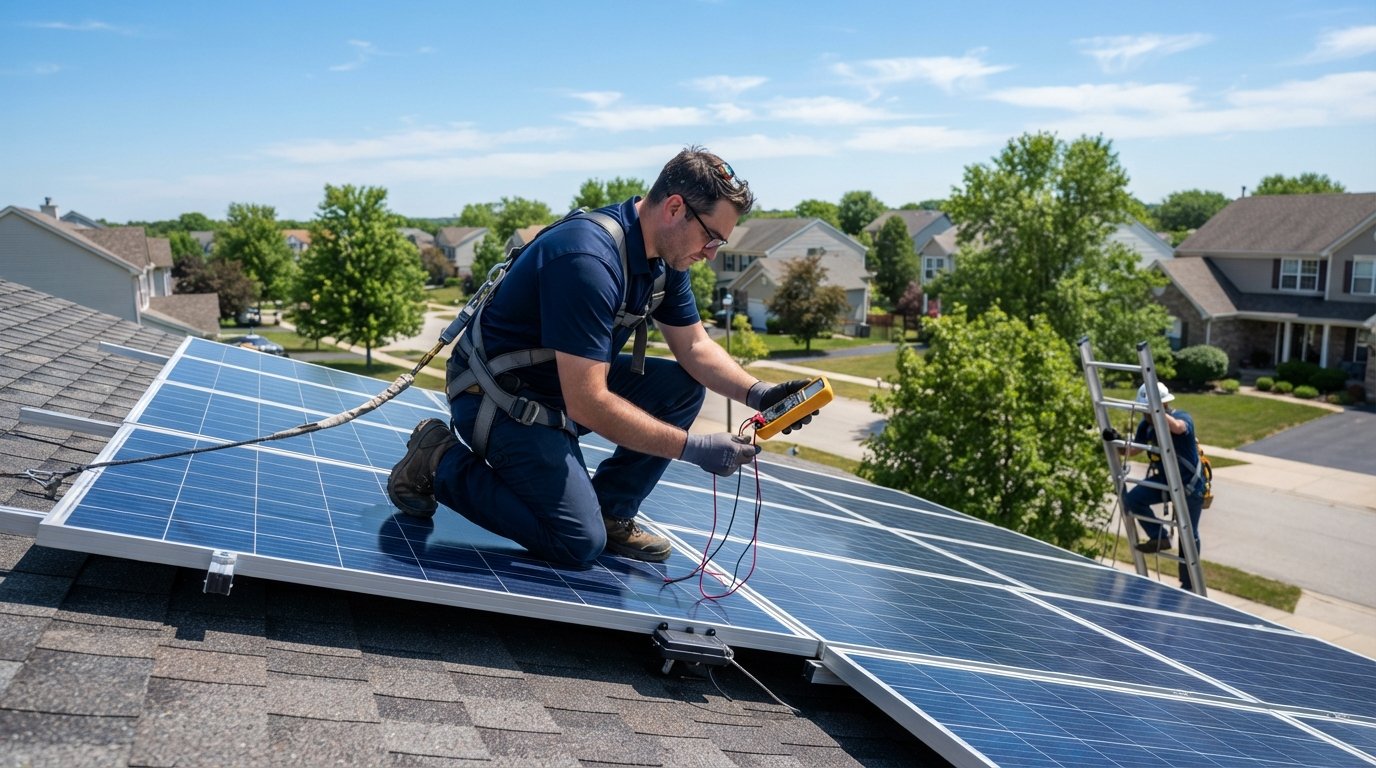
It is also important to recognize that panels rarely fail outright. Catastrophic failure is uncommon and usually tied to physical damage, manufacturing defects, or extreme weather events. More often, the issue is slow and invisible: a gradual decline that the homeowner never notices because the system simply produces a little less each year. This is why monitoring and periodic professional inspections are valuable. They catch underperformance before it erodes your savings.
For anyone comparing quotes, the durability question is central. A cheaper panel with a weaker warranty may save money upfront but cost more over time. That trade-off is worth examining carefully, and it is exactly the kind of detail a reputable installer should be willing to explain. If you are early in the process, it also helps to understand how a solar installation estimate request can lower your bills, since the quote structure often reveals how much attention a company pays to long-term performance.
Warranties: What They Cover and What They Do Not
Solar panel warranties generally come in two main categories, and understanding the difference is essential when you evaluate proposals. The first is the product warranty, which covers defects in materials and workmanship. The second is the performance warranty, which guarantees a minimum power output over time. A strong panel typically carries both, and the length of each tells you a lot about the manufacturer's confidence in its product.
Product warranties commonly run 10 to 25 years. Performance warranties are usually longer, often 25 to 30 years, and are expressed as a guaranteed percentage of original output. For example, a warranty might promise at least 92 percent output at year 12 and at least 85 percent at year 25. These numbers are not marketing fluff. They are contractual commitments, and they should be documented in writing as part of your installation paperwork.
What warranties do not cover matters just as much. Damage from storms, hail, improper installation, or neglect is typically excluded. Labor costs for removing and reinstalling panels during a roof repair are often not covered either. That is why it is wise to read the fine print and ask your installer directly about exclusions. A trustworthy provider will walk you through the details rather than gloss over them.
- Product warranty: Covers manufacturing defects and material failures, typically 10 to 25 years.
- Performance warranty: Guarantees a minimum output level, often 25 to 30 years.
- Inverter warranty: Usually 5 to 12 years, sometimes extendable.
- Workmanship warranty: Covers installation quality, commonly 5 to 10 years from the installer.
When you stack these together, you get a clearer picture of your true protection. The panel may be warranted for 25 years, but if your inverter fails at year 12 without coverage, you will face a real expense. Factoring these replacements into your long-term savings estimate gives you a more honest view of the investment.
What Shortens a Solar Panel's Life?
Several factors can accelerate degradation or cause premature failure. Understanding them helps you protect your investment and ask better questions during the buying process.
Heat is one of the biggest culprits. Panels operate most efficiently in cooler temperatures, and sustained high heat can speed up degradation. This does not mean hot climates are bad for solar. It means installation quality and ventilation matter. Panels mounted with proper airflow behind them tend to run cooler than those pressed tightly against a roof surface.
Physical damage from hail, debris, falling branches, or even careless foot traffic during maintenance can crack cells or break glass. Even minor damage that is not immediately visible can create hot spots that reduce output and, over time, harm the panel. Regular inspections after severe weather are a simple but effective safeguard.
Poor installation is another major factor. Improper wiring, inadequate grounding, or sloppy mounting can lead to performance problems and safety risks. This is one reason consumer advocates consistently recommend vetting installers carefully rather than choosing solely on price. The cheapest quote can become the most expensive decision if it shortens the life of your system.
Soiling and shading also play a role. Dust, pollen, bird droppings, and leaves reduce output while they are present, and persistent shading on part of an array can create uneven stress across the system. Regular cleaning and thoughtful system design mitigate these issues.
Finally, neglect quietly shortens lifespan. Systems that are never inspected, never monitored, and never cleaned tend to underperform and fail earlier than well-maintained systems. A modest annual check-up is a small price for years of reliable production.
How to Maximize the Lifespan of Your Solar Investment
Getting the most years out of your panels is not complicated, but it does require a bit of intention. The good news is that most of the work happens before and shortly after installation, with only light upkeep afterward.
Start by choosing quality equipment from manufacturers with strong warranties and a proven track record. Then choose an installer with a solid reputation and a workmanship warranty that gives you recourse if something goes wrong. After installation, set up monitoring so you can spot declines early. A sudden drop in production is a signal to investigate, not ignore.
Schedule periodic professional inspections, especially after major storms. Keep panels reasonably clean, and avoid planting trees that will grow to shade your array in future years. If you plan roof work, coordinate with your solar installer to remove and reinstall panels properly rather than letting a general contractor handle it.
- Choose panels with strong product and performance warranties.
- Hire a reputable installer with a meaningful workmanship warranty.
- Enable system monitoring and review performance monthly.
- Inspect and clean panels at least once a year.
- Address any production drops or damage promptly.
These steps do not guarantee a specific number of years, but they stack the odds in your favor. They also protect the financial case for solar, because a system that produces closer to its rated output for longer delivers better savings and a faster payback.
When Should You Replace Solar Panels?
Replacement is rarely an all-or-nothing decision. In many cases, individual panels can be swapped out if they are damaged or underperforming, while the rest of the array continues operating. This is one advantage of modern system design. It also means you do not necessarily need to replace the entire system when one component fails.
That said, there are situations where broader replacement makes sense. If your panels are 25 to 30 years old and producing well below their original output, the cost of continuing to operate them may outweigh the benefit. If your inverter has failed and is out of warranty, you might consider upgrading to a newer model with better efficiency and monitoring capabilities. And if you are planning a roof replacement, it can be smart to coordinate panel removal and reinstallation with an eye toward upgrading older equipment.
The decision usually comes down to economics. Compare the cost of replacement against the value of the additional electricity the new panels would produce. In many cases, replacing a few underperforming panels is far more cost-effective than replacing the whole array. A qualified installer can help you run those numbers.
It also helps to think about how long you plan to stay in your home. If you intend to sell within a few years, the remaining lifespan of your panels is part of the home's value proposition. Buyers increasingly recognize solar as an asset, and documented performance and warranty coverage can support a higher sale price.
How Lifespan Affects Your Solar Savings and Payback
The financial performance of a solar system is directly tied to how long it produces at a useful level. A system that lasts 30 years instead of 20 can deliver dramatically more lifetime savings, even if the upfront cost is identical. This is why lifespan should be a central part of your evaluation, not an afterthought.
When you review a quote, ask about the expected degradation rate, the warranty terms, and the assumed system life used in the savings projection. Some estimates assume optimistic lifespans or ignore inverter replacement costs. A transparent provider will show you the assumptions and explain them. You can also verify current federal and state incentives, since programs change and your eligibility may affect the math.
For homeowners who want to explore options without pressure, independent resources can help. Sites like NewSolarQuotes provide educational guides and calculators that help you understand costs and savings before you talk to installers. That kind of preparation makes it easier to compare offers and ask the right questions.
Ultimately, the lifespan question is about confidence. When you know how long panels really last, what warranties protect you, and what maintenance keeps them performing, you can move forward with a clear understanding of the risks and rewards. That is the foundation of a smart solar decision.
Solar panels are among the most durable energy investments a homeowner can make, and with the right equipment, installation, and care, they can deliver decades of value. Take the time to evaluate lifespan alongside price, and you will be well positioned to enjoy the savings for years to come.