
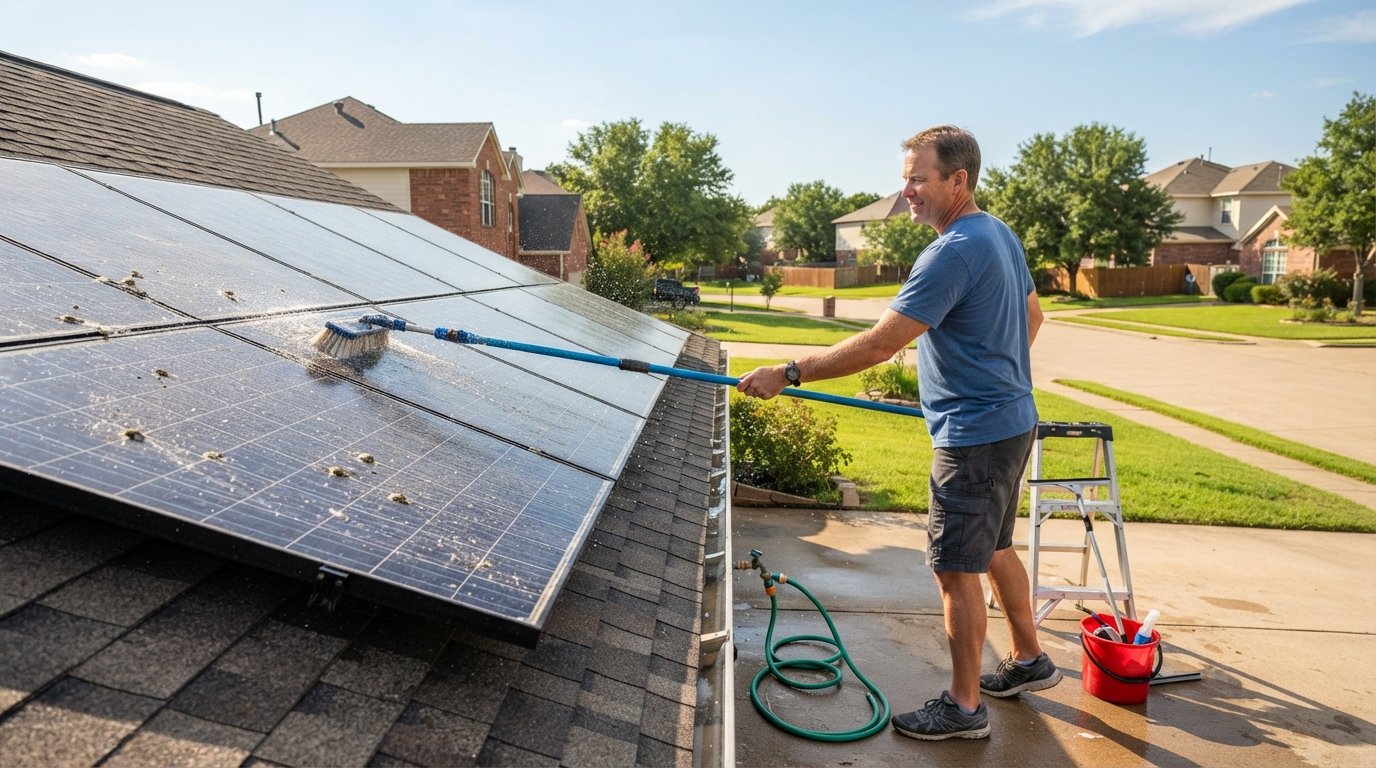
Solar Panel Cleaning Frequency and Cost for Homeowners
Learn how often to clean solar panels and what it costs. Call (833)-793-7166 for expert advice on maximizing your solar investment.

By Olivia Ingram
Learn more about Solar Panel Cleaning for guides, costs, and what to expect.
Compare Solar Panel Cleaning Pros Near You

Enter your ZIP code to compare top-rated local professionals and request free quotes.
Solar panels are a long-term investment, and keeping them clean is one of the simplest ways to protect that investment. But how often do you really need to clean them, and what does it cost? The answers depend on where you live, how much it rains, and how much debris your panels collect. In this guide, we will cover the key factors that determine solar panel cleaning frequency and cost for homeowners, so you can make informed decisions and maximize your system's performance.
Why Cleaning Matters for Solar Panel Performance
Dirt, dust, pollen, bird droppings, and other debris can block sunlight from reaching the solar cells, reducing electricity production. Even a thin layer of dust can cause a noticeable drop in output, especially in dry, dusty regions. Over time, accumulated soiling can lead to hot spots and permanent damage if not addressed. Regular cleaning helps maintain optimal efficiency and ensures you get the most out of your solar investment.
However, cleaning too frequently is unnecessary and can even be harmful if done improperly. The goal is to clean when it matters, not on a fixed schedule. Understanding the local environment and monitoring your system's performance will guide you in determining the right frequency.
How Often Should You Clean Your Solar Panels?
There is no one-size-fits-all answer, but general guidelines can help. In most residential settings, cleaning once or twice a year is sufficient. In areas with heavy pollen, dust, or bird activity, you may need to clean three or four times a year. Conversely, if you live in a region with frequent rain and low dust, annual cleaning may be enough.
Consider the following factors when deciding how often to clean:
- Local climate: Dry, dusty areas (e.g., desert Southwest) require more frequent cleaning than rainy regions.
- Pollen season: If you have many trees, pollen can coat panels in spring.
- Bird activity: Panels near trees or roosting areas may attract birds, leading to droppings that require prompt removal.
- Smoke and pollution: Areas with wildfire smoke or high pollution can cause soiling.
- Roof pitch and tilt: Steeper roofs shed debris better; flatter roofs may need more attention.
Monitoring your system's energy production is the best way to know if soiling is affecting performance. If you notice a sudden drop in output that cannot be explained by weather or system issues, it may be time to clean. Many monitoring systems provide real-time data, making it easy to spot trends.
Regional Considerations for Solar Panel Cleaning
Where you live plays a major role in cleaning frequency. In the American Southwest, dust storms and low rainfall mean panels can get dirty quickly. Homeowners in Arizona, Nevada, and New Mexico often clean two to four times per year. In the Southeast, pollen is a major issue in spring, but frequent rain helps rinse panels otherwise. In the Northeast, snow can be a concern in winter, but cleaning is usually less frequent. Coastal areas may have salt buildup, which can be corrosive, so periodic rinsing is advisable.
If you are in a region with high soiling, it may be worth investing in a professional cleaning service to ensure the job is done safely and effectively. For those in areas with moderate soiling, DIY cleaning can be a cost-effective option.
DIY Solar Panel Cleaning: Safety and Equipment
Cleaning solar panels yourself can save money, but safety must come first. Panels are often on roofs, and working at heights carries risks. If your roof is steep or you are not comfortable with heights, hire a professional. Also, never walk on the panels themselves, as they can crack or break.
Before cleaning, turn off the system if possible, although this is not always necessary. Use a soft brush or squeegee with a long handle, and a gentle stream of water from a hose. Avoid high-pressure washers, as they can damage the panels or seals. Use a mild soap if needed, but avoid abrasive cleaners or solvents. Always work early in the morning or late in the day when panels are cool to prevent rapid evaporation and streaking.
Here is a basic equipment list for DIY cleaning:
- Soft-bristle brush or microfiber mop with extension pole
- Garden hose with spray nozzle
- Mild detergent (pH-neutral)
- Squeegee (optional)
- Safety harness and non-slip shoes if working on a roof
Remember to check your manufacturer's warranty and installation manual for any specific cleaning recommendations or restrictions. Some manufacturers may void the warranty if improper cleaning methods are used.
Professional Solar Panel Cleaning: Costs and Frequency
Hiring a professional cleaning service typically costs between $150 and $300 per visit, depending on the number of panels, roof accessibility, and local labor rates. Some companies charge per panel, usually $5 to $15 per panel. For a typical 20-panel system, you might pay $100 to $300. Frequency recommendations from professionals often align with the guidelines above: once or twice a year for most homes, more often in dusty areas.
Professional cleaning offers several advantages: safety, expertise, and convenience. Professionals have the right equipment and know how to avoid damaging panels. They can also inspect for issues like cracks or loose wiring while cleaning. If your panels are on a steep roof or you have limited mobility, professional cleaning is a wise choice.
When selecting a cleaning service, ask for proof of insurance, check reviews, and get multiple quotes. Avoid companies that use high-pressure washers or harsh chemicals, as these can harm your panels. A reputable cleaner will use deionized water to prevent mineral spots and soft brushes to avoid scratches.
How to Tell If Soiling Is Hurting Production
Most solar systems come with monitoring software that shows energy production in real time. Compare current output to historical data for similar weather conditions. If you see a decline of more than 5-10% that cannot be attributed to weather or system faults, soiling may be the culprit. Another low-tech method is to visually inspect panels from the ground; if they look dirty, they probably are. You can also check for shading issues or bird droppings.
Keep in mind that some soiling is normal and does not significantly impact overall annual production. A slight decrease in output may not justify the cost of cleaning. Calculate the potential savings from cleaning: if cleaning costs $200 and restores 5% of production on a system that generates $1,500 worth of electricity per year, the savings ($75) do not outweigh the cost. In that case, cleaning less frequently or waiting for natural rain to help is more economical.
Balancing Cost and Benefit: Finding Your Optimal Cleaning Schedule
To determine the best cleaning frequency for your home, consider the cost of cleaning versus the value of lost production. Start with an annual cleaning and monitor performance. If you notice significant soiling before the year is up, increase frequency. In dusty areas, biannual cleaning may be optimal. Keep a log of cleaning dates and energy production to identify patterns.
Also, factor in the cost of your time if you DIY. While DIY saves money, it requires time and effort. If you have a large system or a challenging roof, professional cleaning may be worth the expense. Many solar installers offer cleaning as part of a maintenance package, which can be convenient and cost-effective.
For a deeper understanding of what drives solar system costs, including maintenance and cleaning, see our guide on what determines solar system cost. It breaks down the various factors that influence the overall investment.
If you are planning a move and need to transfer or install solar at your new home, resources like Moving.Homes offer practical advice for homeowners on relocation, including tips for managing utilities and home upgrades.
Frequently Asked Questions
Can rain clean solar panels?
Rain can help rinse away light dust, but it is not a substitute for proper cleaning. Rainwater may contain minerals that leave spots, and it does not remove bird droppings or sticky pollen. In areas with frequent rain, panels may stay relatively clean, but periodic inspection is still needed.
Do solar panels need cleaning in winter?
In snowy regions, snow can cover panels and block production. It is generally best to let snow melt naturally, as scraping can damage panels. However, if snow persists, gentle removal with a soft roof rake is acceptable. Cleaning in winter is usually not necessary unless there is significant soiling from other sources.
How much does solar panel cleaning cost?
Professional cleaning typically costs $150 to $300 per visit, or $5 to $15 per panel. DIY cleaning costs are minimal, mainly for equipment and water. The frequency and local labor rates affect the total annual cost.
Is solar panel cleaning covered by warranty?
Most warranties do not cover cleaning, but they may require periodic cleaning to maintain warranty validity. Check your manufacturer's guidelines. Some installers offer cleaning as part of a maintenance plan.
By understanding the factors that influence solar panel cleaning frequency and cost for homeowners, you can make smart decisions that protect your investment and maximize your energy savings. For personalized advice and to connect with local solar professionals, consider reaching out to a trusted solar quote service.