
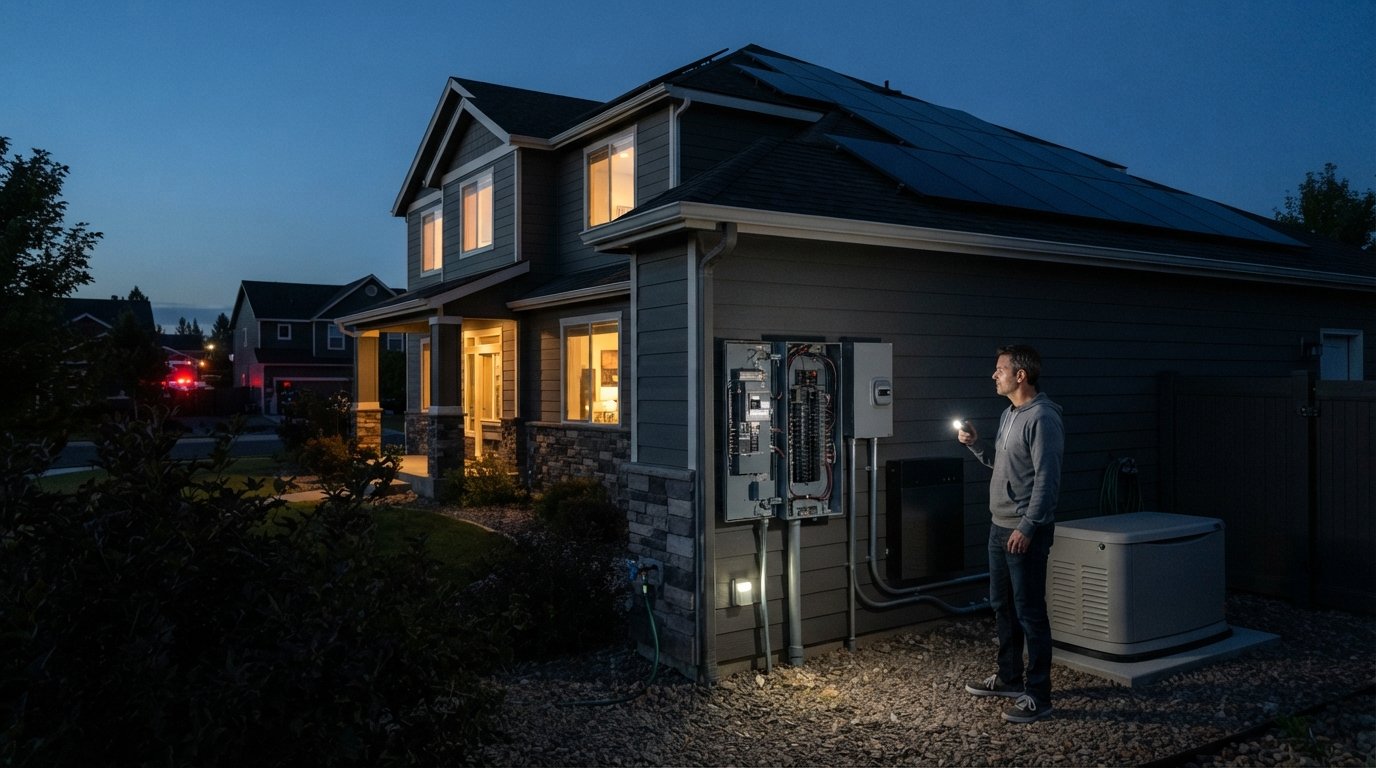
Solar Microgrid for Home with Backup Generator Integration
Build a resilient solar microgrid for home with backup generator integration. Call (833)-793-7166 for expert guidance on sizing and permits.

By Olivia Ingram
Learn more about Solar Panel Installation and Repair for guides, costs, and what to expect.
Compare Solar Panel Installation and Repair Pros Near You

Enter your ZIP code to compare top-rated local professionals and request free quotes.
When the grid goes down, most solar panel systems go down with it. That is the frustrating reality for thousands of homeowners who invested in solar expecting energy independence, only to watch their panels sit idle during a blackout. The missing piece is not more panels or a bigger battery. It is a smarter architecture that ties solar, storage, and a backup generator into one coordinated system: a home microgrid. When you integrate a backup generator with a solar microgrid for home use, you create a power system that can island itself from the utility, recharge from the sun, and fall back on fuel when the weather refuses to cooperate. The result is resilience that lasts through cloudy weeks, not just cloudy afternoons.
How a Home Microgrid Differs from Standard Grid-Tied Solar
A conventional grid-tied solar system is designed to push power onto the utility grid during the day and pull power back at night. It is efficient and inexpensive, but it has a fatal flaw in an outage: anti-islanding rules require the inverter to shut down the moment the grid loses voltage, because sending power onto dead utility lines endangers line workers. Adding a battery solves part of that problem. A standard solar-plus-battery setup can disconnect from the grid and run selected circuits in your home, typically backed-up loads like refrigerators, lights, internet routers, and medical equipment. This is what most homeowners mean when they say they want backup power, and for short outages it works well.
A true microgrid goes further. Instead of backing up a subset of circuits, it manages an entire electrical ecosystem with its own control logic. The microgrid controller decides, moment by moment, whether power should flow from solar panels, a battery bank, a generator, or the utility grid. It can sequence generator starts, throttle solar production if the battery is full and loads are light, and prioritize which circuits get power when supply is tight. In practical terms, a grid-tied battery system is a backup appliance. A microgrid is a small, self-governing power grid that happens to sit behind your electric meter.
This distinction matters financially and technically. Standard battery backup systems are simpler, cheaper, and easier to permit. Microgrids cost more upfront because they require a controller, more sophisticated switching gear, and often a larger battery or generator. In exchange, they can ride through multi-day outages, support larger loads like well pumps, air conditioning, or EV charging, and in some cases reduce demand charges or participate in utility programs. If your goal is simply keeping the lights on for a few hours, a battery alone is fine. If your goal is keeping your household fully functional for a week, a microgrid is the more honest answer.
How Solar, Batteries, and Generators Work Together
The heart of any microgrid is the inverter and control system. Modern hybrid inverters can accept DC input from solar panels and batteries, convert it to AC for household use, and coordinate with a generator through a transfer switch or a generator input port. When the grid is healthy, the system operates like a normal grid-tied solar setup, exporting excess production and charging the battery from solar or cheap off-peak grid power. When the grid fails, the inverter islands the home and begins running from battery and solar. If the battery state of charge drops below a set threshold, the controller signals the generator to start.
What makes this integration tricky is that solar and generators do not naturally cooperate. Solar production is variable and inverter-based, while generators are mechanical and prefer steady loads. If a generator is running and the solar array is also producing at full tilt, the generator can be back-fed, causing voltage instability or damage. Good microgrid controllers solve this by curtailing solar production while the generator runs, or by using the generator only to charge the battery rather than to power loads directly. Some advanced systems use a generator as a grid-forming source and synchronize the solar inverters to it, but this requires compatible equipment and careful commissioning.
Battery chemistry and sizing also shape the design. Lithium iron phosphate (LFP) batteries are the current default for home storage because they are safe, durable, and efficient. Lead-acid batteries cost less upfront but have shorter lifespans and lower depth-of-discharge tolerances. For a microgrid that will cycle daily and occasionally run deep during outages, LFP is usually the better long-term investment. Sizing depends on your critical loads, your tolerance for generator runtime, and how many days of autonomy you want. A typical whole-home microgrid might use 20 to 40 kWh of battery storage paired with a 10 to 20 kW generator, but those numbers vary widely by climate and household habits.
If you are still weighing whether storage is worth the cost at all, our guide on solar battery backup as your home power safety net walks through the tradeoffs in plain language before you commit to a microgrid design.
Generator Sizing and Transfer Switch Requirements
Generator sizing is where many do-it-yourself microgrid plans fall apart. A generator that is too small will trip breakers when the well pump and air conditioner start at the same time. A generator that is too large wastes fuel and money. The right size depends on three factors: your continuous load, your surge load, and whether the generator will power loads directly or only charge the battery. If the generator only charges the battery, it can be smaller because it runs at a steady, efficient output. If it powers the house directly, it must handle locked-rotor amps from motors, which can be two to three times running watts.
Transfer switches are equally important. A manual transfer switch is cheap and simple, but it requires someone to be home and willing to flip breakers in the rain. An automatic transfer switch (ATS) senses grid loss and switches the home to generator or battery power within seconds. For a microgrid, you generally want an ATS that is rated for the full service amperage and that communicates with the inverter so the two do not fight each other. Some hybrid inverters include a built-in transfer switch for backed-up loads, while whole-home microgrids often use a separate service-rated ATS.
Here is a simplified checklist for pairing a generator with a solar microgrid:
- Calculate continuous and surge loads for all circuits you want to back up, not just the ones you think you need.
- Decide whether the generator will power loads directly or only charge the battery, as this changes sizing dramatically.
- Choose an inverter or controller that explicitly supports generator input and can curtail solar during generator runs.
- Select an automatic transfer switch rated for your service size and compatible with your inverter's control signals.
- Confirm fuel type and storage, since propane, natural gas, and diesel each have different maintenance and runtime characteristics.
One often-overlooked detail is generator maintenance. A generator that sits unused for years may not start when you need it. Microgrid controllers can run weekly exercise cycles to keep the engine lubricated and the battery charged. If you live in a region with frequent outages, a generator that runs occasionally is more reliable than one that never runs at all. If you live somewhere with rare outages, a battery-only microgrid may be simpler and cheaper, with a portable generator as a manual backup for extreme events.
For homeowners who want a vetted professional to handle the sizing, wiring, and permitting, services like Contractor.Homes connect you with pre-screened local contractors who understand microgrid and generator integration, which reduces the risk of an expensive mismatch between components.
When a Microgrid Makes Financial Sense
The financial case for a microgrid is not the same as the financial case for solar. Solar panels save money by offsetting utility bills. Batteries and generators save money by avoiding outage costs, which are harder to quantify but very real. A microgrid makes the most sense when outages are frequent or long, when your home has critical loads that cannot go without power, or when utility rates include demand charges or time-of-use pricing that a battery can arbitrage.
Consider a homeowner in a rural area with a well pump, a home office, and a freezer full of food. A single multi-day outage can cost thousands of dollars in spoiled food, hotel bills, and lost work. A microgrid that keeps those loads running might pay for itself in a few outage seasons. In contrast, a suburban homeowner with reliable power and no medical equipment may find that a small battery backup plus a portable generator offers most of the resilience for a fraction of the cost. The microgrid premium is easiest to justify when the alternative is genuine hardship, not minor inconvenience.
Incentives can shift the math. The federal Investment Tax Credit has historically covered a percentage of battery storage costs when the battery is charged by solar, and some states and utilities offer additional rebates for storage or for enrolling in virtual power plant programs. Generator costs are usually not covered by solar incentives, which is one reason some homeowners choose a battery-only microgrid and keep a portable generator as a manual fallback. Always verify current incentive details with a tax professional or the relevant government agency, because programs change.
Another financial angle is utility rate design. Some utilities are moving toward time-of-use rates with high evening prices. A battery can charge during cheap solar hours and discharge during expensive peak hours, saving money every day, not just during outages. A generator does not help with that arbitrage, but it does extend the battery's ability to ride through long cloudy stretches. The combination can be more valuable than either component alone in markets with both high outage risk and high peak rates.
Permitting, Interconnection, and Utility Notification
Microgrids are more complex to permit than standard solar because they involve islanding, generator fuel storage, and sometimes new electrical service equipment. Most jurisdictions require an electrical permit for the transfer switch and any new circuits, a building permit for generator pads or fuel lines, and in some cases a separate permit for the battery installation. Inspectors will want to see that the system meets the National Electrical Code, particularly Article 702 for optional standby systems and Article 706 for energy storage systems. Requirements vary by state and county, so local expertise matters.
Utility interconnection is a separate process. Even though a microgrid is designed to island, it still connects to the grid for normal operation and net metering. The utility will review your application, may require a visible lockable disconnect, and will specify anti-islanding settings. Some utilities have specific rules for systems with generators, because they want assurance that the generator cannot back-feed the grid. In rare cases, a utility may require a more expensive relay package or a study before approval. Starting the interconnection application early, before equipment is ordered, can save months of delay.
A practical sequence for most homeowners looks like this:
- Define your backup goals and critical loads, then get quotes from at least three installers who have microgrid experience.
- Submit the utility interconnection application and the local electrical permit application, often in parallel.
- Finalize equipment selection after the utility confirms its requirements, since some inverters and transfer switches are pre-approved and others are not.
- Install the system, schedule inspections, and get written approval to operate before relying on the microgrid for backup.
- Commission the system with a test outage, verifying that the battery, solar, and generator hand off correctly under load.
Homeowners who skip the commissioning step often discover problems during a real outage, which is the worst possible time. A planned test, ideally with the installer present, confirms that the transfer switch operates, the generator starts under load, and the solar inverters curtail properly when the generator runs. It also gives you a chance to learn the system's user interface before you are stressed and in the dark.
Designing for Resilience, Not Just Backup
The best microgrids are designed around how a household actually lives, not around a spec sheet. That means thinking about which loads must run simultaneously, how long outages typically last, and what fuel storage is realistic. A generator that relies on natural gas may fail in an earthquake that ruptures lines. A propane tank lasts longer but needs refilling. A battery lasts indefinitely if the sun returns, but not through a week of heavy clouds. The most resilient systems combine all three with clear priorities and realistic expectations.
It also helps to think in layers. The first layer is energy efficiency: LED lighting, efficient appliances, and insulation reduce the load the microgrid must carry. The second layer is solar plus battery for daily savings and short outages. The third layer is a generator for extended outages or heavy loads. Each layer adds cost and complexity, but each also adds a margin of safety. You do not have to build all three at once. Many homeowners start with solar and battery, then add a generator later when budget or circumstances allow.
Finally, remember that a microgrid is a long-term investment in your home's habitability. It is not just about avoiding inconvenience. It is about keeping medicine cold, water flowing, and communications open when the grid cannot be counted on. If you are considering a solar microgrid for home with backup generator integration, the most important first step is a honest conversation about your goals, your budget, and your local conditions with a qualified designer who has built these systems before. That conversation costs nothing, and it can save you from a system that looks good on paper but fails when it matters most.