
Solar Installation Process Explained for Homeowners
A clear, step-by-step guide explaining the solar panel installation process for homeowners, covering benefits, costs, and how to get started.

By Liam Parker
Learn more about Solar Panel Installation and Repair for guides, costs, and what to expect.
Compare Solar Panel Installation and Repair Pros Near You

Enter your ZIP code to compare top-rated local professionals and request free quotes.
Have you watched your electricity bill climb steadily, wondering if there’s a better way? You’re not alone. Many homeowners are now looking to solar panels to reduce their energy costs and gain independence from the unpredictable power grid. Understanding the solar installation process explained in simple terms is the first step toward making an informed decision for your home and wallet.
Understanding Solar Installation Process Explained
At its core, the solar installation process is the journey of turning sunlight into usable electricity for your home. It involves mounting photovoltaic (PV) panels, typically on your roof, which capture sunlight and convert it into direct current (DC) power. An inverter then transforms that DC power into the alternating current (AC) electricity that powers your lights, appliances, and devices.
This process allows you to generate your own clean energy, directly reducing the amount you need to purchase from your utility company. More homeowners are considering it because it’s a proven, reliable technology that offers both immediate and long-term financial benefits. A professional installer manages this entire process, ensuring your system is safe, efficient, and compliant with all local regulations.
What Are Photovoltaic Panels?
Photovoltaic panels, or solar panels, are made up of many small cells, usually silicon-based. When sunlight hits these cells, it knocks electrons loose, creating an electric current. This is the fundamental science that allows your system to generate free power from the sun every single day.
Why Solar Energy Is Becoming More Popular
The shift to solar energy is driven by a powerful combination of financial and environmental factors. Rising electricity prices have made the stable, predictable cost of solar power incredibly attractive. Once your system is installed, a significant portion of your energy costs is locked in, protecting you from future rate hikes.
Alongside the desire for savings is a growing concern for the environment. Homeowners are choosing solar to reduce their carbon footprint and contribute to a cleaner future. The long-term savings potential is substantial, often paying for the system’s initial cost and then providing decades of nearly free electricity.
If you are considering solar power for your home, comparing installation quotes can help you understand your options. Request a free solar quote or call to learn more.
Common Questions Homeowners Have About Solar
It’s normal to have questions before making a significant home investment like solar. Many people wonder about the upfront cost, which can be offset by financing, tax credits, and rebates. Others are concerned about their roof’s suitability or what happens on cloudy days.
A reliable installer will answer all these questions during a consultation. They will assess your specific situation and provide clear, honest information. To help you get started, here are some of the most frequent concerns homeowners express.
- How much does a solar panel system cost?
- Is my roof suitable for solar panels?
- Will solar panels work when it’s cloudy or raining?
- How long will the installation process take?
- What maintenance do solar panels require?
- Can I add a battery for backup power?
How Solar Panel Installation Works
The installation process is a carefully planned series of steps managed by professionals. It begins with a detailed evaluation of your home and energy usage. The goal is to design a system that meets your needs and maximizes your financial return.
Your installer handles all the necessary paperwork, including permits and applications for incentives. This expertise is crucial for a smooth process and is one reason why working with a professional is so valuable. The physical installation is typically completed in just a few days.
- Home Energy Assessment & Design: An expert reviews your electricity bills, inspects your roof, and designs a custom system.
- Permits & Approvals: Your installer secures all required building permits and submits interconnection paperwork to your utility.
- Equipment Delivery & Preparation: All necessary components, like panels, inverters, and racking, are delivered to your home.
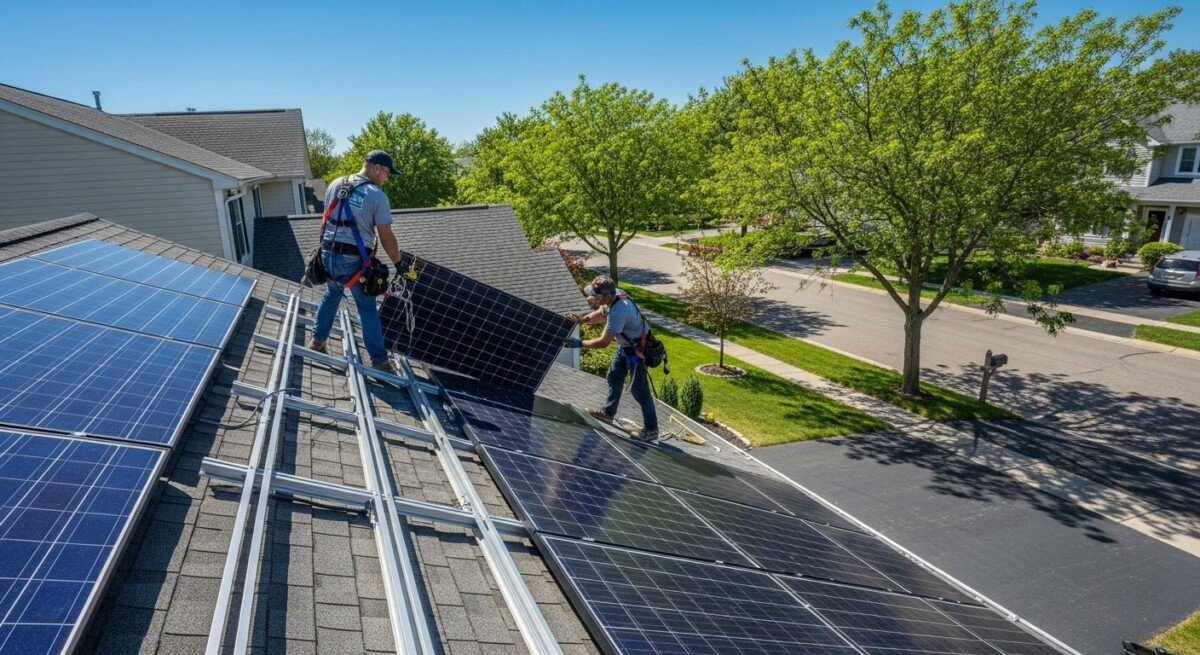
- Installation Day: Crews install the racking, mount the panels, run wiring, and set up the inverter and electrical components.
- Inspections & Activation: The system is inspected for safety and then officially activated by your utility company.
Speaking with experienced installers can help you determine the best solar solution for your home. Compare solar quotes here or call to explore available options.
Signs Your Home May Be Ideal for Solar
While many homes are good candidates for solar, some characteristics make the investment particularly advantageous. The most obvious factor is access to strong, unobstructed sunlight for most of the day. A south-facing roof is often ideal, but east and west-facing roofs can also work very well.
If you have high monthly electricity bills, solar can provide significant relief. The more you currently pay for power, the faster your solar investment typically pays for itself. Understanding your specific potential for savings is key, which is why reviewing detailed solar installation quotes for homeowners is so important.
- Your roof receives direct sunlight for at least 5-6 hours per day.
- You have high or rising monthly electricity costs.
- Your roof is in good condition and has ample, unshaded space.
- You plan to own your home for the next 5-10 years or more.
- Your local utility offers net metering or other favorable policies.
- You are interested in increasing your property value and energy independence.
What Affects Solar Installation Costs
The final price of your solar system depends on several key factors. The size of the system, measured in kilowatts (kW), is the primary driver,a larger system to offset more usage will cost more. The quality and efficiency of the equipment you choose, such as premium panels or microinverters, also influence the price.
Installation complexity matters too. A simple roof mount on a standard shingle roof is less labor-intensive than a ground mount or an installation on a tile roof. Critically, available government incentives, like the federal solar tax credit, and local rebates can dramatically reduce your net cost. For a deeper dive into the numbers, our guide on understanding solar installation pricing breaks down these factors in detail.
The cost of solar installation varies depending on your home and energy needs. Request personalized solar quotes or call to see what options are available.
Tips for Choosing a Reliable Solar Installer
Selecting the right installer is as important as choosing the right equipment. A trustworthy company will guide you through every step, from design to activation and beyond. They should be transparent about costs, timelines, and expected performance.
Always verify an installer’s credentials and experience. Look for proper licensing, insurance, and certifications from organizations like NABCEP. Don’t hesitate to ask for references from past customers in your area.
- Check for proper state licensing and insurance.
- Look for established companies with several years of local experience.
- Read customer reviews and ask for references.
- Review the warranties offered on both equipment and workmanship.
- Get detailed, written proposals from at least three different companies.
- Ensure they handle the entire process, including permits and utility interconnection.
Long-Term Benefits of Installing Solar Panels
The most immediate benefit of going solar is watching your electric bill shrink. Over the 25+ year lifespan of a system, these savings can amount to tens of thousands of dollars. This financial cushion protects you from rising energy costs and provides predictable monthly expenses.
Beyond the bills, solar panels increase your home’s market value and appeal to future buyers. You also gain a greater degree of energy independence, knowing you’re producing your own power. Perhaps most importantly, you make a lasting positive impact on the environment by reducing reliance on fossil fuels.
How long do solar panels last?
Most high-quality solar panels come with a performance warranty guaranteeing they will still produce at least 80-85% of their original output after 25 years. With minimal maintenance, the system itself can continue generating clean energy for decades beyond that.
Will solar panels work during a power outage?
Standard grid-tied solar systems automatically shut off during a blackout for safety reasons, unless paired with a battery storage system. Adding a solar battery allows you to store excess energy and use it to power essential items when the grid is down.
What is net metering?
Net metering is a billing arrangement with your utility company. When your solar panels produce more electricity than you use, the excess is sent to the grid, and you earn credits. You can use these credits to draw power from the grid at night or on cloudy days, effectively using the grid as a battery.
Are there tax credits for going solar?
Yes, the federal government offers a Residential Clean Energy Credit (often called the solar tax credit). This allows you to deduct a significant percentage of your solar system cost from your federal taxes. Many states and local utilities offer additional rebates and incentives.
Do I need to replace my roof before installing solar?
It’s highly recommended. Since solar panels are designed to last 25-30 years, your roof should be in good condition with a similar remaining lifespan. Installing panels on an old roof means paying to remove and reinstall them later for a roof replacement.
How much maintenance do solar panels require?
Solar panels require very little maintenance. Occasional cleaning with water to remove dust, pollen, or bird droppings is usually sufficient. Your installer will also monitor system performance remotely and alert you if there are any issues.
Taking the time to understand the solar installation process empowers you to make a confident decision for your home’s energy future. By generating your own clean power, you can achieve significant savings, increase your energy independence, and contribute to a healthier planet. The best next step is to gather information specific to your home by comparing detailed quotes from reputable local installers.
Learn more about Solar Panel Installation and Repair for guides, costs, and what to expect.
Compare Solar Panel Installation and Repair Pros Near You
Enter your ZIP code to compare top-rated local professionals and request free quotes.